
Donald Trump has never been an easy politician to follow. Ever since his first presidential run, he has routinely given confused and confusing answers, contradicted his previous positions and casually thrown out ideas which even days before would have been unthinkable.
The result has been a long-running suggestion – which originated from his own supporters and advisers during his 2016 campaign – to take the President “seriously, but not literally”. But that is looking increasing difficult to do as the Middle East crisis escalates even further.
After Israel attacked the South Pars gas field on Wednesday, causing Iran to retaliate by hitting a similar facility in Qatar, Trump insisted the US “knew nothing” about Israel’s strike, asserting that “no more attacks will be made by Israel” on South Pars. However, according to the Wall Street Journal, US officials said the President was aware of the plan and approved it.
New FeatureIn ShortQuick Stories. Same trusted journalism.
In the next breath, Trump warned that if Iran made any more retaliatory attacks on Qatar’s liquefied natural gas facilities, the US “with or without the help or consent of Israel, will massively blow up the entirety of the South Pars Gas Field at an amount of strength and power that Iran has never seen or witnessed before”.
The threat has sent markets into a tailspin – oil prices, gas prices, petrol prices, anything related to energy has spiked through the ceiling, while global stock markets have plummeted.
This war is starting to look all too real. Trump is either losing control of Israel and the conflict, or he’s lying about what’s really going on.
The US President seems to know he will need someone to blame for things getting so out of hand. He had been attempting to set up Nato and the US’s traditional allies in Europe as a scapegoat for the inability of shipping to navigate the Strait of Hormuz, publicly demanding they offer help to unblock it, even as he insists the US didn’t actually need assistance and it was just a “test”.
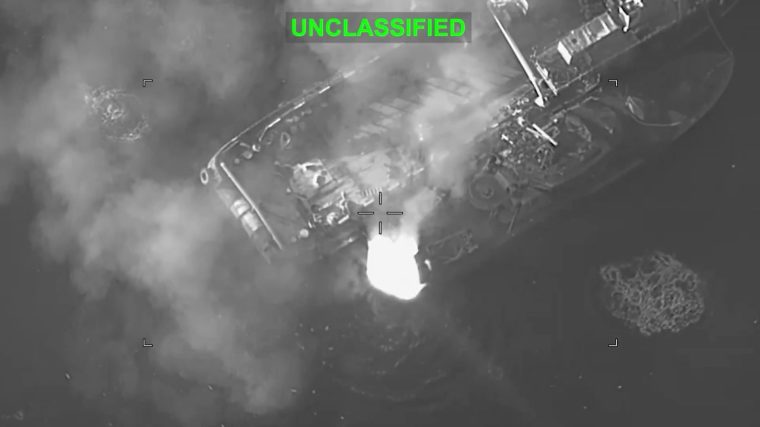 United States Central Command released a video which, it says, shows American forces destroying Iranian naval targets that threaten shipping in the Strait of Hormuz (Photo: US Central Command)
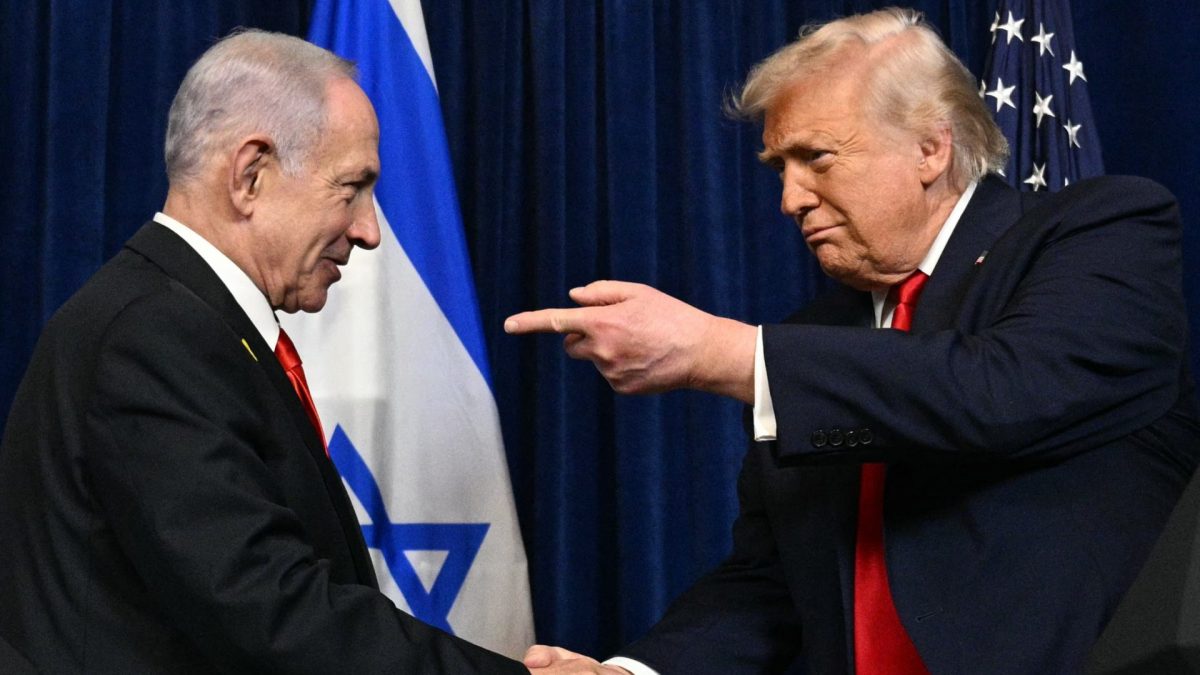
But Trump cannot blame Nato for the conflict crossing a traditional red line in the region – striking oil and gas fields – so here he is laying the blame at Israel’s door, suggesting that the strike on Iran’s gas facilities had not been cleared or sanctioned by the White House.
There is every chance this is actually true. In the early days of the conflict, Trump complained that the US had a list of possible successors for Ayatollah Ali Khamenei it would like to have seen installed in Tehran, but, as the President said, “most of the people we had in mind are dead”, having been targeted by Israeli strikes.
Neither the US nor Israel has given the world a clear rationale or plan for this war, and reporting that has been published from closed-door briefings suggests they don’t necessarily have a clear idea themselves. It is therefore entirely plausible that the two countries are not on the same page when it comes to targets and tactics.
It is hard to stick to a plan when you don’t have one.
But there is now a real risk that all of this escalates in ways that blow back on Israel and its Prime Minister, Benjamin Netanyahu, who remains a strong advocate for the war.
Swathes of Trump’s Maga base are furious at the ongoing conflict and are looking for a scapegoat. His counterterrorism chief, Joe Kent, resigned on Wednesday, blaming Israel for dragging the US into a war it shouldn’t have joined. Vice President JD Vance, meanwhile, staked his political future on US isolationism and needs a way to oppose the war if he has any chance of being the Republican presidential candidate in 2028.
When Maga looks for someone to blame, Israel could easily find itself in the crosshairs. Trump is also growing increasingly frustrated by a conflict that is showing no sign of ending, and may turn on Israel, blaming it for the mess that he and its leaders have got themselves into. A new “forever war” is the last thing Trump and his base wanted.
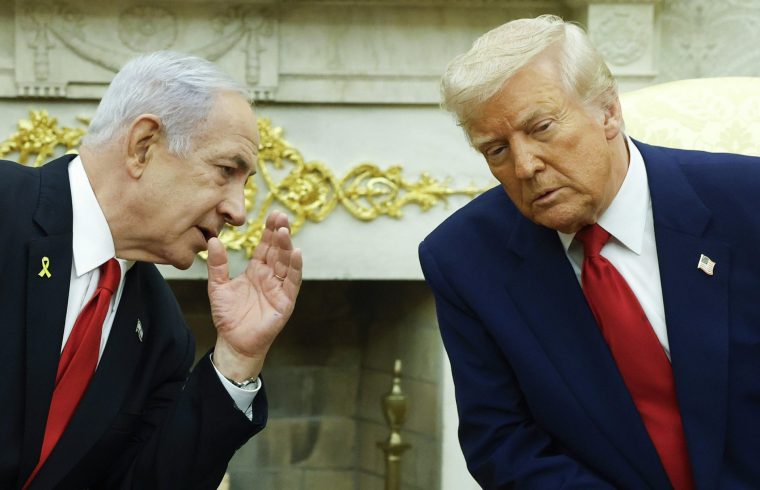 Netanyahu could soon find himself acting as a fall guy for Trump, who will look to avoid the blame should the war with Iran drag on (Photo: Kevin Dietsch/Getty)
Israel has worked hard to be Trump’s best friend – but so have Saudi Arabia and Qatar. The latter have now found themselves in an existential economic crisis thanks to this friend. Israel could soon find itself in similar trouble.
Taking the President “seriously but not literally” has certainly been what the world’s market traders have tried to do during Trump’s second term. When he spent much of 2025 imposing and then withdrawing tariffs seemingly at random, markets largely assumed it would all blow over – helping many stock indices hit record highs, despite the economic uncertainty.
Traders had been trying to do the same with the fallout from Trump’s decision to launch the US’s largest conflict with Iran in decades. In the immediate aftermath, Tehran quickly blocked the Strait of Hormuz, a waterway essential not just for the world’s supplies of oil and gas, but also fertiliser and aluminium, not to mention the food supply of several Middle Eastern nations – most of them US allies.
Prices rose and markets fell, but not by very much. Everyone has been largely hoping that one way or another, the crisis will blow over and things will return to normal – not least because the consequences, if they do not, would make the price spikes caused by Russia’s invasion of Ukraine in 2022 look trivial.
Now, however, refineries across the Middle East are having to shut down, because there is nowhere to store what they can produce. Some will take months to restart, whenever that is possible.
At the same time, while Iran relied on the threat of drones and missiles to block the Strait, reopening it would have been simple. But as Tehran lays mines, the process becomes slower, costlier and riskier.
Trump is increasingly losing control of his war and may lash out at friends and enemies alike. If that happens, does Israel have a plan if its most vital ally turns on it and lays the blame for the war at its feet?