
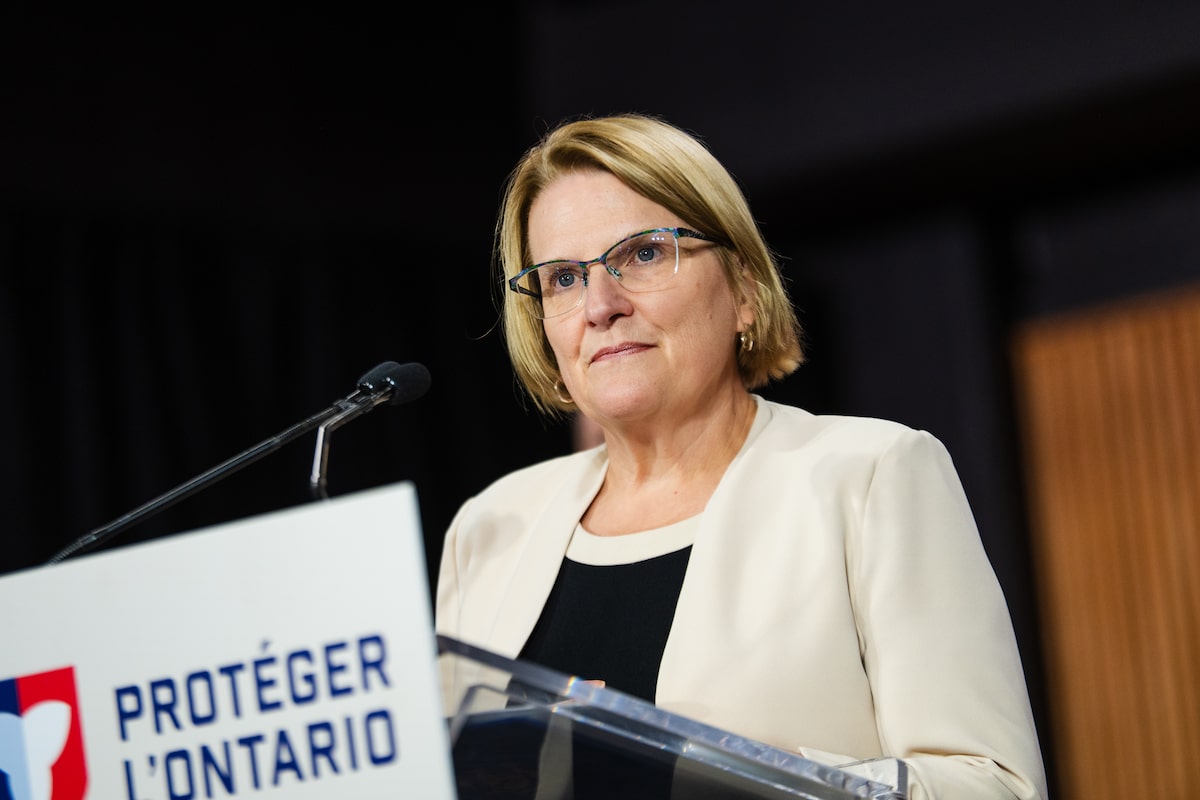
Ontario Health Minister Sylvia Jones at Queen’s Park in Toronto in October, 2025. Ms. Jones unveiled the primary care electronic medical record plan on Thursday.Laura Proctor/The Canadian Press
The Ontario government is promising to create a centralized electronic medical record system for family doctors, a move intended to end the practice of physicians using software that isn’t connected to the rest of the health system or accessible to patients.
But the plan has no timeline or funding attached. Adopting the new medical record system would be voluntary for family doctors, the government says.
Ontario Health Minister Sylvia Jones unveiled the primary care electronic medical record plan on Thursday during a pre-budget announcement that also promised an additional $325-million for primary care, a major health policy focus of Premier Doug Ford’s third term.
The government will table its budget on March 26.
“The proposed primary care medical record system will be an interoperable, secure system accessible from across Ontario that will provide clinicians with a more complete view of a patient’s health history, improving co-ordination across the health care system with patient consent,” Ms. Jones told a news conference at Humber River Health, a hospital in northwest Toronto.
Family doctor study finds disparities in primary care across Canada
The Ministry of Health intends to work with Ontario Health, the agency that oversees day-to-day operations of the health care system, and Supply Ontario, the agency responsible for public-sector procurement, to talk with players in the digital health market before issuing a request for bids to deliver the system.
The government said it would explore whether there would be a single “vendor of record” or more than one.
There are three companies that dominate the market for electronic-health-records systems for doctors: Telus Health, QHR Technologies (owned by Loblaw Companies Ltd.) and Well Health Technologies Corp.
Telus Health spokesperson Jill Yetman said the company welcomed Ontario’s announcement.
“Telus Health has deep experience supporting primary care practitioners and health system partners across Canada, including large-scale digital health and interoperability initiatives, and we look forward to learning more as the process unfolds,” Ms. Yetman said in an e-mail.
Loblaw declined to comment and Well Health did not respond.
Canadian health care has long been dogged by fragmented digital health record-keeping that can’t communicate across different parts of the system. Patient histories, lab and diagnostic test results and records of hospital care are often held in electronic silos that leave family physicians either in the dark or devoting hours to manually inputting information into electronic charts.
Ottawa says digital prescription tool cancelled because it failed to replace fax machines
That leads to an administrative burden that doctors trained in family medicine frequently cite as a reason not to practise office-based, cradle-to-grave primary care. A recent survey from the Canadian Medical Association found more than nine in 10 doctors said extra paperwork was affecting their work-life balance and leading to burnout.
However, governments in Canada have stumbled when they’ve tried to create interoperable digital health records in the past.
Just last month, Canada Health Infoway, a federally funded non-profit, announced it would shut down PrescribeIT, a national prescription sharing service that was supposed to help doctors and pharmacists “axe the fax.”
Only about 5 per cent of all prescriptions were sent via PrescribeIT, despite Infoway spending more than $250-million on the technology since 2017.
And when Ontario tried to develop an electronic medical record system in 2008, it ended with the eHealth scandal, which forced the resignation of a Liberal health minister in 2009. An Auditor-General’s report found the government of the day spent more than $1-billion on the project with little to show for it.
Ms. Jones, asked how she would avoid repeating the mistakes of the old eHealth Ontario agency, said her government intended to involve the integrity and privacy commissioners in their search for a vendor of record.
Another barrier to streamlining records has been the companies that make the software itself, according to a Competition Bureau study from 2022. The report said the companies had historically little reason to co-operate or make it easy to share records between different platforms.
Ms. Jones said making it easy to share records – known in the industry as interoperability – would be an important criteria in the procurement process.
“If they are not interested in insuring their interoperable piece is there, then they are not going to be part of the final opportunity to bid,” she said. It’s as simple as that.”
Ms. Jones and Jane Philpott, a medical doctor and former federal health minister who is leading the province’s primary care action team, also told the news conference that an additional 124 primary care health teams would be added or expanded across the province in the next fiscal year.
That includes $2.3-million for a team at Humber River to enroll another 5,600 patients.
The Ford government has promised that the 1.9 million Ontarians who don’t have a family doctor will get access to continuing primary care by 2029.
Meanwhile, the federal government recently introduced a bill that would require all health technology companies to adopt common standards to make it easier to share data. The bill is in the early stages of debate in the Senate.