
British military officers have been dispatched to the US to help plan how to reopen the Strait of Hormuz, defence officials disclosed, after the price of oil soared as Iran warned it would strike energy infrastructure across the Gulf.
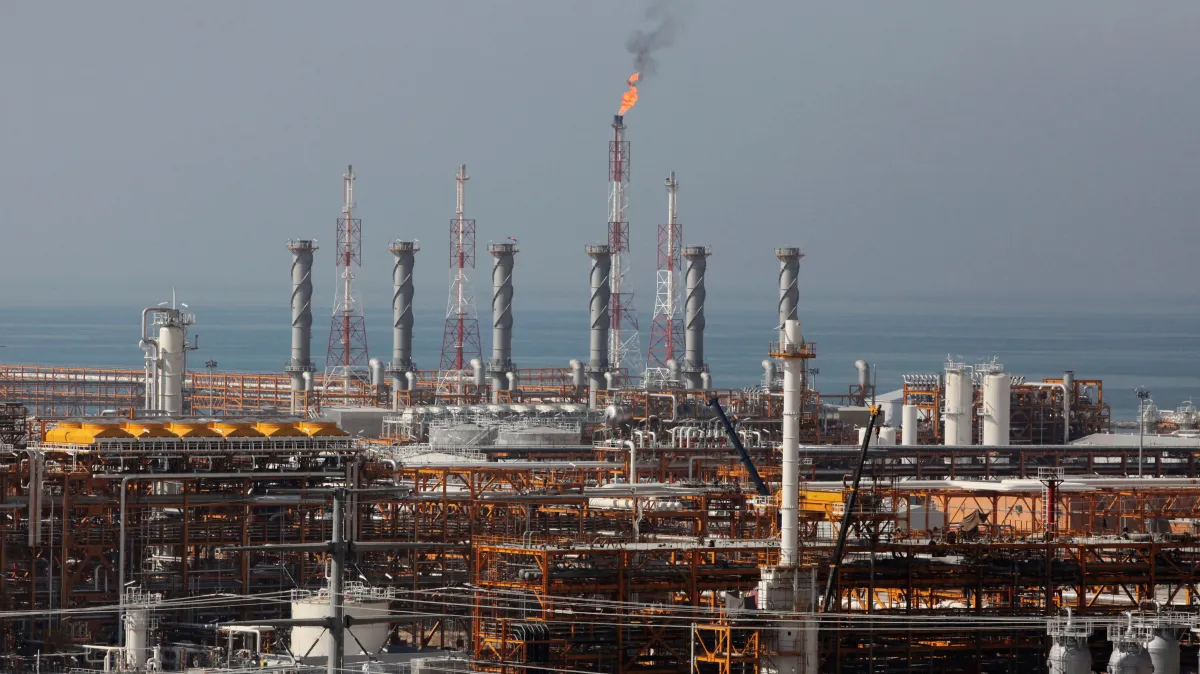
Iran’s huge Pars gasfield was hit on Wednesday, a major escalation in the US-Israeli war, prompting Tehran to announce it would respond with attacks on oil and gas targets throughout the region.
President Trump supported Israel’s attack on the South Pars field on Wednesday but is said to want no more strikes on Iranian energy sites, unnamed US officials told the Wall Street Journal.
Tehran listed prominent sites belonging to Saudi Arabia, the UAE and Qatar, stating they were now “direct and legitimate targets” that should be evacuated immediately before strikes in the coming hours.
Authorities in Abu Dhabi intercepted missiles which had been on course for the Habshan gas facility and the Bab oil field and their media office said that operations at the gas facilities had been suspended.
At least four people died on Wednesday night — three women in the West Bank and one in central Israel — in the latest Iranian missile attacks, apparently involving cluster munitions.
Oil prices shot up after the Pars attack in a conflict that has already halted shipping from the world’s most important energy-producing region and could now bring lasting damage to its infrastructure. Benchmark Brent crude prices rose around 5 per cent to above $108.
Iran closed the strait to most shipping, with commercial vessels coming under attack, after the US and Israel launched Operation Epic Fury on February 28. President Trump initially claimed Iran was weeks away from developing a nuclear weapon.
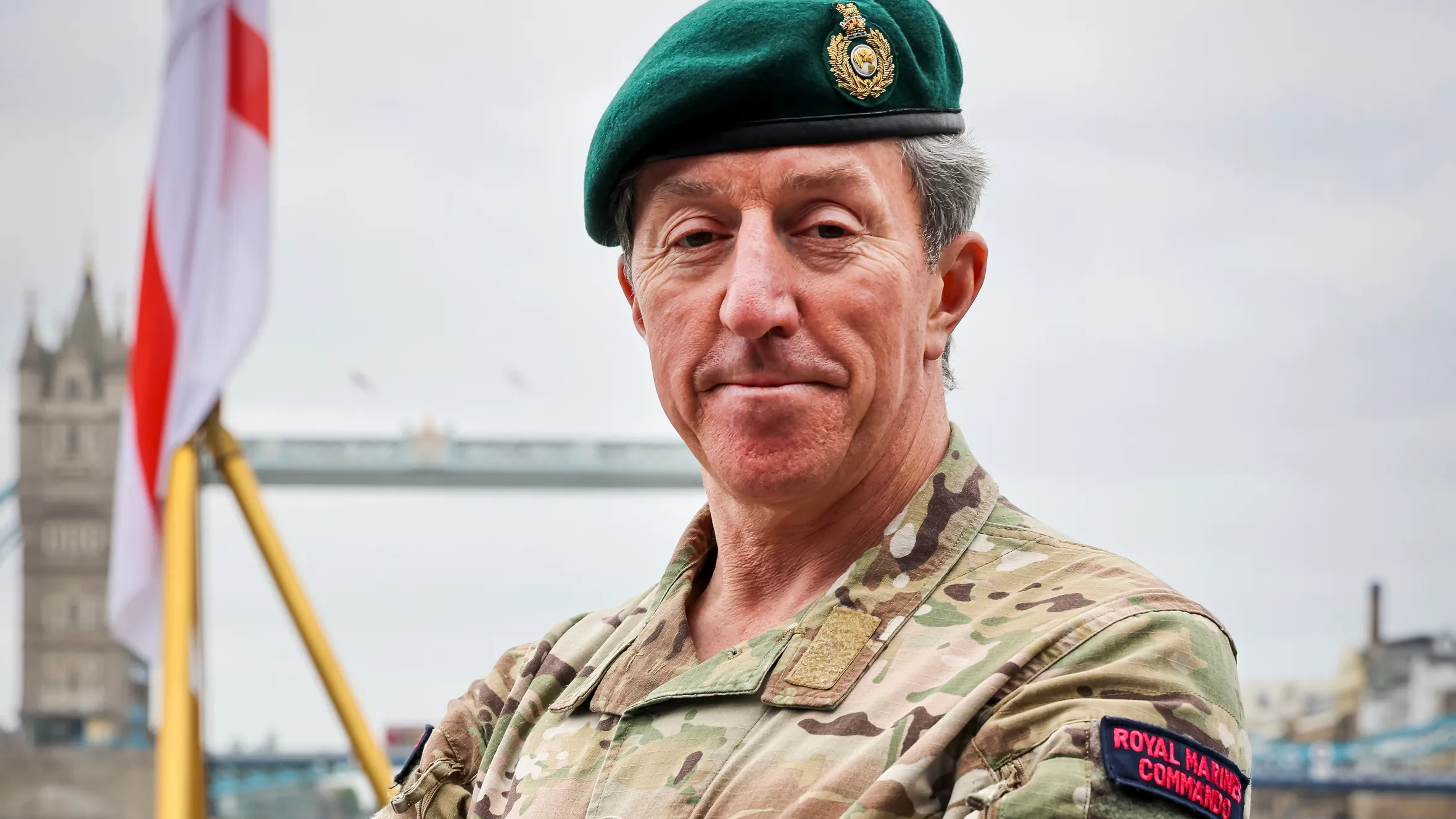 British military chiefs, including General Sir Gwyn Jenkins, the first sea lord, have presented a number of options to ministersRoyal Navy
However, appearing before Congress on Wednesday, Tulsi Gabbard, the director of national intelligence, said that Tehran abandoned its pursuit of a nuclear weapon after American B-2s dropped 30,000-pound bombs on its enrichment sites in June last year.
Her remarks contradicted Trump’s central justification for the war.
Israel claimed that it assassinated Iran’s intelligence minister, Esmail Khatib, on Tuesday night, one of several Iranian leaders who have been killed since the start of the war.
In a briefing, defence officials disclosed a small team of UK military planners has been sent to US Central Command at MacDill Air Force Base, in Tampa, Florida. US Central Command is responsible for American military operations in the Middle East.
The handful of experts are there to help plan and develop options for how to enable shipping to transit through the chokepoint, which is feared to contain mines, it is understood.
British military chiefs, including General Sir Gwyn Jenkins, the first sea lord, have presented a number of options to ministers. The UK is unlikely to send Royal Navy ships to escort vessels while the conflict is raging because of the dangers such a mission would present, it is understood.
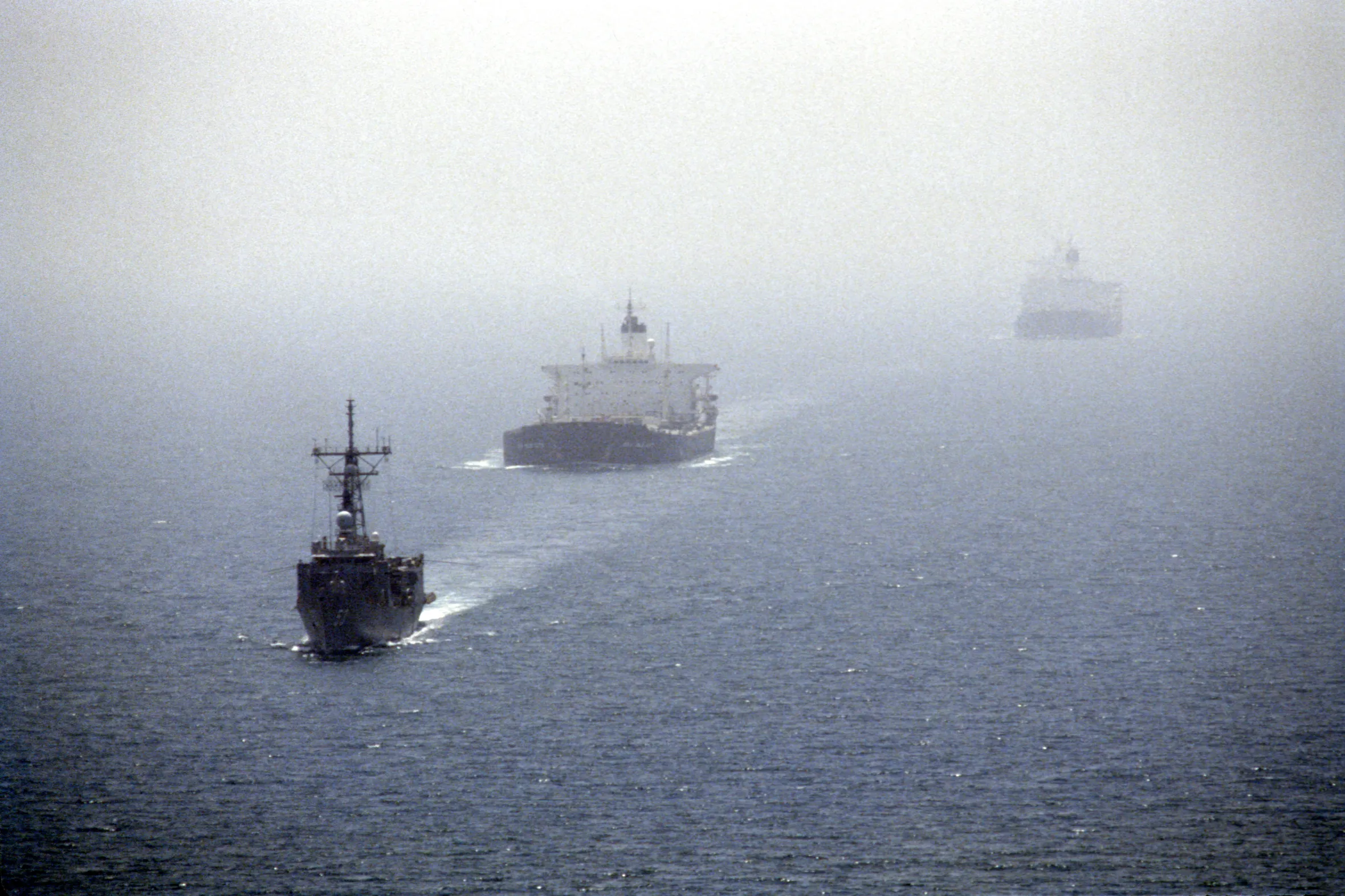 A US warship escorts tankers through the Strait of Hormuz in 1987 as part of Operation Earnest Will GETTY IMAGES
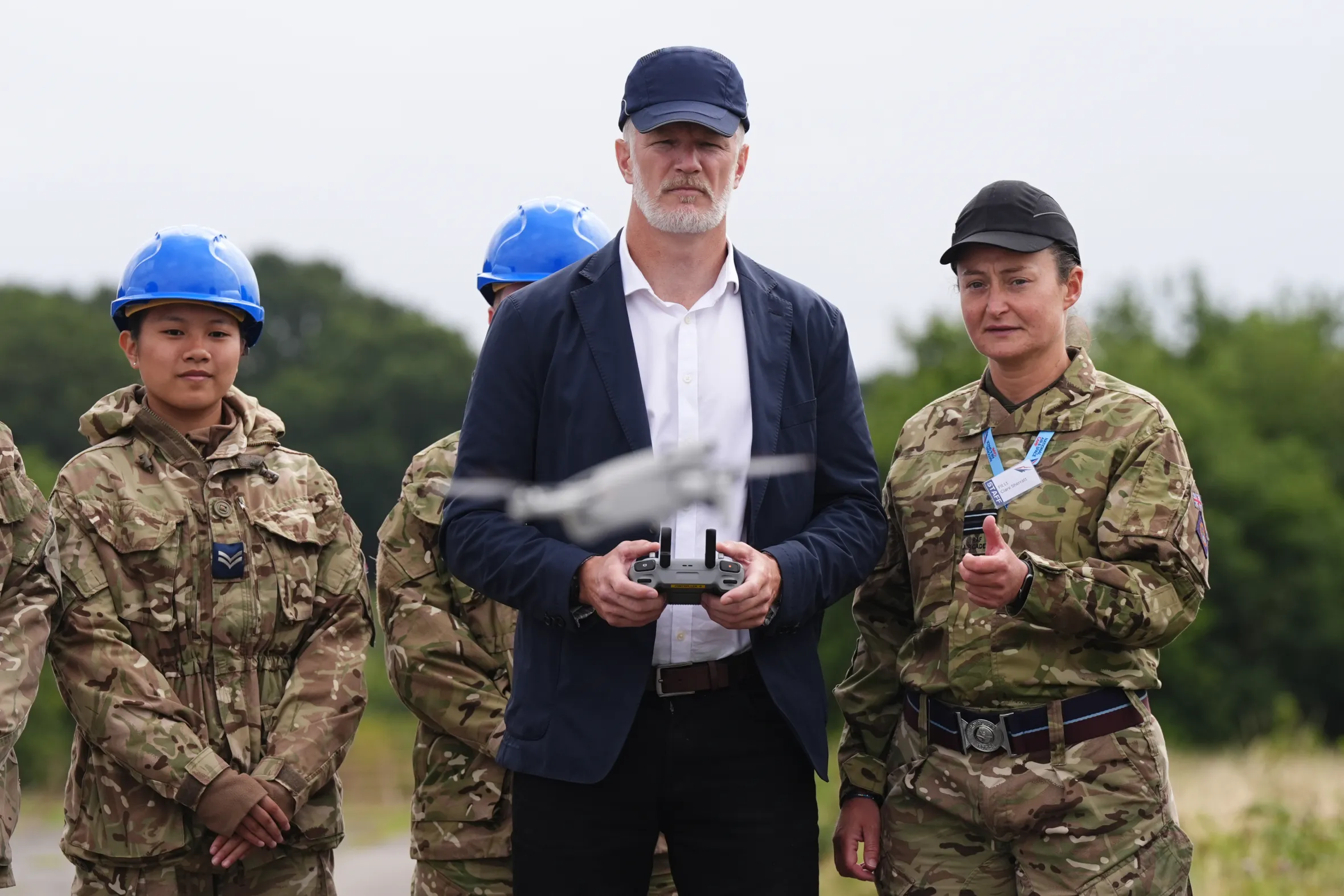 Al Carns, the armed forces minister, said that a “multinational solution” was needed Jacob King/PA
However, the UK is discussing with both the US and European allies how it could help if the situation calms down.
A senior UK defence official said the situation was “incredibly fluid” and “the level of threat is such that I don’t see many nations being willing to put warships into the middle of that threat right now.”
Al Carns, the armed forces minister, said in a briefing: “In 1987 when this last happened, it took 30 warships to escort in the Strait of Hormuz. That gives you just an example of the resources required.”
He said the situation was even more complex now, with Iran’s arsenal including fast attack boats, different kinds of mines, ballistic missiles and unmanned drones in the air, on the sea and beneath the waves.
Carns said: “I would say this must be a multinational solution. We’re not anywhere near that at the moment, but I would say one thing: that there’s one thing worse than working with allies, and that’s working without them.”
John Healey, defence secretary, discussed the situation with counterparts from France, Germany, Italy and Poland. “We are working with allies to reinforce regional security and protect British interests,” Healey said.
On Wednesday night President Macron of France said he had spoken with Trump and the Emir of Qatar and called for an end to strikes on civilian targets, particularly energy and water infrastructure. “Civilian populations and their essential needs, as well as the security of energy supplies, must be preserved from military escalation,” Macron said in a post on X.
The Ministry of Defence announced it would buy further missiles for British forces in the Middle East as part of efforts to support Gulf states under attack from Iran.
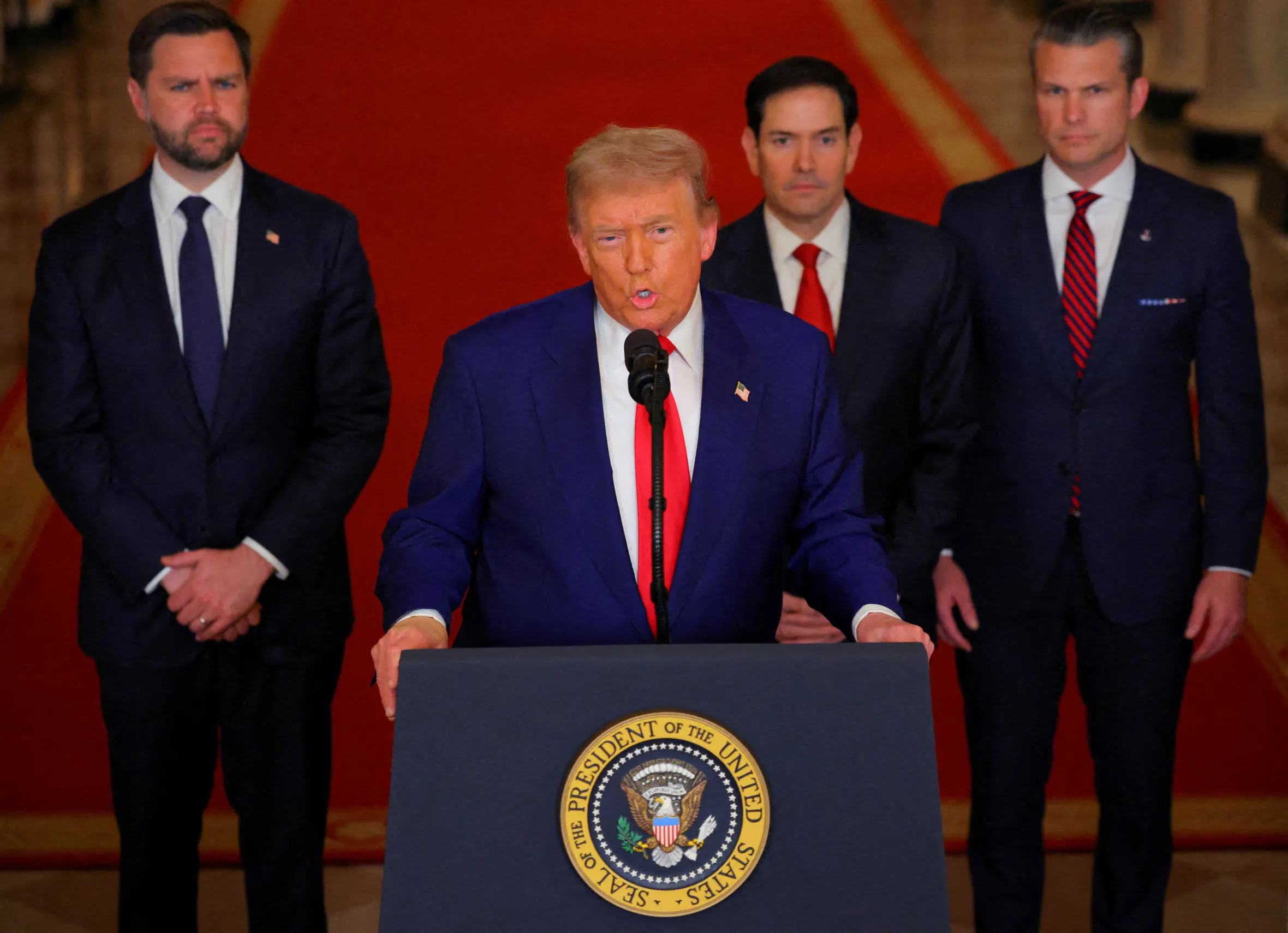 President Trump has issued conflicting statements about the future of the Strait of HormuzCarlos Barria/Reuters
It said it planned to stock up on more laser-guided Martlet weapons, which have been used to down drones in Iraq in recent weeks. It did not say how many would be purchased for security reasons.
After hosting ambassadors and defence attaches from Gulf states in London, Luke Pollard, minister for defence readiness, said reopening the strait was “absolutely vital for global trade, for our energy security, for the UK and for our partners in the region”.
He said: “The UK is convening our allies, both the United States, our European friends and partners in the region for those serious discussions about how the strait could be reopened. This is difficult and complicated work.
“There won’t be a quick or easy solution, but the UK is uniquely placed to be able to bring together those allies to look at what is the solution.” He said there would not just be a military solution but a “full package of measures” would be required, including insurance solutions.
He said the quickest way to reopen the Strait of Hormuz was with “de-escalation and an end to the conflict”.
Pollard said dealing with mines was “one part of a very complex problem”. Even an end to the conflict would still bring threats from underwater drones and threats from the air, he added.
Trump has issued a series of conflicting statements about the Strait of Hormuz in recent days. In his latest remarks he suggested he could wash his hands of the problem once his military attacks had “finished off” Iran, leaving it to countries reliant on oil and gas exports through the waterway to secure it.
Trump has repeatedly berated countries including the UK for failing to respond to his request for support in the maritime chokepoint.
In a post on his Truth Social platform, Trump said: “I wonder what would happen if we ‘finished off’ what’s left of the Iranian Terror State, and let the Countries that use it, we don’t, be responsible for the so called ‘Straight?’ (sic)
“That would get some of our non-responsive “Allies” in gear, and fast!!!”
At prime minister’s questions, Sir Keir Starmer defended his approach, insisting he would not allow UK forces to be drawn into a “wider war”.
Starmer said: “I want to see this war end as quickly as possible.
“The longer it continues, the bigger the impact on the cost of living. And that’s why we intervened to support households with costs of heating oil.
“The best way forward is a negotiated settlement with Iran giving up any aspirations to develop a nuclear weapon.”
On Wednesday evening Reuters reported that the White House was considering deploying thousands of US troops to the Middle East in order to reinforce its operation.
One option was to deploy US troops to Iran’s coastline in order to secure the Strait of Hormuz and ensure safe passage of oil tankers. Another was to send ground forces to Kharg Island, Iranian land in the Persian Gulf which is the hub for 90 per cent of the country’s exports. The administration has also explored the possibility of sending forces to secure Iran’s highly enriched uranium.
A White House official, speaking on condition of anonymity, said: “There has been no decision to send ground troops at this time, but President Trump wisely keeps all options at his disposal.”