
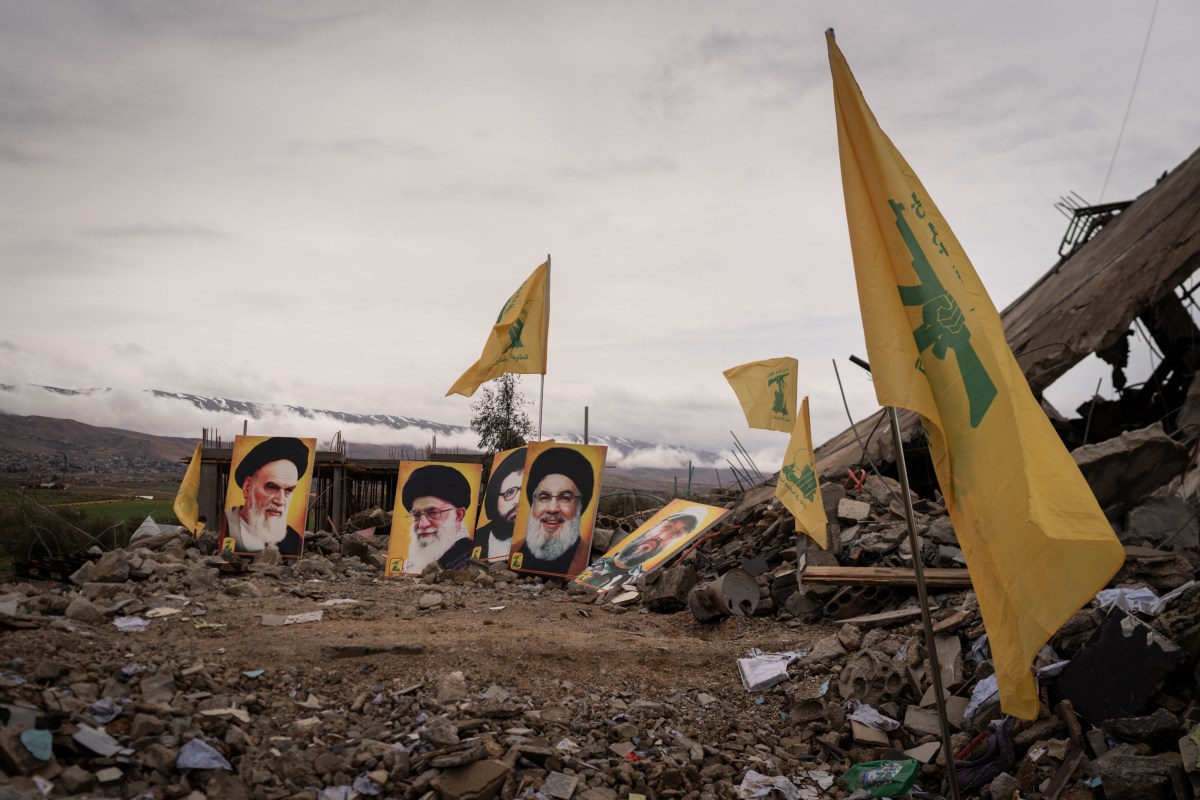
As Israel wages an air and land war against Lebanon’s Hezbollah in the midst of an ongoing joint campaign with the United States against Iran, a senior Israeli diplomat told Newsweek that a decisive victory across the northern border could set the stage for the biggest regional shift in decades—perhaps ever—in the nation’s history.
Since its foundation in 1948, Israel has been surrounded by enemies, first battling Arab coalitions and then an Iran-aligned Axis of Resistance that has been in open war with Israel since an attack led by the Palestinian Hamas movement in October 2023.
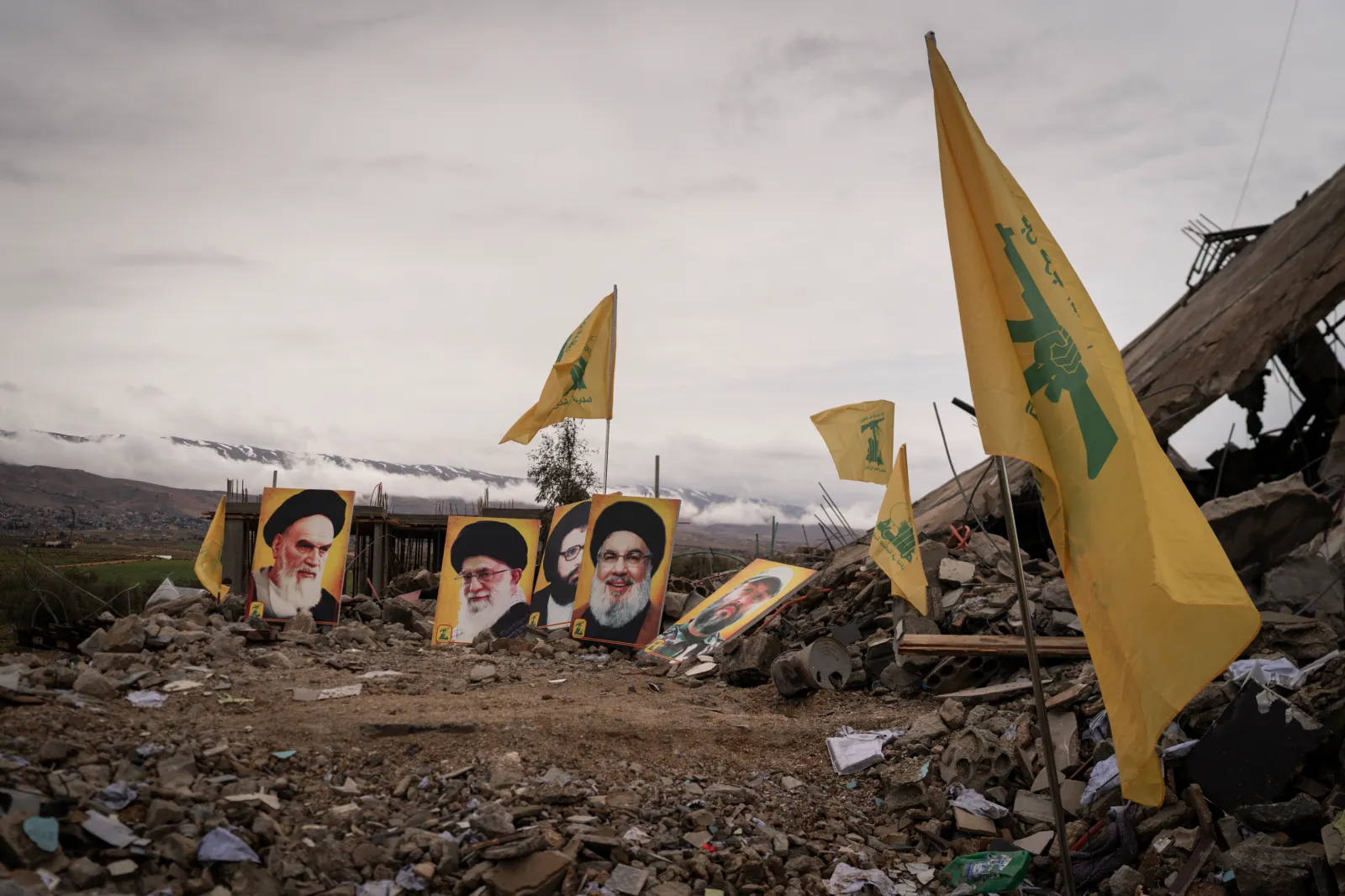
Events have since drastically altered the regional landscape. With Hamas severely weakened and confined to pockets of low-level insurgency in the Gaza Strip and Syria’s Baathist government toppled by rebels whose leader expresses little desire to confront Israel, Hezbollah stands as the last major front-line threat.
While battered from a sweeping campaign launched by Israel in response to the Iran-backed Lebanese group’s intervention in October 2023 that formally ended with a November 2024 ceasefire despite ongoing Israeli strikes, Hezbollah returned to the fight earlier this month, conducting fresh attacks in retaliation for the U.S.-Israeli killing of Iranian Supreme Leader Ayatollah Ali Khamenei.
In simultaneously taking on Hezbollah and its ally in Tehran, Israel is now looking toward a future free of hostile actors in its immediate vicinity, a development that Israeli Consul General in New York Ofir Akunis argued would prompt a widespread recalibration that positions Israel to become a regional leader in key areas.
“What will be the effect on Israel? We will be the hub of high-tech and the innovation center of all the region,” Akunis told Newsweek.
 ‘A Tough Neighborhood’
In some ways, Israel’s wars predate even its establishment. Already battling Palestinians for the same lands left behind by a collapsing British colonial mandate, the newly announced state in May 1948 immediately fended off an alliance of Arab armies—primarily those of neighboring Egypt, Jordan and Syria.
After a 1956 clash with Egypt in which Israel temporarily occupied Gaza and the Sinai Peninsula, Israel again seized these territories along with the Jordan-held West Bank and Syrian Golan Heights in a second multifront war fought in 1967. Israel retained these lands in another war in 1973, marking the final confrontation with Arab armies and Israel’s last decisive victory in a list of conflicts that persist through the present day.
After invading civil war-torn Lebanon in response to attacks by Yasser Arafat’s Palestine Liberation Organization in 1982, Israel first entered into battle with the newly established Hezbollah, a conflict that would last up until the Israel Defense Forces’ (IDF) withdrawal in 2000. While still engaged in Lebanon, Israel also contended with the rise of Hamas in occupied Gaza and the Israeli-Palestinian violence of the First Intifada that erupted in 1987.
New hopes for peace came in the 1990s with the signing of the U.S.-brokered Oslo Accords that established the Palestinian National Authority under Arafat’s leadership and a peace treaty with Jordan, the second Arab nation to establish ties with Israel after Egypt did so in 1979. But these aspirations were soon shattered as extremism on both sides mounted.
What ensued instead of lasting reconciliation was the Second Intifada, the IDF’s 2005 exit from Gaza, a monthlong war with Hezbollah the following year and Hamas’ takeover of Gaza the year after, followed by a series of Israel-Hamas wars leading up to October 2023 and a conflict now encompassing much of the Middle East.
While recognizing a number of battlefield wins, Akunis also saw a history of failures in past policies pursued by Israel and the West, which he argued his current government was now seeking to rectify.
“I can say that the Western world and my country as well, we did a lot of mistakes during the last 35 years, and from time to time, a few steps that we took reflect weakness in the eyes of the ayatollahs and their proxies,” Akunis said. “One of them is that we escaped from Lebanon, so now Hezbollah, they are the owners of this place, and, of course, the disengagement plan in the Gaza Strip.”
“By the way, the Oslo treaties in which we brought Yasser Arafat to our territories, what happened? Nothing. Terror attack after terror attack after terror attack after terror attack, ongoing since [Arafat] arrived in Gaza in July 1994,” Akunis said. “So, this is our neighborhood. It’s a tough neighborhood. And now I want to be optimistic.”
 ‘From Beirut to Mecca’
Much like Hamas’ deadly attack almost precisely half a century later, the 1973 Yom Kippur War began for Israel with a devastating enemy attack born out of intelligence failure, forcing the nation and its armed forces to quickly regroup and reclaim the initiative on multiple fronts.
The current war has been even more expansive, with Israel battling Palestinian militias in Gaza and the West Bank as well as Iran and its Axis of Resistance allies in Lebanon, Iraq, Syria and Yemen.
But Akunis held out hope that victory would bring about yet another shift to the regional calculus. Recalling “a lot of enemies” Israel has faced over the decades, from 1948 to the present, he said, “maybe these last three weeks will open the eyes of the others, and they will come to a conclusion that it’s better to cooperate with Israel, because Israel will not disappear from the region.”
“This is our homeland,” Akunis said, “and we will be there to cooperate, to collaborate, to build a new Middle East, a real new Middle East.”
Israeli Prime Minister Benjamin Netanyahu—whom Akunis previously served under in four separate ministerial positions, most recently as minister of science of technology until being named consul general in 2024—has repeatedly invoked the term “new Middle East” to describe a region in which Israel would count allies and partners rather than enemies.
An effective framework for such a vision, Akunis pointed out, is the Abraham Accords, the series of agreements launched in 2020 that saw the United Arab Emirates, Bahrain, Sudan and Morocco become the next Arab countries to normalize relations with Israel under U.S. President Donald Trump’s first term.
Discussions to include Saudi Arabia in the pact were underway before October 2023, which put a halt to normalization talks as regional tempers flared. But Akunis felt the Middle East’s upheaval would only open new opportunities that in some way recall the aspirations of Israel’s old pan-Arabist foes—but with Israel now at the center.
“If Lebanon’s government would join the Abraham Accords and Saudi Arabia, so you have from Bahrain through the Emirates, through Saudi Arabia, through Jordan, through Israel, through Lebanon, it’s a huge potential, not only of tourism, that’s good, trade, open markets,” Akunis said. “You can take your car from Beirut to Mecca and Medina, or a railway.”
In fact, Akunis said plans had already been drawn up to connect Israel’s port city of Haifa to Jordan’s Irbid. He also suggested daily direct flights between Tel Aviv and Tehran, as existed before the 1979 revolution that toppled a pro-West monarchy and established the Islamic Republic.
That same Islamic Republic, along with allies like Hezbollah, are now the primary obstacle to realizing this reshaping of the region, Akunis argued, depicting their defeat as a harbinger of change and a “new game” altogether.
“The only reason is the ideology of the ayatollahs, and that will be, as I said, a new Middle East,” Akunis said. “We are looking forward to that. It can take time. It’s a process. In Judaism, there’s tikkun olam, you need to fix the world. We are fixing the world.”
 “It’s Not Over ’til It’s Over”
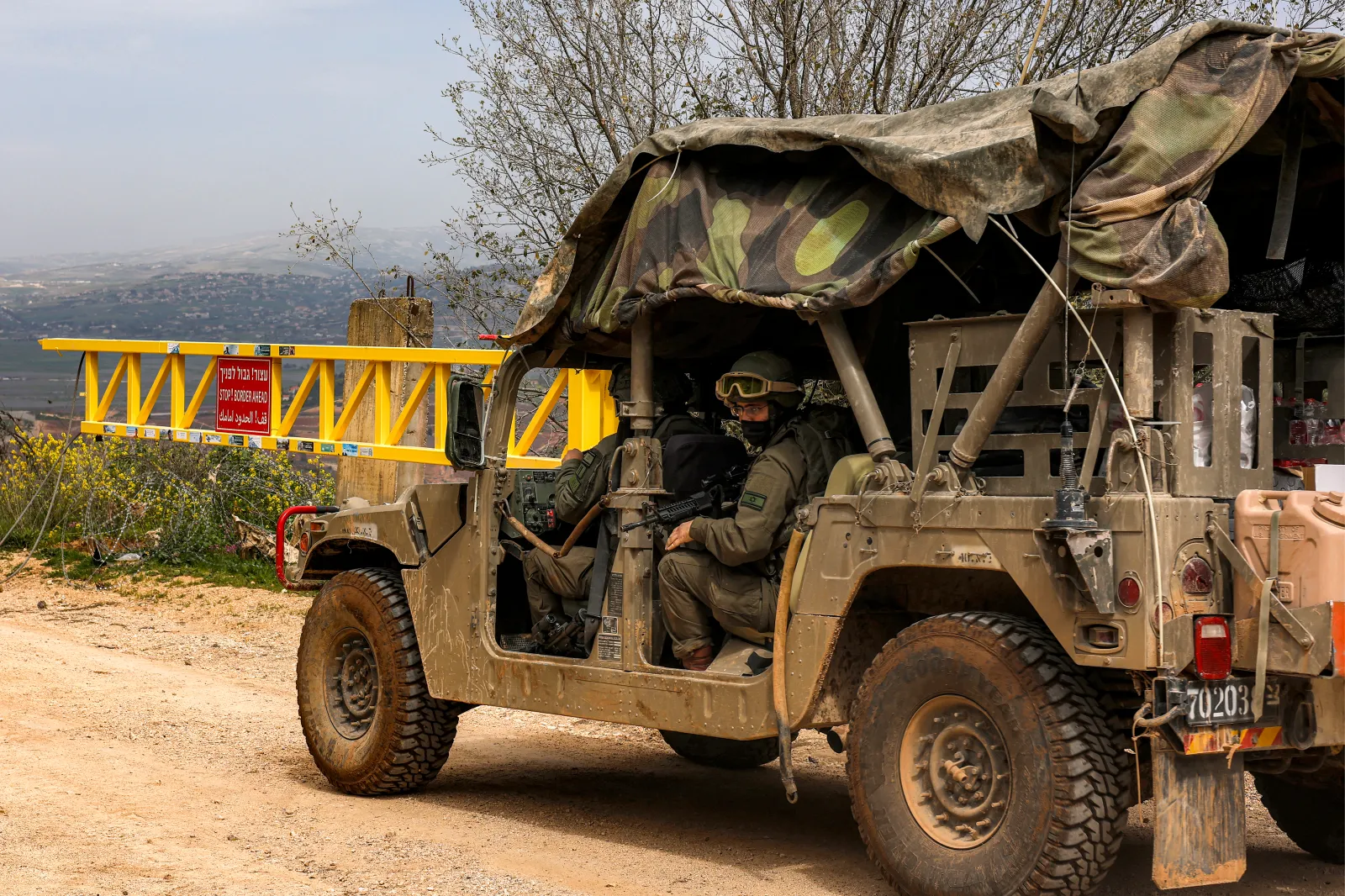
While the broader conflict emanating from the original war in Gaza has already shattered the preexisting regional equation, Israeli hopes to usher in a new era remain tied to decisive victories in both Lebanon and Iran.
But the battle rages on both fronts. As Iran continues to strike back by launching waves of missile and drone attacks against Israel and Arab Gulf states hosting U.S. military bases, Hezbollah’s reentry into the conflict has put further strain on Israel’s air defense systems.
“It’s not over till it’s over,” Akunis said. “By the way, they hit Haifa port two hours ago, they are using Hezbollah to launch their missiles to the Upper Galilee and the Western Galilee and, of course, still Tel Aviv, it’s actually the biggest civilian center in Israel, and Jerusalem as well.”
And though grateful for U.S. cooperation in the war, Akunis expressed deep frustration with European powers who have refused to provide assistance to both countries. He was particularly critical of France, the former colonial power over Lebanon, due to its stance on Israel’s war with Hezbollah, which French officials have also said must be disarmed.
“So, they want to take responsibility. Take it. For God’s sake, take it,” Akunis said, slamming his desk. “With all due respect, the French government, they said that they condemned the Israeli involvement and attacks in Lebanon. We’re not attacking the Lebanese. We’re attacking Hezbollah, the Iranian unit. It’s the same thing [in Iran], an attack against the ayatollahs and their administration, and not the Iranian people.”
Akunis touted that Israel and the U.S. have “achieved most of the main goals” in the ongoing campaign, including the degradation of the majority of Iran’s long-range missile capabilities. Ultimately, however, the fall of the Islamic Republic would have to be brought about by its own citizens, an outcome he acknowledged could not be guaranteed nor for which Israel planned to provide direct military support.
“Maybe you’ll come again, around November, December 2026, and you will say to me, ‘Nothing happened there,’ and I will tell you that, ‘Unfortunately, the Iranian people did not rise up,'” Akunis said. “I hope that they will.”
As for Hezbollah, Israel is also calling on the Lebanese government and its armed forces to step up in restricting the group’s activities, a situation that some fear could lead to renewed sectarian conflict or even civil war.
Meanwhile, Hezbollah has only signaled preparedness for what may prove to be an existential battle, with slain leaders like Secretary-General Hassan Nasrallah replaced after his September 2024 killing, much like Hamas after the death of its chief, Yahya Sinwar, a month later.
“We are there until further notice,” Akunis said. “As you know, Nasrallah is not there, but there’s others. But what can we do here? Like Sinwar, Sinwar is not there, but someone else is there. There’s a lot of terrorists.”