

Listen to this article
Estimated 4 minutes
The audio version of this article is generated by AI-based technology. Mispronunciations can occur. We are working with our partners to continually review and improve the results.
A Kuwaiti oil refinery came under attack early Friday from Iranian drones and sirens sounded in Israel warning of incoming fire, while explosions boomed over Tehran as Israel hit Iran as the country marked the Persian New Year.
As the war which has rocked the global economy neared the end of its third week, Iran showed no signs of letting up on its attacks on Gulf region energy sites as Kuwait said drone strikes at its Mina Al-Ahmadi oil refinery sparked a fire which crews were working to control.
The refinery, which can process some 730,000 barrels of oil per day, was already damaged Thursday in another Iranian attack. It is one of three oil refineries in the tiny, oil-rich Gulf country.
Iran stepped up its attacks on energy sites in Gulf Arab states after Israel on Wednesday bombed its massive South Pars offshore natural gas field in the Persian Gulf.
Heavy explosions shook Dubai as air defences intercepted early incoming fire over the city, where people were observing Eid al-Fitr, the end of the holy Muslim fasting month of Ramadan, and mosques made the day’s first call to prayers.
Bahrain’s Interior Ministry said a fire broke out after shrapnel from an intercepted projectile landed on a warehouse, and Saudi Arabia reported shooting down multiple drones targeting its oil-rich Eastern Province.
WATCH | Iran warned against further strikes: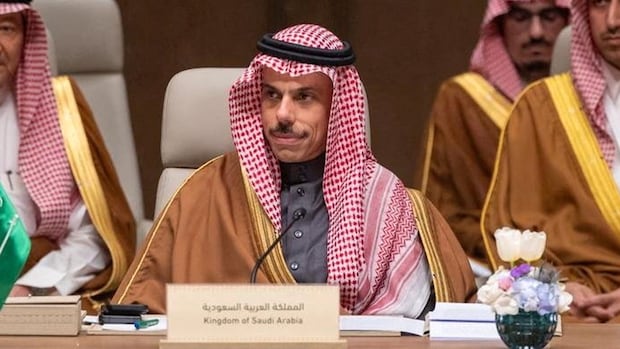
Gulf-state leaders warn Iran against further strikes on fuel sites
Leaders of Persian Gulf countries have warned Iran against further attacks on oil and gas facilities that are driving up global fuel prices, calling them a dangerous escalation.
The renewed attacks came after an intense day that saw Iran hit energy infrastructure around the region and launch more than a dozen missile salvos at Israel following the attack on South Pars.
South Pars, the Iranian part of the world’s largest gas field, is located offshore in the Persian Gulf and owned jointly with Qatar. With some 80 per cent of power generated in Iran coming from natural gas, the attack posed a direct threat to the country’s electricity supplies.
Fears grow of global energy crisis
Late Thursday, Israeli Prime Minister Benjamin Netanyahu said the country would hold off on any further attacks on the gas field at the request of U.S. President Donald Trump after the Iranian response sent oil prices skyrocketing.
Beyond Iran’s attacks on its Gulf Arab neighbours, its stranglehold on shipping through the Strait of Hormuz, a strategic waterway through which a fifth of the world’s oil and other critical goods are transported, has caused rising concerns of a global energy crisis.
Brent crude oil, the international standard, which spiked to more than $119 US a barrel during Iran’s attacks Thursday, was around $107 US in morning trading on Friday, up more than 47 per cent since Israel and the U.S. attacked Iran on Feb. 28 to start the conflict.
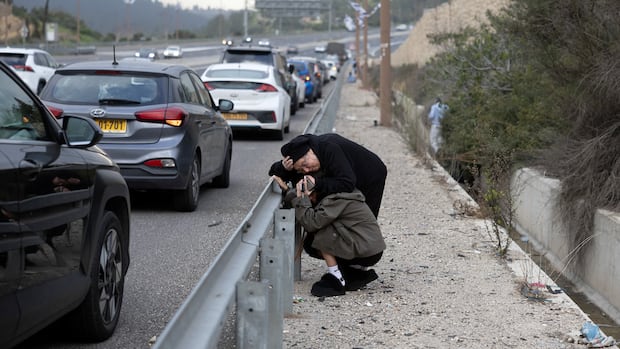
In Israel, sirens warned of attacks on Jerusalem and on the north early Friday, sending people scrambling to shelters again. There were no immediate reports of casualties.
Not long after Israel announced that it had begun new strikes on Iran, the sound of explosions were heard in Tehran, as Iranians marked Nowruz, or the Persian New Year. Associated Press journalists in Tehran heard more airstrikes in the capital just before noon local time.
Israel’s army later said it had launched more strikes on targets east of Tehran.
In addition to steadily striking Iran, Israel has regularly hit Lebanon, targeting the Iranian-backed militia Hezbollah.
Israeli strikes against Hezbollah have displaced more than one million people, according to the Lebanese government, which says more than 1,000 people have been killed. Israel says it has killed more than 500 Hezbollah militants.
In Israel, 15 people have been killed by Iranian missile fire. Four people were also killed in the occupied West Bank by an Iranian missile strike.
More than 1,300 people in Iran have been killed during the war, and at least 13 U.S. military members.
Meanwhile, the U.A.E. said Friday it disrupted what it called “a terrorist network funded and operated by Lebanon’s Hezbollah and Iran.”
It arrested five men accused of laundering money, alleging they were “operating within the country under a fictitious commercial cover” that sought to carry out schemes that would threaten the country’s financial stability.
It published images of five prisoners on its state-run WAM news agency, without identifying them.