
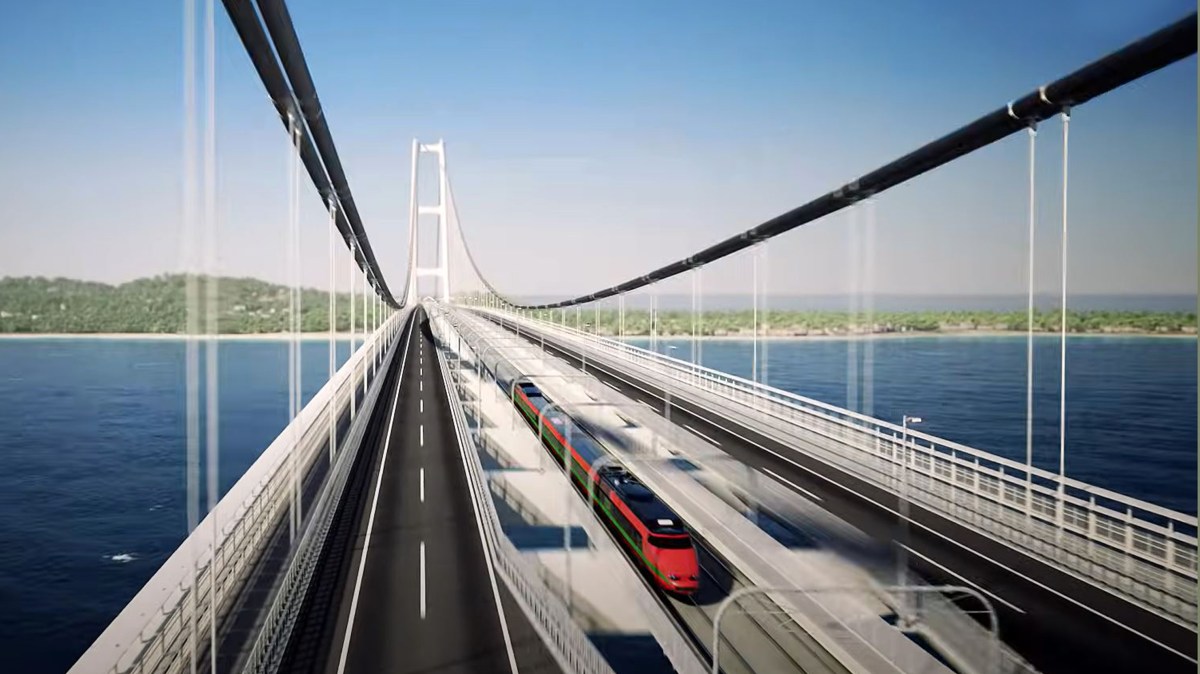
Italy is to build the world’s longest suspension bridge between the mainland and Sicily, shrugging off fears about the area’s history of earthquakes and mafia-run construction firms.
With a single suspended span of about 3.3km, the Strait of Messina Bridge will exceed the span of Turkey’s Canakkale bridge — the record holder — by more than a kilometre, held up by steel cables more than a metre in diameter.
Giorgia Meloni, the Italian prime minister, said: “It is not an easy task but we consider it an investment in Italy’s present and future, and we like difficult challenges when they make sense.”
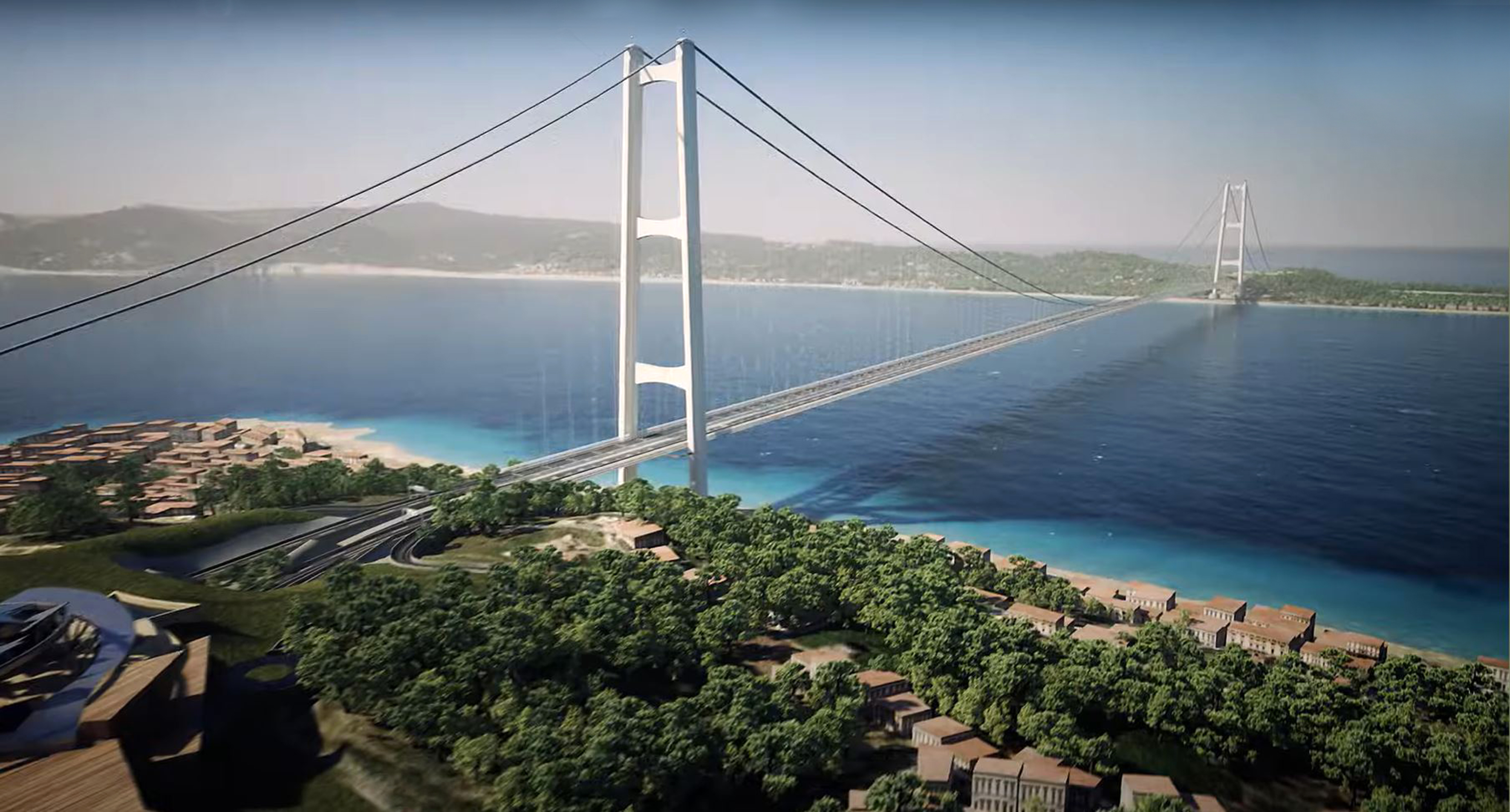
Concept art of how the bridge might look
WEBUILD
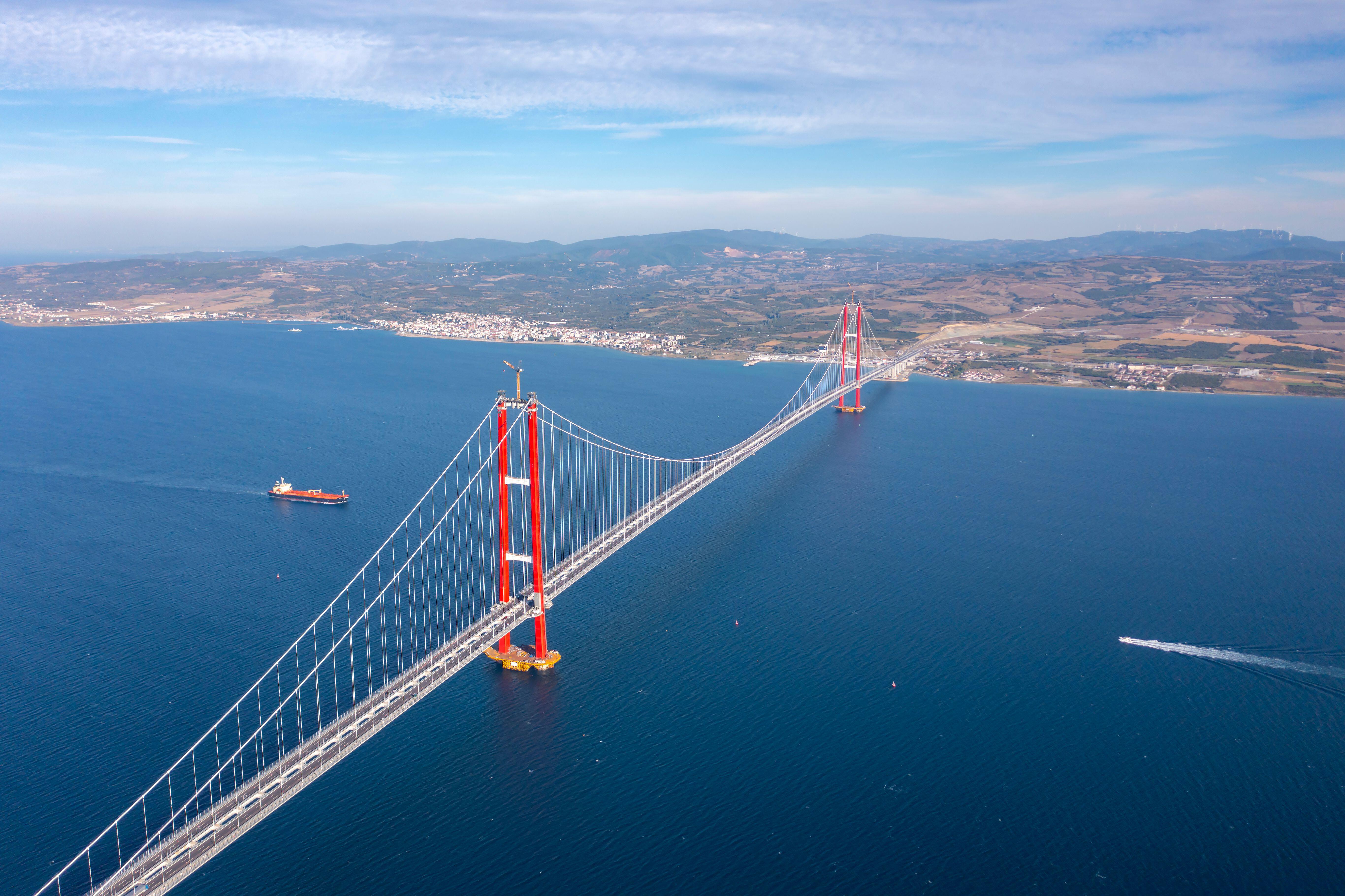
The Canakkale bridge in Turkey, built in 1915
ALAMY
Priced at €13.5 billion and due for completion in 2032, the bridge will be a “demonstration of Italy’s willpower and technical expertise that is matched by few around the world”, Meloni added.
Six road traffic lanes and two railway lines will fill the 60m-wide bridge, which will be supported by two 399m-high towers, according to the Italian constructor WeBuild.
A bridge over the strait has been an ambition of rulers since Charlemagne. The Italian government has made plans for one since the 1960s and they were championed by prime ministers including Silvio Berlusconi, only to be shelved due to costs and environmental concerns.
The approval this week is a boost for Matteo Salvini, the transport minister, deputy prime minister and firebrand, whose career has been overshadowed by Meloni since he joined her coalition in 2022.
Opponents of the bridge vowed to continue their legal battle to stop it, citing threats to birds migrating between Europe and Africa and the risk of earthquakes. The Sicilian town of Messina was levelled by a 7.1 magnitude quake in 1908. It was the deadliest earthquake in modern European history, claiming up to 80,000 victims.
WeBuild said that suspension bridges “are the most seismic-reliable structures, since they have a low sensitivity to earthquakes”, claiming that was why they are favoured in earthquake hotspots such as California and Japan.
Salvini played down allegations that local mafia clans were determined to seize construction deals connected to the bridge. He said: “If we didn’t build a bridge because, as some people say, there is the mafia in Sicily, there is the ‘Ndrangheta in Calabria, we wouldn’t get anything done.”
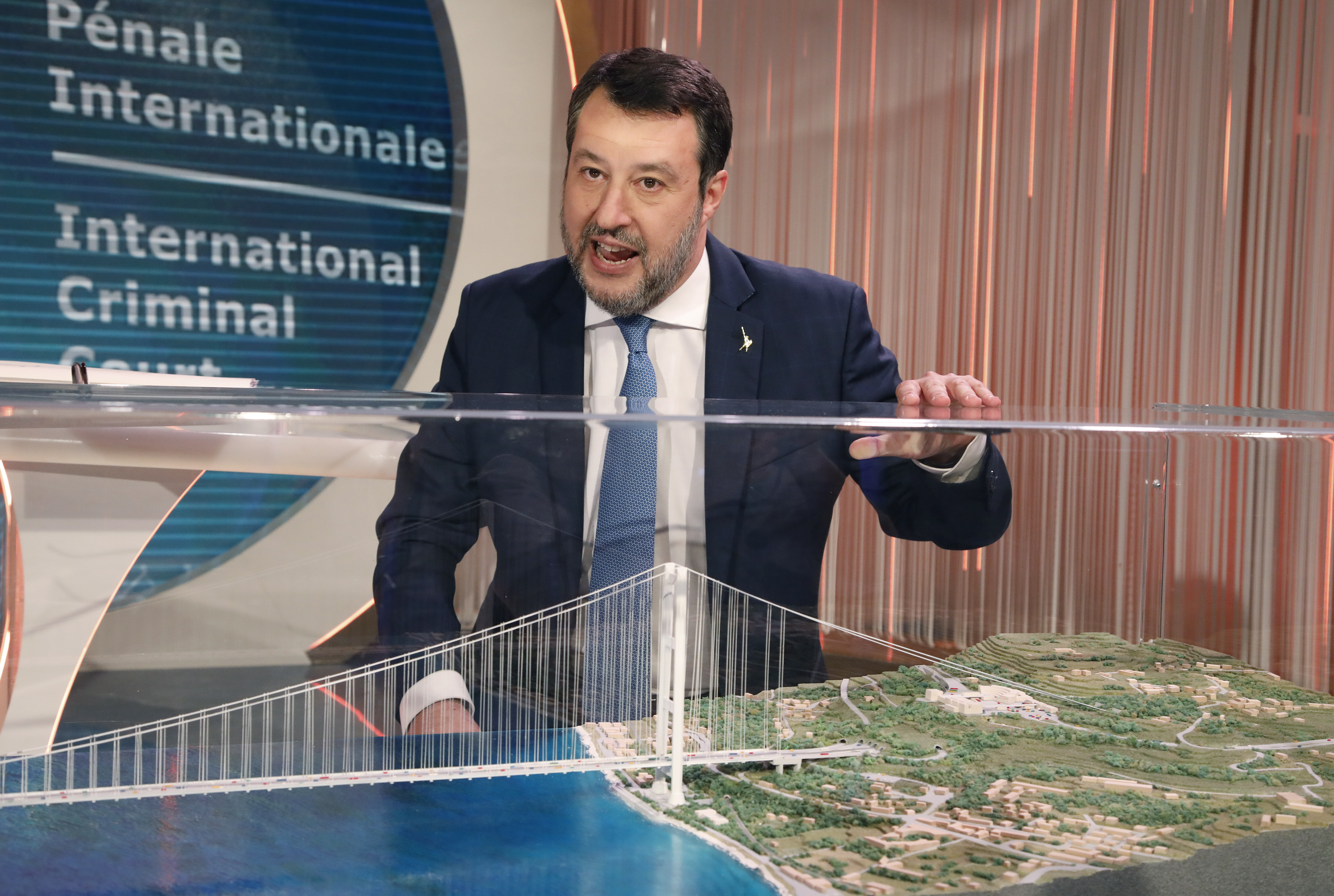
Matteo Salvini, the transport minister, discussing the bridge on television two years ago
MARCO RAVAGLI/GETTY IMAGES
The bridge and the road and rail links to it would generate 120,000 jobs and boost the struggling economy of southern Italy, he added.
Left-wing opposition politicians have claimed the cash could be better spent on schools and hospitals. “This is a colossal waste of public money and a monument to uselessness and Salvini’s propaganda,” Anthony Barbagallo, a Democratic Party MP, said.

A protest against the bridge in Messina last month
ALESSANDRA BENEDETTI/GETTY IMAGES
Salvini responded: “In the Chinese or US media they will talk about the engineering work on the bridge, while here there are people who view the biggest public work in the West as a problem.”
He quipped that the strait had only been crossed twice without a ferry — once by the Roman consul Lucius Metellus, who tied barrels together in 252BC to let more than 100 war elephants cross the waterway, and then by a 15th-century saint, Francis of Paola, who is said to have sailed across on his cloak.
Today cars crossing the strait are loaded onto ferries for a journey that can take more than an hour, compared with the 15 minutes it will take to cross the bridge. Trains are split into sections that are run onto tracks on the ferries. Once ashore, they are reassembled before continuing their journey on Sicily, which can take up to three hours, Salvini said.
The bridge would end decades of service for ferries, which have been worked hard. Such was the demand for crossings in the 1950s that one vessel scuttled at the end of the Second World War was raised from the seabed and put back into service. It plied the route for another four decades before being retired in 1991.