
When stories appear warning of Israel’s “reputational damage,” the first instinct of most supporters of the Jewish state is to ask: How can Israel fix it?
But sometimes a different question must first be asked: Should they fix it?
Take this CNN story, headlined: “How the Trump administration could be hurting Israel’s already damaged brand.”
It’s certainly true that Israel’s “brand” has taken a hit among U.S. voters. The Trump administration’s apparent contribution to that is based on three major examples in the CNN story.
The first is Secretary of State Marco Rubio’s inartful answer to a question that was then chopped up by his critics and presented as proof that Israel dragged America into the war. The administration quickly cleaned it up, but there wasn’t much of a mess to begin with because the Trump team was clearly calling the shots from the beginning and anyone following the war knew immediately to dismiss any ginned-up rumor to the contrary.
The second is Joe Kent’s resignation letter. As I wrote this week, the former counterterrorism official’s letter was so conspiracy-ridden that it accused Israel of being responsible for ISIS in Syria. So I chuckled when I read this part of the CNN story:
“The reaction on much of the establishment right has largely been to dismiss Kent as an antisemitic crank. But this is someone Trump put in a powerful position — and did so despite his known past associations with extremists, including White nationalists and a Nazi sympathizer. And Kent is now using the credibility the administration vested in him to target Israel.”
Trump is indeed responsible for elevating Kent to his recently vacated position. But thankfully the administration very publicly vested exactly zero credibility in Kent. He was given a job with an important title, but he was not responsible for policymaking and his influence was nil. Kent is under FBI investigation, and he decided to leap before he was pushed.
So who is Kent influencing against Israel? Democrats don’t need his help, unfortunately, independents repeatedly rejected him as a candidate for office because of his ties to white nationalists, and Republicans back Trump in the war with Iran.
The third and final example is at least a point of legitimate debate: the question of whether the U.S. and Israel have contradictory war aims.
CNN uses the Israeli attack on Iran’s Pars gas field to frame this question. That attack was followed by an Iranian retaliatory strike on Qatar’s section of the gas field, sending energy prices up. Trump disavowed any knowledge or approval of the initial Israeli strike, but that is not remotely plausible. Nonetheless, it’s clear that Trump doesn’t want a repeat of that incident.
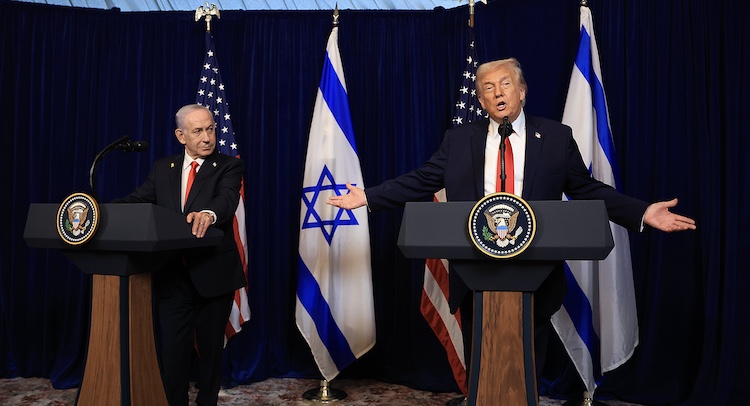
It’s also clear that Israel will respect the president’s wishes. Indeed, at yesterday’s press conference, Prime Minister Benjamin Netanyahu made this point explicitly. Trump, he said, is “the leader. I’m, you know, his ally. America is the leader. Israel is, as the national security memorandum described us … they called Israel the model ally. That’s how they call it, the model ally. It’s not a superpower.”
You can see the progression here of attempts by narrative-setters to degrade Israel’s credibility. First it was that Israel is joining Trump’s war, and Trump’s war doesn’t poll all that well. Then it was “Israel is responsible for this war.” But nobody believes that, and Trump has been happy to own this war; he sees it as a legacy-defining conflict. Then it was “Israel’s interests clash with U.S. interests.” But that, too, fails to ignite because Israel comes right out and says it’ll follow Trump’s lead on every aspect of the war. And now it’s “Israel’s reputation will continue to suffer if it sticks with this war.”
That has been the case since October 7, 2023. Israel has been forced to choose between survival and shallow, fleeting popularity with the president’s critics. Israel is not going to “fix” its unpopularity by committing suicide, and this type of concern trolling is ineffective against people fighting for their survival.