
The deal was drawn up in a kitchen at the old conference centre down the road from Parliament Hill.
It was there in November, 1981, during a late-afternoon break at a federal-provincial meeting to salvage the patriation of Canada’s Constitution from Britain, that the Kitchen Accord was sketched on two pages. The agreement forged the framework to bring the Constitution home – and for the new Charter of Rights and Freedoms.
In the middle of the accord’s first page, it states “all of the Charter” – all is underlined – along with two words in legal Latin: non obstante. The words mean notwithstanding. Patriating Canada’s Constitution, more than a century after Confederation, in part revolved around the Charter of Rights. And the Charter hinged on the words non obstante.
Premiers refused to agree to the Charter unless it included a notwithstanding clause. To ensure elected leaders had the final word on laws, rather than judges and the courts, the clause empowered governments to override an array of Canadians’ new constitutional rights – everything from freedom of religion to the right to a lawyer if arrested.
Two days after the Kitchen Accord, prime minister Pierre Trudeau defended the deal in the House of Commons.
“I agreed to a lot of things that were not my first choice,” he said. “I was looking for a consensus and I got a consensus.”
Thanks in part to the notwithstanding clause, prime minister Pierre Trudeau, left, found common ground with most premiers at 1981’s constitutional conference, but not René Lévesque of Quebec, right.Fred Chartrand/The Canadian Press
A few weeks later, federal justice minister Jean Chrétien told the House the notwithstanding clause did not emasculate the Charter. He represented Ottawa in the kitchen, alongside attorneys-general from Ontario and Saskatchewan. Mr. Chrétien predicted it would be “politically very difficult” for future governments to wield the clause in laws.
It was true, mostly, for a long time.
That hands-off consensus fractured in the late 2010s. These days, the notwithstanding clause is a favoured tool of some conservative-led provinces. Alberta used it in four laws last fall, three of them to put restrictions on transgender youth. Quebec also used it in a law last fall to push secularism and has another one – banning public prayer – pending.
As provincial premiers got over the political taboo of using the clause, civil rights groups started searching for legal arguments in court to take on such laws.
The Supreme Court of Canada is set to weigh in on Bill 21, a Quebec law passed with the help of the notwithstanding clause.Sean Kilpatrick/The Canadian Press
Now, starting March 23 at the Supreme Court of Canada, the notwithstanding clause is at the centre of one of the biggest top court hearings in the four-plus decades since the enactment of the Charter of Rights.
At issue is Quebec’s Bill 21, which became law in mid-2019. It was Premier François Legault’s legislative foray into laicity – secularism. Bill 21’s goal is a secular public service. It prohibits workers, including teachers, from wearing religious symbols such as a hijab on the job. Quebec shielded the law with the notwithstanding clause from court challenges for infringements on freedom of religion and the right to equality.
Most cases at the top court are heard on a single day. Two days is a long hearing. Bill 21 will be heard over four days – the same length as the landmark 1998 Quebec secession reference case.
It will feature a longer roster of lawyers than any previous case at the top court: six groups of appellants challenging Quebec and Bill 21, alongside the federal and five other provincial governments, and a record 38 outside intervener groups.
It’ll be an all-star legal gathering, as lawyers, governments and judges face complicated legal and constitutional arguments on of how Canada functions as a federation.
At the heart of the case is the question of what limits, if any, there are on governments’ powers to quash the rights and freedoms of Canadians.
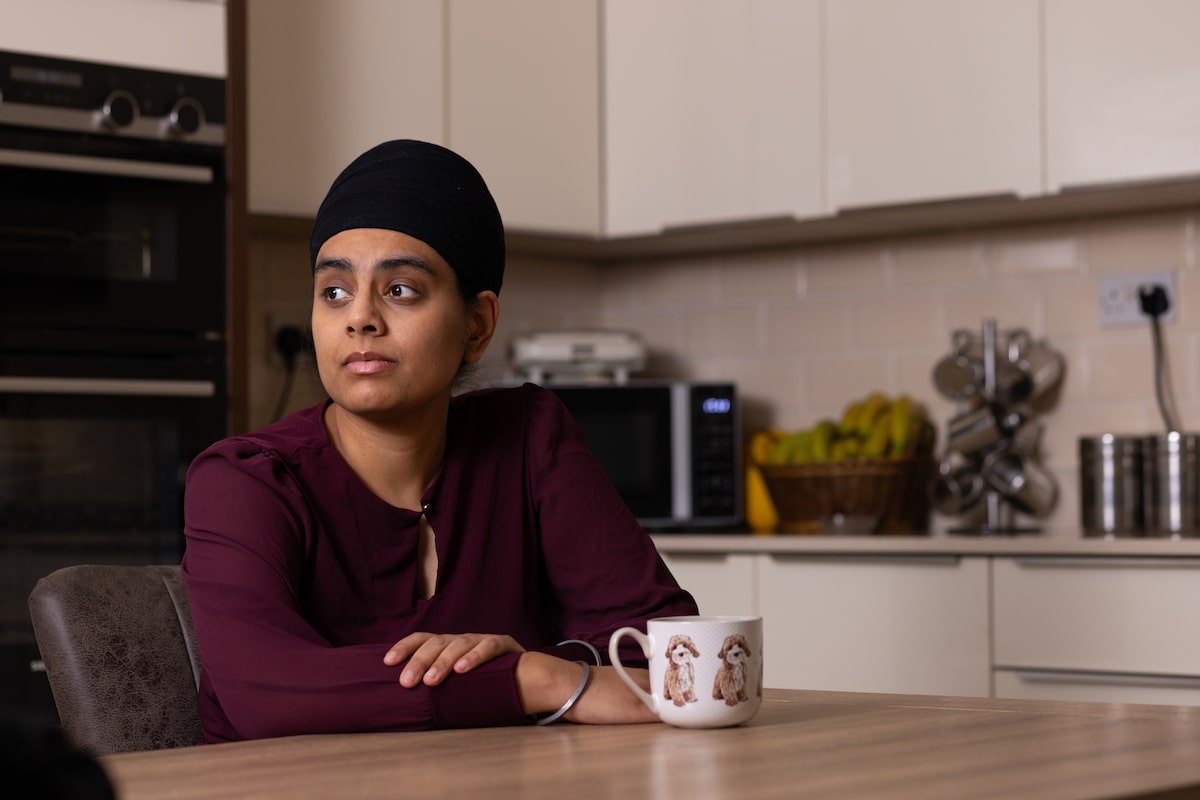
‘It was racism. In a grand way,’ Amrit Kaur says of Bill 21’s arrival in the province where she grew up. Now living in Britain after an initial move to B.C., she is one of the appellants in the Supreme Court case.Paul Stringer/The Globe and Mail
“It’s been grossly misused,” said Amrit Kaur of the notwithstanding clause in Quebec. “Minority groups are being scapegoated.”
She grew up in the province. She is Sikh and wears a turban, a symbol of her commitment to a life of spirituality and discipline. Bill 21 forced her to move west to teach in British Columbia.
Mrs. Kaur is among the appellants at the Supreme Court, a legal odyssey that has now stretched more than six years.
“It’s about standing up to oppression,” Mrs. Kaur said.
“It was difficult. When I reflect back, I understand it was racially motivated. It was racism. In a grand way. People who are pro secularism don’t see it that way. I feel it that way.”
The past and present of the notwithstanding clause is set to shape Canada’s future. Opponents of Bill 21 see minority rights at stake. What value is the Charter if governments can ignore it? Provinces see a threat to their political power. Quebec feels the case is existential, its autonomy within Canada in peril.
Quebec has had several waves of opposition to Bill 21 since it became law in 2019, and since lower courts supported it. Its showdown at the Supreme Court comes as the law’s architect, François Legault, exits the Quebec premiership.
Justin Tang and Jacques Boissinot/The Canadian Press
The 1980s and 1990s
There is little ambiguity in Section 33 of the Charter.
It states governments may invoke the clause so a law “shall operate notwithstanding a provision included in section 2 or section 7 to 15 of this Charter.” A right or freedom may be blatantly violated – but the law is allowed to stand. The clause is in effect for five years, when it must be re-enacted to remain valid.
There is no stated limit, on how often a government can use it, or how many times it is re-enacted.
After the Charter became part of the Constitution, and Quebec’s opposition to patriation, the province repeatedly used the notwithstanding clause as an act of political protest. That led to the Supreme Court’s one previous in-depth consideration of the clause.
In a precedent called Ford, decided in 1988, the judges skirted a debate that continues today, between legislative supremacy and Canadians’ rights. (The main focus of the Ford case was government-mandated exclusive use of French on commercial signs in Quebec.)
The Supreme Court said debates around the notwithstanding clause were not relevant in its assessment. In a ruling delivered by “The Court” to emphasize legal unanimity, the judges said the text of the notwithstanding clause is clear. “There is no warrant for importing into it grounds for substantive review of the legislative policy in exercising the override authority in a particular case.”
It was a bright green light for governments from the top court to use the clause, yet its power, even in Quebec, faded into the political background for years thereafter.
The notwithstanding clause is in the ‘application of Charter’ section of the Charter of Rights and Freedoms, in the far right column.Government of Canada
There were a few flareups.
Alberta enacted the clause against same-sex marriage in 2000, effectively a symbolic move that expired in 2005, shortly before marriage equality became legal across the country.
In an earlier case, there was intense pressure on Alberta premier Ralph Klein to use the clause to override a ruling on gay rights. In 1991, a Christian college in Edmonton fired Delwin Vriend because he was gay. He became the face of a fight for equality. The Supreme Court heard the case in late 1997.
“What I did was duty,” remembered Mr. Vriend in an interview from his home in Paris. “When you see injustice, you work to stop it.”
As the top court deliberated, the obvious political tool, the notwithstanding clause, seemed ready for use. To some conservatives in Alberta, the idea that judges would force gay rights into law was an affront.
The Supreme Court ruled in early spring, 1998 that human rights include gay rights. Mr. Klein, on the day of the decision, suggested it was “pretty hard to go against that kind of judgment.” Opponents launched radio and TV ads to push Mr. Klein to hit back. There were violent threats. “These things,” said Mr. Vriend, “have real-life consequences.”
After delaying a decision for a week, the premier decided against it.
What strikes Mr. Vriend is the politics of the past reverberating in the politics of the present, the notwithstanding clause used last year in Alberta to restrict trans youth.
“It’s the same thing,” Mr. Vriend said. “For political reasons, they’re saying we need to enact this, not realizing the lives they’re affecting. This is Conservative government policy: We’re going to use this one stupid little clause in the Constitution that was never meant for this and we’re going to use it to make people’s lives miserable – for politics.”
The late 2010s and 2020s
Quebec’s Bill 21 in 2019 was at the fore of the notwithstanding clause’s resurgence. What was to be exceptional became common.
Quebec and Ontario have both several times used the clause in laws and proposed its use in others. Bill 21 was Quebec’s biggest move and the province renewed the clause in 2024 when it expired. Ontario Premier Doug Ford, soon after winning his first provincial election in 2018, threatened to use it to slash the size of Toronto city council and has since used it in laws on election spending and a school staffers strike. He’s talked about using it to remove bike lanes and clear encampments of unhoused people.
The federal government has never used the clause but Conservative Leader Pierre Poilievre had promised to be the first if he had been elected last year, to limit bail for people charged with serious crimes.
Last fall Alberta Premier Danielle Smith moved on various fronts. She used the clause to end a teachers strike. Several weeks later, Alberta used it in three laws affecting trans youth: prohibiting gender-affirming health care; banning transgender girls from female sports; and requiring parental consent at school to change a name or pronouns.
Saskatchewan legislated pronouns at school and parental consent in 2023, shielded by the notwithstanding clause. It put the Cain family in Saskatoon on the front lines of protests against government.
The Cains had moved to the province in 2007, the year the conservative Saskatchewan Party was first elected.
When Silas Cain, today an 18-year-old transgender man, was in Grade 6, before the pronouns law was passed, he was able to try a different name and the pronouns they/them. “I was grateful,” said Mr. Cain.
After the pronouns law, he felt the same duty Mr. Vriend did, to defend his community from a political attack. “Talking loud and being vocal, I’m not scared of it,” Mr. Cain said. “I don’t want to abandon this place. I want to make this place better.”
Silas Cain, playing with his mother at home, recalls being ‘grateful’ to try they/them pronouns before the Saskatchewan law was passed.Carey Shaw/The Globe and Mail
In Medicine Hat, Kimberly Large lives in the Alberta Premier’s riding. She and her spouse Ashley met with Ms. Smith in 2024 after the government first outlined its trans law plans. They told the Premier about their trans daughter, their work with Alberta Health Service on gender care, and decision to proceed with puberty blockers.
Their daughter is 13. It’s unclear whether she’ll be able to receive hormone therapy in Alberta.
“It feels like the government doesn’t want us here, doesn’t want trans kids to live,” Ms. Large said. “We’re in American right-wing Republican-style politics.”
The provincial governments set to defend the notwithstanding clause at the Supreme Court have the opposite perspective. They are democratically elected, unlike judges on top courts across the country, who are appointed by the federal government.
Alberta, in its Bill 21 legal filing, stated there would be no Charter of Rights without the notwithstanding clause. And its text and purpose are unmistakable. Its role is “to preserve parliamentary sovereignty” and when it is used, the limits of rights “are determined by the legislature, not the judiciary.”
Amrit Kaur wears a turban, as many devout Sikhs do. She chose to move to B.C. when Quebec issued teachers a stricter dress code.Paul Stringer/The Globe and Mail
Bill 21 in Quebec
Amrit Kaur graduated from the University of Ottawa with an education degree on June 16, 2019. Quebec’s Bill 21 became law the same day.
The government’s aim was secularism, in a province where the Catholic Church had long been an omnipresent institution.
While the prohibitions on religious symbols among public sector workers was broad – one challenger to Bill 21 is a Catholic woman who wears a cross and a medal of the Virgin Mary – many people believed the law was pointed in a specific direction: women of colour.
Mrs. Kaur, feeling betrayed by her province and repelled by a sense of religious persecution, moved to British Columbia to work as a high school teacher. “I had the means,” she said. “Others didn’t.”
She likened the pursuit of secularism to a sort of fundamentalism, “where religious minorities such as myself can’t be trusted. It’s not based on evidence. It’s easy to ostracize people who look different. It’s easier than fixing the roads or the hospitals.”
The Quebec Superior Court had its say on Bill 21 five years ago.Ryan Remiorz/The Canadian Press
The court challenges began soon after Bill 21 became law. The legal arguments covered wide ground and stretched back to pre-Confederation statutes. But the provincial government twice won in court, first at the Quebec Superior Court in 2021, and then at the Quebec Court of Appeal in 2024.
The notwithstanding clause, as designed, was the legal bulwark. Opponents’ efforts to show the courts ways around the notwithstanding clause failed. They said Bill 21 violated unwritten constitutional principles. They said it violated laws from before 1867. They said the province improperly used the notwithstanding clause.
None of it worked, in the final judgment of the Quebec appeal court.
Yet there were distinct words of concern from the bench.
Justice Marc-André Blanchard, in his 2021 superior court judgment, observed Bill 21 forced people affected by the law to choose between their beliefs and their livelihoods. After a 33-day trial, he called it “a cruel consequence that dehumanizes the people targeted.”
The judge conceded a government “may use the override clauses as it pleases, and for purely political reasons,” but in a society that respects fundamental rights, the notwithstanding clause “should be used sparingly and with caution.”
Bill 21 at the Supreme Court
At the Supreme Court next week, the appellants want the top court to strike down Bill 21. They want the court to declare multiple violations of the Charter – religion, equality, minority languages, gender equality – and rule that Quebec failed to comply with the notwithstanding clause and declare its use invalid.
But given the top court’s 1988 Ford precedent, and the seemingly clear wording of Section 33, the Supreme Court may not have much of a legal ambit.
“I don’t know how they can delete the effect of the notwithstanding clause,” John Major, who served on the Supreme Court from 1992 to 2005, said in an interview.
To Mr. Major, the clause has always been a flaw in the Charter. If it was up to him, he has said he’d cut it from the Charter, even if it was a crucial political compromise in 1981. “I don’t want to exaggerate and say it destroyed the Charter,” Mr. Major said in interview. “But it limited the Charter.”
Former Supreme Court judge John Major thinks the notwithstanding clause was a mistake.Chris Wattie/Reuters
One potential change that may be more likely at the Supreme Court is an endorsement of judicial declarations.
This would mean courts could issue rulings on whether laws protected by the notwithstanding clause violate the Charter, even as those laws remain valid.
The concept rose to prominence in legal circles after a 2019 article in Policy Options and has since gained wider traction. While the lower courts in Quebec did not endorse judicial declarations in the Bill 21 case, the Saskatchewan Court of Appeal last year did in a challenge to the province’s pronouns law. Saskatchewan’s top court said the clause does not prevent courts from declaring infringements of Charter rights.
At the Supreme Court, numerous intervener groups support this idea, as do the federal Liberal government and provincial NDP governments in British Columbia and Manitoba. Conservative governments in Quebec, Ontario, Alberta and Saskatchewan are resolutely against.
The Supreme Court, in an unusual move in mid-February, indicated it might also be open to the idea. It asked the main parties in the Bill 21 case to submit arguments on whether the law infringes on the Charter’s freedoms of religion and expression, and right to equality. In early March, challengers to Bill 21 said, resoundingly, yes it does.
Quebec scoffed and said the top court shouldn’t have even asked the question – because the notwithstanding clause precludes it.
The Justice Department, led by Sean Fraser, has had a team of lawyers working on the Bill 21 case.Adrian Wyld/The Canadian Press
The federal government wants the Supreme Court to go further.
Last September, in its legal arguments on the Bill 21 case, Ottawa called on the top court to impose limits, for the first time, on repeated use of the notwithstanding clause.
The clause is a “temporary legislative power,” Ottawa said, and courts should review repeated use. The federal government argued that preventing people from exercising rights for years is equivalent to eliminating those rights.
Conservative-led provinces reacted harshly. They demanded Prime Minister Mark Carney back down and withdraw the legal filing. They said it threatened national unity. Ottawa did not withdraw it.
“I’m not concerned that society is going to see its downfall over the next number of months,” said federal Justice Minister Sean Fraser in an interview, “but some future government, empowered by an erosion of our rights today, will continue to chip away at them bit by bit until they’re gone.”
Mr. Fraser’s Quebec counterpart is Simon Jolin-Barrette, left, who has defended the province’s right to set policies such as Bill 21.Jacques Boissinot/The Canadian Press
To provincial premiers, in the early 1980s and today, the clause is about political power. Conceding any ground is anathema. Quebec, most of all, insists its political soul is at stake.
“It is essential, even vital, for Quebec to be able to make its own choices,” Simon Jolin-Barrette, the province’s Justice Minister, said last year when the Supreme Court agreed to hear the Bill 21 case.
Julius Grey, a veteran Montreal lawyer who has fought for civil rights for a half-century and is part of the Bill 21 case, called that “absolute nonsense.”
“Why would civil liberties be different in a place that speaks a different language?”
Mr. Grey respects Quebec’s goal of secularism but rejects the government’s strategy.
“There’s no reason to tell somebody who’s wearing a hijab that you can’t teach or work in a daycare, or if you’re wearing a turban, you can’t work as a policeman.”
Jean Chrétien revisited the scene of the Kitchen Accord in 1983 with Roy Romanow, middle, and Roy McMurtry, left. All have since spoken out against what they consider misuse of the notwithstanding clause.Dan Hamilton/The Canadian Press
‘It was not designed for that’
When Mr. Ford in Ontario first reached for the notwithstanding clause in 2018, the men who were there at the Kitchen Accord in 1981 spoke out: Mr. Chrétien; former Saskatchewan NDP premier Roy Romanow, who was the province’s attorney-general in 1981 and penned the accord’s two pages; and former Ontario Progressive Conservative attorney-general Roy McMurtry.
They said the clause was to be invoked only in exceptional circumstances, a last resort after careful consideration. They condemned Mr. Ford’s actions and said his caucus should oppose him.
“History will judge them by their silence,” the three declared.
Mr. Chrétien at 92 still fights the old fights. In a speech last November, he said much of what he said in 1981. He criticized current premiers for using the clause for marginal reasons. “It was not designed for that,” the former prime minister said.
“That worries me very, very much.”
In your court: More from The Globe and MailThe Decibel podcast
The battle over the notwithstanding clause is about something much deeper, Globe columnist Andrew Coyne argues. Last fall, he spoke with The Decibel about how we got to this point in a national conversation on the Charter.. Subscribe for more episodes.
David Ebner reports
New Brunswick First Nation asks Supreme Court to hear case on Aboriginal title, private land
Ottawa appeals Emergencies Act case to the Supreme Court
Judges must speak out to bolster public confidence in courts, Chief Justice Glenn Joyal says