
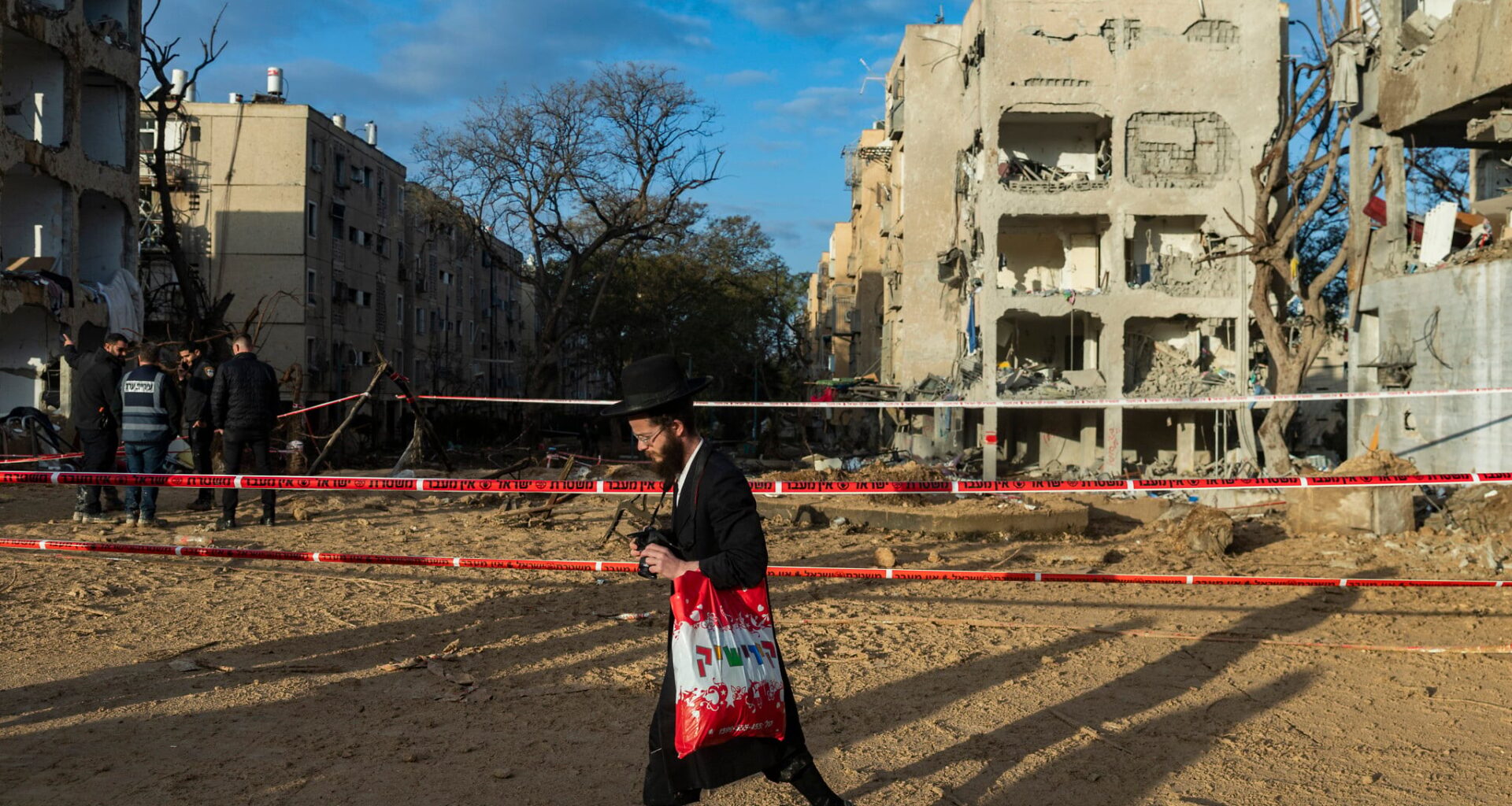
Saturday night saw Israel experience its largest casualty event since the start of the war with Iran three weeks ago, when two ballistic missiles struck residential neighborhoods in the southern cities of Arad and Dimona, injuring nearly 200 people — most of whom were not in bomb shelters at the time of impact.
Although Iran claimed to have targeted the nearby Dimona nuclear facility, it was local civilians who bore the brunt of the attack.
In Arad, 88 people were treated by Magen David Adom first responders, 10 of them seriously, including a 5-year-old girl. Beersheba’s Soroka Medical Center said it treated a total of 115 people from the city.
Benjamin Lew, a local resident, told The Times of Israel that he rushed his family to safety when the sirens sounded.
Lew recalled waking his two children and taking them with his mother to the building’s bomb shelter.
Get The Times of Israel’s Daily Edition
by email and never miss our top stories
By signing up, you agree to the terms
“We heard a really loud boom,” he said.
The strike marked the first direct hit in Arad, but Lew noted that the city had been under frequent missile alerts since the war began on February 28.
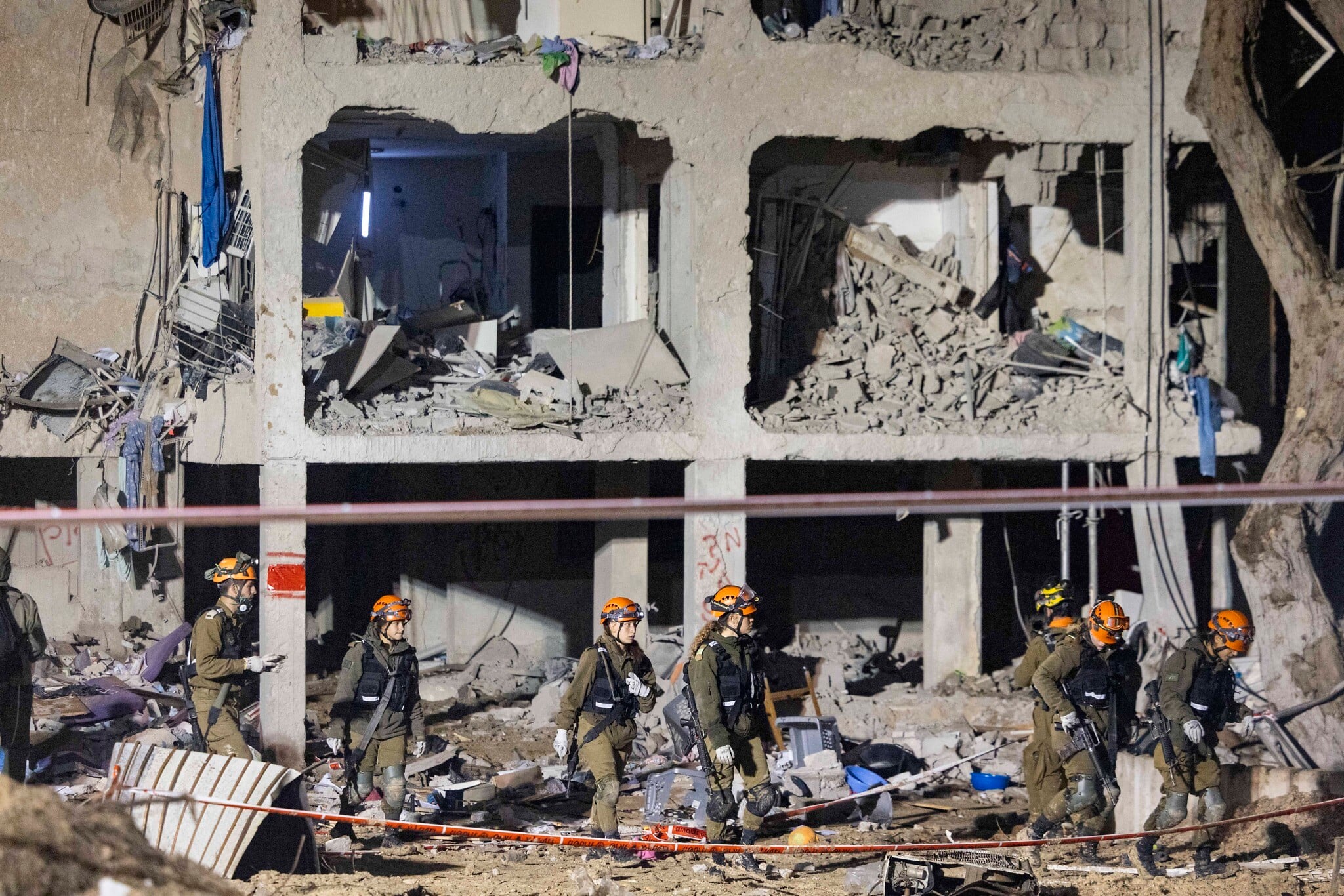
Security and rescue forces at the scene where a missile fired from Iran at Israel caused damage to residential buildings and injured civilians in the southern Israeli city of Arad, March 22, 2026. (Chaim Goldberg/Flash90)
His mother, Maayan Taylor, described the toll on families living under constant threat of ballistic missile attacks: “Our kids haven’t had a proper night’s sleep in a while.”
Lew added that his ex-wife’s home in Beersheba had been damaged in a previous attack, prompting him to believe Arad would be safer for his children — an assumption that was now shaken.
“It definitely doesn’t feel as safe,” he said.
According to Israel Defense Forces spokesman Roni Kaplan, the strike underscored the ongoing threat posed by Iran.
“We see here the manifestation of the Iranian threat,” Kaplan told The Times of Israel. “We have a direct impact because our air defenses aren’t hermetic, although they are some of the best in the world.”
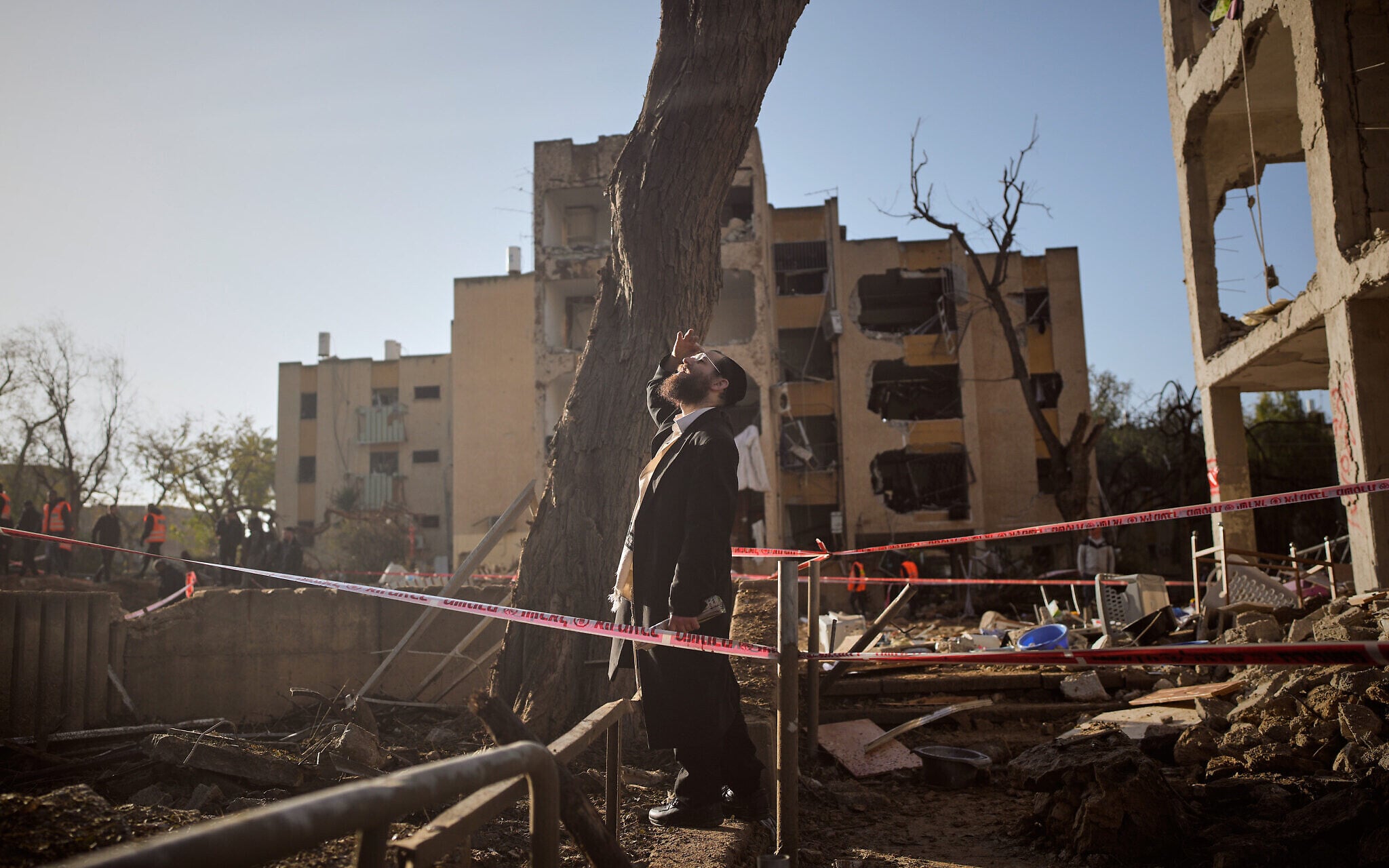
A man looks at residential buildings damaged by an Iranian missile strike in the southern city of Arad, March 22, 2026. (AP Photo/Ohad Zwigenberg)
The Israeli Air Force said the failure to intercept the two missiles had different and unrelated circumstances, arguing that the fact that the incidents occurred in the same area within two hours was entirely coincidental.
Both missiles were fitted with conventional warheads containing hundreds of kilograms of explosives, resulting in far more extensive damage than the cluster munition warheads behind most impact sites across Israel during the war.
According to Kaplan, the blast’s shockwave and debris caused secondary damage to multiple buildings in the area, stretching for several blocks in Arad’s majority ultra-Orthodox neighborhood.
A first responder who was at the scene Saturday night told The Times of Israel that several of the religious residents opposed being evacuated to hotels ahead of the Passover holiday — a period that requires strict dietary observance and careful control over food and kitchen conditions — fearing they could not uphold their standards of kashrut.
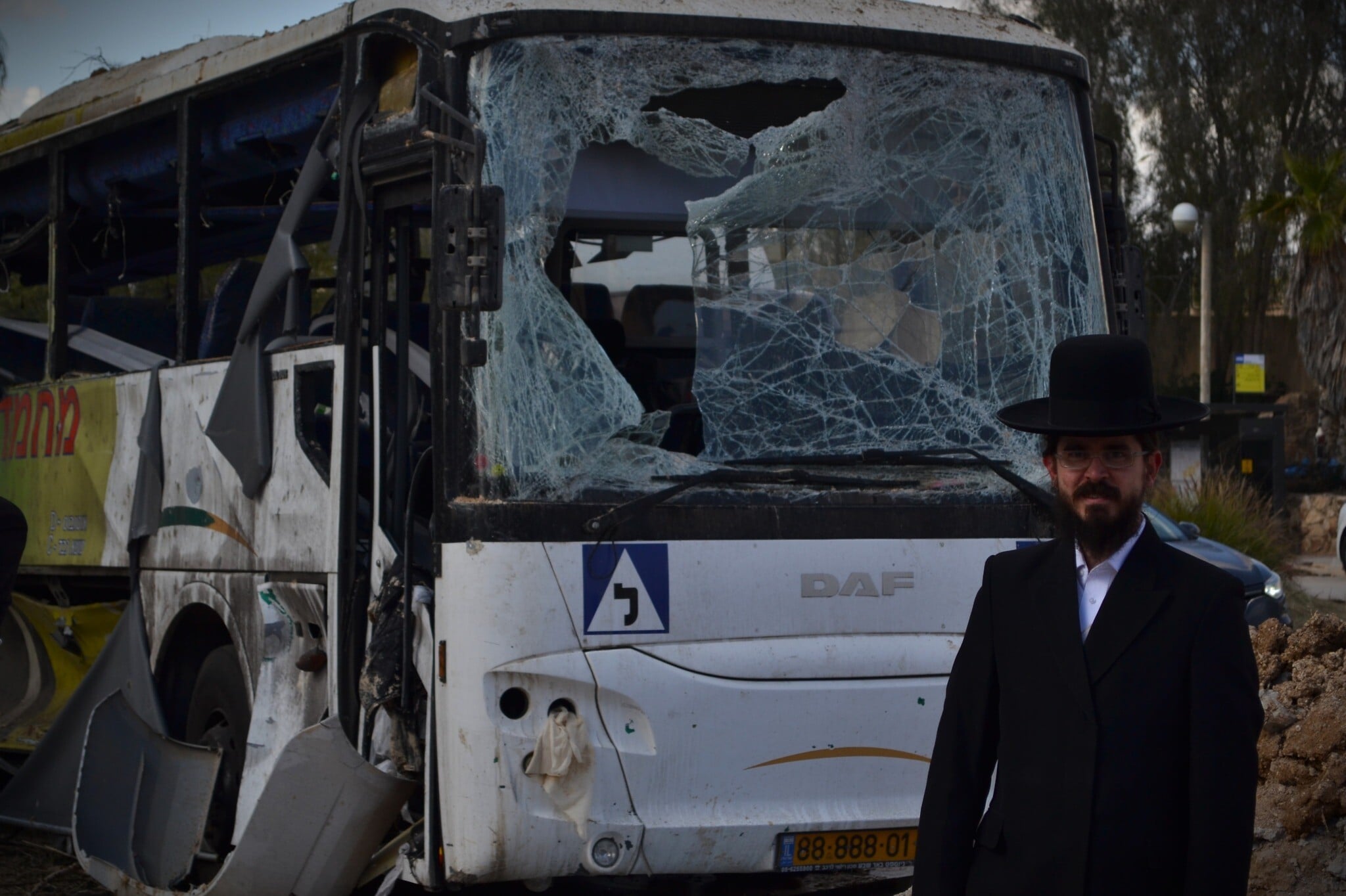
The site of a ballistic missile strike in the city of Arad, March 22, 2026. (Stav Levaton/Times of Israel)
‘It’s a lot of damage for one rocket’
In the city of Dimona, located some 25 kilometers (15.5 miles) away, MDA said it treated 33 people, among them a 12-year-old boy in serious condition. Soroka said 60 people from the city were hospitalized.
As in Arad, the missile destroyed several buildings in the immediate area and damaged many more on the surrounding blocks.
On Sunday afternoon, the air still carried the distinct scent of charred debris.
A building housing an after-school program serving underprivileged children was one of the structures reduced to rubble.
“Thank God the children weren’t there,” program director Shilgit Kanias said. “This is a miracle.”
Despite the damage, Kanias was already looking ahead to rebuilding the community pillar.
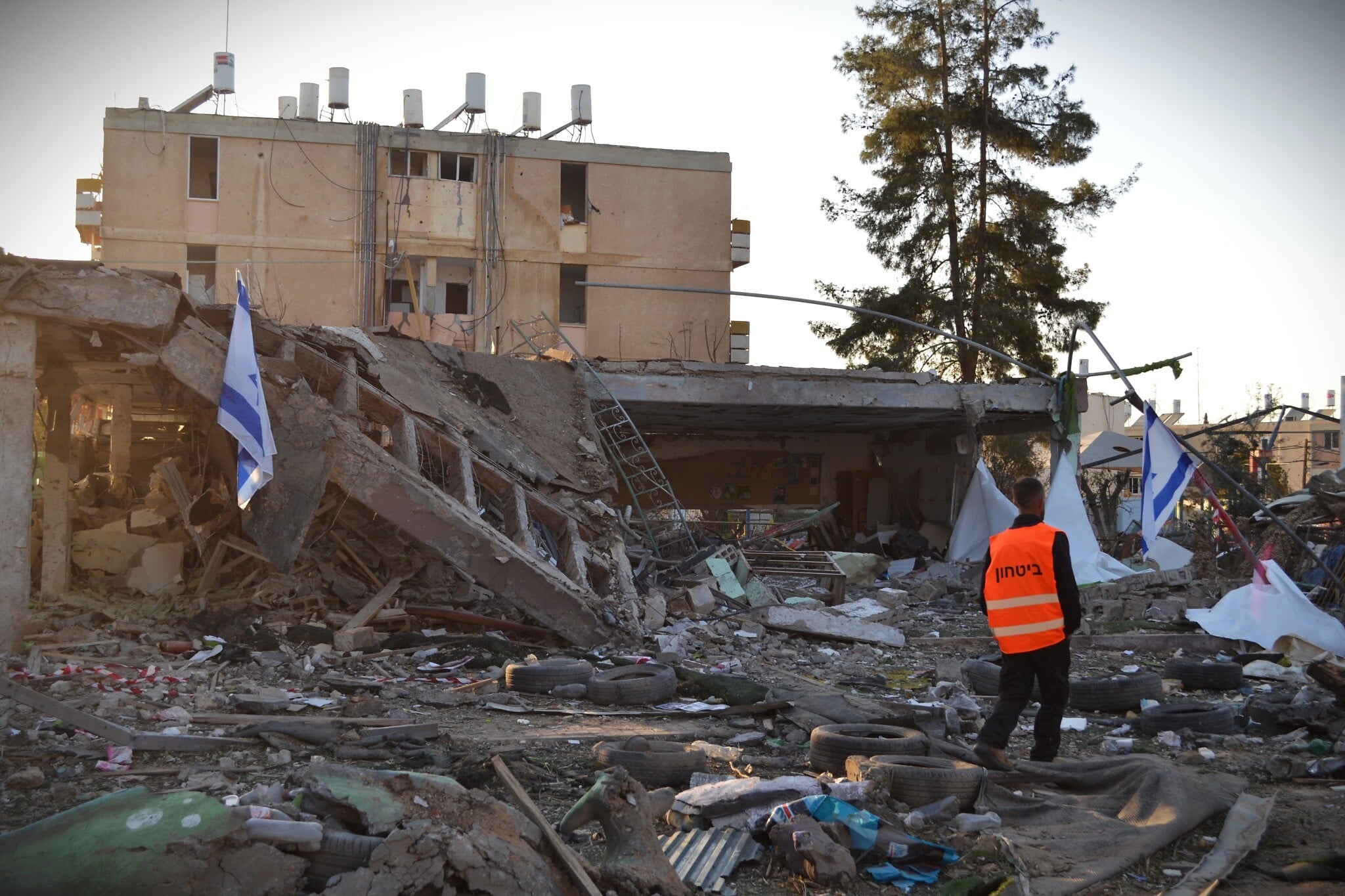
A destroyed building that once housed an after-school program for underprivileged youth in the city of Dimona, following a ballistic missile strike, March 22, 2026. (Stav Levaton/Times of Israel)
“I can already see volunteers cleaning up,” she said. “Everything will be back up and running… I just don’t know how long it will take.”
The Dimona community is no stranger to coming together in times of need. After a resident from Virginia, Zev Goldberg, lost his brother, Ari, in a tragic accident two months ago, locals set out to build a home for lone combat soldiers in his memory.
The brothers had made aliyah together and hoped to serve side by side in the IDF — a dream now cut short — and locals are now raising funds to complete the project in Ari’s memory.
Zev Goldberg was in a shelter when the missile struck on Saturday night.
“I was safe,” he said. “The shelter shook.”
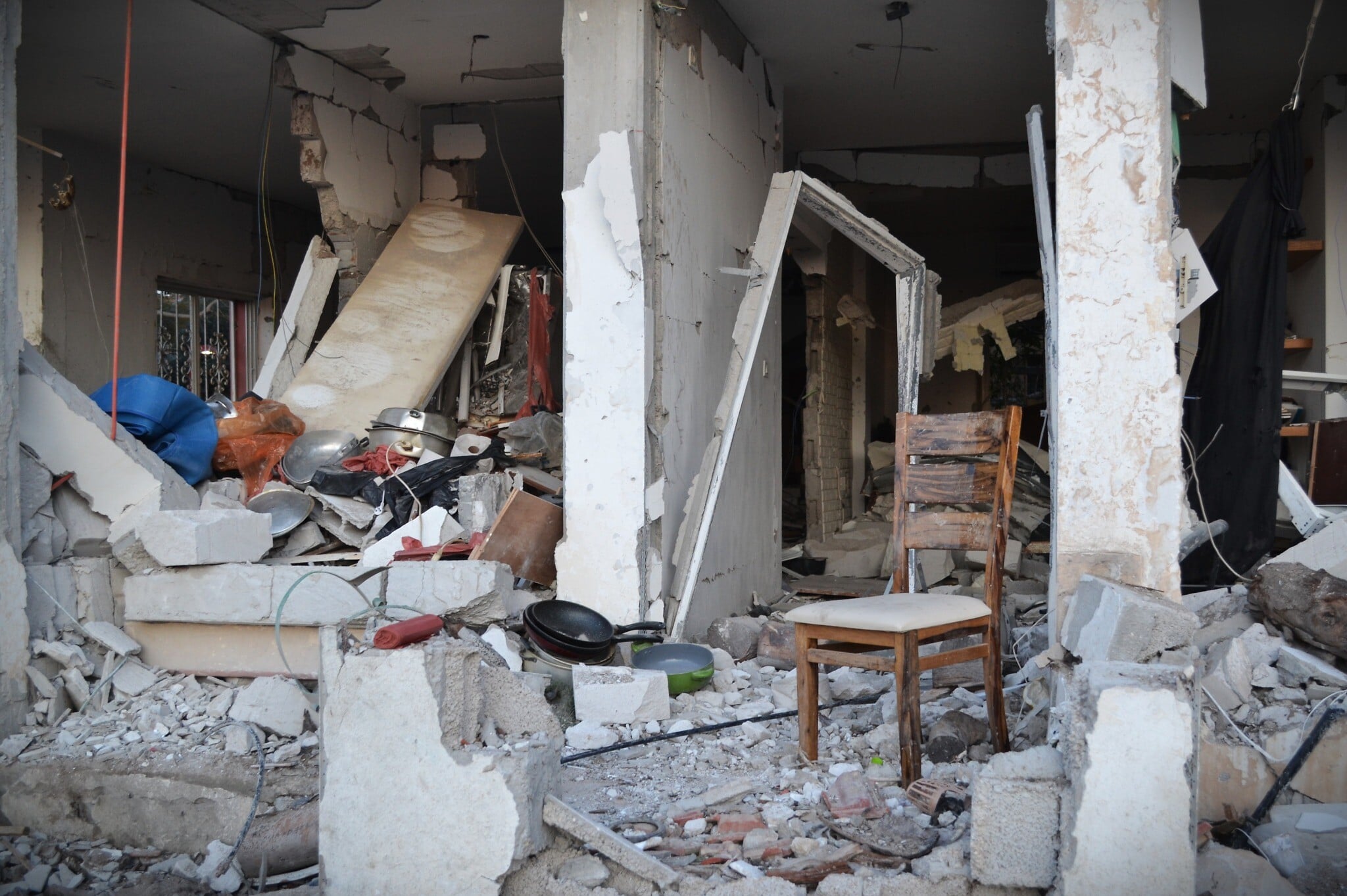
The site of a ballistic missile impact in the city of Dimona, March 22, 2026. (Stav Levaton/Times of Israel)
Seeing the aftermath, he added: “I’m shocked… It’s a lot of damage for one rocket.”
However, Goldberg refused to let the shadow of war dampen his spirit, telling The Times of Israel that he was excited to hear from the IDF later that day what position he would be assigned to for his service.
“I want to serve in Givati,” the infantry brigade, he said with a smile.
You appreciate our wartime journalism

You clearly find our careful reporting of the Iran war valuable, at a time when facts are often distorted and news coverage often lacks context.
Your support is essential to continue our work. We want to continue delivering the professional journalism you value, even as the demands on our newsroom have grown dramatically during this ongoing conflict.
So today, please consider joining our reader support group, The Times of Israel Community. For as little as $6 a month you’ll become our partners while enjoying The Times of Israel AD-FREE, as well as accessing exclusive content available only to Times of Israel Community members.
Thank you,
David Horovitz, Founding Editor of The Times of Israel