
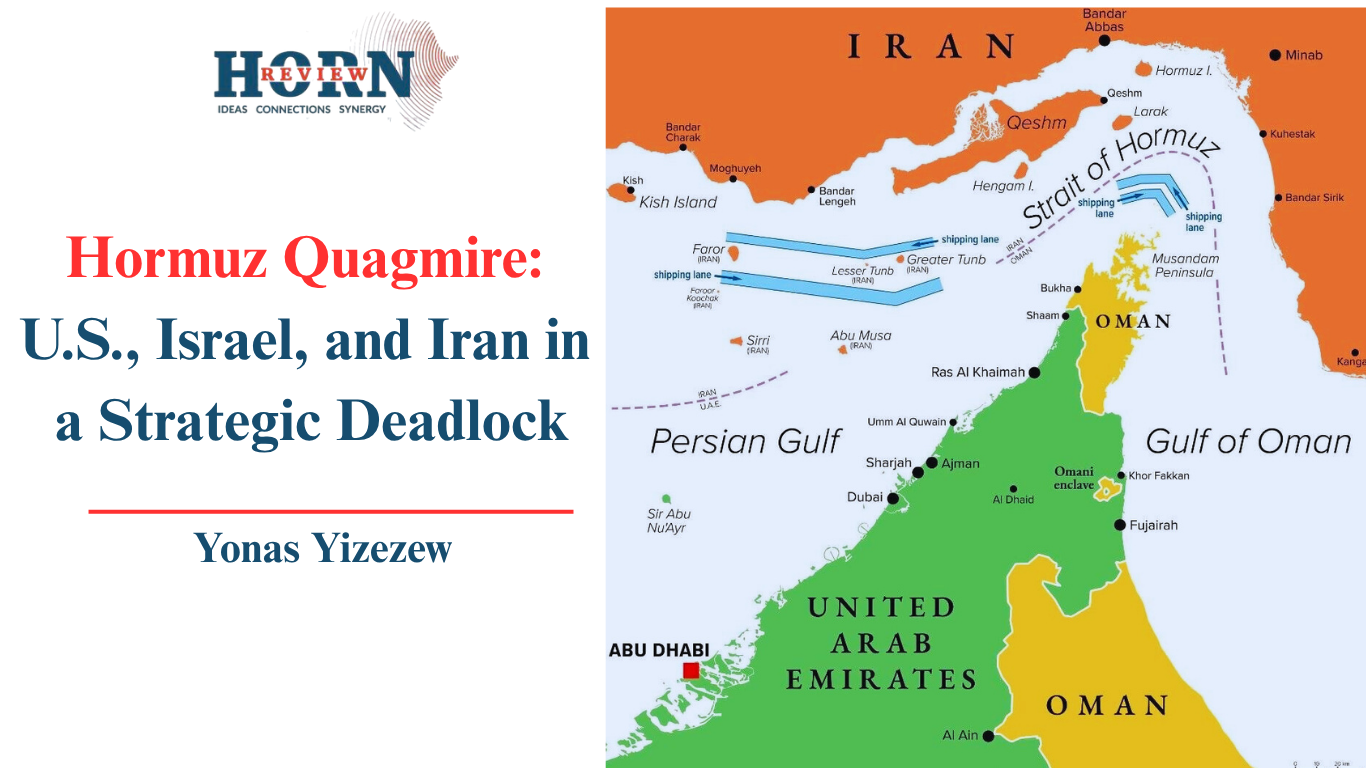
The current U.S.–Israel–Iran war has crystallized around the Strait of Hormuz in a way that mirrors, but also intensifies, the Tanker War of the 1980s. What began as a targeted campaign against Iranian nuclear and military sites has evolved into a full‑blown contest over the world’s most critical energy choke‑point, through which roughly one‑fifth of global oil and a substantial share of liquefied natural gas once flowed. The Strait has thus become less a passive sea lane than a managed, politically contested corridor—a tool of coercion that Iran is using to reshape the regional order and compel Washington into a stark choice between escalation and retreat.
Satellite imagery and shipping data reveal an image that contradicts the narrative of a fully blocked Strait. Around Iran’s Kharg Island oil terminal, the main hub for Iranian exports, tankers still line up to load crude, often under the cover of military and IRGC‑manned patrol vessels. The Wall Street Journal has reported that Iranian oil exports have risen slightly since the war began.
What has changed is not the Strait’s physical configuration but the political rules of access. Iran has turned the Strait into a de facto permission‑based corridor rather than an open highway. Vessels that are perceived as aligned with Washington face potential attacks, drone overflights, and the ever‑present specter of mines. In contrast, Chinese‑linked or “politically neutral” flagged ships are allowed to pass after individual vetting, sometimes through informal channels run by the IRGC. Iran’s effective control over who can move oil tankers through the Strait of Hormuz has meant that countries seeking the release of their stranded vessels increasingly have to negotiate terms with Tehran or its intermediaries.
From a geopolitical standpoint, this is a refinement of Iran’s long‑standing doctrine: using the Strait of Hormuz as a lever on the global economy and as a symbol of regional hegemony. By exercising de facto control over who may transit the Strait of Hormuz and under what conditions, Iran is not merely seeking to destabilize global energy markets but to transform what has been a neutral international passage into a strategic mechanism that Tehran can open or restrict at its discretion to achieve political leverage. That is precisely what Iran’s foreign minister is signaling when he claims that “a number of countries” have approached Tehran to secure safe passage—a signal that even nominally hostile states now have to bargain with Iran to secure their energy lifelines.
The Gulf monarchies are both the most exposed to the consequences of this crisis and the most uneasy with Washington’s pursuit of maximum pressure. As the Strait has been de facto closed to most Gulf exports, production has been cut, LNG plants have slowed or shut, and force majeure declarations have rippled through global energy contracts.
Iran has already responded to U.S. and Israeli strikes by targeting Gulf energy infrastructure. Qatari LNG plants, Saudi Red Sea refineries, and Emirati gas fields have suffered missile and drone attacks. These strikes are meant to signal that Iran can turn the Gulf itself into a battlefield if the war escalates further. Gulf capitals now find themselves in a deeply contradictory position because they urgently seek the reopening of the Strait of Hormuz to sustain their energy exports, yet they are concerned that the only apparent path to achieve this through extensive strikes on Iranian energy infrastructure would provoke Iranian retaliation against their own desalination plants, power grids, and oil facilities. The Gulf are trying to avoid a scenario in which winning the Strait war inadvertently destroys the Gulf’s own social and economic fabric.
The tensions in this triangular dynamic came into sharp focus on March 22, when President Trump issued a 48‑hour ultimatum over the Strait of Hormuz. He ordered Iran to “fully open, without threat” the Strait within two days or face the obliteration of Iranian power plants.
Iran’s reaction was calibrated to deepen the Gulf’s anxiety. The IRGC announced that if U.S. bombs strike Iranian power plants, it would close the Strait “completely and indefinitely,” unleash attacks on U.S. and Israeli energy assets across the region, and specifically target Gulf water and energy facilities. Tehran framed this as a defensive necessity, but the underlying logic is coercive: it is using the threat of Gulf‑centric retaliation to make any American escalation against Iranian energy targets politically toxic in Washington’s own regional allies.
From a strategic perspective, the ultimatum is designed to corner Iran, but it ends up cornering the Gulf states instead. They are placed between two unacceptable options: accept Iranian gatekeeping of the Strait or accept a U.S. escalation that could transform the Gulf into a war‑torn industrial zone. This dynamic weakens Washington’s bargaining power, because the objects of Iran’s retaliation are also the objects of American protection. The result is not sharper leverage over Iran, but a bargaining environment in which every move the United States makes is constrained by what it knows Iran will do in the Gulf.
Washington’s position is further constrained by European allies declining to take part in any initiative to forcibly secure passage through the Strait. This European abstention is not merely caution but also reflects a deeper strategic reassessment. European economies are already suffering from higher energy prices and the added costs of rerouting crude and LNG via the Cape of Good Hope, but European capitals calculate that direct involvement would lock them into a conflict whose primary beneficiaries would be Washington and Jerusalem, not Brussels or Berlin. There is also a growing awareness that sustained escalation in the Gulf would accelerate China’s economic and diplomatic influence in the region, as Beijing becomes an indispensable buyer of discounted Iranian crude and a potential mediator in any post‑war negotiations.
For the United States, this means that the burden of reopening the Strait falls almost entirely on U.S. shoulders. Minesweeping and escort operations are technically feasible, but they would require prolonged naval and air commitment in an environment saturated with mines, drones, and small, fast attack craft that IRGC forces have spent decades preparing. The Tanker War of the 1980s, which ended only after the Reagan administration destroyed much of Iran’s conventional navy, offers a cautionary precedent: such campaigns are not quick, clean, or cheap. The risk for Washington is that it can degrade Iranian capabilities without fully securing the Strait, winding up in a protracted, costly quagmire with uncertain political payoff.
The core dilemma for the United States and Israel is not operational but strategic on how to reconcile credibility with survivable cost. Both action and inaction carry strategic costs. On one hand, a full withdrawal from the Strait‑centered escalation would effectively leave the Strait under Iranian de facto control, with Tehran able to open or close it at will. Such an outcome would constitute a major setback for Washington’s original aims of nuclear rollback and regional deterrence, and It would likely be perceived as a diminution of American credibility, especially in Gulf capitals that already question the durability of U.S. security guarantees. It would also institutionalize Iran’s role as the gatekeeper of global energy flows, allowing it to periodically raise prices, squeeze rivals, and reward allies by selectively manipulating the Strait.
On the other hand, continued escalation—particularly large‑scale strikes on Iranian energy infrastructure—carries a prohibitive risk of regional blowback. Oil prices have already surged, and any further spike could trigger global recessionary shocks, especially in energy‑dependent European and Asian economies. Iranian retaliation against Gulf energy and water‑desalination facilities would deepen the economic and humanitarian crisis in the very states Washington is trying to reassure.
For Israel, the calculation is both narrower and more acute. Jerusalem’s primary concern is existential security—curbing Iranian nuclear latency and degrading Tehran’s capacity to arm and bankroll proxies across the region. Tel Aviv broadly supports Washington’s rhetoric about reopening the Strait, but it lacks the independent naval capacity to reopen Hormuz on its own. That means Israel is dependent on the United States to bear the costs of Strait‑centric escalation, even as it is concerned that such escalation could trigger broader Iranian attacks on Israeli ports, refineries, and coastal infrastructure.
By Yonas Yizezew, Researcher, Horn Review