
 Play Brightcove video
President Donald Trump has claimed Iran “wants very much to make a deal” after he announced on Monday the US would postpone an attack on Iranian power plants for five days
Prime Minister Keir Starmer and Trump also had a “constructive” call on Sunday evening, in which they agreed it was “essential” the Strait of Hormuz reopened
Trump had threatened to “obliterate” Iran’s power plants by Monday evening if the passage stayed shut
Iran said it will retaliate against all US and allied energy, oil, and industrial infrastructure in the region and deploy naval mines across the “entire Persian Gulf” if there is a land invasion
Israel launched a “wide-scale wave of strikes” in Iran on Monday, as missiles were reported overnight in Lebanon, the UAE and Saudi Arabia
More than 1,500 people have died in Iran, more than 1,000 people in Lebanon and 15 in Israel, as well as 13 US military members
The war has displaced 3.2 million people in Iran and 1 million in Lebanon, the UN has said.
President Donald Trump has claimed the US and Iran are having “very, very good discussions” which could bring the ongoing conflict in the Middle East closer to an end.
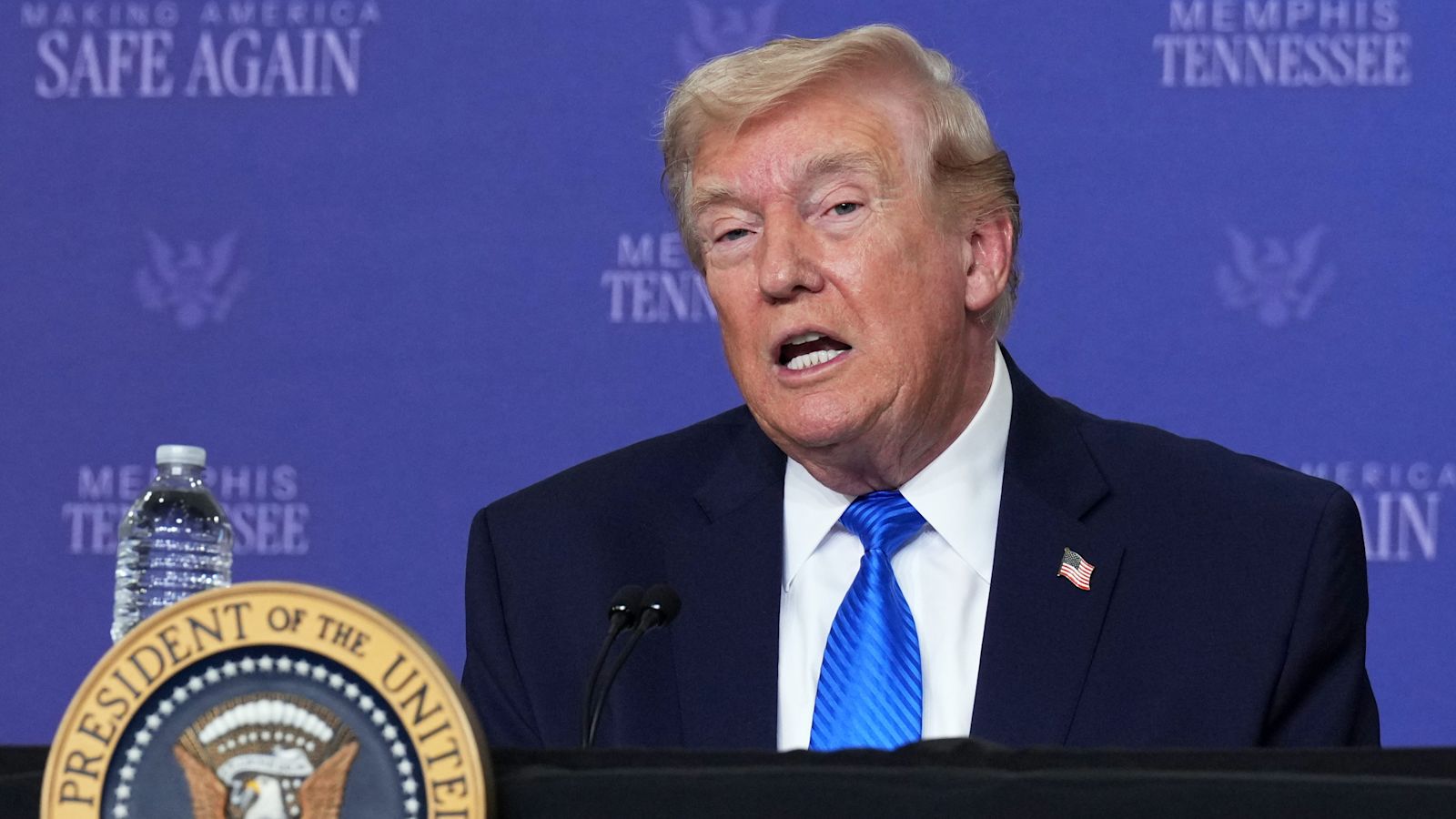
Speaking in Memphis, Tennessee, Trump said that Iran has agreed “they won’t have nuclear weapons.”
“We are now having really good discussions. They started last night, a little bit, the night before that. I think they’re very good. They want peace. They have agreed they won’t have a nuclear weapon. But we’ll see.”
The president said his administration has been negotiating with Tehran “for a long time” and believes a deal is close. He referenced his threat to blow up Iranian power plants, which he has paused for another five days.
Trump had previously threatened to “obliterate” Iran’s power plants if the Strait of Hormuz – through which around one-fifth of the world’s oil passes – was not reopened by Monday 11.44pm (UK time), before he extended the deadline.
Earlier on Monday, Trump said that the US would take the country’s enriched uranium should a settlement be made.
“We’d like to make a deal too. We’re going to get together today, by probably phone, because it’s very hard – for them to get out, I guess,” Trump told reporters from an airport in Florida before boarding Air Force One.
He told reporters that if discussions with Iran did not go well, the US would “just keep bombing our little hearts out”.
The speaker of Iran’s parliament had responded to the deadline by warning that the regime would target and destroy critical infrastructure, energy infrastructure, and oil facilities throughout the region in an “irreversible manner”, with Iranian media later publishing a list of such sites.
Subscribe for free to our weekly newsletter for exclusive and original coverage from ITV News. Direct to your inbox every Friday morning.
This would risk both electrical supplies and water in the region, as desert nations have their power stations next to desalination plants crucial for supplying drinking water.
The death toll from the war has risen to more than 1,500 people in Iran, more than 1,000 people in Lebanon, 15 in Israel and 13 US military members, as well as a number of civilians on land and sea in the Gulf region.
Israel announced early on Monday morning that it was launching “a wide-scale wave of strikes targeting Iranian terror regime infrastructure”.
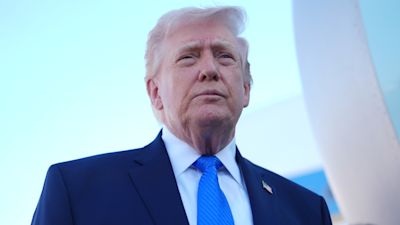
Trump spoke to reporters in Florida before boarding Air Force One Credit: AP
Trump says Iran wants to make a deal, but Iran denies talks
US President Donald Trump said he has told the “Department of War to temporarily postpone planned strikes against major energy and electricity targets in Iran,” based on preliminary conversations over the last two days.
The President insisted the two sides have had “very good discussions” and that Iran “means business.”
“Iran has one more opportunity to end its threats to America and our allies, and we hope they take it.
“Either way, America and the entire world will soon be much safer and will be a much more secure planet.”
Trump did not elaborate on what had been discussed or who was present for those conversations; however, the state-owned IRAN newspaper reported that Iran’s Foreign Ministry denied there had been any.
“Remarks by the US president are part of efforts to reduce energy prices and buy time to implement his military plans,” the newspaper said.
The price of crude oil dropped from $113 (about £84.63) per barrel to just over $101 (£75.64) after Trump announced the deadline would be postponed.
In response, Iranian state television declared that Trump had backed down “following Iran’s firm warning”.
The critical passage has been practically closed since the war began
Starmer and Trump speak hours after president mocks PM
Trump and Starmer had a “constructive” conversation on Sunday and agreed to speak again, a Downing Street spokesperson said.
“They agreed that reopening the Strait of Hormuz was essential to ensure stability in the global energy market,” they said.
The phone call took place hours after the president reshared a sketch from the new British version of comedy show Saturday Night Live, which saw a frightened Starmer asking Deputy PM David Lammy for advice.
“What if Donald shouts at me? What do I say, Lammy?” the actor playing Starmer says in the clip, before adding: “Oh crumbs, I just hate conflict.”
Iran threatens to hit power plants and plant mines in retaliation
Iranian media published a list of power plants in Gulf Arab states after the regime warned it would strike such facilities if Trump follows through on his threat.
The list, including the United Arab Emirates’ nuclear power plant, was published by Fars News Agency, which has close ties to the Islamic Revolutionary Guard Corps (IRGC), and Iran’s judiciary news agency Mizan.
The UAE’s Barakah nuclear power plant has four reactors out in the western deserts of the country near its border with Saudi Arabia.
The IRGC said on Monday Iran would respond by hitting power plants in all areas that supply electricity to American bases, “as well as the economic, industrial and energy infrastructures in which Americans have shares.”
“Do not doubt that we will do this,” it said in a statement read on Iranian state television.
The IRGC has also threatened to close the Strait of Hormuz entirely. At present, transits are down by 94.2% since the war began on February 28, data from Maritime AI company Windward shows.
“We did not start this war and will not initiate it now, but if the enemy harms our power plants, we will do whatever is necessary to defend our country and national interests,” Iranian Armed Forces spokesman Lieutenant Colonel Ebrahim Zolfaqari said on Sunday.
“The uninterrupted process of destroying the mentioned targets will begin, and nothing will stop the continuation of our operations against US and allied energy, oil, and industrial infrastructure in the region.”
Iran’s Defence Council has also threatened to deploy naval mines across the “entire Persian Gulf” if the US begins a land invasion.
US media reported last week that the Pentagon had begun making preparations for ground forces to enter Iran.
People wave Iranian flags at the Enqelab-e-Eslami square in downtown Tehran on Sunday Credit: AP
Multiple countries targeted by strikes overnight
Airstrikes were reported in Lebanon Sunday night into Monday morning, Lebanon’s state news agency said.
The Israel Defense Forces said it had begun “a wide-scale wave of strikes targeting Iranian terror regime infrastructure” in Tehran during the early hours of Monday morning.
An Indian national in the UAE was hurt by falling shrapnel on Monday after a ballistic missile over an air base in Abu Dhabi was intercepted, its authorities said.
Saudi Arabia’s Defence Ministry also said it had intercepted a missile targeting its capital Riyadh, while another struck an “uninhabited area”.
Both Bahrain and Kuwait sounded missile alerts early Monday over incoming Iranian fire.
The head of the IEA warned all countries would feel the impact of the crisis Credit: AP
Millions displaced as impact felt across Asia and Africa
A senior United Nations official has said the war has a “far-reaching” impact on millions of people, particularly in developing countries in Asia and Africa.
“Our world is the most violent it has been since the Second World War,” Jorge Moreira da Silva, executive director of the UN Office for Project Services, said.
The war has displaced 3.2 million people in Iran and 1 million in Lebanon, Moreira da Silva said.
He warned that the number of hungry people is likely to increase by tens of millions over the course of the year, as the impact of the war widens.
‘No country’ immune to impact of oil crisis, says IEA director
The global economy faces a “major, major threat” because of the Iran war, the head of the Paris-based International Energy Agency said on Monday.
The IEA helps coordinate a collective response to major disruptions in the supply of oil, and earlier this month, its member countries agreed to release a record 400 million barrels to combat the spike in prices.
Protesters hold a rally to call for an end to the war in front of the US Embassy in Manila, Philippines Credit: AP
“No country will be immune to the effects of this crisis if it continues to go in this direction,” Fatih Birol said at Australia’s National Press Club in Canberra.
Birol said the war has had a worse impact on oil than the two oil shocks of the 1970s combined, and a worse effect on gas than Russia’s invasion of Ukraine in 2022, with 40 energy assets in nine countries across the region “severely or very severely damaged”.
“Some of the vital arteries of the global economy, such as petrochemical, such as fertilizers, such as sulfur, such as helium — their trade is all interrupted, which would have serious consequences for the global economy,” he said.
Asia has been the hardest hit by energy shortages as a result of the war, with the majority of oil and liquefied natural gas passing through the Strait of Hormuz destined for the region.
In Manila, the Philippines, a group of protesters gathered outside the US embassy on Monday to condemn the war.
Reporting History sees journalists join News At Ten anchor Tom Bradby to revisit their remarkable on-the-day reports of the defining events of the modern age. Listen to the episodes below…