
Seven locations have been chosen for new towns to be built across the UK as part of the Government’s attempts to kickstart its stuttering housebuilding plans.
The new developments will feature neighbourhoods that will allow people to get around easily without a car, shared green spaces, and “vibrant high streets”, ministers said.
While only two sites could reasonably be described as entirely new towns delivering 40,000 new homes, the remainder will offer at least 10,000 new houses.
New FeatureIn ShortQuick Stories. Same trusted journalism.
The biggest new development is expected to be Tempsford in Bedfordshire, where up to 40,000 new properties will be built around a new East West Rail station, providing transport links to Cambridge, Oxford, London and Milton Keynes. It is currently a tiny village of 600 people and 300 homes.
The same number of homes is earmarked for Brabazon and West Innovation Arc in South Gloucestershire. It is also proposed as the site of a new research and advanced engineering economy.
Other locations include Leeds South Bank (about 20,000 new homes); Crews Hill and Chase Park in Enfield, north London, (20,000 homes); Manchester Victoria North (15,000 homes); and Thamesmead, south-east London, (15,000 homes).
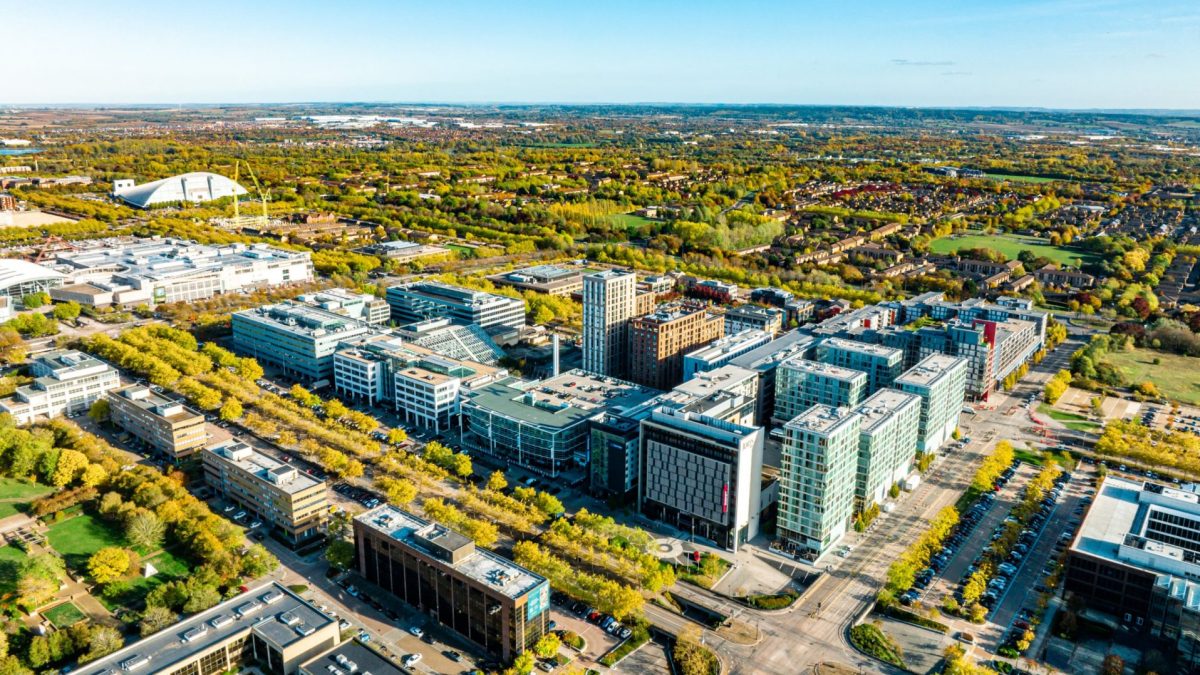
There is also set to be a significant extension to Milton Keynes, one of the most well known existing new towns. it is expected to grow by a further 40,000 homes.
The Government assessed six further locations – Adlington in Cheshire, Heyford Park in Oxfordshire, Marlcombe in Devon, Plymouth, South Barking in London, and Wychavon Town in Worcestershire – but decided they will not be taken forward at this stage. However, they could be developed in the future.
New towns include affordable homes
Each of the new towns will be made up of 40 per cent affordable homes, with at least half of these being open for social rent.
In its manifesto, Labour pledged to begin work on 1.5 million new homes over the course of the Parliament, to expand homeownership to more Britons.
Housing Secretary Steve Reed said: “People want real change – homes they can afford, local infrastructure that works, and good jobs in thriving communities. Our next generation of new towns marks a turning point in how we build for the future.
“From the ground up, we’re planning whole communities with homes, jobs, transport links and green spaces designed together – so we can give families the security and opportunities they deserve.”
Sir Keir Starmer has said he wants the new towns to be designed based on King Charles’s Poundbury housing estate in Dorset, where designers wanted to emphasise place-making as much as house-building.
Last year, the Prime Minister said that he wanted to build “beautiful communities” with two fifths given to affordable housing. Speaking after a visit to the King’s Nansledan housing development in Cornwall, Starmer said: “I was struck by the quality of the build, the variety, [I was] particularly struck by the fact that you couldn’t tell which was social housing.”
King Charles’s “experimental” urban extensions have been criticised by some sections of the design industry for being a pastiche, building houses based on outdated styles. But the Prime Minister believes the developments are hugely popular with local communities and are a demonstration of how to overcome conventional Nimbyism.
The Government has said no decisions have been made on the names of new towns, despite recent reports that the likes of Elizabethtown (after the late Queen), Pankhurst (after suffragette Emmeline), Attleeton (after the former Labour prime minister) and Athelstan (the first King of England) were under consideration.