
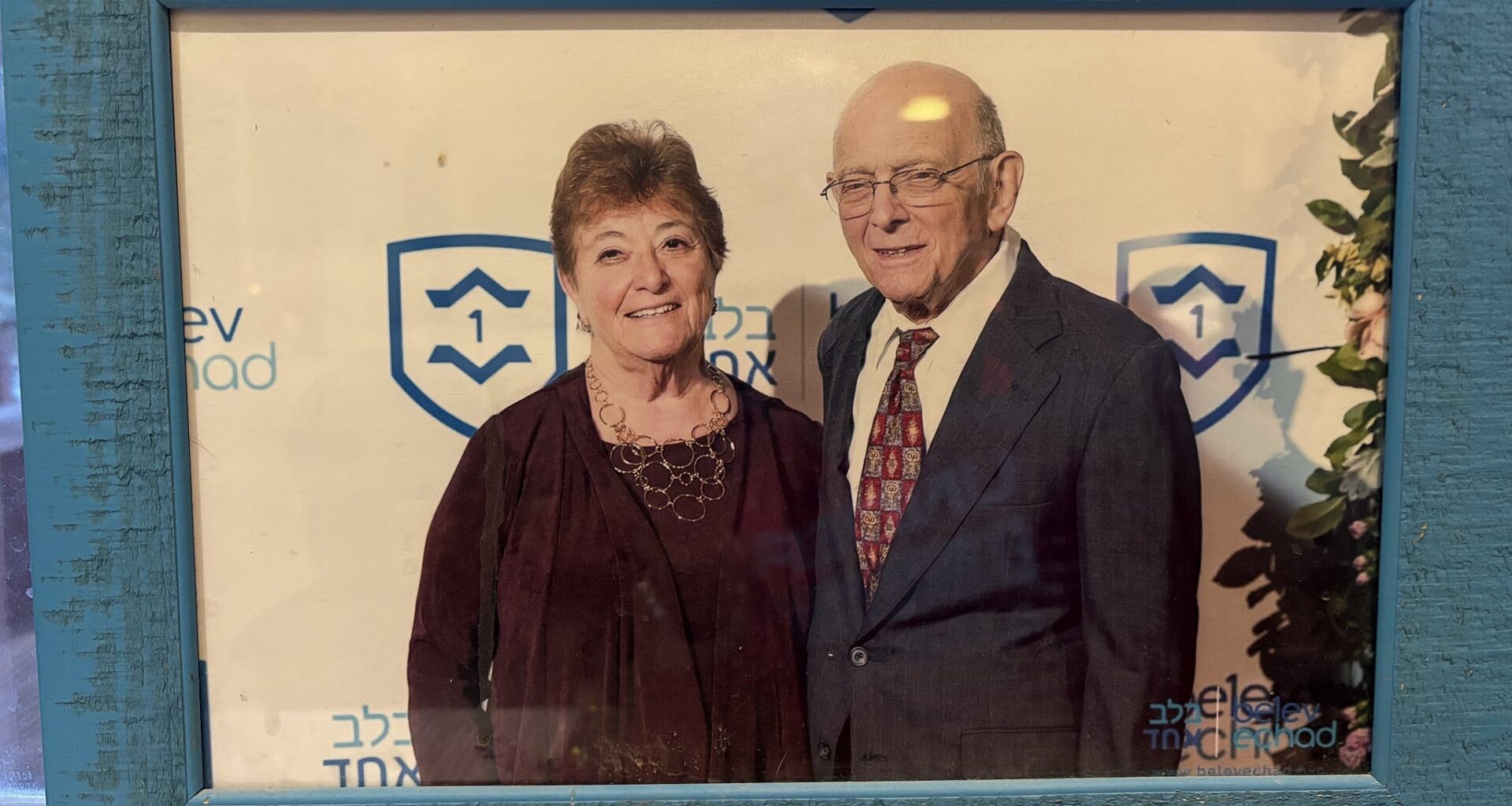
A couple of summers ago, I sat down in my Dad’s office and he asked me:
“Why do you come so often?”
I said: “To visit you.”
He said: “So, I’m not just the guy who sends you money?”
I said: “You’re my Dad!”
That was years later. But, well before that, my father underwent major surgery. He remained in the hospital for many weeks – not because of the surgery itself, but because of a hospital error.
When he returned home, he had to be fed through a PEG tube. But over time, he relearned how to eat, and even how to enjoy food again.
Still, he was not quite the same after that. He required more care – much of which fell to my mother.
And yet, over the next ten years or so, he was still very much the dad we knew. My parents visited, came to my daughter’s wedding, and he and they truly enjoyed our visits.
What really affected him later was the combination of COVID and the flu, and another long hospital stay.
And still, afterwards, my father, in a way, doubled down on living.
He couldn’t walk much outside, but he continued to read his newspapers every day – keeping up with the latest business news and world events. He went to the occasional movie or concert with my mother.
In fact, he had a routine.
Every day he would come downstairs, read the newspapers, eat breakfast, take a nap, eat lunch, work on the family finances, eat dinner, watch a show with my mother, and then go to bed – only to repeat the same day again.
And he lived that day with a kind of quiet enthusiasm—as if each day was his day in the world, and that was enough.
But none of this was possible on its own.
Every day, my mother helped him shower, helped him get dressed, tended to his wounds, made his breakfast, his lunch, his dinner, served dessert, and helped him get ready for bed.
And she made sure he took his medications – counting them, one by one, for each day of the week, every week, for at least the last three years of his life.
After so many days, so many trips to the doctor’s office, and close calls that weren’t, perhaps the hardest thing my mother ever did – besides losing her parents at a young age – was accepting that there was nothing more she could do.
And then letting my father go to hospice.
Her husband of 66+ years.
That took courage.
That was love.
There’s a line from Fiddler on the Roof, when Tevye asks Golda, “Do you love me?”
And she answers, not with a simple yes, but with a life:
“For twenty-five years I’ve washed your clothes,
cooked your meals, cleaned your house,
given you children…
Twenty-five years my bed is his.”
And then she asks: If that’s not love, what is?
Did my mother love my father?
Did my father love my mother?
Who could even ask.
Thank you, Mom…
for giving Dad the life he had,
and for giving us so many more years with him.
We will be there for you…
just as you have always been there for us.
Love
Dr. Barry Lynn has a PhD in Environmental and Atmospheric Sciences. He has an undergraduate degree in Biology. He is a researcher/lecturer at the Hebrew University of Jerusalem, and is the CTO of Weather It Is, LTD, a weather forecasting and consulting company.