
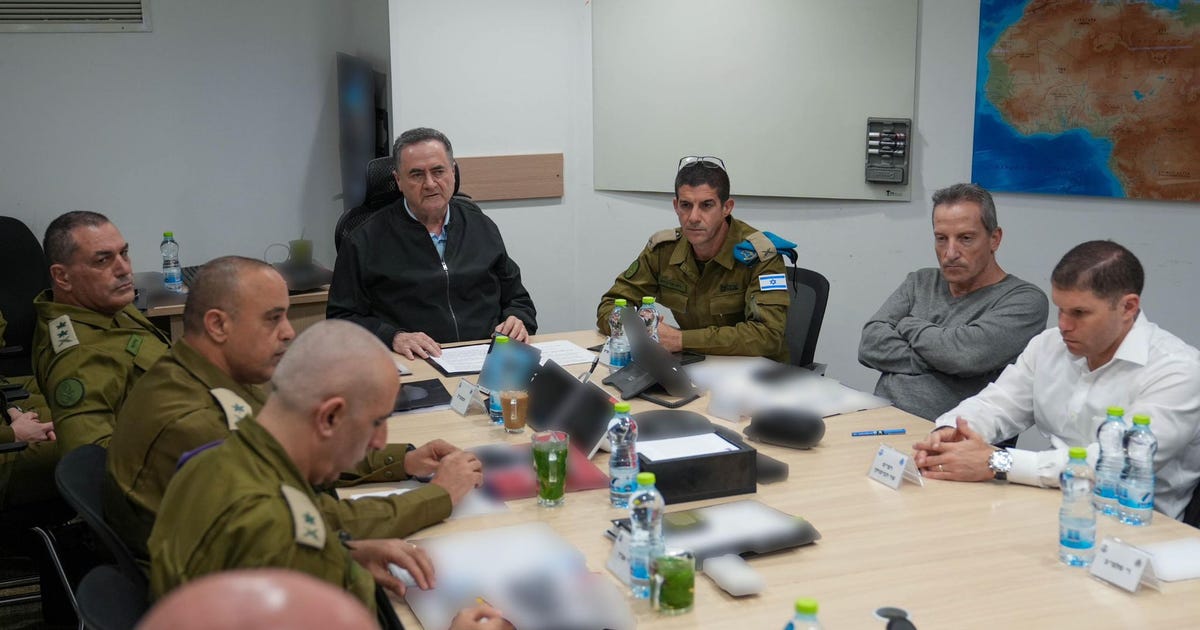
Israeli Defense Minister Israel Katz said on Tuesday that the Israeli military will maintain control of southern Lebanon up to the Litani River, adding that hundreds of thousands of Lebanese living in the area will not be allowed to return “until security is guaranteed” for Israel’s northern communities.
Katz’s comments follow similar remarks from Finance Minister Bezalel Smotrich, who called for Israeli control of the area and suggested that the Litani River should become Israel’s new northern border.
In a military assessment attended by the military’s top command, Katz said that the IDF will “continue to operate in Lebanon with full force against Hezbollah.”
According to him, the Lebanese government pledged to disarm Hezbollah and “did nothing.”
 Close
Close
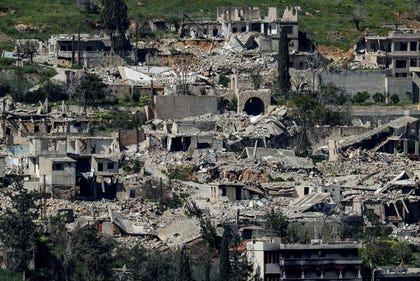
Buildings lie in ruins in southern Lebanon as seen from the Israeli side of the Israel-Lebanon border, earlier this month. Credit: Amir Cohen/ REUTERS
Buildings lie in ruins in southern Lebanon as seen from the Israeli side of the Israel-Lebanon border, earlier this month. Credit: Amir Cohen/ REUTERS
He noted five bridges over the Litani river which he said were used by Hezbollah, were blown up, and added that “the IDF will control the remaining bridges and the security zone up to the Litani.” Katz also reiterated descriptions of the military’s demolition of homes in frontline villages along the border, which he described as “terrorist outposts in every way.” The minister said this policy was “in line with the model we applied in Gaza’s Rafah and Beit Hanoun,” which have been largely flattened.
“We promised to deliver security to the northern residents, and this is what we’ll do,” the minister concluded.
On Monday, an Israeli airstrike destroyed an additional bridge over the Litani River in southern Lebanon’s Qaaqaait al-Jisr, effectively severing the main connection between the city of Nabatieh and Wadi al-Hujeir region to its south. The bridge was also attacked last week.
Related Articles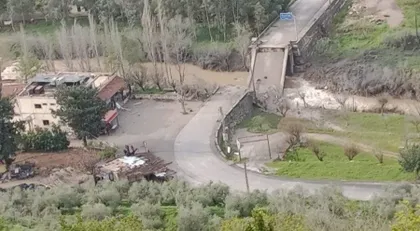 Close
Close
Destroyed bridge over Qaaqaait al-Jisr in southern Lebanon, on Monday.
Destroyed bridge over Qaaqaait al-Jisr in southern Lebanon, on Monday.
“These attacks constitute a dangerous escalation and a blatant violation of Lebanese sovereignty,” the president said in an official statement. “They are a prelude to a ground invasion, which Lebanon has repeatedly warned against through diplomatic channels.”
The president accused Israel of “attempting to sever the geographical connection between the region south of the Litani and the rest of Lebanon.”
Haaretz PodcastWill the Iran war bring Netanyahu a triumph at the polls? | Dahlia Scheindlin on Israeli voters
play
Haaretz Podcast
Will the Iran war bring Netanyahu a triumph at the polls? | Dahlia Scheindlin on Israeli voters
Volume: 0.5
X1
total– : –time0:00
fast forward15
play
rewind15
Aoun said the targeting of the bridge “blocks the delivery of humanitarian aid and falls within suspicious plans to establish a buffer zone, strengthen the occupation, and promote an Israeli invasion of Lebanese territory.” The president called on the international community and the UN Security Council to “assume their responsibilities and take immediate action to deter Israel from carrying out this offensive.” Adding, “Continued silence or inaction encourages further violations and undermines the credibility of the international community.”