
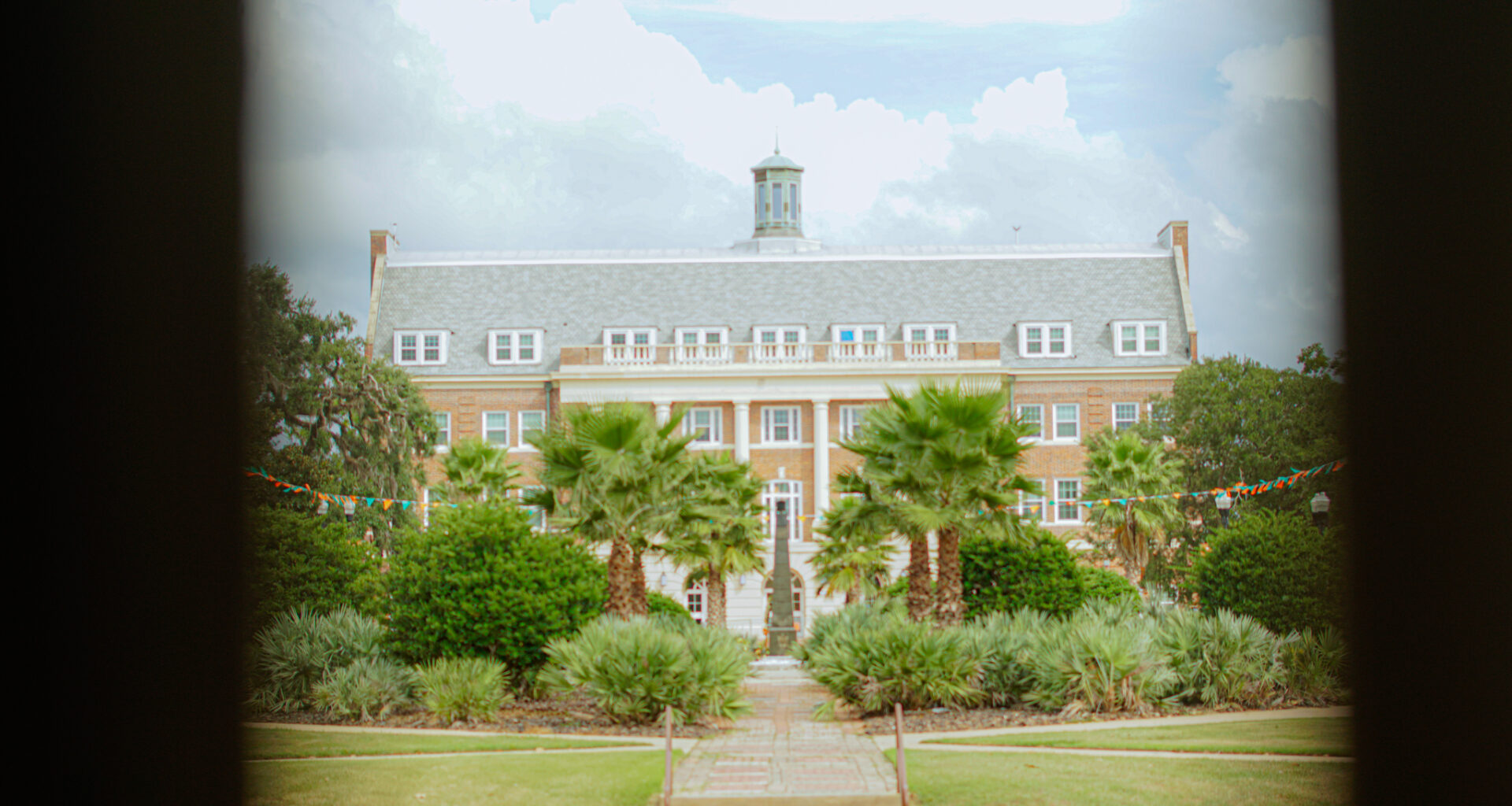
A view of FAMU’s quadrangle. (Khalil-Lullah Ballentine/FAMUAN)
FAMU’s recent winter break trip to Israel, which included faculty, administrators and students, has sparked conversations among the student body, with critics questioning the university’s transparency, ethical responsibility and alignment with its mission as a historically Black institution.
The trip was described by university partner Passages Israel as an immersive educational experience exposing students to “both ancient and modern Israel, deepening their faith while also gaining a greater understanding of the complex issues confronting Israel today.”
However, many students say they were unaware the trip was taking place until after it had already occurred, fueling frustration.
“Frankly, I didn’t hear anything about the trip until after, and even then, leaders haven’t seemed open to conversation or accountability about it,” said Kayla Davis, a political science major.
Brianna Jean, an animal science major at FAMU, said her initial reaction to learning about the trip was disbelief.
“To be completely honest, I thought it was a joke,” Jean said. “I heard from a friend that they were in Israel, and the first thing that came to mind was ‘why?’”
Israeli forces have killed at least 556 Palestinians since a ceasefire went into effect nearly four months ago, according to CBS News. As recently as Feb. 4, Israeli soldiers killed 23 Palestinians across the Gaza Strip in one of the deadliest days since a ceasefire began. Among these Palestinians killed, five were children, including a 5-month-old and a baby who was just 10 days old, seven women and a paramedic, said hospital officials.
University officials have said students were provided opportunities to participate and that the trip was introduced during a Board of Trustees meeting. In a written response to the FAMUAN, Vice President for Student Affairs William E. Hudson Jr. acknowledged that some students expressed strong opposition after the trip became public.
“The university was aware that some students expressed strong concerns about the trip,” Hudson said.
Hudson also explained that administrators reviewed the feedback and engaged in internal discussions with academic leadership and student support teams.
Despite these assurances, students can’t help but view the trip as an endorsement of Israel’s actions. Jean said she believed it functioned as institutional indoctrination rather than neutral academic exploration.
“Considering the political climate in the world, it is not far-fetched to say Israel has a deeply rooted connection to the United States,” Jean said, referencing U.S. financial and political support for Israel amid the ongoing genocide in Gaza. “To see our president, Marva Johnson, sending students, faculty, and administrators to Israel is utterly distasteful.”
Jean also took issue with statements from the CEO of Passages Israel, an organization connected to similar HBCU trips, who said the goal was to expose students to ancient and modern Israel while deepening their faith.
“This was never a trip to have anyone at FAMU deepen their faith,” Jean said. “This trip was meant to be a ‘Look at us, we aren’t so bad’ trip.”
Hudson rejected the idea that the university intended to promote a political viewpoint.
“The intent of the trip was educational in nature and aligned with academic objectives, not to endorse any political position or viewpoint,” he said. “The program was designed to support learning, critical engagement, and global exposure within the framework of established academic oversight and institutional policies.”
The backlash has also sparked broader conversations about FAMU’s identity as an HBCU and its relationship to global struggles involving race, power and oppression. Jean said the trip felt especially contradictory given Israel’s documented treatment of Black communities, including Ethiopian Jews.
“Leaders of an HBCU going on a trip to Israel is illogical,” Jean said. “HBCUs are known for fostering empowerment and community building. For us to go to Israel is tone deaf.”
“FAMU has been notoriously strict with what politically motivated and charged things that it is associated with going as far as to order a cease to the ‘FAMU Students for Kamala’ for using the school’s name so seeing them go from that to actively visiting a country that is embroiled in political controversy was shocking,” Davis added.
Hudson says the administration understands that students may hold differing views on how institutional values are reflected in academic programming.
“The concerns expressed by students were understood as reflecting their perspectives on FAMU’s identity and mission as an HBCU,” he said.
He added that international trips undergo a structured review process coordinated through the Office of International Programs, including risk assessments, faculty oversight, and alignment with university policies, particularly when travel involves regions facing humanitarian crises.
Still, some students say the university has not done enough to acknowledge their concerns or take accountability. Jean criticized the administration for what she described as silence and a lack of apology.
“Our support is not for sale,” Jean said. “It is shameful to not only send students to Israel but also hide this from everyone until after winter break. We demand accountability.”
Hudson says the university remains committed to open dialogue and student well-being, emphasizing that student perspectives were considered both before and after the trip.
“The university values student input and engages in ongoing review and dialogue,” he said.