
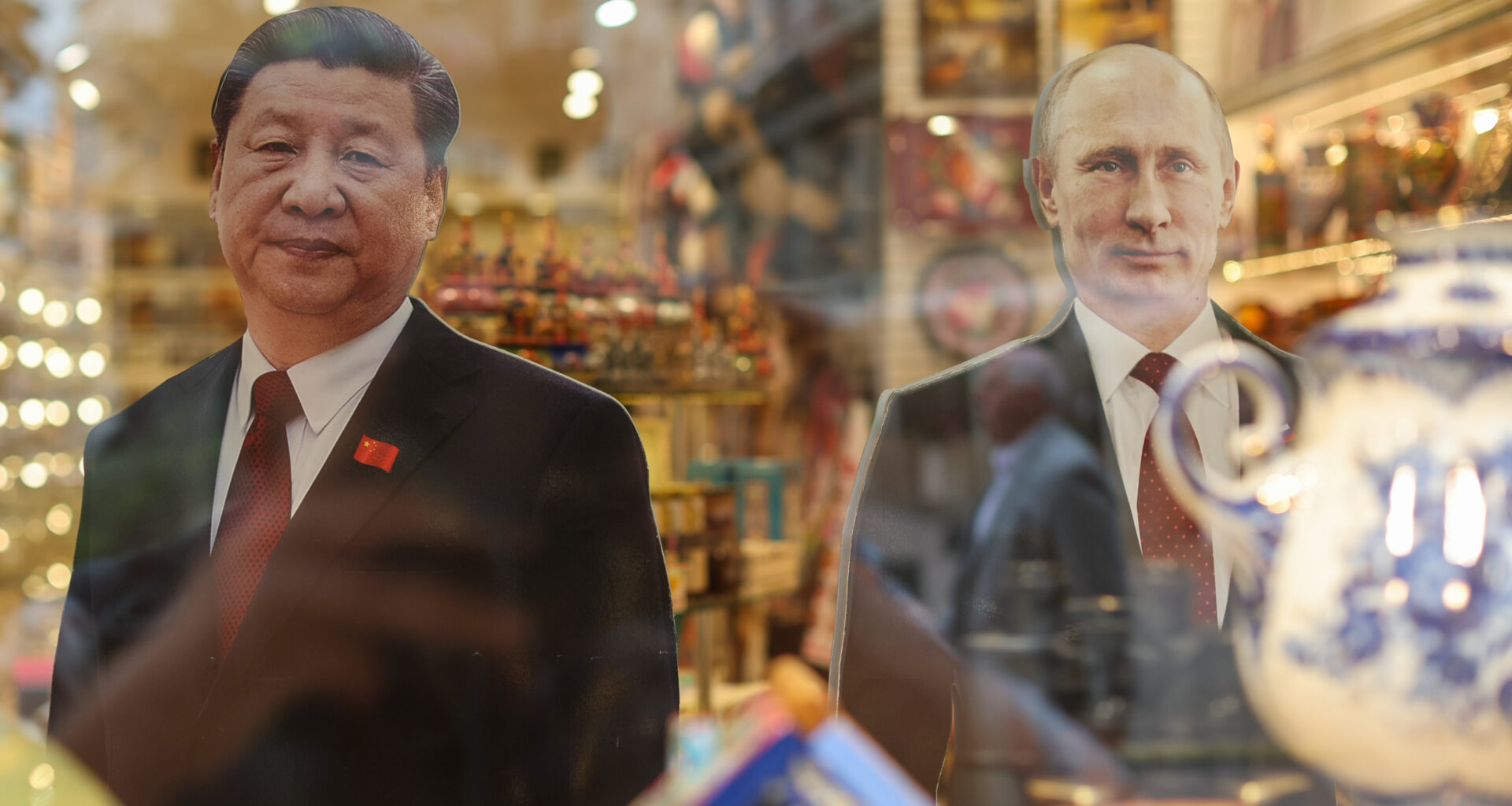
On paper, the logic is airtight: with global oil prices surging and US sanctions on Russian crude partially eased, Moscow is a clear beneficiary from the war in Iran. In contrast, China is in a tricky spot, reliant as it is on oil flows through the now-closed Strait of Hormuz.
This analysis looks solid, but look closer and a more complex picture emerges. Start with the idea that rising oil prices are filling up Russian state coffers fast. At around $5bn per month, the war-driven oil windfall is in fact little more than a band-aid for a fiscal deficit that reached $40bn in January-February alone—about 90% of Russia’s annual target. Russian policymakers are well aware of this: the Kremlin is already sketching out a 10% cut in “non-sensitive” spending in an attempt to save up to $25bn this year.
The volume story no more encouraging. After more than 12 years of sanctions, Moscow’s oil infrastructure is decaying, with just 300,000 barrels per day of spare capacity—hardly enough to compensate for the 10-15 million barrels per day lost in Gulf exports. With no certainty that the war will drag on, Russian oil firms are unlikely to ramp up investment any time soon. Ukraine’s drone strikes, now reaching as far as the Caspian Sea, only add to the strain.
“Washington is not unlocking new Russian oil supply—it is only greenlighting deals India had already lined up.”
Russia’s thin spare capacity helps to put Washington’s sanctions relief on Russian crude sales to India into perspective. The 30-day waiver applies to oil already loaded on tankers, roughly 120 million barrels that had been idling at sea as Indian refiners were wary of tripping US sanctions. In other words, Washington is not unlocking new Russian oil supply—it is only greenlighting deals India had already lined up.
For Moscow, losing access to the Arab Gulf and Iran is a further blow. The UAE has been a key suspect of facilitating sanctions evasion, while Iran has long been a major market for Russian firms, notably in defence and nuclear energy. The conflict has now stalled construction of flagship Russian projects, such as the Bushehr-2 nuclear plant. With the Gulf and Iran now out of the equation, Moscow’s reliance on Beijing could deepen.
For China, Hormuz disruptions are certainly painful. Yet they also vindicate Beijing’s bet on electrification. Electricity accounts for 30% of China’s energy consumption, about 50% higher than that of the US or Europe, leaving it better insulated from the spike in global oil prices. The war in Iran also turbocharges the case for the global energy transition—and Chinese firms manufacture around 70% of worldwide clean-tech supplies.
Looking ahead, the conflict in Iran could give China useful leverage. Many of the missiles, fighter jets and other weapons that America needs for its war effort run on Chinese-made critical raw minerals, in particular rare earths—of which the US has only about two months of stocks. When US president Donald Trump heads to Beijing for tariff negotiations in coming months, Chinese policymakers may come to the table with an ace up their sleeve.
Meanwhile, early reports suggest that Iran could allow some oil tankers to transit through Hormuz, with a Chinese catch: shipments would need to be traded in renminbi, which would deal a blow to the US dollar’s dominance in energy trade. Even if just a fraction of transactions switches currency, the irony will be stark: A US-launched war will help normalise non-dollar energy sales, succeeding where years of Chinese diplomacy have not.
Finally, it may be worth turning the attention to the aftermath of the conflict, in particular reconstruction in those Gulf countries hit by Iranian drones and missiles. Here, Beijing is well placed to move fast. Building on their Belt and Road Initiative track record, Chinese firms will quickly position themselves as partners, providing finance, steel and cranes to rebuild ports, energy facilities and desalination plants.
Beyond the headlines, the balance of gains between Russia and China from the war in Iran looks rather different. Moscow’s oil bonanza may be impressive on a spreadsheet, but it will not relieve the Kremlin’s fiscal headache. China’s pain from the Hormuz closure is real, yet Beijing emerges with a vindicated clean-tech strategy, stronger cards at the US-China trade table and a foothold in the post-war Gulf. Conflicts almost always reshape the global order, but rarely in the ways that their architects intended.
The European Council on Foreign Relations does not take collective positions. ECFR publications only represent the views of their individual authors.