
Gulf countries are set to condemn Iran’s wave of attacks while Tehran, backed by China and Cuba, seeks to haul the US before the UN body for its school strike. But NGOs warn that both debates risk entrenching political narratives rather than advancing accountability.
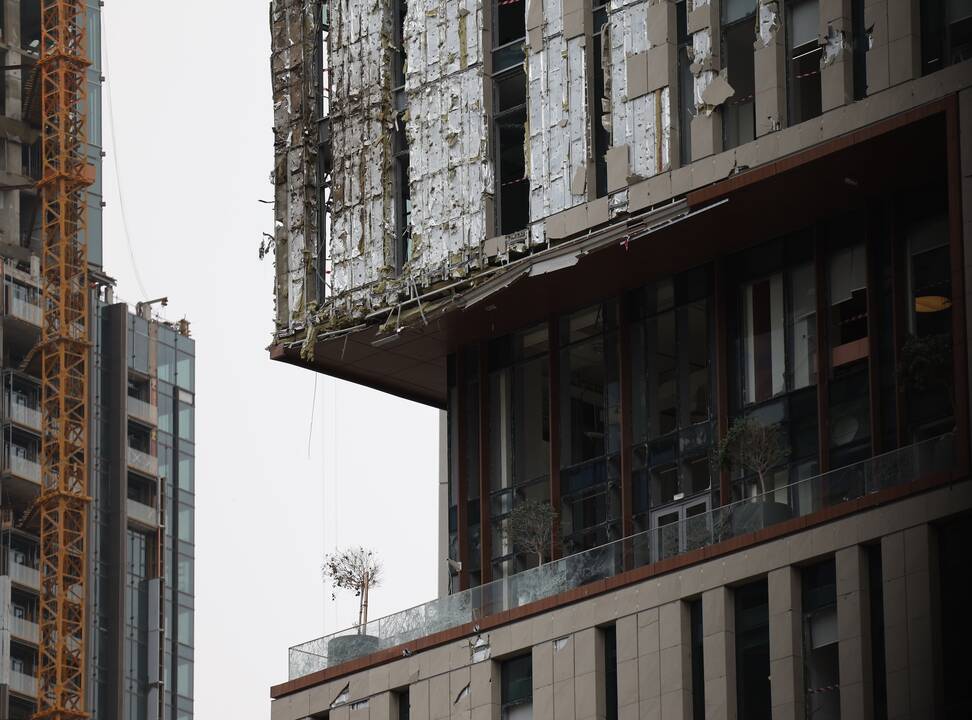
The Human Rights Council is due to hold an emergency meeting on Wednesday on Iran’s wave of airstrikes across the Gulf. Dozens of civilians have been killed and hundreds have been wounded by missile and drone attacks against cities and energy sites across Qatar, Saudi Arabia, the United Arab Emirates, Kuwait, Bahrain, Oman and Jordan, in retaliation for the US-Israeli war on Iran that began nearly a month ago.
The debate, requested by the Gulf Cooperation Council and Jordan last Thursday, will consider a draft resolution tabled by the same group, condemning Iran’s attacks on states not involved in the hostilities as “flagrant violations” of their sovereignty and of international law and demanding reparations.
Iran has justified the attacks as solely targeting US and Israeli military facilities in the region and insisted it does not seek escalation with its neighbours.
Gulf countries, however, accuse Tehran of strangling global trade and energy security through its restrictions on the Strait of Hormuz – one of the world’s main oil-shipping choke-points – pushing up crude prices and squeezing developing countries already burdened by debt. The draft due to be considered on Wednesday asks the UN Human Rights Office to report back to the council on the human rights implications of Iran’s attacks on the Gulf and Jordan at its next session in June.
US strike under scrutiny
Iran separately requested on Monday that the council hold an urgent debate on a US strike on a girls’ school in Minab in southern Iran, near a compound linked to the Islamic Revolutionary Guards Corps. In a letter addressed to Human Rights Council president Sidharto Reza Suryodipuro, Tehran cited figures of 168 children aged between 7 and 12 killed in the 28 February attack.
The letter was backed by China, Iran’s largest crude buyer, and Cuba, which has been under a near-total economic blockade by the Trump administration since late January.
“Intentional attacks on educational buildings that are not military objectives constitute war crimes under Article 8 of the Rome Statute,” the letter states.
Preliminary findings from a US internal military investigation reported by The New York Times indicate that US forces mistakenly targeted the elementary school due to outdated information. An independent investigation by Amnesty International concluded that the US had violated international law for “failing to take all feasible precautions to avoid civilian harm”.
No date has been set for the debate yet. Council spokesperson Pascal Sim told journalists on Tuesday that the two unplanned debates could derail the council’s session, expected to conclude next Tuesday.
A ‘selective’ framing
For rights campaigners, the duelling initiatives risk turning the council into a geopolitical arena. “The debates are highly selective and risk feeding a competing, partial narrative of a much broader conflict,” said a worker from an NGO focused on the region, who asked to remain anonymous over the sensitivity of the issue.
The Gulf-backed draft omits any reference to the US-Israeli strikes that triggered Iran’s retaliation. Nor does it mention Israel’s war against Hezbollah in Lebanon, which has displaced over one million people, or the exchange of fire between Israel and Iran that has killed civilians and wounded many on both sides.
Latin American and African countries raised these oversights in consultations but stopped short of demanding any amendments, reluctant to appear to justify Tehran’s attacks.
Meanwhile, NGOs face a balancing act at the Iran-backed debate of denouncing civilian harm from the US-Israeli strikes without glossing over Tehran’s repression at home. The Fact-Finding Mission on Iran is already investigating the school bombing. With Tehran rejecting its mandate, it remains unclear whether it will be allowed to contribute to the discussion.
The EU, which has typically led initiatives at the council on violations in Iran, has struggled to take a clear line amid internal divisions on the US-Israeli campaign.
“It is important that the Human Rights Council takes a coordinated, comprehensive, principled and impartial approach to all violations amid the conflict…with a clear focus on atrocity prevention and protection of impacted civilians across the conflict…and does not suggest any hierarchy of victims of this conflict, nor among those responsible for international humanitarian law violations,” said Hilary Power, UN Geneva director at Human Rights Watch, speaking during consultations ahead of the Gulf-led debate.
Phil Lynch, executive director of the International Service for Human Rights, echoed the concerns, denouncing states’ “selective outrage”. “To preserve its legitimacy and the universality of human rights, the Human Rights Council must avoid one-sided framing and adopt a comprehensive, non-selective approach to the conflict,” he said in a statement.