
Despite President Donald Trump’s indications of negotiations geared toward ending the U.S.-Israeli war against Iran, thousands of U.S. personnel and additional warships are on their way to the Middle East.
The looming deployments, which reportedly include at least two U.S. Marine Expeditionary Units (MEUs) and personnel of the Army’s 82nd Airborne Division, has sparked speculation of an attempt by the White House to escalate a conflict already wreaking havoc on regional stability and global energy markets into some form of a ground war.
Several scenarios have emerged surrounding such an operation, ranging from the relatively limited seizure of the strategically located Kharg Island to more ambitious efforts to drop U.S. personnel within the Islamic Republic’s mainland.
In any of these cases, however, analysts and former officials warn of anticipated retaliation and resistance from Iranian forces that, despite suffering extensive losses of senior leadership and military capabilities since the U.S. and Israel launched their joint war on February 28, appear ready and willing to drive up the costs for an invading force in ways that could exceed the last major U.S. intervention in Iraq in 2003 as well as the current administration’s threshold for seeking further gains.
“That’s what Iran is thinking when they think about this,” Joseph Votel, retired four-star Army general who served as commander of U.S. Central Command and is now a fellow at the Middle East Institute, told Newsweek, “that they can just outlast and continue to make this difficult the whole way, and draw it out in time to cause us to make decisions that we don’t want to make, like putting troops on the ground.”
And while he said it would be up to the Trump administration to determine its limits, this was “the quandary I think that they’re all dealing with right now”—with all signs indicating any land operation would be both lengthy and highly demanding in terms of resources.
“I don’t see a lot of great situations for this that won’t take an extraordinary amount of troops and a lot of time to accomplish,” Votel said.
 The Battle for Kharg Island
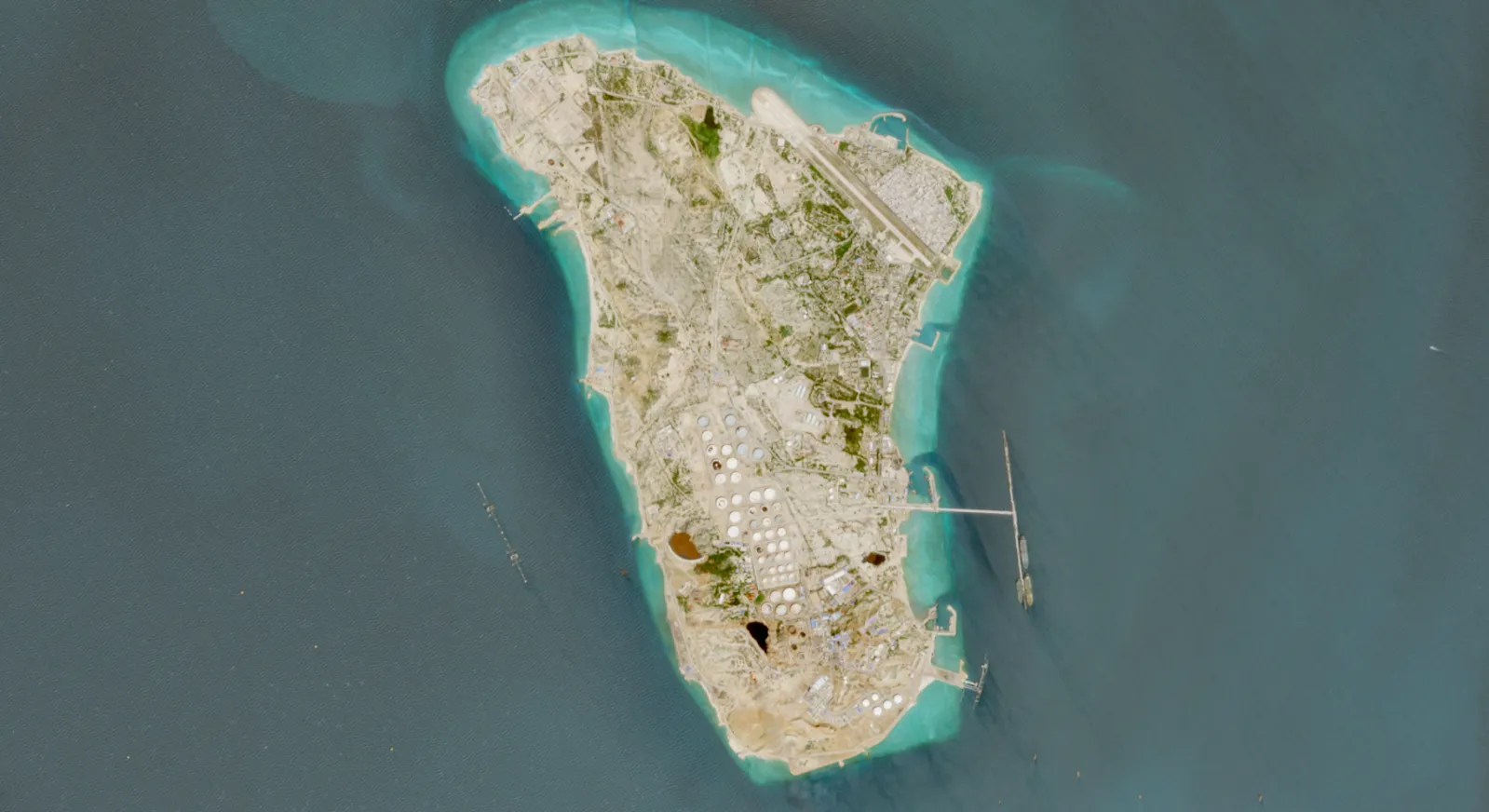
Among the operations reportedly on the table, the notion of taking over Kharg Island has garnered significant attention, both due to Trump’s past comments on the territory as well as its central location in facilitating Iran’s energy exports and attempts to close the Strait of Hormuz to all other maritime traffic.
Trump ordered U.S. strikes against Kharg Island last week, claiming to have destroyed up to 90 military targets, including naval mine facilities and missile storage bunkers, while “sparing” oil facilities. While sitting just 15 miles off the Iranian coast, the island may prove indefensible for Iranian forces.
Votel saw both “advantages” and “disadvantages” in such a task, one likely to be carried out by personnel of the MEUs now headed to the region. Reports surfaced last week that the 11th MEU would be redirected from a scheduled visit to the Indo-Pacific to instead deploy to the Middle East, where the 31st MEU is already set to soon arrive.
“The key pieces to all of that is that not only do we have to get troops to that location, but we have to protect them,” Votel said. “So, we have got to provide air cover. We have got to sustain them. So, we have got to have kind of a lifeline of supplies and stuff that are going into them, and then we’ve got to dedicate the resources to prevent Iran from coming after them.”
“It’s not an insignificant operation, but I could very easily see one of these MEUs, at least a portion of it, perhaps the whole thing, getting sucked up into one of these critical islands.”
Much attention has surrounded the prospect of mobilizing an amphibious-ready group to storm the island by sea, though this manner of approach may leave U.S. forces exposed to Iranian fire emanating from the island or the mainland.
Ben Connable, retired U.S. Marine Corps Middle East foreign area officer and intelligence officer who is the executive director of the Battle Research Group, said an amphibious landing “would be unnecessarily risky.” Rather, he argued, “in all likelihood they would attack by air. V-22s can easily reach Kharg from various locations.”
“Given the size of the island and U.S. fire dominance, I could imagine a single infantry battalion taking and holding that ground. The biggest threat they would have to contend with would be Iranian missile and cruise-missile attacks,” Connable told Newsweek, noting the prevalence of Shahed-style drones acting as effective cruise missiles. “Putting aside important questions related to our war strategy, the Marines can execute this operation with a high chance of success.”
Once ashore, however, U.S. forces would be well within range of even shorter-range Iranian missile and drone systems, leaving personnel to be “sitting ducks,” in the words of Ilan Goldenberg, former Iran team chief at the Pentagon now serving as senior vice president and chief policy officer at the J Street advocacy group.
And a victory at Kharg Island may hardly be enough to sway the calculus of an Iranian government that has signaled little appetite for de-escalation in the midst of the region’s most intensive war in decades.
“I think that one is a little easier in that it is an island, so once you capture it, it’s easier to defend it. You’re not in the middle of Iranian territory and then you would use that to try to apply pressure on the Iranians, essentially, like leverage,” Goldenberg said. “But I’m very skeptical it would work, because the Iranians have really demonstrated that they’re willing to take a lot of pain. So, I don’t think this would be the thing that suddenly, magically brings them over the edge.”
 Seizing the Strait
To truly secure a presence on Kharg Island and also limit Iran’s ability to strike at the Strait of Hormuz, another scenario calls for deploying a U.S. presence along Iran’s southern coast.
But then, Goldenberg pointed out, “you’re going to have to hold it and the Iranians are going to flow forces in, and, on the strait, you’d have to keep a lot of air power there to prevent the Iranians then from flowing forces in and take out that air power against those ground forces as they try to move towards you.”
The scope of such an operation would likely demand U.S. forces assuming control of additional islands and cities, including the major Iranian port city of Bandar Abbas. And that’s before an extensive operation required to demine the waters of the Strait of Hormuz.
“I don’t see how this would be accomplished without seizing territory that runs in an arc from about Bandar-e-Jask to Kish Island, or at least Bandar-e-Lengeh (plus Qeshm, etc.),” Connable said. “Then they would need to control terrain inland at least to the hills north of Bandar Abbas in a parallel arc running a generally east-west contour. Even with that ground control the Strait would need to be cleared of mines and protected from anti-ship cruise missiles that might have several hundred kilometers of range. And I believe we just retired our last minesweepers.”
In addition to a full MEU, Connable assessed that in order to satisfy the concerns of shipping insurers such as Lloyd’s of London, the U.S. operation would require the added deployment of other elite units, such as the 82nd Airborne Division and the 75th Rangers Regiment, working alongside two MEU amphibious-ready groups.
The Wall Street Journal reported later Tuesday that a brigade combat team consisting of 3,000 personnel of the 82nd Airborne Division was set to be deployed to the region imminently.
The threats from both missiles and drones as well as internal resistance would also have to be factored, particularly as the city of Bandar Abbas is home to more than half a million people, larger than the Iraqi city of Ramadi, where around 100 U.S. personnel were killed during bloody battles with insurgents long after the collapse of then President Saddam Hussein’s government.
“They might or might not be welcomed there; we cannot assume an anti-invasion insurgency or guerrilla campaign. But one should be planned for,” Connable said. “Key threats would be missiles and drones for conventional forces at the outset of a campaign, particularly at Kharg Island. If we put troops onto coastal Iran then we need to be ready for missiles, drones, Basij counter-invasion asymmetric operations like IEDs, mines, small rocket and ambush teams, UAS attacks, etc.”
In addition to paramilitary and guerrilla units, soldiers associated with Iran’s two parallel armed forces, the Artesh and the Islamic Revolutionary Guard Corps (IRGC), would also have to be factored in.
“I wouldn’t rule out the Artesh and IRGC ground units,” Connable added. “We think we have bombed every enemy flat in all recent wars, only to discover they can still muster combat units and counterattack. In the 1991 Gulf War, the Iraqi 5th Mech Division counterattacked after a month of nonstop bombardment. And at al-Faw in Iraq in 2003 at least a battalion of Iraqi armor counterattacked the British landing force.”
 The Nuclear Option
Trump has repeatedly asserted that the U.S. had “obliterated” Iran’s nuclear program during a previous U.S. raid ordered during the 12-Day War launched by Israel against the Islamic Republic in June. Yet a significant amount of highly enriched uranium is believed to remain in the rubble of the Isfahan Nuclear Technology Center.
Reports have indicated that the White House was mulling a limited operation aimed at securing this material and extracting it. Yet the risks present in securing coastal regions are significantly compounded when dealing with a centrally located site already likely to be subject to Iranian defensive measures.
“That is a very big, very risky operation,” Goldenberg said. “You would have to put a lot of forces on the ground, because Isfahan is hundreds of miles inside of Iran. You’re talking about landing at a nuclear facility, one of the major areas where the Iranians likely know you’re coming.”
Unlike past Special Operations raids that killed Al-Qaeda chief Osama bin Laden at a complex in rural in Pakistan in 2011 or the more recent raid that captured Venezuelan President Nicolás Maduro and his wife from their residence in Caracas in January, an insertion at the Isfahan nuclear site would not permit U.S. forces to “just go in for an hour and then you’re gone.”
“You have got to get this very delicate material out, and that means you’re going to be on the ground for a long time, which means the Iranians have time to then flow forces from all over the country towards that site from different directions,” Goldenberg said. “So, you’ve got to establish a perimeter around the nuclear site that’s pretty big and be able to fight off a major force coming in.”
Votel also argued that such an undertaking would require a “special operations force on the ground to focus on the recovery,” as well as “a rather large force to secure that,” diverting precious resources to conduct air support and surveillance to protect the inserted personnel and eventually extract them. This, he assessed, “would likely not be an operation that would be done enough in a day or two, but probably take a much, much longer period of time.”
With this option and others pertaining to the penetration of Iranian inland territory, there are also geographic constraints that raise issues for the projected success of a wartime insertion on hostile territory even if other still unknown factors such as Gulf Arab states allowing U.S. military access to support a land campaign fall into place.
“The big limitation that I see, really, to any of this is the fact that Iran’s geography is not favorable to invasion, and it’s been a fact of Iran’s internal defense for millennia and since ancient times,” Carlton Haelig, fellow at the Center for a New American Security’s Defense Program who previously worked at the Office of the Secretary of Defense Historical Office, told Newsweek.
“You can get relatively far onto a lodgment on the Iranian landmass itself,” Haelig said, “but then you run into multiple very high, very rough mountain ranges that you just simply cannot traverse with large, mechanized forces into the heartland of the country.”
And with attempting to drop into territory as far deep into Iran as Isfahan, he warned that “the range of the operations insertion is a significant uncertainty of whether or not that would succeed.”
“And then, how do you get that material out?” Haelig added. “It’s much easier to insert special operations forces than it is for them to safely and securely remove the material that you would be trying to secure out of the country.”
 ‘A Swamp for the Americans’
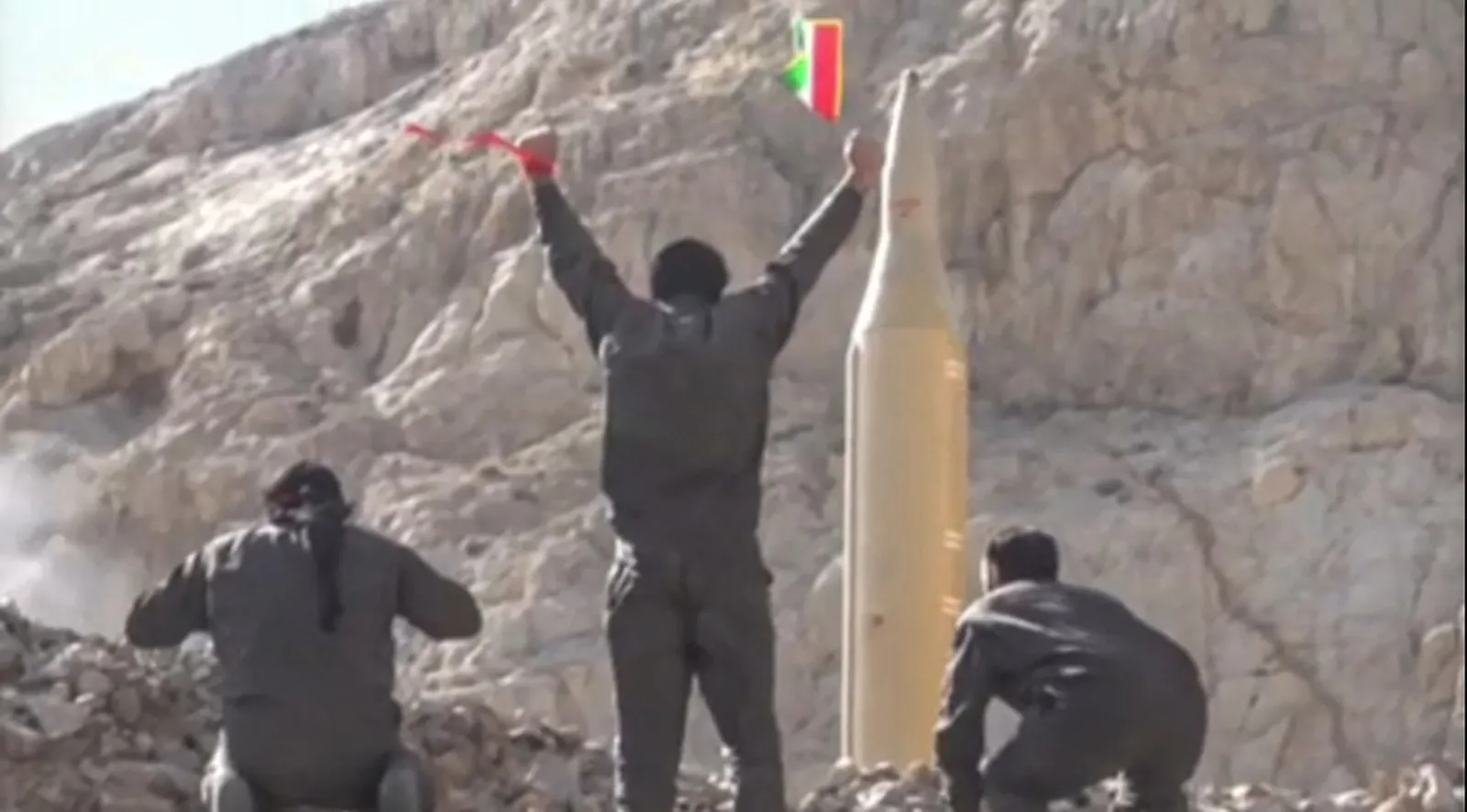
Despite ongoing setbacks, an increasingly decentralized Iranian military continues to demonstrate command and control capabilities in firing missiles and drones at Israel and nearby Arab states hosting U.S. military facilities. Iranian military and political officials have also expressed defiance in the face of Trump’s declarations of success and claims of ongoing talks toward a ceasefire, promising to wage the war on their own terms.
Reports of Iranian air defenses successfully striking a state-of-the-art F-35 on Thursday aside, the country has proven largely unable to contend with U.S. and Israeli aerial bombardments. But a protracted battle on the ground may prove more unpredictable, given the Iranian military’s efforts to mount a diverse range of asymmetrical tactics.
“Iran is prepared for any land war with America. Entering a land war with Iran would mean stepping into a swamp for the Americans; they would lose,” Ali Bagheri Dolatabadi, professor from Yasouj University in the Iranian capital Tehran, told Newsweek.
“About half of the Iranian population has access to weapons due to their rural lifestyle,” Dolatabadi said. “All of these people could easily become combat soldiers to defend their homeland. The Iranian armed forces have also prepared themselves for any land war using mosaic warfare tactics, which they have practiced many times. Iranians are skilled in guerrilla warfare and are capable of withstanding any attack.”
The Iranian government’s entrenchment has thus far stymied both Trump and Israeli Prime Minister Benjamin Netanyahu’s expressed hopes for an internal uprising toppling the Islamic Republic. It also appears to have tempered early speculation of a fourth scenario—the U.S. throwing its weight behind Iranian dissident groups on the ground, including Kurdish factions that have expressed their willingness to mount an anti-government offensive in the northwest.
Even less likely an option in the eyes of observers would be the prospect of the Trump administration attempting to pursue the most traditional path for war-fighting—a full-scale invasion.
“I think it’s important to recognize that Iran is larger than the State of Alaska. So, it’s huge. It’s really big,” Votel said. “And, the terrain variations are about the same in terms of rugged terrain and open areas, dense urban things. And so, very quickly it would consume a lot of troops and then getting them there would be one challenge, sustaining them would be another challenge, not just logistically, but with the fire support and everything that you need. And, of course, it would be all-consuming in terms of that.”
“It all goes towards whatever the end state is, and if our end state is to actually go in and do regime change, and change things on the ground, then it may require ground troops,” he added. “But as we’ve kind of bounced around on what our strategic end states are, I think we’re less focused on that at this particular point.”
A far more powerful U.S. military may very well prevail over Iranian forces in the conventional sense. What follows, however, could emerge as the very kind of “forever war” that Trump has railed against, with greater complexities and challenges than experienced in Iraq.
“It’s a country of 90 million people. Iraq was 23 million,” Goldenberg said. “So, you’re talking about a country that’s basically four times as large in terms of population. Try thinking about that as a counterinsurgency campaign.”
Goldenberg counted roughly 200,000 troops deployed at the peak of the U.S. campaign in Iraq and argued “it was never enough to fully quell the insurgency,” which then erupted with even greater force to give way to the Islamic State militant group (ISIS) shortly after the U.S. withdrawal in 2011, drawing U.S. troops back by 2014.
In Iran, he said “you’d be talking about hundreds of thousands of troops in an occupation scenario, with a very proud people and a regime that still has enough support.”
“If 20 percent of the public are supporting the regime, that’s enough to cause you a massive nightmare,” Goldenberg said. “I don’t think it’s militarily viable, unless you want to fight this war for the next 20 years.”
Reached for comment, the White House referred Newsweek to Trump’s Truth Social account.
Update 3/24/26 2:15 p.m. ET: This article has been updated to include additional developments.