
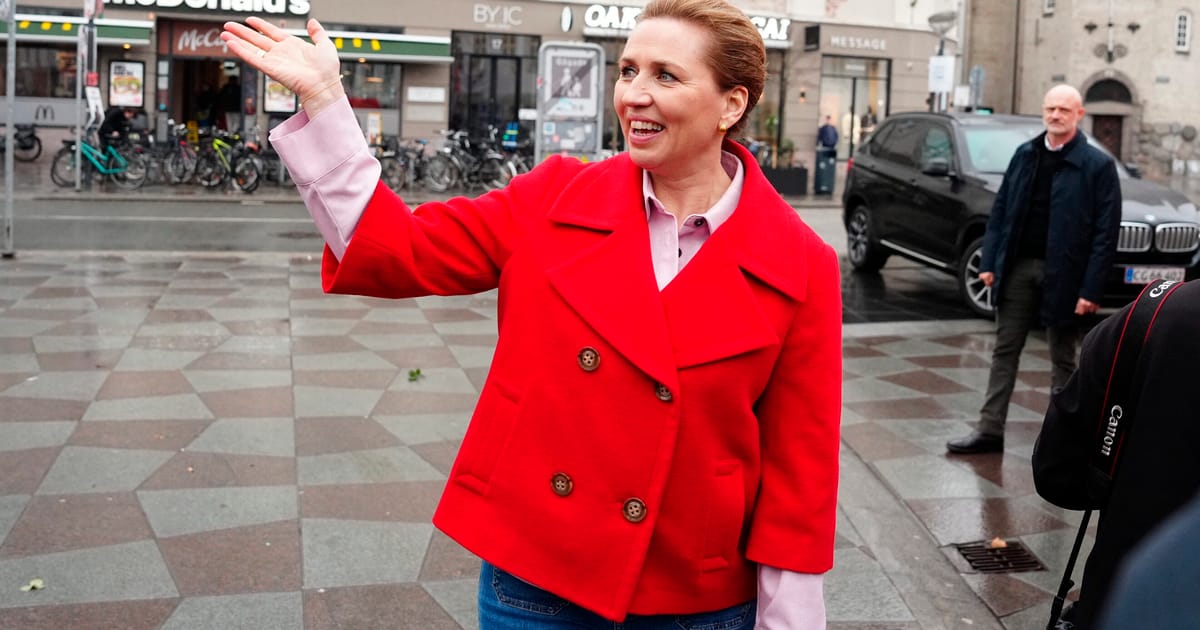
After a historic defeat in last year’s local elections, Frederiksen was handed a political lifeline by U.S. President Donald Trump’s efforts to annex Greenland — triggering a rally-around-the-flag moment that the Danish leader attempted to capitalize on by calling an early election.
Frederiksen’s main right-wing challenger, the Venstre party led by Troels Lund Poulsen, tallied just 9.3 percent of the vote. The Liberal Alliance’s Alex Vanopslagh emerged as the leading figure on the right with 10.5 percent, the poll projected. The Green Left is forecast to finish in second place, on 11.4 percent
Denmark is evenly split between a “red bloc” of left-leaning parties led by the Social Democrats, and the right-leaning “blue bloc,” led by Poulsen. Current Foreign Minister Lars Løkke Rasmussen’s centrist Moderates party — which scored 8.2 percent, according to the exit poll — is likely to have the final say in coalition talks.
The Green Left, the Red-Green Alliance and the Danish Social Liberal Party, all part of Frederiksen’s red bloc, achieved better results than in the 2022 parliamentary election.
It is unlikely that the next government will be a repeat of the current coalition, a cross-party administration that broke with the traditional red-blue divide in Danish politics to include the center-left Social Democrats, center-right Venstre, and the centrist Moderates.
The blocs were unable to find a majority, meaning Rasmussen emerges as the kingmaker in coalition talks. He openly embraced that by putting himself forward the day before the election as “royal mediator,” appointed by King Frederik X, to broker talks.