
Embrace, for the moment, the grasp you foolishly think you have on the 2026 baseball season. Of course, the West divisions have basically been decided already. You can name at least five of the six incoming NL playoff teams, and the major award winners? Copy/paste from last year.
Baseball doesn’t work like that. Baseball never worked like that, and it works even less like that than it used to.
Each year, I look at the projected records of all 30 teams (according to Baseball Prospectus’ PECOTA system) and find historical “best-case scenarios” for those teams going back to 2008. (Why 2008? Because that’s how far back I have the data.)
What other team was expected to be that good or that bad, and how did it work out for them? Not every team’s best-case scenario will end in a championship, but that’s mainly so I’m not shoe-horning comparisons to the same basic set of teams each year.
Last season, only one of the six teams PECOTA expected to be the best in its division actually won that division. Multiple teams projected for fewer than 81 wins have played into October in 13 of the past 14 years. That includes four different teams projected to finish below .500 making the postseason in each of the last three years. Nearly half the playoff field has turned over annually the past four years.
So enjoy that confidence in your picks now. You’re about to be humbled. Except for that NL West pick. Yeah, the Dodgers have that one locked up.
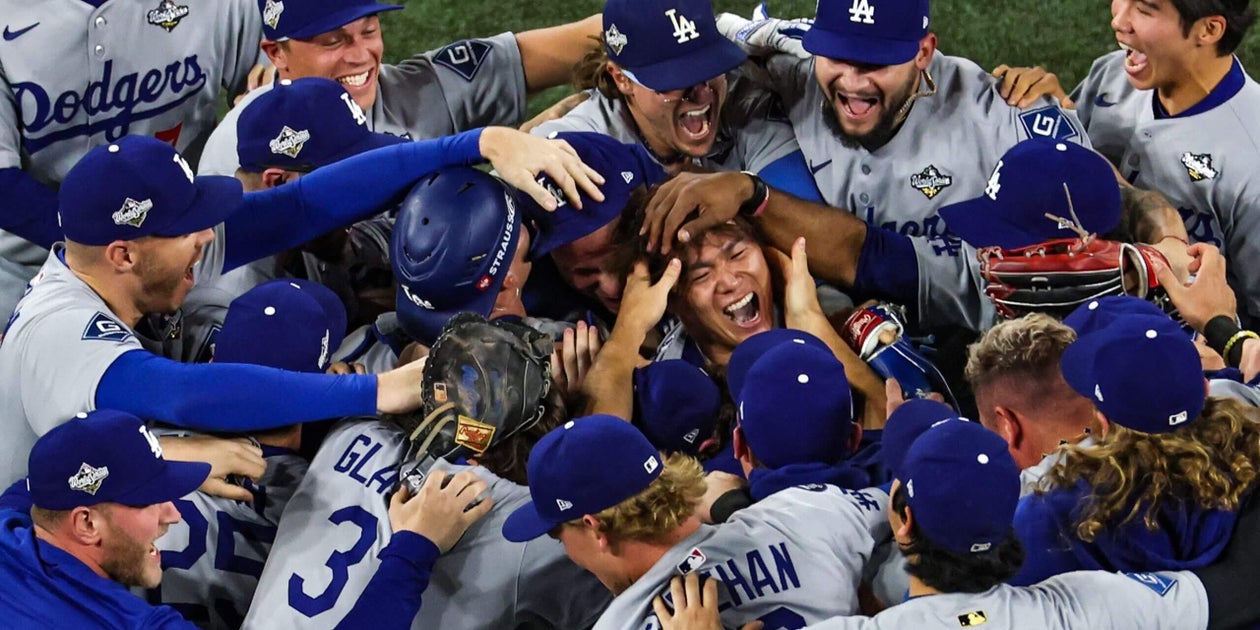
Los Angeles Dodgers (projected: 103-59)
Historical analogue: 2025 Dodgers
2025 Dodgers projection: 103-59
2025 Dodgers actual: 93-69, World Series champion
The Dodgers are unique among current organizations, but this Dodgers team is decidedly not unique among other Dodger teams. Since 2020, PECOTA has projected seven teams to win 100 or more games; the Dodgers own six of those. We could compare this 103-win projection to last year’s 103-win projection, or 2021’s 103-win projection, or 2020’s 103-win projection, or 2024’s paltry 102-win projection.
The Dodgers possess both the highest ceiling and the highest floor in the sport.
Seattle Mariners (94-68)
Historical analogue: 2017 Astros
2017 Astros projection: 93-69
2017 Astros actual: 101-61, World Series champion
These Mariners are the first non-Astros AL West team to be projected for 90-plus wins since the 2015 Angels. (Seattle hopes it goes better than it did for that squad, which went 85-77.) Like 2017’s version of the Astros, there’s reason to hope the Mariners can outperform even lofty expectations and win the first title in franchise history, thanks to a well-rounded roster.
Chicago Cubs (90-72)
Historical analogue: 2022 Astros
2022 Astros Projection: 90-72
2022 Astros Actual: 106-56, World Series champion
The 2022 Astros, on the other hand, were an established entity in winning their second championship. These Cubs don’t have that pedigree yet themselves — though, hey, signing Alex Bregman from those ’22 Astros helps — but they possess the same kind of roster mix of veterans and on-the-rise youngsters. (Houston had basically remade its whole rotation behind Justin Verlander by 2022.) Getting to 106 wins might be tough, but seizing the NL Central and making more noise in the postseason is certainly within reach.
Atlanta Braves (89-73)
Historical analogue: 2016 Red Sox
2016 Red Sox projection: 88-74
2016 Red Sox actual: 93-69, AL East champions
Atlanta and that Boston team were each coming off consecutive disappointing seasons (though in Boston’s case, they were both last-place seasons). Projected to be solid anyway, the Red Sox justified that by winning a good division. Atlanta figures to be in a tight race itself in this year’s NL East.
New York Mets (89-73)
Historical analogue: 2015 Cardinals
2015 Cardinals projection: 89-73
2015 Cardinals actual: 100-62, NL Central champions
While these Mets have more star power than those Cardinals, they hope to ride a similarly well-rounded approach to something like triple-digit wins and a division title. St. Louis used Matt Carpenter to lead the offense, Jason Heyward in the best season of his career and a resurgent John Lackey in the rotation to beat out the 98-win Pirates and 97-win Cubs in the best NL Central in history.
Toronto Blue Jays (88-74)
Historical analogue: 2019 Nationals
2019 Nationals projection: 89-73
2019 Nationals actual: 93-69, World Series champions
The Jays exorcised some significant postseason demons last fall, so they’re not in exactly the same position the Nationals were back in 2019, when Washington had yet to win a playoff series. But the idea for those Nats, same as these Jays, was to pay off a successful era in team history with a trophy.
New York Yankees (88-74)
Historical analogue: 2018 Red Sox
2018 Red Sox projection: 88-74
2018 Red Sox actual: 108-54, World Series champions
By 2018, the Red Sox had been back in the postseason two years in a row without winning it all. Overlooked going into that season, they stormed out to a 17-2 record and never looked back en route to one of the more dominant full seasons in recent baseball history. The Yankees have had more playoff success lately but still lack the ultimate prize, and they possess the talent capable of running away in the American League.
Philadelphia Phillies (85-77)
Historical analogue: 2008 Phillies
2008 Phillies projection: 86-76
2008 Phillies actual: 92-70, World Series champions
It’s just about finishing the deal in October for the Phillies. The ’08 team was on the front end of a string of division championships; this ’26 team is probably nearing the back end of it. But this pitching staff is stronger top to bottom, especially if Zack Wheeler stays on track for an early-season return.
Kansas City Royals (85-77)
Historical analogue: 2025 Blue Jays
2025 Blue Jays projection: 85-77
2025 Blue Jays actual: 94-68, AL pennant
This time last year, you might have raised an eyebrow at Toronto’s 85-win projection, thinking it was high. Instead, the Blue Jays exceeded that by nine wins, won the AL East, the pennant, and nearly the championship. The Royals may not feel like a favorite in the AL Central, but PECOTA likes the mixture of experience in their rotation and youthful upside in the lineup. Without a behemoth like the Dodgers in the AL, a pennant isn’t out of the question.
Houston Astros (84-78)
Historical analogue: 2025 Phillies
2025 Phillies projection: 86-76
2025 Phillies actual: 96-66, NL East champions
It can feel like the Astros’ run is over already: The ALCS streak ended in 2024, the postseason streak last year. Entering last season, it felt like Philadelphia’s moment had passed it by, unable as it was to take advantage of a weaker NL playoff field in 2024. The Phillies put together a 96-win regular season anyway to claim another division title. The Astros have that type of talent, especially if Yordan Alvarez is healthy this time around.
Texas Rangers (84-78)
Historical analogue: 2011 Rangers
2011 Rangers projection: 85-77
2011 Rangers actual: 96-66, AL pennant
No, this year’s Rangers aren’t coming off a pennant the way they were in 2011. But there’s still plenty of legit pedigree remaining from the 2023 title, with Corey Seager in the lineup and Nathan Eovaldi leading one of the AL’s best rotations. The ’11 Rangers were buoyed by bigger steps forward by Elvis Andrus, Matt Harrison and Derek Holland. Looking at you, Wyatt Langford, Evan Carter, Jack Leiter and Kumar Rocker.
Detroit Tigers (84-78)
Historical analogue: 2013 Cardinals
2013 Cardinals projection: 84-78
2013 Cardinals actual: 97-65, NL pennant
Even after consecutive playoff berths, PECOTA wasn’t sold on the ’13 Cardinals. In fact, a common theme here is how little it was sold on the Cardinals on a yearly basis. St. Louis’ deep offense made up for a lack of impact power, its rotation was boosted by midseason promotions and its bullpen was lights out. Detroit’s big step forward was truncated last year by a late-season fade. But it’s started to create the roster depth that raised the ceiling for those Cardinals.
Boston Red Sox (84-78)
Historical analogue: 2011 Cardinals
2011 Cardinals Projection: 84-78
2011 Cardinals Actual: 90-72, World Series champions
Yep, St. Louis again, 84-78 again. It’s a reminder that, for a team projected to win about 84 games, a 90-win season is totally within reason — and when a team wins 90 games, winning the World Series is not outlandish. The 2011 Cardinals did require a late-season collapse by Atlanta that season (let’s not talk about late-season collapses from 2011 in the Red Sox blurb), but they had that solid mix of veterans and youth that can carry a team late. The depth of that team was at the plate, while for the Sox it’s mostly on the mound.
Baltimore Orioles (83-79)
Historical analogue: 2011 Tigers
2011 Tigers projection: 83-79
2011 Tigers actual: 95-67, AL Central champions
Let’s live in the glory days of the early 2010s. Nobody won 100 games, every 84-win projection picked out a division winner, and VCU could play Butler in the Final Four. Before 2011, the Tigers had not paid off the promise of that 2006 pennant. They’d narrowly missed the playoffs in a couple of seasons since, and they were nearing a quarter-century without a division title. But fueled by the addition of another big bat in Victor Martínez, the 2011 squad started a string of division crowns in Detroit. The Orioles, with Pete Alonso now complementing his orange with black, hope that one more middle-of-the-order presence pulls the lineup together for a team that hasn’t lived up to 2023’s promise in the years since.
Tampa Bay Rays (82-80)
Historical analogue: 2015 Mets
2015 Mets projection: 81-81
2015 Mets actual: 90-72, NL pennant
The 2015 Mets were proof that it doesn’t matter how bad your offense is for four months if you’ve got the pitching to keep you around. Tampa Bay’s offense shouldn’t be that much of a weakness; the top three are close to as good as it gets in the American League. But if the Rays are going to surprise people in the sport’s toughest division, they’ll need Shane McClanahan and Drew Rasmussen at their absolute best.
Milwaukee Brewers (82-80)
Historical analogue: 2021 Braves
2021 Braves projection: 82-80
2021 Braves actual: 88-73, World Series champions
Atlanta in 2021 and St. Louis in 2006 are, to me, the prime examples of how you don’t always win it all with your best team. Sometimes, when you give yourself enough chances, it breaks your way one year. The Brewers have given themselves more and more chances in the last decade, and this year’s team might be the one best suited for October baseball. There are more high-ceiling arms in the rotation, more young players capable of breaking through to become stars rather than, to steal a term, Average Joes.
Pittsburgh Pirates (82-80)
Historical analogue: 2015 Cubs
2015 Cubs projection: 82-80
2015 Cubs actual: 97-65, NL wild card
The 2015 Cubs are the team that arrived a year earlier than everyone expected. That would be the case for a Pirates team that isn’t carrying Konnor Griffin on the Opening Day roster, that got just a glimpse of Bubba Chandler last season and that is still waiting for Jared Jones to return to the rotation. But sometimes everything happens quicker than you expect, and you find yourself in the NLCS.
San Francisco Giants (82-80)
Historical analogue: 2010 Giants
2010 Giants projection: 81-81
2010 Giants actual: 92-70, World Series champions
The Giants have become the Khris Davis of teams; he nailed the same batting average year after year, and the Giants win 79 to 81 games each season. So it’s fitting to compare them to a squad projected to finish .500 but instead won it all. The 2010 Giants were sparked by a guy named Buster Posey growing into a new role at the major-league level; the 2026 Giants can be sparked by the same thing.
San Diego Padres (81-81)
Historical analogue: 2025 Brewers
2025 Brewers projection: 80-82
2025 Brewers actual: 97-65, NL Central champions
Despite its recent track record of reaching the postseason, Milwaukee wasn’t expected to be a significant factor in the NL last season. The Padres are in a similar spot this spring. That lineup can be deeper than you think, and the bullpen can still mitigate the weaknesses in the starting rotation, especially until some more arms get back during the season.
Arizona Diamondbacks (79-83)
Historical analogue: 2024 Padres
2024 Padres projection: 79-83
2024 Padres actual: 93-69, NL wild card
San Diego had won 89 and 82 games the two seasons prior to 2024, when PECOTA thought it would slip further to 79 wins. Arizona has won 89 and 80 games the last two seasons, and now PECOTA thinks it will slip further to 79 wins. In both cases, the core contributors to a really good team are still there. The Diamondbacks still have Ketel Marte and Corbin Carroll and even Zac Gallen and Merrill Kelly, and their rotation can’t have as much bad luck as last year (or so you’d think). And the bullpen? Well, you can figure that out in-season.
Minnesota Twins (78-84)
Historical analogue: 2017 Diamondbacks
2017 Diamondbacks projection: 78-84
2017 Diamondbacks actual: 93-69, NL wild card
The 78-win projection feels optimistic given the Twins’ trajectory since the late stages of the 2024 season. The Diamondbacks bottomed out to 93 losses a decade ago, brought in a new manager and got off to a hot start en route to 93 wins. Minnesota dropped all the way to 92 losses last season and has brought in a new manager in Derek Shelton. It still has a frontline starter and some intriguing rotation arms and players capable of star performances in the lineup. Now the Twins only need the hot start?
Cincinnati Reds (77-85)
Historical analogue: 2019 Athletics
2019 Athletics projection: 78-84
2019 Athletics actual: 97-65, AL wild card
Rodney Dangerfield thought the last decade’s A’s weren’t shown the proper amount of respect. Then-Oakland won 97 games in 2018, was projected for 78 in 2019, and then won 97 again. Sure, Cincinnati’s 83-win wild-card berth wasn’t quite as formidable, but there’s a lot of already established talent here. Can Elly De La Cruz take the big step forward Marcus Semien did for the Athletics? Can other young hitters in the lineup do enough to back a pitching staff that should again be among the NL’s best?
Athletics (77-85)
Historical analogue: 2015 Astros
2015 Astros projection: 77-85
2015 Astros actual: 86-76, AL wild card
Nobody has yet predicted the A’s to win the 2028 World Series, but the trendline is compelling. This team has found the middle-of-the-order bats needed to get to October — their George Springer and José Altuve, as it were. Now it’s about complementing them, perhaps with Leo De Vries as the Carlos Correa comp. There’s no potential Cy Young Award winner like Dallas Keuchel in-house, but Luis Morales could be the start of a more competent pitching staff, with Gage Jump eventually to follow.
Cleveland Guardians (76-86)
Historical analogue: 2022 Guardians
2022 Guardians projection: 77-85
2022 Guardians actual: 92-70, AL Central champions
Sorry, but it’s a rule: “Guards Ball” more or less rejects any comparisons of the Guardians to other team dynamics. This year’s Guardians team is expected to have a rough offense and a pretty good pitching staff. Sound familiar? The ’22 version ended up having a better than expected offense thanks to the breakout of Andrés Giménez, who put together a sixth-place finish in MVP balloting. Cleveland sure could use that kind of breakout from one of its several youngsters to carry it to another unexpected postseason appearance.
Miami Marlins (74-88)
Historical analogue: 2014 Royals
2014 Royals projection: 78-84
2014 Royals actual: 89-73, AL pennant
We thought about allowing Miami to skip a step with a comp to the 2015 Royals: That team was projected for only 72 wins and won 95 and the championship. But the trendline is more in line with the 2014 predecessors, who went from 72 to 86 to 89 wins and a pennant. Miami jumped from 62 to 79 last season; another leap forward thanks to a full season of Eury Pérez and a deeper stable of offensive contributors could get Miami into the playoffs where, as the 2014 Royals showed so jubilantly, anything can happen.
Chicago White Sox (69-93)
Historical analogue: 2012 Orioles
2012 Orioles projection: 72-90
2012 Orioles actual: 93-69, AL wild card
The 2012 Orioles remain the go-to for a wild card team that really came out of nowhere — which is why they’re the comp for the White Sox for a second straight season. Maybe that’s unfair to a Chicago team that has pretty clearly improved since the end of last season. There’s some actual intrigue here, thanks to Colson Montgomery and Munetaka Murakami and Kyle Teel. To actually get to October, though, it will take the kind of one-run luck that propelled Baltimore in 2012, when it went 29-9 in one-run games to make the postseason.
Washington Nationals (67-95)
Historical analogue: 2020 Marlins
2020 Marlins projection: 71-91
2020 Marlins actual: 31-29, NL wild card
Yeah, the Nats’ playoff odds — currently below one percent — probably would benefit from a 60-game sprint rather than a 162-game marathon. But hey, even in a very good NL East, crazy things can happen and have happened. The Nats would need some career outlier seasons like those Marlins received from Miguel Rojas and Garrett Cooper, as well as breakthroughs from their youth. (For Miami, that was Sandy Alcántara and Sixto Sánchez.) C.J. Abrams and James Wood playing like stars all season is a plausible place to start.
St. Louis Cardinals (67-95)
Historical analogue: 2025 Reds
2025 Reds projection: 74-88
2025 Reds actual: 83-79, NL wild card
Here’s the thing about the National League: Yeah, you’ve got the Dodgers, and you’ve got a few more teams with solid shots to win 90 games. But when you’re thinking about that last wild card or two, the pickings start to get slimmer. Right now, the sixth-best projected record in the league is 82-80 — a tie between Milwaukee, Pittsburgh and San Francisco. It’s not wild to think a win total in the low 80s can get you into the dance, the way it did in 2023 for the Diamondbacks and Marlins and the way it did last year for the Reds. The Cardinals can be that team, if some of their youth arrive earlier than expected and the pitching staff is surprisingly competent.
Los Angeles Angels (66-96)
Historical analogue: 2012 Athletics
2012 Athletics projection: 72-90
2012 Athletics actual: 94-68, AL West champions
Those 2012 A’s — who didn’t look like a playoff contender at the All-Star break, let alone in spring training — were largely led by maturation from their youth. It was Yoenis Céspedes arriving in the States, and it was Brandon Moss, Josh Reddick and Josh Donaldson coming of age. But they also got huge seasons from 31-year-old Jonny Gomes, 34-year-old Grant Balfour and 39-year-old Bartolo Colón. And when you look at these Angels, yeah, they’ll probably need to be led by Zach Neto, Nolan Schanuel and Jo Adell. But, man, it would be fun to see a huge season from Mike Trout, not to mention all the relievers born in the 1980s that constitute the Angels’ high-leverage plan.
Colorado Rockies (61-101)
Historical analogue: 2021 Giants
2021 Giants projection: 75-87
2021 Giants actual: 107-55, NL West champions
I have used this comparison for Colorado before, and I acknowledge it’s a stretch. But the 2021 Giants outperformed their PECOTA projection by 32 wins — and that’s the kind of insane season the Rockies would need to submit to be a contender in the National League. It’s the kind of year where everything goes right: where every at-bat and every pitch is given to a player who is above average and where your best players play at their peak. The Giants did that in Farhan Zaidi’s third season; the Rockies will try to do it in Paul DePodesta’s first.