
What do we mean by a ‘catchy harvest’?published at 09:36 British Summer Time
09:36 BST
Ashleigh Ellwood
Head of arable, Farmers Guardian
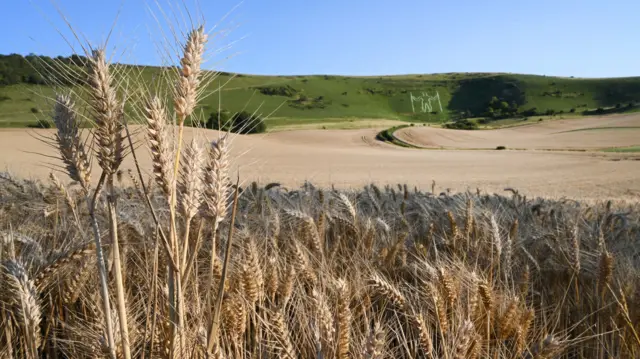 Image caption,
Crop success is largely driven by weather patterns
Harvest is upon us, the cereal
crops have turned golden and there is the steady hum of combine harvesters
working tirelessly in fields across the nation – all aiming to beat one thing –
the weather.
Crop success is largely driven by
weather patterns, which can create a real dilemma for growers during harvest,
when decisions can directly impact not only profit margins but our own food
security.
Starting this growing season with
a wet autumn during planting, followed by an extended drought period, the
challenge continues as some farmers are now facing a ‘catchy’ harvest – but
what does this mean?
Farming a ‘catchy’ harvest
describes a season where the rainfall becomes unpredictable, making harvest
more challenging and start-stop.
After experiencing a drought
during the key grain-filling period, when the crop uses its stored nutrients to
develop grains that are then harvested, a wetter harvest can degrade crop
quality and yields, and increase the risk of disease and spoilage before the crop
has the chance to be processed.
Heavy downpours and storms can
delay harvest, as farmers often stop combining and wait for a drier day. They
can only continue when the cereal crops’ moisture content is between 14-20%, as
measured with a moisture meter.
However, this year the harvest is the earliest
it has been since 2006, which gives growers more opportunity to wait a little
longer and combine in preferred conditions.
The jury is still out to determine
the success of the 2025 harvest, as many farmers are still combining, but
despite the weather woes, farmers remain committed to their crops, contributing
significantly to the nation’s food security and rural stewardship.