
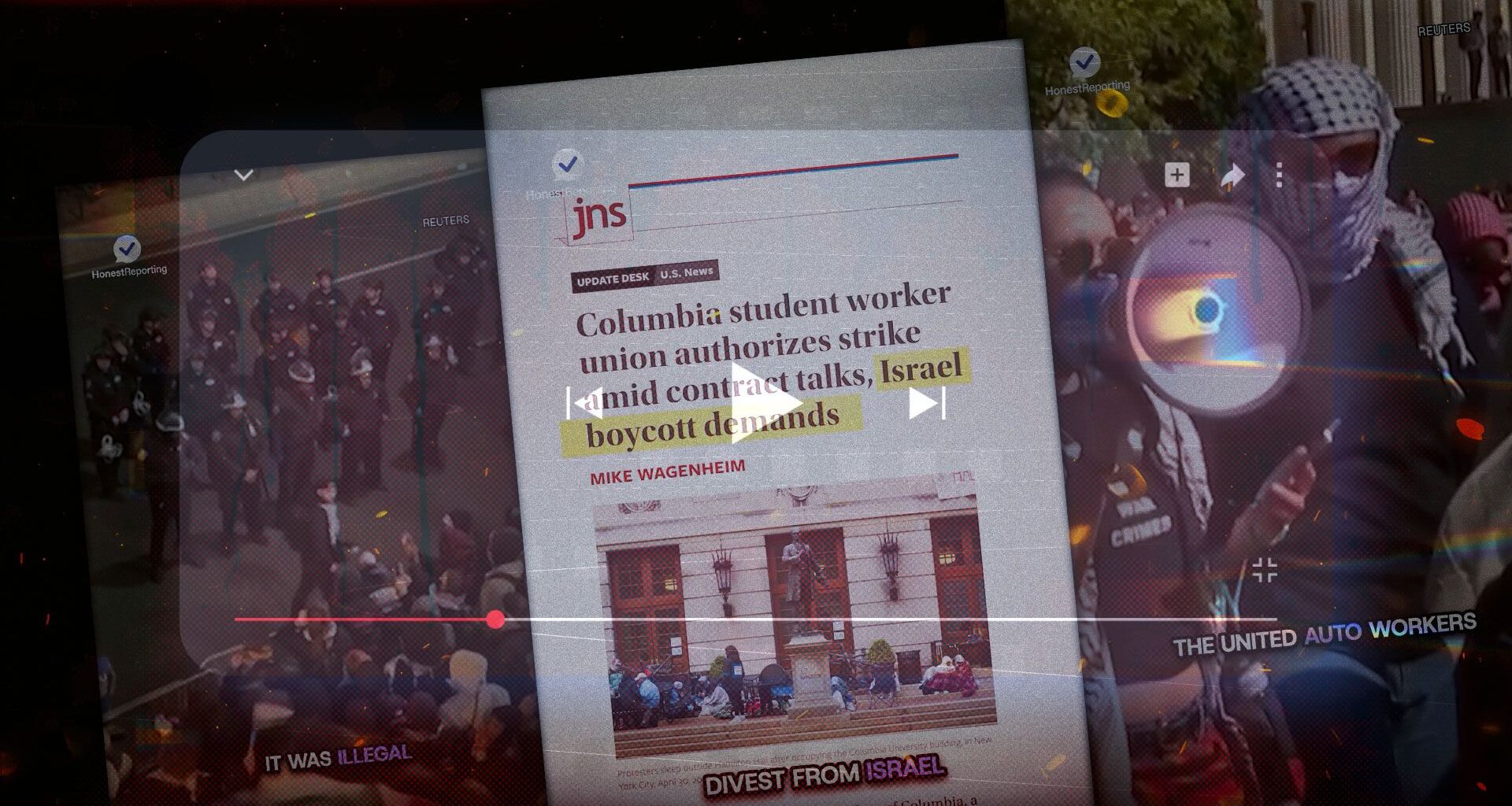
At Columbia University, a graduate student labor dispute is taking an unusual turn. Instead of centering negotiations on wages, healthcare, or working conditions, the student workers’ union has tied its demands to Israel.
The union, Student Workers of Columbia (SAW), has threatened to strike. But alongside typical labor issues, its proposal includes calls for the university to divest from Israel, cut ties with Israeli academic institutions, and grant amnesty to students involved in past anti-Israel campus occupations.
Some demands go even further. Until recently, the union pushed for a permanent ban on police presence on campus, a position it later dropped after being told it was not legally viable. It has also called for access to campus surveillance infrastructure, raising additional concerns given prior incidents where protesters damaged security cameras during building occupations.
The overlap between the union and campus activism is not incidental. SAW has been closely linked to Columbia University Apartheid Divest (CUAD), a coalition that helped organize anti-Israel encampments following the October 7 attacks. The union has reportedly supported these efforts, including helping fund activities and providing institutional backing for events.
CUAD itself has openly stated that traditional student concerns are secondary to its political goals regarding Israel. That posture has now carried over into a labor negotiation that would typically focus on workplace conditions.
Even organized labor leaders have raised concerns. The United Auto Workers, SAW’s parent union, has warned that inserting foreign policy demands into a labor contract could undermine the legal protections that govern strikes in the United States. Under labor law, strikes tied to workplace issues are protected. Political strikes are not.
What began as a labor dispute is now something else entirely. And in the process, the union risks weakening the very rights it claims to defend.
Found this video interesting? Follow the HonestReporting page on Facebook to catch more videos, and read articles debunking news bias and smears, as well as others explaining Israel’s history, politics, and international affairs. Click here to learn more!