
Washington
—
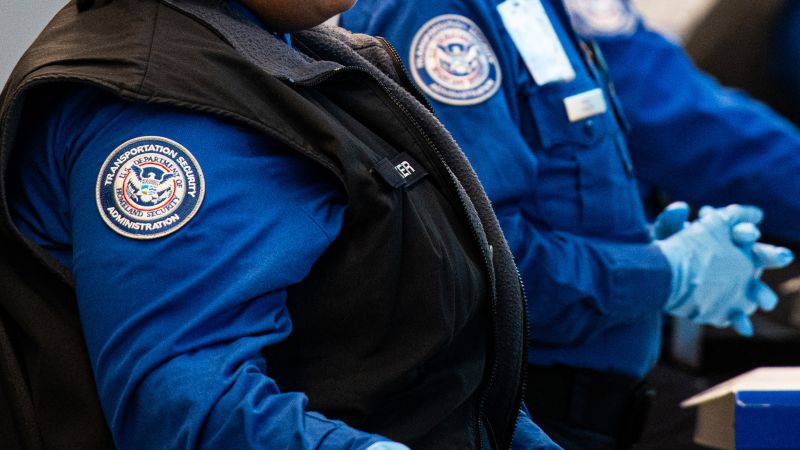
Transportation Security Administration screeners checking passengers and their bags are the most visible layer of security at airports, but now that they have gone without pay for more than a month, some aviation experts are concerned the shutdown is increasing risks.
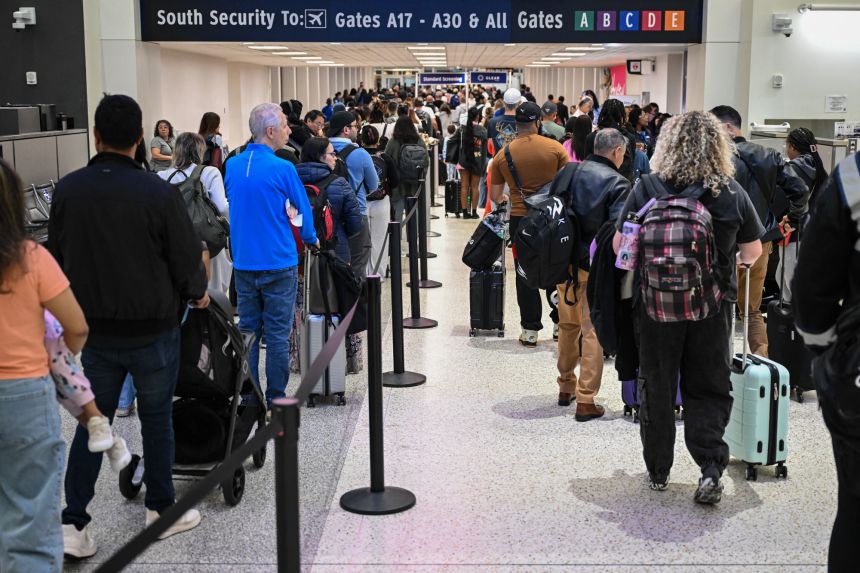
“The wait times are obviously spiking everywhere, which means it’s more chaotic, which creates a security vulnerability,” said Keith Jeffries, who ran TSA at Los Angeles International Airport and is now a vice president of K2 Security Screening Group.
“How focused are the front line employees on actually finding dangerous or prohibited items, or people with bad intentions, because they haven’t been paid?” he added.
The war with Iran, which started about three weeks ago, adds to the wide-ranging threats TSA must look out for every day. The agency is not just made up of people giving pat-downs and finding bottles of water in carry-ons but has teams assessing threats and vulnerabilities along with intelligence and law enforcement agencies.
“You can’t eliminate risk, but you can mitigate risk,” said John Pistole, who served as the TSA administrator during the Obama administration.
While TSA often notes they rely on many different layers of security, both “seen and unseen” by the traveling public, situations like this lapse in funding bring “heightened awareness to how dependent the system is on men and women at TSA,” Pistole said.
“They’re humans who might be distracted because they were worried about, ‘How am I going to pay the rent this month, buy groceries, child care, all those basics,’” he said. “That’s just human nature, even though they strive to do the best job and be professionals.”
Immigration and Customs Enforcement agents were deployed to airports around the country this week but it’s not clear what exactly their role is.
The Transportation Security Administration was created to improve and standardize security after the September 11 attacks but has increasingly fallen victim to government fights over funding. TSA agents are among 61,000 Department of Homeland Security employees not getting paid while Democrats and Republicans are locked in legislative gridlock on immigration reform.
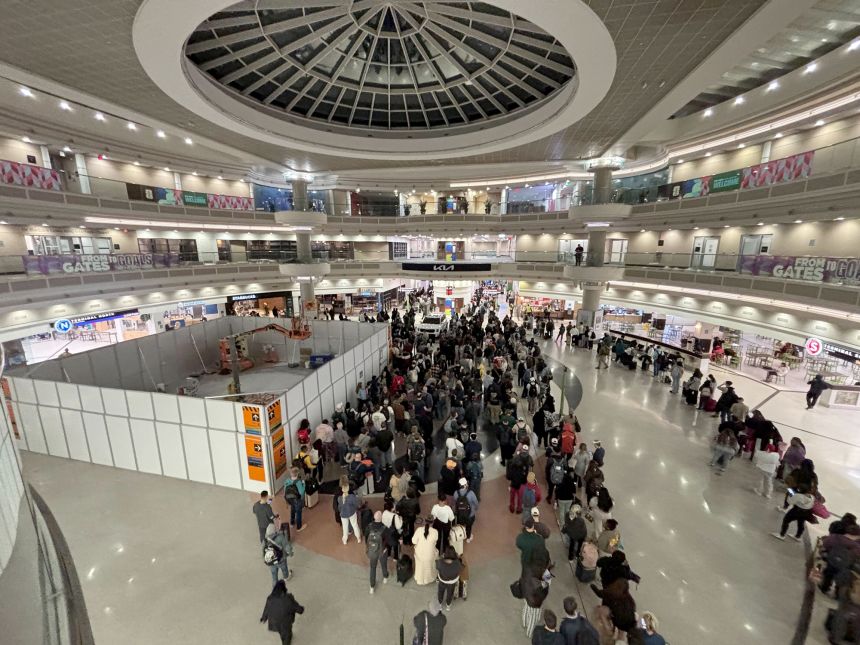
Meanwhile, in the airports, hours long lines have wrapped around terminals as travelers wait to get into fewer lanes managed by fewer TSA officers. Some checkpoints have been closed, and the agency has even warned screening could be stopped at some small airports, effectively shutting them down.
“In the past, wait times, excessive wait times, have put pressure on Congress to find a deal. But Congress should be so lucky that it’s just wait times that pressures them to a deal, and not something worse happening, like a security lapse,” said Erik Hansen, senior vice president and head of government relations for the US Travel Association.
In some respects, the long lines are a sign officers are trying to maintain standards. Passengers can’t simply be sped through the lines faster.
“We need not only to be vigilant, but extra vigilant,” Pistole said.
Yet, he worries the massive lines created when the reduced number of screeners follow the essential rules could create additional vulnerabilities.
“From the standpoint of a suicide bomber, or a shooter, (who) wants to go in and just shoot up this area, the airport, where people are in these long queues … it’s a double problem,” he told CNN’s Kate Bolduan.
Now the question remains, how long will Congress take before they act?
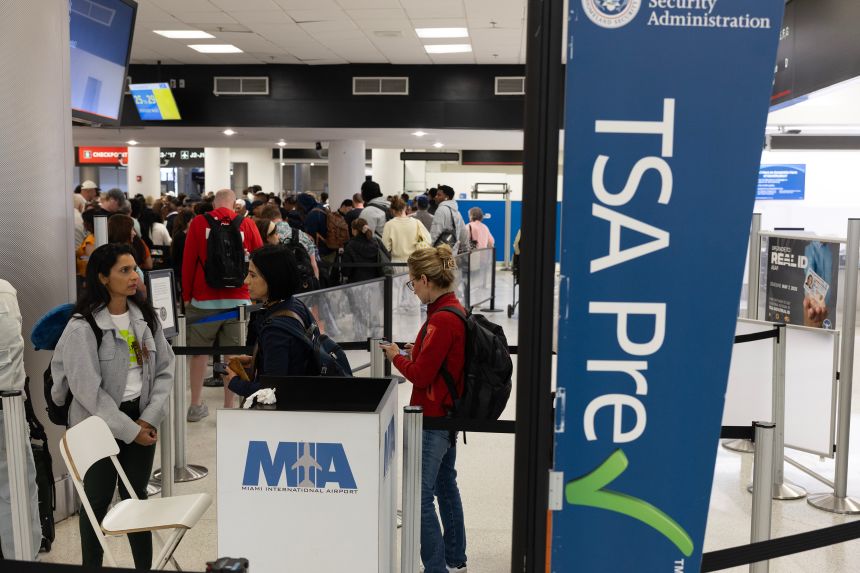
“We have thousands of travelers funneled through narrow checkpoints waiting three hours or more… we’re under constant threat to our aviation system and heightened alert when we have conflicts in the Middle East,” Hansen said. “It’s absolutely reckless to think that it’s acceptable not to pay (transportation security officers) and not to find a solution as quickly as possible.”
There is another ticking clock too. It is less than three days until a two-week-long recess.
Bills won’t be passed during the break – and most members of Congress will head to the airport, through TSA checkpoints and on planes – all secured by the same TSA agents who are not being paid.
Wednesday, acting TSA administrator Ha Nguyen McNeil will testify before a congressional committee about the shutdown.