
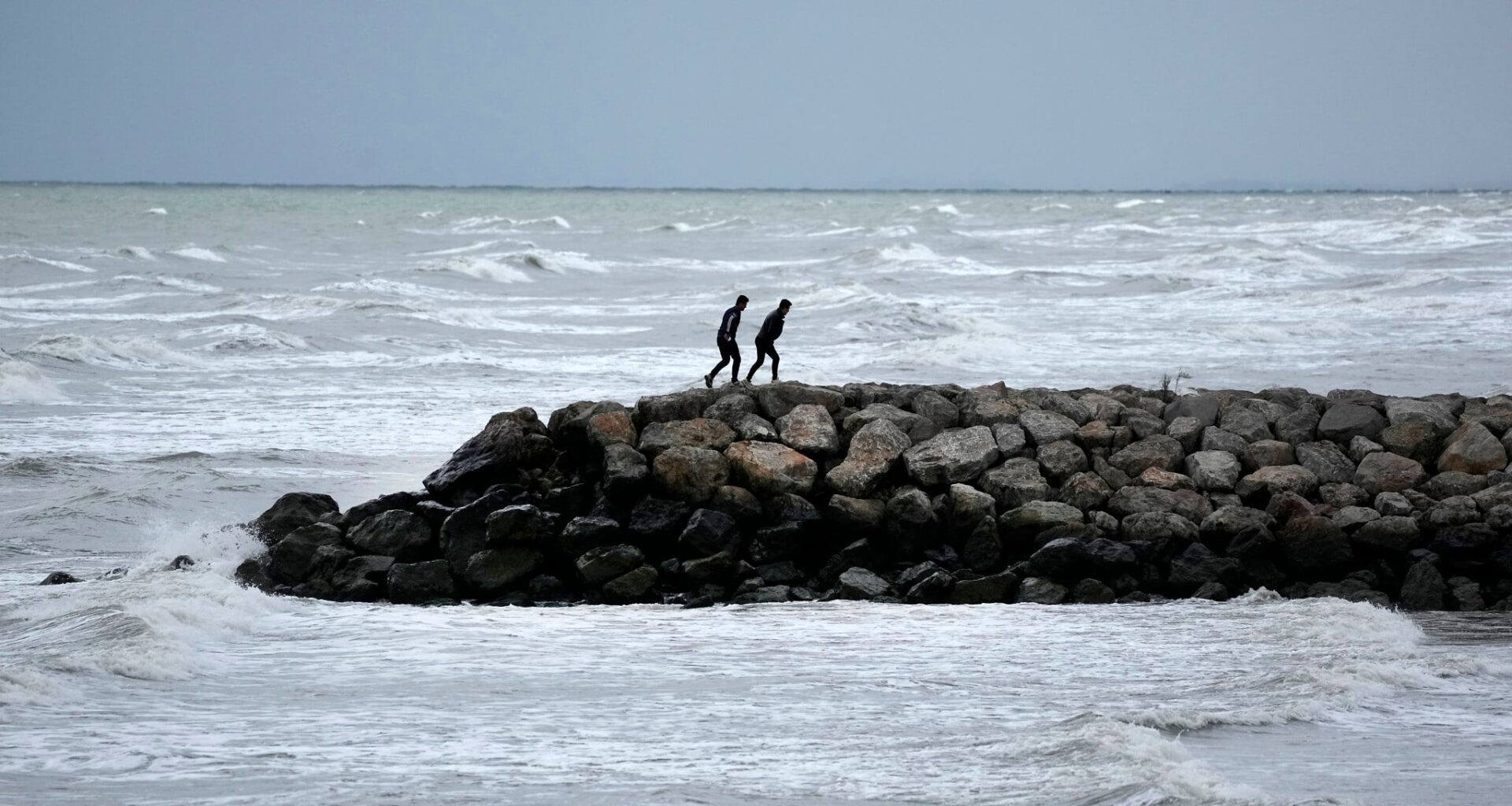
Recent Israeli airstrikes off the Iranian coast of the Caspian Sea targeted a key shipping route used by Iran and Russia for the exporting and importing of weapons, including those used by Moscow in its war on Ukraine, the Wall Street Journal reported Wednesday, citing people familiar with the matter.
According to the report, one of the key aims of the port strikes was to limit Russia’s weapons-smuggling abilities, although Israel has not publicly acknowledged this, likely due to its desire to maintain cordial ties with Moscow.
The Israeli Air Force, last Wednesday, carried out a wave of airstrikes against Iranian Navy vessels at the port city of Bandar Anzali, on the coast of the Caspian Sea. According to the IDF, the strikes destroyed an Iranian Navy corvette, four missile boats, and several auxiliary ships and guard boats, along with a command center and a shipyard.
It said at the time that it targeted the missile boats to cause a blow to the Iranian military, despite the fact that they did not pose a direct threat to Israel from the Caspian Sea.
According to The Wall Street Journal, though, the sting of the strikes was likely felt not just by Iran but by Russia, too, which has its own port on the Caspian Sea, some 600 miles from Iran’s.
Get The Times of Israel’s Daily Edition
by email and never miss our top stories
By signing up, you agree to the terms
Russia and Iran have long enjoyed close ties, and in January 2025, they signed a strategic partnership agreement to further improve cooperation, including military and defense partnerships.
The two countries, both heavily sanctioned by the West, maintain a shipping route on the inland sea, the Journal said, using it to transfer weapons — from Iran to Russia — and food supplies — from Russia to Iran.
Israeli airstrikes hit Iranian Navy vessels and infrastructure at the Iranian port city of Bandar Anzal and in the Caspian Sea, March 18, 2026. (Israel Defense Forces)
The shipping route is believed to be one of the main lines used by Russia and Iran to evade sanctions, according to experts cited by the Journal. The sanctioned Islamic Republic of Iran Shipping Lines regularly operates out of Bandar Anzali, it said, not far from where the Iranian Navy is located.
Iran has been supplying Russia with drones and other weapons since Moscow launched its invasion of Ukraine in February 2022. In 2023, Tehran transferred more than 300,000 artillery shells and one million rounds of ammunition to Moscow via the Caspian Sea, the Journal said.
Iran also initially provided Russia with the Shahed drones it favors for attacks on Ukrainian infrastructure, but Moscow now produces its own variant, having received assistance from Tehran to build its own manufacturing plant.
Russia, in turn, is widely reported to be aiding Iran in various capacities following the outbreak of its war with Israel and the US on February 28.
According to a Journal report last week, Moscow is providing satellite imagery and improved drone technology to aid Tehran’s targeting of US forces in the region, as well as supplying Iran with parts to modify Shahed drones, providing them with improved communications, navigation, and targeting capabilities.
Kyiv, which has developed a range of cheap and effective drone interceptors to protect against Russian attacks, has since deployed more than 200 defense specialists to help the Gulf states fend off Iran’s relentless drone strikes.
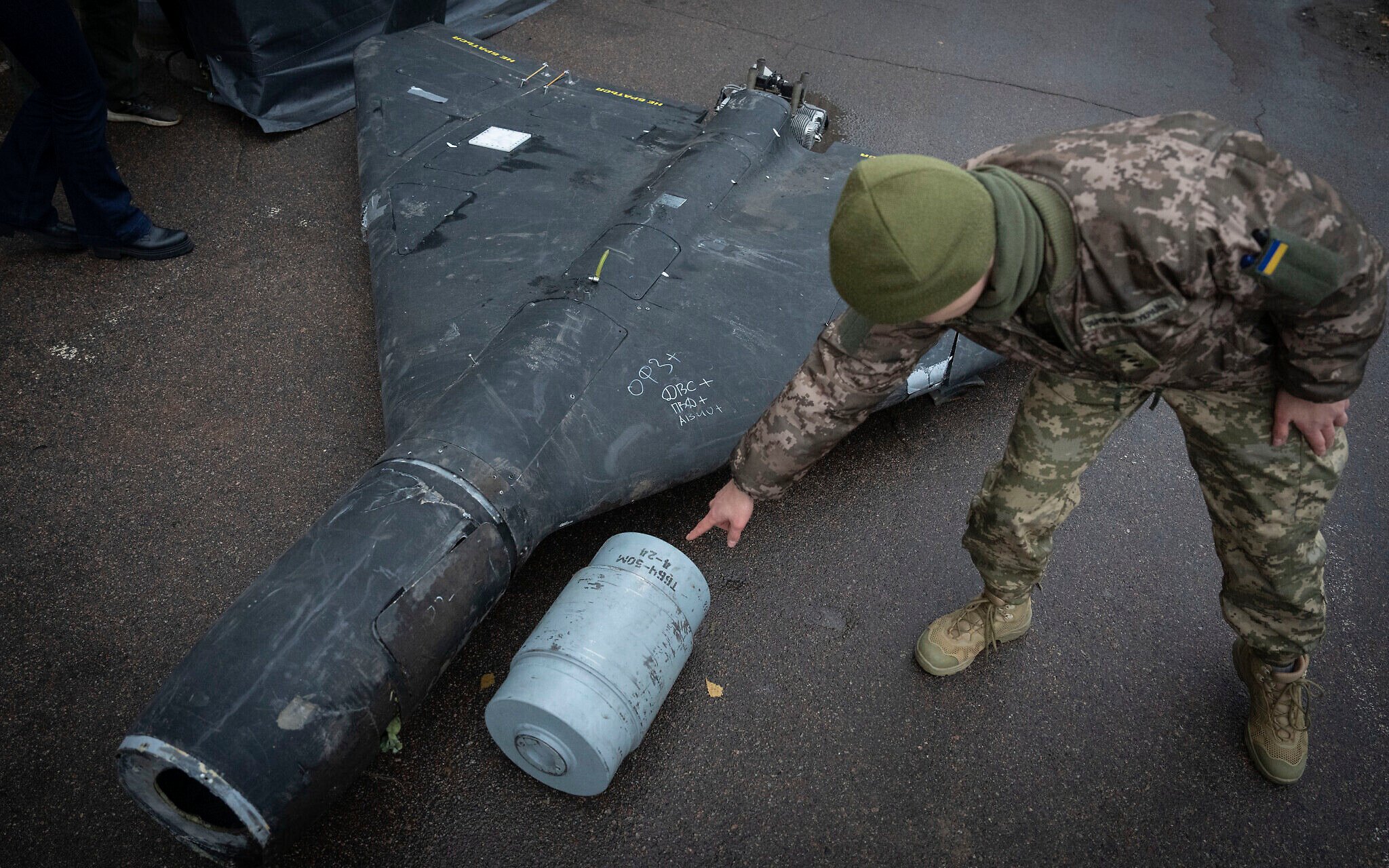
A Ukrainian officer shows a thermobaric charge of a downed Shahed drone launched by Russia in a research laboratory in an undisclosed location in Ukraine, Nov. 14, 2024. (AP Photo/Efrem Lukatsky)
The Journal said that although Israel’s Caspian Sea strikes were unlikely to halt Russian-Iranian sea trade entirely, it would likely slow the countries down for a period, as they would have to move their operations to alternate ports if they wished to continue.
Israel has not acknowledged the expected impact on Russia of the Caspian Sea strikes, which analysts told the Journal was likely a deliberate choice, given the careful line Jerusalem treads with Moscow.
Prime Minister Benjamin Netanyahu and Russian President Vladimir Putin maintain regular contact, chiefly on matters pertaining to Iran and Syria, where Russia propped up the regime of former president Bashar al-Assad during the Syrian Civil War.
Israel under Netanyahu has largely remained neutral when it comes to the war in Ukraine — sending only humanitarian aid to Kyiv, not military aid as requested — even as Russia has grown increasingly critical of Israel’s military action in the region and moved closer to its enemies.
On Monday, Russian Foreign Minister Sergei Lavrov spoke to his Iranian counterpart Abbas Araghchi regarding Israel’s strikes at the Caspian Sea port.
“Mutual concern was expressed about the dangerous spread of the conflict provoked by Washington and Tel Aviv to the Caspian Sea area,” Russia’s foreign ministry said.
Lavrov also said that attacks on Iran’s nuclear infrastructure including Bushehr posed “unacceptable risks to the safety of Russian personnel and are fraught with catastrophic environmental consequences.”
The following day, Kremlin spokesman Dmitry Peskov warned that Russia would view any spillover of the Iran conflict into the Caspian Sea “extremely negatively.”
Reuters contributed to this report.
You appreciate our wartime journalism

You clearly find our careful reporting of the Iran war valuable, at a time when facts are often distorted and news coverage often lacks context.
Your support is essential to continue our work. We want to continue delivering the professional journalism you value, even as the demands on our newsroom have grown dramatically during this ongoing conflict.
So today, please consider joining our reader support group, The Times of Israel Community. For as little as $6 a month you’ll become our partners while enjoying The Times of Israel AD-FREE, as well as accessing exclusive content available only to Times of Israel Community members.
Thank you,
David Horovitz, Founding Editor of The Times of Israel