Mixed signals on an alleged peace plan to end the conflict with Iran have the markets once again in a seesaw pattern, with some analysts raising the odds of a recession due to elevated oil prices.
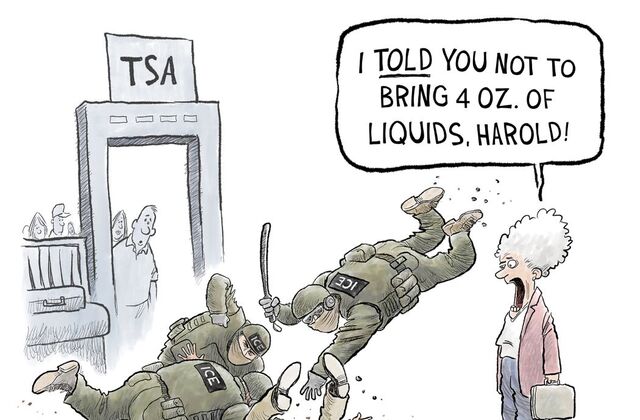
Uncertainty over the duration of the war against Iran and continuing lack of funding for airport security agents has led to Americans feeling nervous. Though President Donald Trump said this week that negotiations were ongoing with intermediaries and Iran, the Islamic Republic has said it will not accept the U.S. proposal. However, it did say it would allow some limited passage of vessels through the critical Strait of Hormuz.
The Dow Jones Industrial Average was trading about 300 points higher Wednesday. Meanwhile, a report Wednesday morning indicated that mortgage demand fell 10% overall last week, with refinance applications dropping by 15%.
“The threat of higher-for-longer oil prices continued to keep Treasury yields elevated, and mortgage rates finished last week higher,” Joel Kan, MBA’s vice president and deputy chief economist, wrote in a statement accompanying the group’s weekly survey. “The 30-year fixed rate rose to 6.43 percent, more than 30 basis points higher than at the end of February and at its highest level since October 2025.”
“Given this period of increasing mortgage rates and diminishing refinance incentives, refinance applications decreased 15 percent as applications across all loan types declined,” Kan added. “Purchase applications were also down last week, as higher mortgage rates, coupled with affordability constraints and economic uncertainty, pushed some potential homebuyers to the sidelines.”
Bond yields have risen and fallen along with oil prices, making consumer loan rates more volatile.
Meanwhile, recession odds have risen as analysts worry about the possibility of “stagflation” – a period of slow to no economic growth accompanied by rising inflation. The Kalshi prediction market site had the odds at 22% at the beginning of March, but it is now slightly above 36%. Average odds for a recession during normal periods for the economy average around 20%.
Market strategists cheered the talk of peace, with Trump saying the U.S. has “won.” But there is also a lot of caution, given that Iran appears to feel it has some leverage in its ability to throttle shipments of oil in the region and the narrow waterway through which 20% of the world’s oil moves – though far less of it destined for America.
“We view the recent developments as an encouraging signal,” wrote Mona Mahajan, head of investment strategy and asset allocation at Edward Jones. “We’re not at the end yet, but it could mark the beginning of the end. That said, we still need to see confirmation from Iran, the reopening of the Strait of Hormuz, and a more meaningful decline in oil prices. Overall, though, this appears to be a step in the right direction.”

Sign Up for U.S. News Decision Points
Your trusted source for breaking down the latest news from Washington and beyond, delivered weekdays.
By clicking “Sign Up”, you will receive the latest updates, including emails, from U.S. News & World Report and our trusted partners and sponsors, and you agree to our Terms and Conditions & Privacy Policy.
Trump and Republicans clearly need a solution to the war as polls show the party potentially losing seats in the November midterm elections and taking control of the House. There were more signs of trouble Tuesday night as Democrats secured victories in two Florida state elections in districts formerly held by the GOP. One of those was in Palm Beach County, home to Mar-a-Lago, where Trump had won by 11 points in 2024.
And prices keep rising for groceries and electricity and now even gasoline, which had been a bright spot of disinflation. Average national gas prices are right at the $4 threshold. And with oil close to $100 a barrel on world markets, they may still go up in the coming weeks.
Meanwhile, the cost of oil is filtering through to import prices, with the Bureau of Labor Statistics reporting Wednesday they rose by 1.3% in February. That is more than twice the 0.6% rise in January and well above forecast. Much of the increase was due to rising energy costs ahead of the war with Iran, though there was also a 2.5% hike in prices of non-fuel goods, the highest year-over-year increase since the index rose 2.9% for the 12-month period that ended with October 2022 in the wake of COVID-19.
“For now, the energy shock is doing what energy shocks typically do. It is acting like a tax on the global economy,” Mark Vitner, chief economist at Piedmont Crescent Capital, wrote on Monday. “Higher gasoline and diesel prices are already eroding purchasing power, particularly for lower-income households, while also raising costs across transportation, logistics, and production.”
“Airlines, railroads and trucking firms are already making hard choices to control cost,” Vitner added. “The more important development, however, is that the shock is broadening. This is no longer just about oil and diesel fuel. Fertilizer, liquefied natural gas, industrial gases, and shipping costs are all being drawn into disturbance. When supply shocks move beyond a single commodity and into the wider production network, they tend to persist longer and prove more difficult to unwind, particularly if fears of shortages and higher prices become embedded in decision-making.”
That is the fear and the threat to the economy. With the Federal Reserve likely to hold interest rates steady until later in the year and with Congress facing possible requests for a supplemental appropriation of as much as $200 billion for the Iran war, policymakers are constrained as to what they can do to stimulate the economy should it worsen into a downturn.
Next week, the BLS will release the monthly jobs report for March. After February surprised to the downside with a 92,000 job loss, it should answer whether the labor market has stalled out or if bad weather and a strike may have adversely affected February’s number.
Before that, on Friday the University of Michigan will issue its final survey of consumer sentiment for March. Expectations are that it will show a slight drop from the earlier estimates as respondents fret about rising prices.
The Week in Cartoons March 23-27