
Some 2,600 years ago, much like today, the Middle East was in turmoil.
At the time, the region featured several superpowers — the Assyrians in decline, the Babylonians on the rise, and the ever-influential Egyptians — fighting over land and hegemony in the Southern Levant.
Between the end of the 7th century and the beginning of the 6th century BCE, control over the northern part of the land of Israel — where the Assyrians had destroyed the kingdom of Israel a century earlier — switched hands from the Assyrians, to the Egyptians and then the Babylonians (who in 586 would also conquer and destroy the kingdom of Judah and Jerusalem).
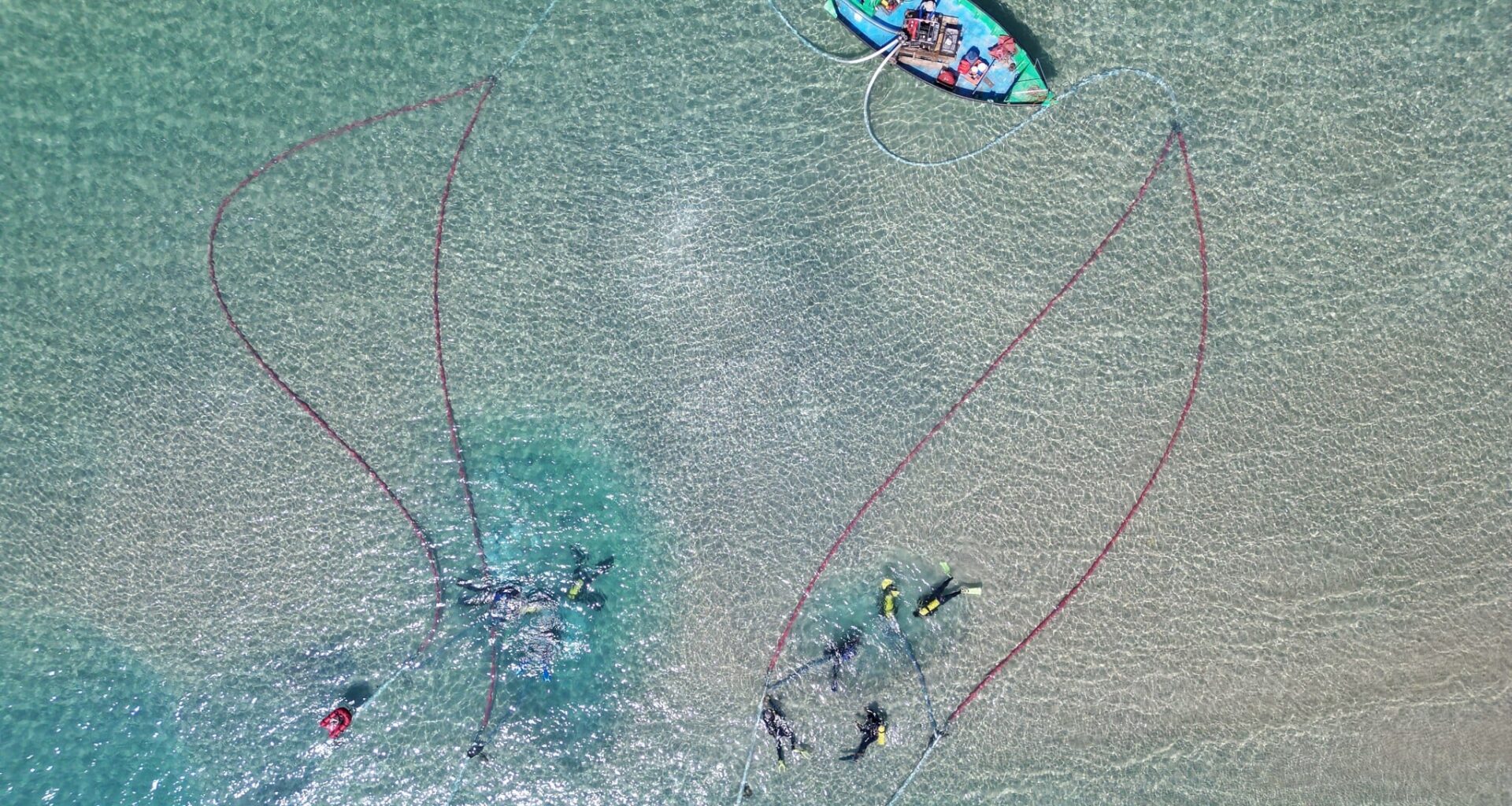
It was against the backdrop of this upheaval that a ship sank just meters from the ancient harbor of Dor, on the Carmel Coast in northern Israel (also known as Tantura Lagoon). Over two and a half millennia later, as maritime archaeologists retrieved some of its cargo, they made an unprecedented discovery, which changes the understanding of ancient metal production, trade routes, and possibly war supplies in the Iron Age (1200-586 BCE), a crucial time in the region’s history when most of the biblical narratives took place.
As revealed in a paper published earlier this month in Heritage Science, a journal of the prestigious Nature group, the goods carried by the ship – nothing of which survived other than a wood and lead anchor – included several chunks of iron in their raw state after the smelting process in a furnace.
Get The Times of Israel’s Daily Edition
by email and never miss our top stories
By signing up, you agree to the terms
Known as “iron blooms,” the artifacts offer, for the first time, evidence that iron was traded in this semifinished form, with very significant implications, Tzilla Eshel of the University of Haifa, one of the authors of the paper, told The Times of Israel.
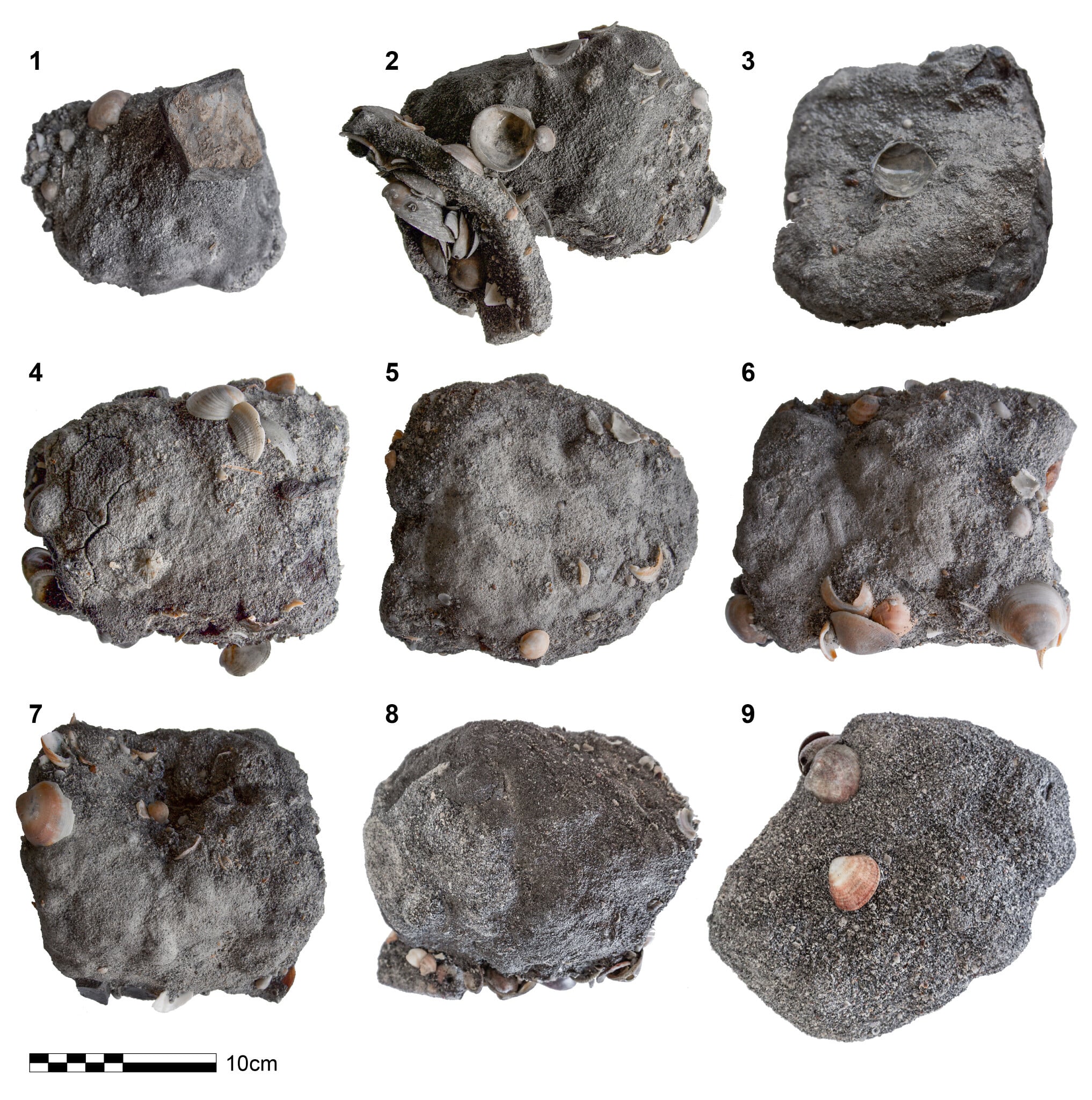
Semifinished iron chunks (known as ‘blooms’) found at the Dor/Tantura Lagoon off the Carmel Coast in Northern Israel in a discovery unveiled in the Heritage Science Journal in March 2026. (Marko Runjajić́)
According to Eshel, the dating of the iron shipment is no coincidence.
“This was a tense period of constant conquering of the Southern Levant, and iron was a very important resource,” she said. “If you produce blooms, that means someone is waiting for them on the other side, and has the technology and the ability to make them into something that is worthwhile the effort — first and foremost, weapons.”
At the time, iron was used to make arrowheads, daggers, swords and more, she explained.

Tzilla Eshel of the University of Haifa. (Courtesy)
The researchers were able to radiocarbon-date the cargo with high precision thanks to several organic samples recovered from its remains, including grape seeds in the pottery and a charred oak twig embedded in one of the blooms. Because of the rapid political changes in the few decades between the end of the 7th and the beginning of the 6th centuries, though, they could not determine which political entity the ship could be associated with, nor whether it was departing or arriving at Dor.
“When I imagine these blooms sinking, I see someone waiting for a ship full of metal that will help them fight a war, only to see it sink in front of their eyes,” Eshel explained. “However, we do not know which of the empires we can associate the trade with.”
The importance of iron
The iron artifacts were not easy to identify.
The area in the Dor Lagoon where they were found contains the remains of three ancient shipwrecks from the Iron Age: one from the 11th century BCE, one from the 9th century, and the latest from the 7th/6th centuries.
When the team of maritime archaeology students, co-directed by Prof. Assaf Yasur-Landau from the University of Haifa and Prof. Thomas Levy from the University of California, San Diego, was working to lift rocks and clear other obstacles in the excavation area, some items turned out to be incredibly heavy, much more so than regular stones.
“They looked like rocks,” Levy told The Times of Israel in a video interview. “Assaf, though, realized that we must be dealing with some form of archaeometallurgical phenomenon.”
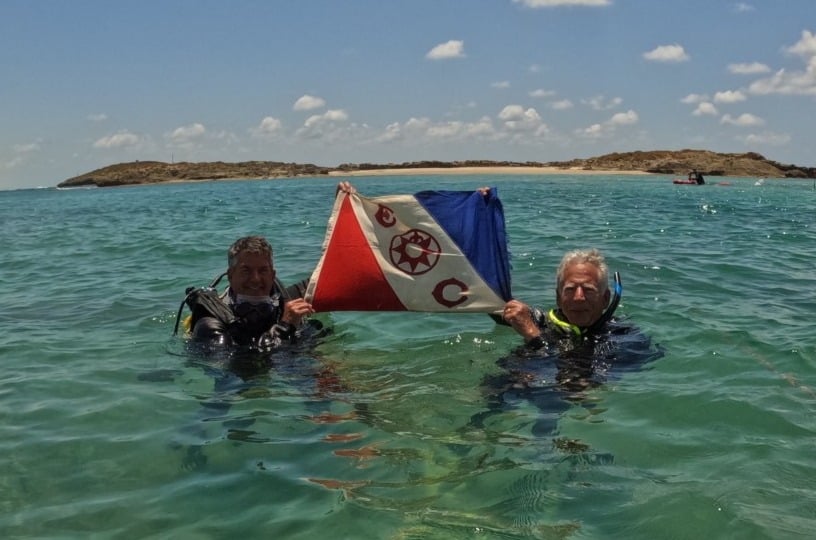
Prof. Thomas Levy from UC San Diego, (right) with Duke Pigott, a marine archaeology volunteer and graduate student at Trinity Southwest University, New Mexico, holding an Explorers Club Flag as part of the Phoenician Cargo Expedition at the Dor/Tantura Lagoon in northern Israel. (Amir Yurman/University of Haifa)
The archaeologists brought the objects ashore, each weighing between five and 10 kilograms.
As an expert in ancient metals, Eshel was called in to examine the finds and was very surprised when she identified them.
In the past, scholars generally believed that when iron ore was processed, it was immediately transformed into billets and transported as such.
Blooms represent a stage prior to billets, and finding them on a ship shows that iron could be smelted, transported as a semifinished product, and then smithed in a different location.
Eshel said the importance of iron in those ancient times cannot be overstated.
“To understand why [iron blooms] are so rare, we have to understand what the difference is between iron and other metals,” she said. “Iron is one of the most abundant metals on Earth, and still, it came into use much later in history than other metals like silver, copper, gold, and bronze.”
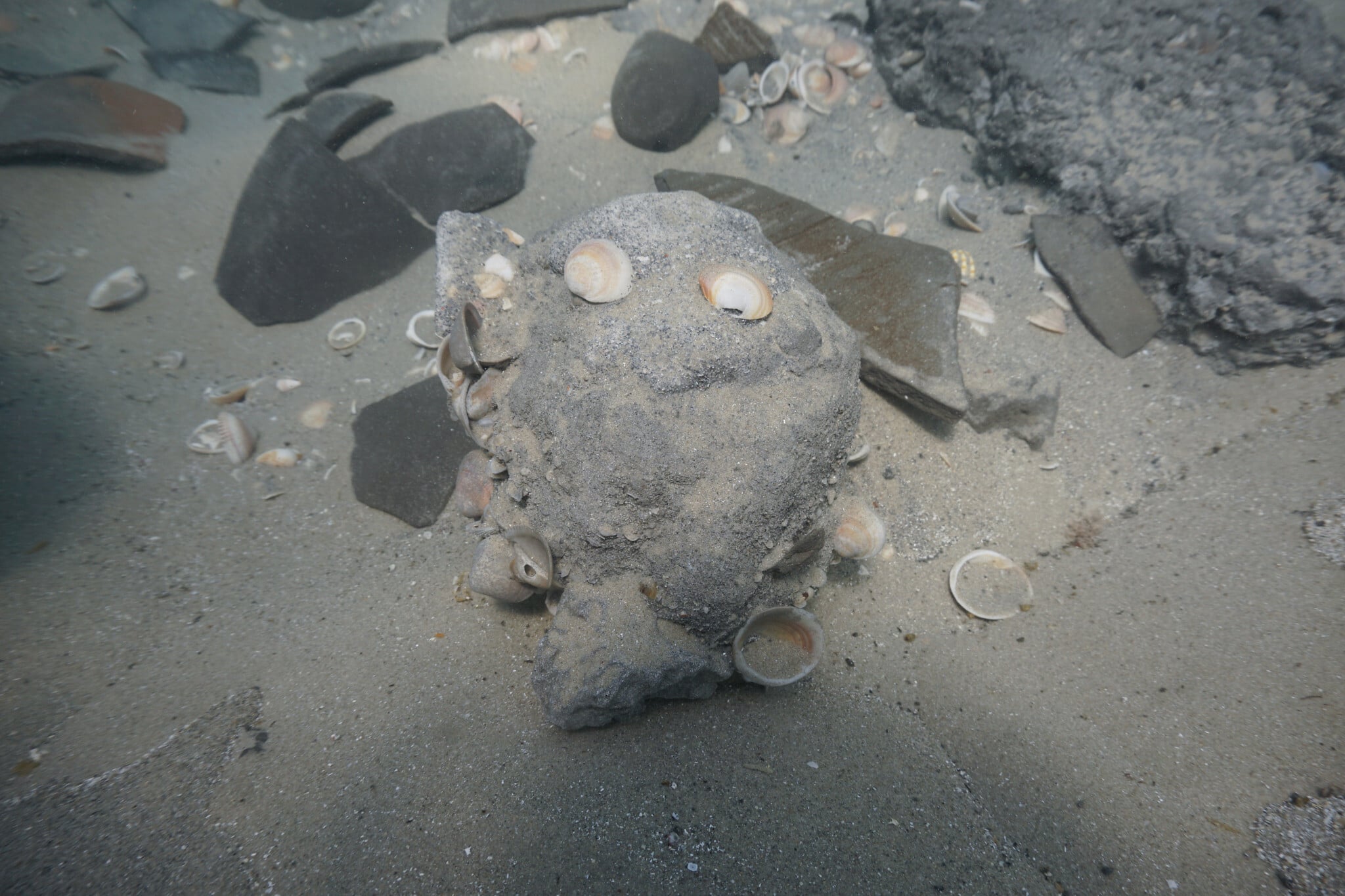
A semifinished iron chunk (known as ‘blooms’) found at the Dor/Tantura Lagoon off the Carmel Coast in Northern Israel in a discovery unveiled in the Heritage Science Journal in March 2026. (Marko Runjajić́)
The archaeologist explained that iron requires a much higher temperature to melt compared to other metals. It was therefore processed in furnaces, where it was mixed with charcoal, a technique that, over time, would create the spongy balls of iron with slag and charcoal embedded, known as blooms. To remove the non-metallic residuals, the blooms were then hammered while still hot, creating the all-metal billets.
“[Scholars] thought that blooms were not traded because it would be a waste of energy to let them cool off [without finishing the process],” Eshel said.
Some remains of blooms have been found in the past, according to Eshel, but only at sites associated with iron production.
“We never found full iron blooms like this, and at sea,” she said.
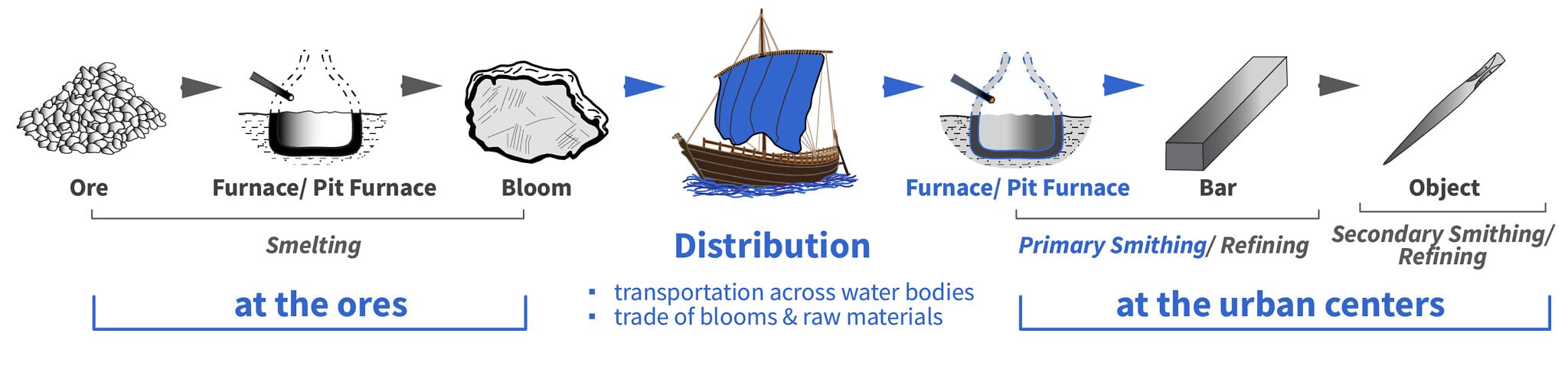
Illustrations of how iron was produced during the Iron Age (1200-586 BCE): In gray, the model before the discovery of semifinished iron chunks at Dor/Tantura as revealed in a Heritage Science study in March 2026; in blue, the contribution offered by the Dor blooms. (Tzilla Eshel/University of Haifa)
One reason the ancient traders might have preferred transporting the blooms rather than the billets is that the slag on the blooms’ surfaces protected them from corrosion if they came into contact with water, a likely occurrence during a long sea voyage.
We cut one of these blooms in half, and the iron inside was fresh as if it were produced yesterday
“Iron is very easily corroded, and when we find billets from the sea, they are very corroded,” Eshel explained. “In this case, we cut one of these blooms in half, and the iron inside was fresh as if it were produced yesterday,” she said.
In the future, the researchers hope to better understand the geographical origin of the iron.
“It’s a new expensive method, and it does not guarantee straightforward results, but we are planning on trying,” Eshel said.
In the Southern Levant, a large iron ore deposit, known to have been used in a slightly later period, was located on the Jordanian side of the Jordan River.
“There might have been other sources that we are not familiar with,” Eshel said. “But the iron might have also come from other parts of the Mediterranean.”
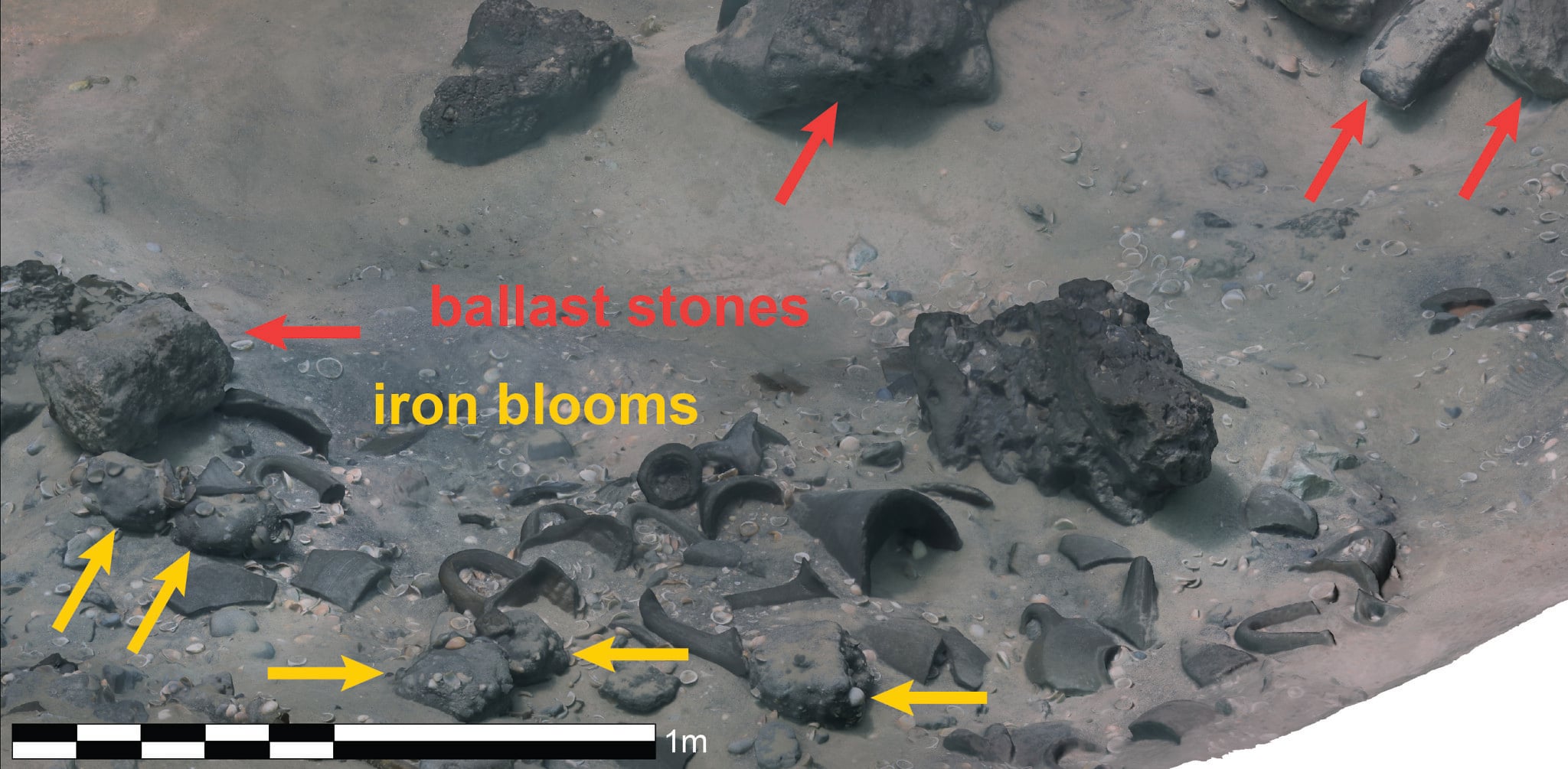
Some items found underwater in a cargo from a circa 2,600-year-old shipwreck in the Dor/Tantura lagoon in Northern Israel, including semifinished iron chunks (known as ‘blooms’) as revealed in a Heritage Science study in March 2026. (Tantura Underwater Excavation)
Several sites in the region also exhibit evidence of ironworking, including Megiddo, Tel Dor, and Acre.
Iron Age’s blooming trade
The new insights provided by the Heritage Science study are significant, confirmed Prof. Aren Maeir from Bar-Ilan University, longtime excavation director at Tell es-Safi. Usually associated with biblical Gath, Maeir was not involved in the paper.
“It’s a very interesting paper; it reveals a whole bunch of new things about iron production and trade in general,” he told The Times of Israel by phone.
“There has been a big debate over whether it was possible that iron smelting would take place in one location, and smithing in a different one,” he added. “We had this very question at Safi, and now we know that it was possible that these two stages of production happened separately.”
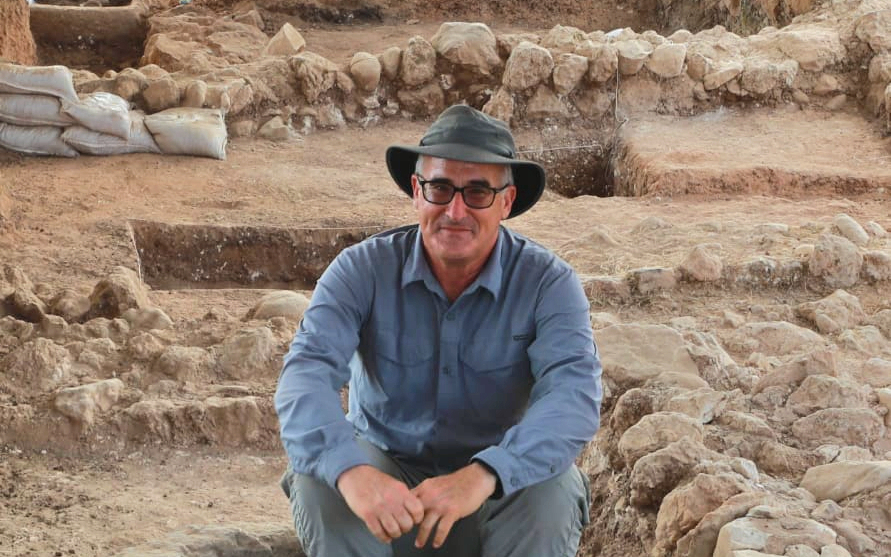
Prof. Aren M. Maeir at the Tell es Safi/Gath excavation, summer 2021. (courtesy)
According to Maeir, perhaps the most important implication of the study is how it reinforces the idea of the complexity of trade networks during the Iron Age.
“In the last 10 or 20 years, this whole topic has been, we could say, ‘blooming’,” he noted dryly. “I think the main lesson we can take from this and many other studies is how much we have to look in detail into the whole question of connectivity during this period.”
“I wouldn’t be surprised if, in the future, we find more evidence of even longer range and more complex connections between the Levant and various places to its West and East, and South,” he added.
Maeir pointed out how, in addition to the Assyrians, Egyptians, and Babylonians, the ship carrying the iron could have also been associated with the Phoenicians, a Semitic population who lived in city-states or settlements across the Southern Levant, which were often subjugated by other regional powers. This had also been the case for Tel Dor, which was primarily inhabited by Phoenicians during the Iron Age, but was conquered by the Israelites and later the three empires.
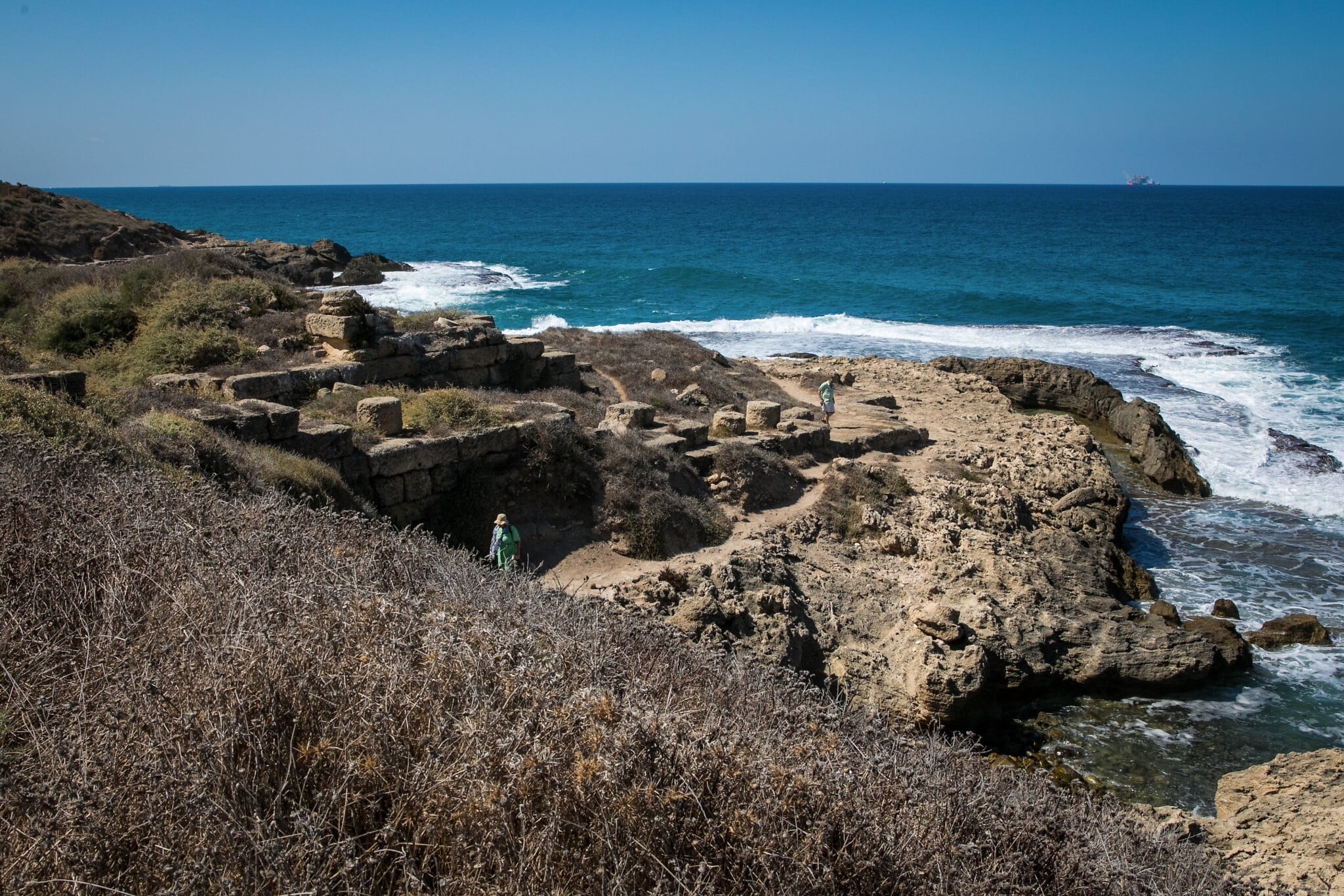
View of archeological remains of structures at the Dor/Tantura Lagoon in northern Israel, on September 23, 2019. (Anat Hermony/Flash90)
“Each political control brought in different limitations and possibilities for the people [under its rule],” the archaeologist said. “Under the Assyrians, the Phoenicians were able to control the trade but were taxed. The Babylonians destroyed some of the Phoenician cities as part of a scorched-earth policy. The brief Egyptian interlude is not well documented, but it seems that it enabled the trade to flourish.”
Asked whether he believes that the newly discovered iron was destined for weapons production, Maeir said it was very possible, but that iron was also employed for many other purposes.
“It was used for plows and agricultural tools, and other tools of production,” he noted.
According to Levy, more answers about the shipwrecks will likely come from other studies being conducted on the underwater finds, including pottery remains and stones that were likely used to balance the vessels. “We have several more papers in production,” he said.
Levy and Yasur-Landau also intend to resume excavating in the lagoon, as they have been doing for several years, usually in late spring, although current geopolitical tensions may prevent them from doing so in the coming months.
I’ll be in Israel in May and early June. Whether we’ll have an expedition, who knows?” he said. “We have to work with the current situation. We’ll just play it by ear.”