
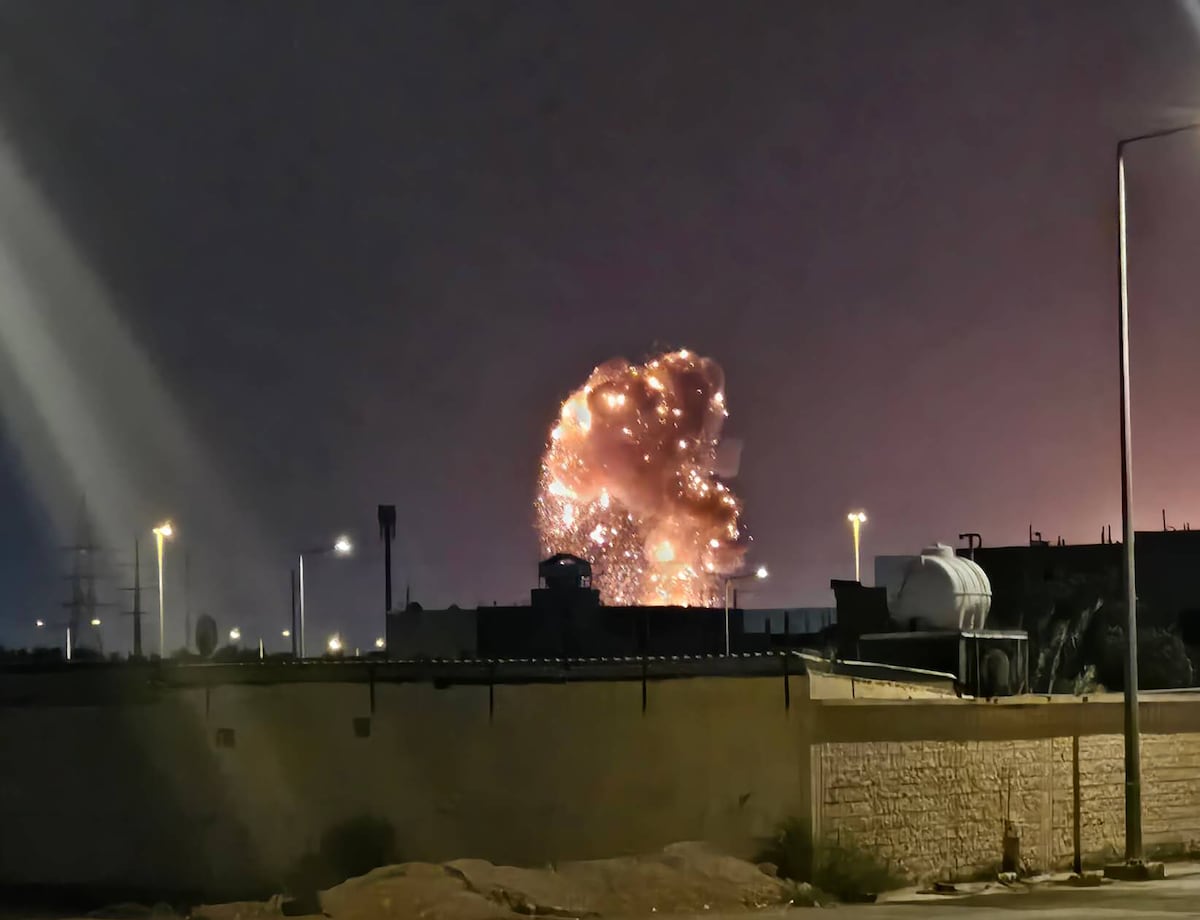
Iran on Wednesday rejected U.S. President Donald Trump’s 15-point proposal to end the war, deeming its terms “excessive.” However, it left a glimmer of hope for continued talks as mediating countries race against time to arrange a meeting between representatives of the two adversaries. This meeting, the mediators warn, could be the last chance to prevent a much more bitter escalation of the conflict.
The Iranian government’s rejection of the plan presented to them by Pakistan earlier this week on behalf of Washington was revealed through statements made by a senior Tehran official to Press TV. According to these statements, the Trump administration’s proposal is “excessive and out of touch with the reality of the United States’ failures on the battlefield.”
The senior official also considers the plan “deceptive” and pointed out that the administration has followed the same pattern in its dealings with Iran during Trump’s second term: it opened negotiations and, while these were taking place — first in June 2025 and then again this February — Washington attacked Iranian territory without bothering to reach an agreement. In the first offensive, it destroyed the country’s nuclear facilities; in the second, it killed a large part of the Iranian leadership, including Supreme Leader Ali Khamenei, who was replaced by his son, Mojtaba Khamenei. Tehran claims that this pattern could be repeated now: while offering to hold talks, the United States is concentrating military reinforcements in the Persian Gulf region, which are expected to begin arriving this Friday.
The 15-point plan appears, at first glance, to be a repetition of the proposals that envoys Steve Witkoff and Jared Kushner presented to Iranian Foreign Minister Abbas Araghchi during their three rounds of meetings before the start of the war: an end to Iran’s uranium enrichment program and the dismantling of the country’s nuclear facilities; an end to the missile program; and an end to Tehran’s sponsorship of radical Islamist groups in the Middle East. To these demands has now been added the opening of the strategic Strait of Hormuz, through which 20% of the world’s oil and gas traffic passes, and which Iran has effectively kept closed since the start of the Israeli-American offensive on February 28. The blockade of this passage has disrupted maritime traffic and triggered market instability.
In return, the United States is offering to lift the sanctions against Iran that are crippling its economy.
While Washington appears to have shown no signs of softening its demands after four weeks of conflict, Tehran is equally unyielding and maintains a maximalist stance. According to a Press TV source, the theocratic regime has presented its own conditions: it demands a complete cessation of “aggression and killings” in Iran and against its allies by the United States and Israel. It also calls for a mechanism to prevent future hostilities and the payment of war reparations. And it demands recognition of Iran’s sovereignty over the Strait of Hormuz as a “natural and legal right of Iran.”
The United States — or rather, Trump — maintains that Iran is eager to reach an agreement. “And who wouldn’t if you were there?” the president declared Tuesday from the Oval Office. He also insists that Washington has won the war — the conflict is about to reach its one-month mark — while the Pentagon is requesting an extraordinary budget of $200 billion, attacks continue, and thousands of reinforcement troops are on their way to join the 50,000 already deployed by the U.S. in the Middle East.
In response to Iranian suspicions regarding these reinforcements while Trump speaks of negotiations, administration representatives say it’s the usual tactic of the former businessman, who prides himself on being a specialist in closing deals. “With one hand he offers a deal, with the other he’s ready to hit you if he doesn’t get it,” they say. And they cite as proof of Washington’s good faith the fact that the two heavyweights of Trump’s foreign policy — Secretary of State Marco Rubio and Vice President J.D. Vance — are now involved in the negotiation efforts.
Iran’s new leaders, from the regime’s hardline faction and linked to the Revolutionary Guard, are skeptical of the negotiations with Witkoff and Kushner, real estate developers by profession, who lack nuclear knowledge and whom they believe did not fully understand the terms offered by Iran in the pre-war talks.
Meanwhile, time is ticking. This Friday, a group of three amphibious assault ships, led by the Boxer, is expected to arrive in the area under the responsibility of U.S. Central Command — which oversees U.S. operations in the Middle East — carrying approximately 2,500 Marines from the 31st Marine Expeditionary Force. The Pentagon has also mobilized some 3,000 paratroopers from the 82nd Airborne Division, who can deploy to any point in the world within 18 hours. And another 2,500 Marines from the 11th Marine Expeditionary Force have been ordered to prepare to sail aboard the amphibious group led by the Tripoli, based in San Diego.
Sign up for our weekly newsletter to get more English-language news coverage from EL PAÍS USA Edition