
Words by ITV News’ Lucy L. Middleton
There is renewed speculation that the US may try to seize Kharg Island in the Persian Gulf.
Multiple reports in US media suggest senior White House officials are considering an operation to take over the coral island, which sits 16 miles from the southwestern shore of mainland Iran.
Trump said on Friday that the US could “take out the island anytime we want”, telling reporters at the White House that it “sits there so totally unprotected”.
ITV News takes a closer look.
Why is Kharg Island important?
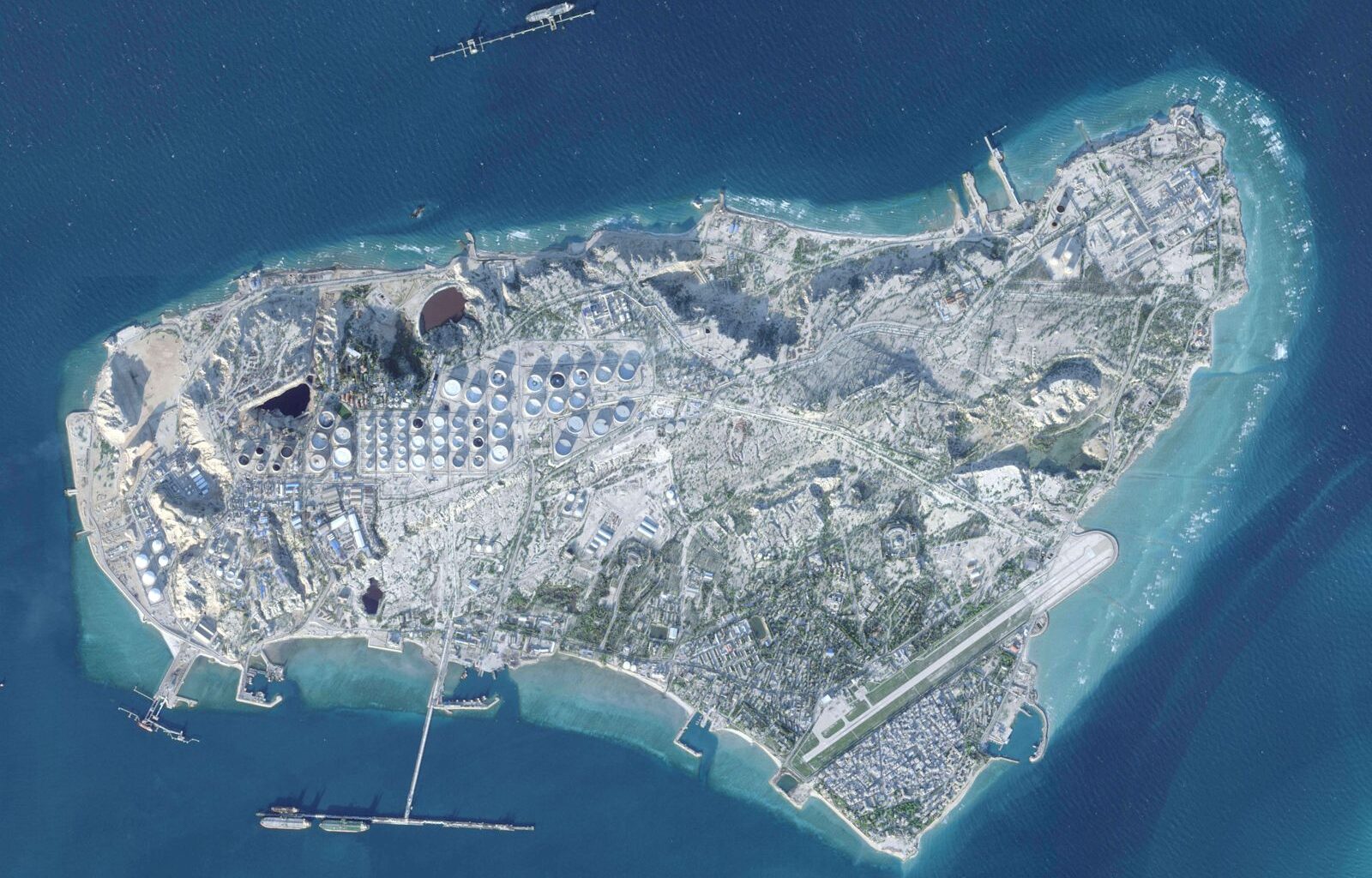
Kharg Island is Iran’s primary oil hub – the terminal for nearly all of Iran’s oil seaborne exports.
Measuring just five miles in length, it is surrounded by much deeper water than Iran’s coastline, meaning the world’s largest tankers can berth there.
This makes it Iran’s main loading, collection and storage point for crude oil, and a complex network of pipelines connects the island with onshore Iranian processing facilities.
Around 94% of Iran’s crude exports originated from Kharg in the last 12 months, data analytics company Kpler showed.
The terminal has remained active during the war, and handled 14 million barrels of crude oil during the first two weeks of March, generating revenue for the Islamic Revolutionary Guard Corps (IRGC).
The island is a vital part of Iran’s economy Credit: Getty Images via CNN Newsource
“If Iran loses control or the ability to operate its oil infrastructure from Kharg Island, its economy is annihilated. He who controls Kharg Island, controls the destiny of this war,” US Senator Lindsey Graham, a close ally of Trump, posted on X on March 14.
About 20,000 people are reported to live on the island, with most being oil workers and their families.
Is the island protected?
Kharg Island is sometimes referred to as “Forbidden Island” due to its extreme security.
The IRGC Navy maintains a presence on the land, including the 112th Zolfaghar Surface Combat Brigade, a unit equipped with fast-attack boats that have anti-ship missiles, rockets and naval mines.
It is also reported to have ground-based air defence units comprising of launchers, radars, and control centres, and bunkers for naval mines and missiles.
President Donald Trump has said Iran and the US are negotiating Credit: AP
Has the US struck the island before?
The US bombed Kharg Island during the second week of the war – and Trump issued a warning it would strike again if the Strait of Hormuz is not reopened fully.
“The United States Central Command executed one of the most powerful bombing raids in the History of the Middle East and totally obliterated every MILITARY target in Iran’s crown jewel, Kharg Island,” Trump posted on March 13.
“I have chosen NOT to wipe out the Oil Infrastructure on the Island. However, should Iran, or anyone else, do anything to interfere with the Free and Safe Passage of Ships through the Strait of Hormuz, I will immediately reconsider this decision.”
US Central Command claimed it had destroyed naval mine storage facilities and missile storage bunkers in the attack.
Iran’s semi-official Fars news agency said the strikes had caused no damage to oil infrastructure, but an air defence facility, naval base, airport control tower and helicopter hangar belonging to an offshore oil company had been targeted.
The US is placing Iran under pressure to unblock the Strait of Hormuz
What impact could a further attack have?
Seizing Kharg could give the US a bargaining tool against Iran in the battle to fully reopen the Strait of Hormuz, experts have said, as disrupting oil exports would cause economic devastation to the country.
However, it would also significantly escalate the ongoing conflict, with Iran vowing to avenge any action taken on the island.
A military source told IRGC-affiliated Tasnim News the regime would block other vital waterways such as the Bab al-Mandab Strait and the Red Sea, if Kharg were invaded.
Subscribe for free to our weekly newsletter for exclusive and original coverage from ITV News. Direct to your inbox every Friday morning.
The near closure of the Strait of Hormuz has seen oil prices surge to more than $100 a barrel continuously since the war began, with the world’s emergency oil system releasing a record 400 million barrels to combat the spike.
Iran also threatened to target energy and water facilities belonging to neighbouring countries in the Gulf when Trump issued the regime a 48-hour deadline to reopen the Strait of Hormuz at the weekend.
What has the White House said?
Trump told reporters on Tuesday that Iran has agreed to “never have a nuclear weapon” and said the countries are “in negotiations right now”, even though the Pentagon is in the process of deploying two units that will add about 5,000 Marines and thousands of sailors to the region.
The move – which will supplement some 50,000 troops already in the region – is designed to give the US president “max flexibility” on what to do next, a person with knowledge of the deployment told AP.
It has raised speculation that the US may try to seize Kharg Island or carry out an operation to remove enriched uranium from inside Iran.
Less than a week ago, Trump declared that the US could “take out” Kharg Island “anytime we want”, telling reporters at the White House on Friday the land was “totally unprotected”.
When asked about a planned invasion or blockade of Kharg, the White House’s press secretary said the US could attack the island “if the president gives the order”.
“Thanks to a detailed planning process, the entire administration is and was prepared for any potential action taken by the terrorist Iranian regime,” Anna Kelly said in a statement.
“President Trump knew full well that Iran would try to stop the freedom of navigation and free flow of energy, and he has already taken action to destroy over 40 minelaying vessels.”
The speaker of Iran’s parliament has denied direct talks are taking place with the US, while an Iranian military spokesman mocked the attempt at a deal on Wednesday.
“Have your internal conflicts reached the point where you are negotiating with yourselves?” said Lt. Col. Ebrahim Zolfaghari, a spokesman for the headquarters, said in a prerecorded video aired on state television on Wednesday.
“The one claiming to be a global superpower would have already gotten out of this mess if it could. Don’t dress up your defeat as an agreement. Your era of empty promises has come to an end.”
Reporting History sees journalists join News At Ten anchor Tom Bradby to revisit their remarkable on-the-day reports of the defining events of the modern age. Listen to the episodes below…