
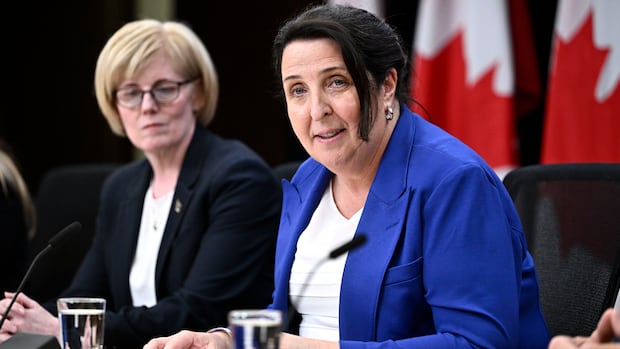
A commission studying the Canadian sport system has called for sweeping change to the way sport is structured, after its work found “the widespread presence of maltreatment and abuse” in a poorly resourced and organized system.
The Future of Sport in Canada Commission, led by former Chief Justice Lise Maisonneuve, has issued nearly 100 calls to action that range from immediately increasing funding to the sport system, to a long-term goal of creating a “centralized sport entity” to oversee sport in Canada.
“As we examined the Canadian sport system, it became very clear that the challenges in Canadian sport are profound — from underfunding and governance deficits, duplication of efforts among organizations, fragmentation and a lack of integration of policies and programs, to an unhealthy focus on high-performance outcomes over participant safety and dignity,” Maisonneuve wrote in her report.
“Indeed, at times, we wondered whether this can even be described as a ‘sport system’ given the pervasive problems that exist.”
The report describes a “broken” system where abuse and maltreatment is rampant at all levels. Racism and discrimination “are widespread not only at the national level but also within community sport.”
The commission heard how “a small contingent of decision-makers and senior leadership within the Canadian sport system had gained massive influence over the direction of priorities and funds and directly or indirectly benefitted from the status quo.”
Some who spoke to the commission were concerned that if the same people are involved in the creation of a new sport entity, change won’t happen, the report says.
WATCH | Report finds chronic underfunding, widespread maltreatment in Canadian sport: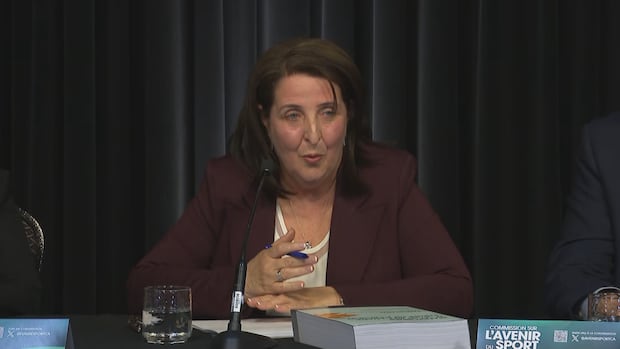
Report finds chronic underfunding and widespread maltreatment in Canadian sport
Commissioner of the Future of Sport in Canada Commission Lise Maisonneuve and Dr. Andrew Pipe answered questions from the media following the commission’s release of its final report on Tuesday. ‘The chronic lack of funding [in Canadian sport] makes it very difficult for the proper systems to be in place,’ Maisonneuve said.
That’s why the commission calls for the creation of a Crown corporation that can access government support but has distance from “political pressures,” similar to agencies that exist in Australia and New Zealand.
The new Crown corporation would oversee the strategy and funding around physical activity and sport, as well as compliance with requirements around safe sport and governance, among other things.
It would also streamline a complicated sport system that Maisonneuve spent many pages in her nearly 1,000-page report explaining — proof of how confusing the system is to navigate, the commissioner said.
“It would create national leadership,” the commissioner said in an interview with CBC Sports. “It would create a stable, accountable system for Canadians.”
‘Recurring conflicts of interest’
The commission recommends the creation of a pan-Canadian safe sport program with authority to respond to all claims of maltreatment across sport, including things that happen at the provincial and local level. That would eventually be managed by the new Crown corporation.
A searchable registry of people who’ve been sanctioned within the sport system should cover the whole country, the report suggests, and not just national sport organizations.
It would help address a complaint system that some described as confusing, with responsibility for sport spread out among national, provincial, local, school and private organizations across the country.
Many of the problems the commission was created to address stem from problems with governance in a system where sport organizations are managing “significant public funding” while relying mostly on volunteer boards, the commission found.
WATCH | ‘Canadians expect change’: Commissioner on the future of sport in Canada:
‘Canadians expect change’: Justice Lise Maisonneuve on the Future of Sport in Canada
Justice Lise Maisonneuve lead the Future of Sport in Canada Commission which released their findings Tuesday. The commission has issued nearly 100 calls to action, including a long-term goal of creating a ‘centralized sport entity’ to oversee sport in Canada.
“This reliance on volunteers has contributed to recurring conflicts of interest, recycled leadership, inconsistent decision making, and inadequate handling of maltreatment complaints,” the report says. “Participants also stated that existing governance requirements are limited, inconsistently applied, and rarely monitored in a meaningful way.”
‘Canadians expect change’
The report lays out that “urgent” action is needed to address “longstanding gaps in safety, governance, and accountability across the system,” secretary of state for sport, Adam van Koeverden, said on Tuesday.
“This report represents a remarkable collective effort that will shape the next chapter of sport in Canada,” van Koeverden, a retired kayaker who won Olympic gold in 2004, said in a statement. “It also shows that we need to fix bigger, systemwide problems, including how sport is managed across the country and gaps in safety protections.
“It was the voices of survivors that broke the culture of silence. Their time, insights, and lived experiences have created a pathway forward for a better Canada. At the same time, the work is not over. Their experiences must continue to guide how we strengthen the system moving forward.”
He said the federal government will focus on “developing our response and implementation plan.”
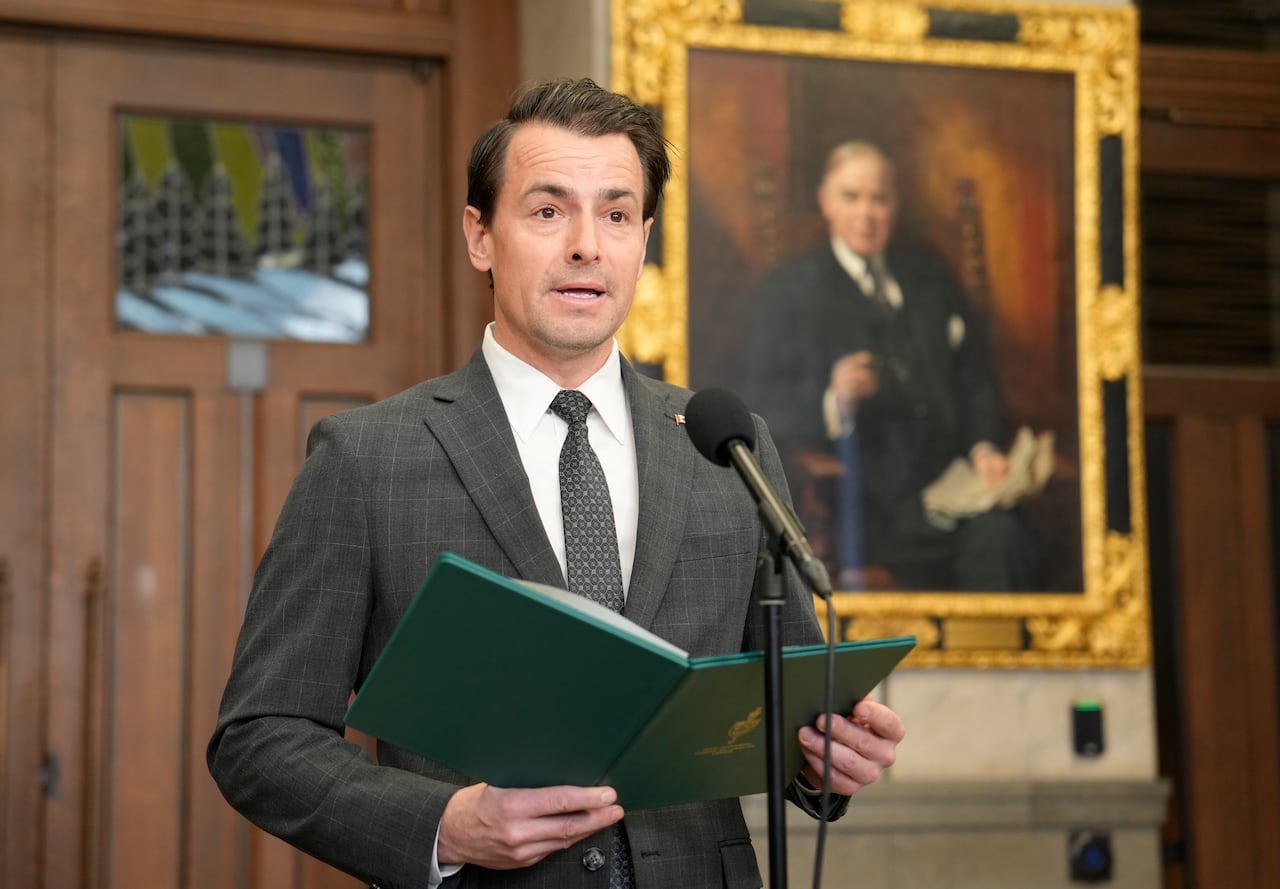 Secretary of State for Sport Adam van Koeverden says the federal government is developing a response and implementation plan for the commission’s report. (The Canadian Press)
The report also recommends appointing an independent monitor to track the implementation of the commissioner’s calls to action, including the federal government’s progress.
“It’s important because Canadians expect change,” Maisonneuve said.
Laura Misener, director of the School of Kinesiology at Western University, was hoping to see a more condensed report that focused specifically on what needs to be done to fix the system.
She worries some of those points will get lost in a lengthy report where so much space is dedicated to explaining how things currently work.
She pointed to the work that still reminds to be done on the 94 calls to action issued in the Truth and Reconciliation Commission of Canada report, which came out more than a decade ago.
“I think it’s feasible,” Misener said. “I guess I’m just a bit skeptical knowing historically how we have fared in this country around reports like this.”
Increasing funding
National sport organizations, athletes, and Olympic and Paralympic officials have repeatedly called for increases in core funding to national sporting organizations “to account for inflation since 2005.”
 The federal government’s Future of Sport in Canada Commission released its final report on Tuesday. (CBC)
The report calls for that funding to be regularly reviewed and adjusted “to be adequate to support core operational requirements and address long-term priorities, including improving safe sport.”
It also discusses the potential of using lottery and sport betting revenues to fund sport, something Norway has done to great success.
“Providing appropriate support to federally funded sport organizations is essential to protect the safety of everyone involved in the sport system,” the report says. “That said, the commission understands that funding alone cannot resolve systemic issues. Everyone involved in the sport system has a responsibility and duty to carefully review their own practices, structures, and spending.”
Earlier this month, prime minister Mark Carney said his government would revamp funding for Canadian athletes over the next six months, but exactly when or by how much isn’t yet clear.
“Canada’s national sport organizations require an urgent and sustained increase in core funding from the federal government,” a statement from the Canadian Olympic Committee and Canadian Paralympic Committee says. “An underfunded system is an unsafe system, and one that will never be able to achieve the many tangible nation-building benefits sport can provide.”
Commissioner applauds athletes’ ‘courage’
The commission’s work began in 2024 after calls to launch a public inquiry into abuse in sport.
That began with athletes from a number of different sports who testified in front of a House of Commons committee about mental and physical abuse and maltreatment they experienced during their sporting careers, laying bare the impact of a system that failed them.
A public inquiry would have offered the power to compel people and agencies to turn over records and testify in public. Instead, the federal government opted for a commission, arguing that a public inquiry could expose athletes to “combative” cross-examination, where they’d have to prove they were traumatized.
Maisonneuve said she couldn’t speak on behalf of athletes, but felt that some people may not have shared their stories had it been in the public forum of an inquiry.
She applauded the courage of the athletes who told her traumatic, personal stories.
“Even though the system has let them down, they still want to be part of the solution to change the system because they believe in the benefits of sport,” Maisonneuve said.