
Executive summary
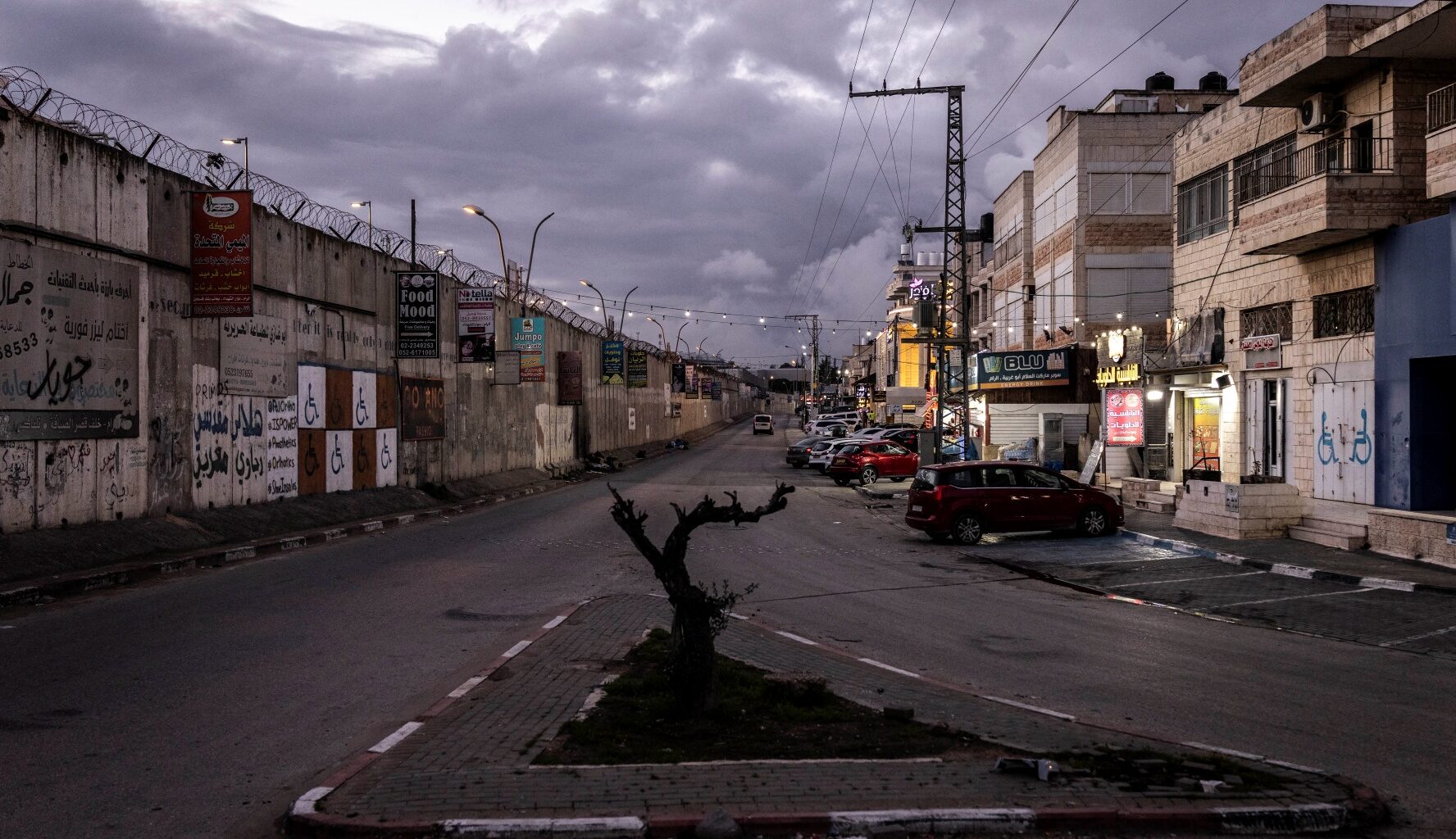
Global attention on Israel-Palestine has understandably focused on Gaza since October 7, 2023. But a parallel and rapidly worsening crisis is unfolding in the West Bank. Intensifying violence and land seizures by Israeli settlers and authorities have killed hundreds of Palestinians at an exceedingly high rate and displaced thousands more. This occurs in the context of an effort, pursued by the present Israeli government since it came to power in late 2022 and sharply accelerated after the Oct. 7 attacks, to expand Israeli control in the West Bank and further entrench the two-tiered legal system by which Israel has long governed the territory.
The Palestinian Authority (PA) has faced the looming possibility of economic and political collapse. Israeli measures—withholding PA tax revenues and restricting Palestinian trade, movement, and banking—have strangled the Palestinian economy. The fading of the two-state solution as a political horizon has, meanwhile, contributed to the severe erosion of the PA’s legitimacy among its people. This crisis has been exacerbated by a failure to renew the PA’s mandate through elections and perceptions of corruption.
Traditional U.S. policy has maintained a rhetorical commitment to the two-state solution while being unwilling to commit leverage to that goal. Absent such pressure, Washington’s enormous diplomatic and financial investments in recent decades have failed to resolve, narrow, contain, or even manage this conflict, which has lurched in an increasingly zero-sum direction. Continuing on this trajectory carries enormous risks for the region’s inhabitants and for U.S. interests. This calls for a new approach. The United States should adopt a policy built from a first principle of equality, aimed at forcefully pressing the parties to adopt political structures that allow for Israelis and Palestinians to enjoy equal freedoms, rights, and prosperity. This policy can start with a focus on the West Bank, as Gaza emerges from conflict.
Introduction
The horrors of the last two-plus years in Gaza have obscured a parallel crisis in the West Bank. Ongoing escalation by the Israeli government and Israeli settlers has left many West Bank Palestinians under reoccurring threat of lethal attack, boxed into shrinking islands of territory, and mired in worsening economic stagnation. This crisis comes against the already extraordinary challenges present for Palestinians in the West Bank, chief among them the more-than-half-century-old Israeli occupation and system of Israeli legal supremacy in the territory.
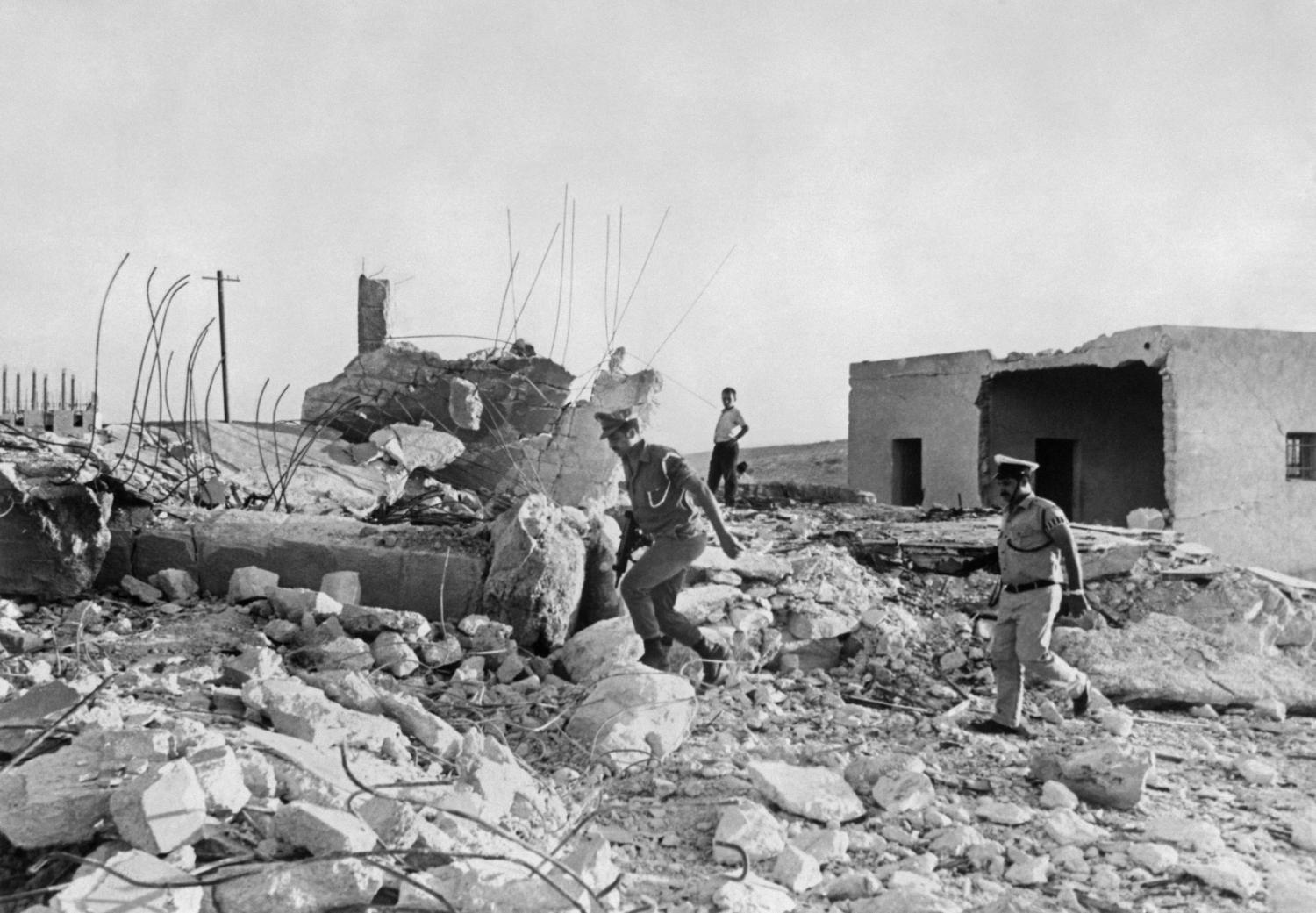
Israeli soldiers inspect the rubble of four dynamited houses belonging to Arabs in the village of Abu Dis, near Jerusalem in the West Bank on August 30, 1967, following the Six-Day War. (AFP via Getty Images)
In fact, Israel began the project of building settlements and transferring its population to the West Bank in 1967, the same year it seized control of the territory. And with few exceptions, such as when settlements in the north of the West Bank were withdrawn in 2005, Israel has pursued a policy of expanded control and settlement of West Bank territory that a future Palestinian state would encompass. This policy has dramatically accelerated under the current government, led by Prime Minister Benjamin Netanyahu and with the influential participation of Finance Minister Bezalel Smotrich. Smotrich, in particular, has maneuvered within the Israeli coalition so that his portfolio also includes extensive powers over civilian life in the West Bank. While the Israeli response to October 7, 2023 escalated the violence and pace of the crisis, the Israeli government has pushed a systematic effort to extend Israeli settlement and control in the West Bank since it took power at the end of December 2022.
As death tolls have horrifically climbed in Gaza since 2023, Palestinians have also faced a surge of deadly violence in the West Bank. 2023-2024 was the deadliest two-year period for West Bank Palestinians since detailed records began being kept in the late 1980s, with nearly 1,000 Palestinians killed by Israeli settlers or soldiers, alongside 53 Israeli soldiers and civilians killed in the West Bank and East Jerusalem. Meanwhile, Israeli land seizures, through formal settlement approvals and informal “outpost” expansions, have proceeded at an unprecedented pace.
This crisis of deadly violence and land seizures dramatically worsens the already negative trajectory in the West Bank, where Israel has continued to cement its long-standing system of control and of Israeli supremacy. A two-tiered legal system largely prevents Palestinians from seeking justice in response to violent acts committed by Israelis. Israeli control of PA funding allows its government to place a stranglehold on the already diminished PA.
The PA, for its part, has begun to reform itself, seeking to meet the demands of international actors and, importantly, the Palestinians themselves, and revitalize its position in Palestinian political life. Yet the pace, veracity, impact, and longevity of these reforms are unclear. Washington and other international actors should continue pressing the PA to accelerate these efforts while also simultaneously pushing Israel to create the conditions that allow them to take hold. Most importantly, U.S. policy should make clear to Israeli leaders that they must allow Palestinian national elections—the normal way a society seeks change—to take place, with arrangements for East Jerusalem, as was done with prior Palestinian elections under the Oslo agreements. A new system must also be developed to end the ongoing Israeli practice of seizing Palestinian customs tax revenues.
Meanwhile, there is high U.S. domestic dissatisfaction toward Washington’s traditional policy approach to Israel-Palestine. Republicans are balancing traditional pro-Israel instincts with increasing skepticism about foreign engagements under an “America First” lens. Democrats, for their part, are increasingly embracing a values-driven perspective that links Palestinian rights to American credibility abroad. Polls show about half of Democrats now sympathize more with Palestinians than Israelis.
Washington needs a new approach to Israel-Palestine that maintains U.S. interests, addresses domestic demands to uphold American values, and begins to meet the short- and long-term crises at hand. It should be built from a first principle of equality and accompanied by a willingness to exert American leverage toward Israel and the PA. The West Bank, where settler violence and displacement have accelerated a trajectory toward a greater calamity, is where this effort must begin.
The United States needs to shift toward an equity-based approach that is rooted in the long-standing American political tradition encoded in the Declaration of Independence: that all are “endowed by their Creator with certain unalienable Rights, that among these are Life, Liberty and the pursuit of Happiness.”
The goal of this policy brief is not to lay out a new endpoint for American conflict resolution efforts in Israel-Palestine. Instead, its objectives are two-fold: first, to clarify why the existing American policy framework of rhetorical support for a two-state solution without taking firm steps to advance it is far from adequate; and second, to lay out initial policy tools to address the current situation. The United States needs to shift toward an equity-based approach that is rooted in the long-standing American political tradition encoded in the Declaration of Independence: that all are “endowed by their Creator with certain unalienable Rights, that among these are Life, Liberty and the pursuit of Happiness.” Absent such a shift, American leaders will continue devoting resources to a policy that deepens the present crisis while squandering what little international goodwill remains.
The escalating West Bank crisis
A rise in deadly violence
Lethal Israeli violence following Oct. 7, 2023, has not been limited to Gaza. In the West Bank, 974 Palestinians were killed by Israeli soldiers and settlers in 2023 and 2024, according to data provided by B’Tselem. Although neither single year reached the grim death total seen in 2002, collectively, 2023-2024 was the deadliest two-year period for West Bank Palestinians since at least 1988, and likely earlier.
Figure 1
The ongoing wave of violence and terror perpetrated by Israeli settlers in the West Bank against Palestinians is not just an unfortunate outcome of unavoidable friction. Specifically, for those perpetrating this violence, it appears to be a means to an end: the expulsion of Palestinian communities from their homes and villages into concentrated areas of the West Bank to allow for greater Israeli land seizure and settlement. In 2025 alone, 1,658 Palestinians were displaced from their homes in the West Bank as a result of settler violence. 2026 shows no signs of this trend slowing, with 694 West Bank Palestinians displaced by settler attacks and access restrictions in January—the highest single-month total since October 2023. The violence has forcibly displaced entire communities. In addition to the well-documented destruction in Gaza, 53 Palestinian communities in the West Bank have been completely displaced by Israeli settler or military violence from October 2023 to January 2026, while 16 more have been partially expelled. A tiny part of the total land area of Israel-Palestine—about 5%—is under nominal PA security control. Population density in this area, designated “Area A” by the Oslo Accords—about 18% of the West Bank—is now four times higher than in Israel.
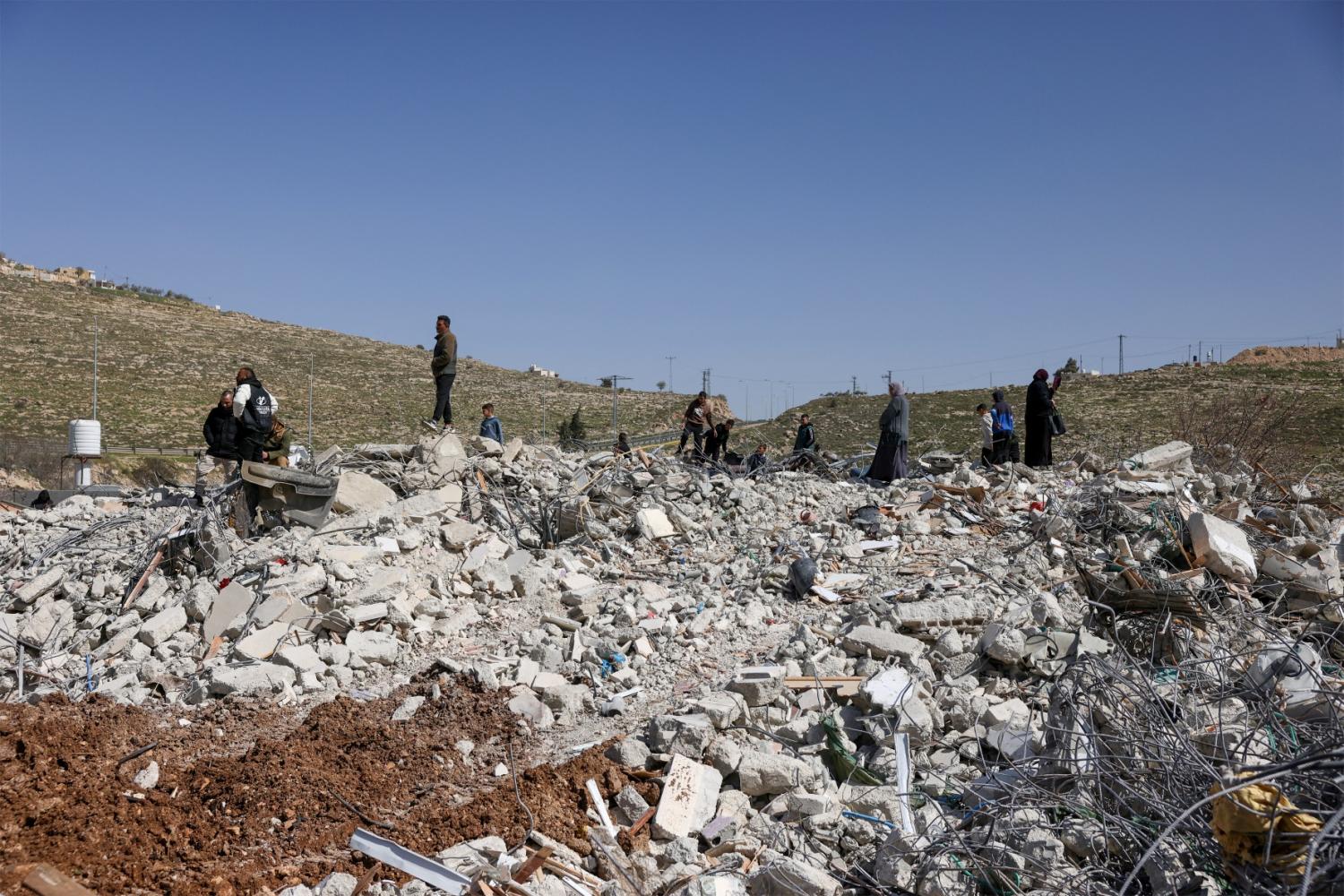
Members of the Salhab family on the rubble of their apartment building after it was demolished by Israeli bulldozers near the Israeli settlement of Hagai, south of the occupied West Bank city of Hebron, on February 18, 2026. (Hazem Bader/AFP via Getty Images)
2025 saw 126 incidents of settler attacks against Palestinians participating in the fall olive harvest alone, including a gruesome attack by a large number of armed Israeli settlers on Palestinians in the West Bank village of Turmus Ayya, which was captured on video. The U.N. Office for the Coordination of Humanitarian Affairs (OCHA) reported that October 2025 saw the highest monthly total of settler attacks since it began recording such statistics in 2006, with more than 260 attacks resulting in casualties, property damage, or both.
Israeli military operations have also displaced tens of thousands in the West Bank. Particularly in the refugee camps in Jenin and Tulkarm, Israeli military operations, featuring air strikes and large contingents of ground troops, have levelled entire residential blocks and forced 40,000 Palestinians to flee their homes as of March 2025. In preparing for the operations, which have featured months-long sieges of densely populated refugee camps in the heart of West Bank neighborhoods, Defense Minister Israel Katz stated that the camps would be cleared and that Israeli troops would “prevent the return of residents and the resurgence of terrorism.”
Widening Israeli land seizures
In February 2026, Israel announced its assertion of its authority in the core, Palestinian-run areas of the West Bank, marking yet another step to, as the ultranationalist Israeli Minister Smotrich put it, “continue to kill the idea of a Palestinian state.” This follows the Israeli government’s final approval in August 2025 of plans for the “E1 settlement” to be constructed between East Jerusalem and the large West Bank settlement of Ma’ale Adumim. Previous U.S. administrations stated strong opposition to construction in this specific area, as Israeli settlement in E1 would effectively sever the parts of the northern and southern West Bank where Palestinians live, undermining the possibility of a contiguous Palestinian state in the territory. In approving the plan, Smotrich, a member of a far-right party and a former settler leader, said that “the Palestinian state is being erased from the table, not with slogans but with actions … every settlement, every neighborhood, every housing unit is another nail in the coffin of this dangerous idea.”
The E1 settlement approval was an especially high-profile example of a much wider trend. Israel has taken advantage of the turmoil in Gaza to dramatically accelerate its West Bank settlement project. In 2024 alone, Israel advanced 28,872 settlement housing units in the West Bank, including East Jerusalem, a 250% increase since 2018. In East Jerusalem specifically, an average of over 14,000 new settlement units were advanced through the planning process annually from 2023 to 2025, up from a 2017-2022 yearly average of just over 3,500. Israeli settler extremists also dramatically increased their construction of settlement outposts from a pre-2023 baseline of about five per year to 32 in 2023, 62 in 2024, and 86 in 2025. Whereas all Israeli settlements are considered illegal under international law, these outposts, often the leading edge of Israeli territorial expansion in the West Bank, are considered illegal even under Israeli law—even as they continue to grow under the Israeli government’s watchful eye.
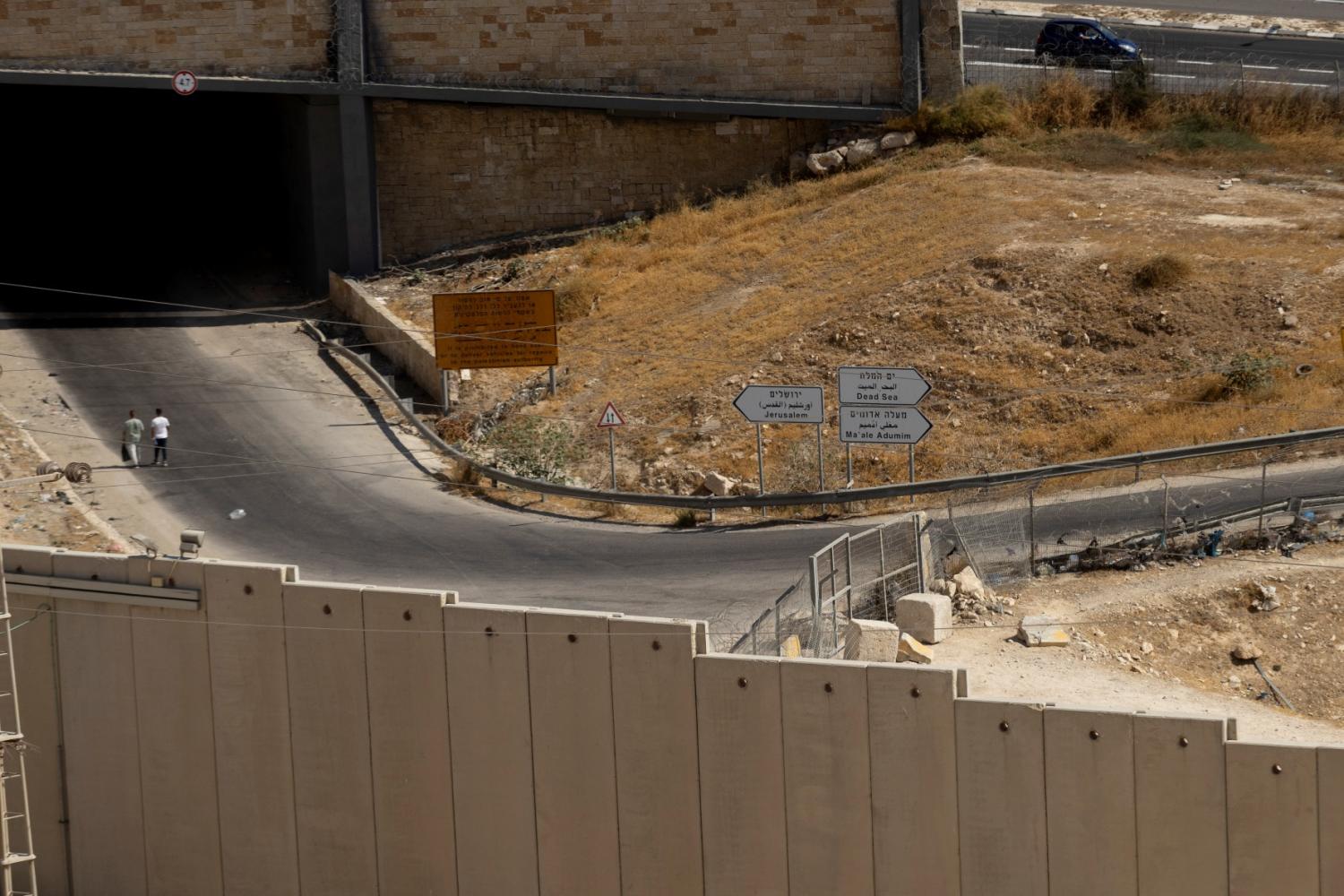
People walk by signs leading to Jerusalem and an Israeli settlement in the West Bank called Ma’ale Adomim, which the Israeli government announced it would expand on August 22, 2025. (Amir Levy/Getty Images)
The same trend can be found in Israeli seizures of Palestinian land and in demolitions of Palestinian homes. In 2024, just under 6,000 acres of West Bank land were seized through Israel’s practice of classifying them as state land, up from the 2010-2020 yearly average of about 250 acres.1 In 2024, Israeli authorities demolished 871 Palestinian homes in the West Bank, the highest such figure in at least two decades.2 The following year, in 2025, they demolished 902 Palestinian homes, with an additional 261 homes demolished in East Jerusalem alone.
Israel’s expanding control of the West Bank and Palestinian life
The two-tiered legal system
This escalating campaign of settler violence and land seizure both deepens and is enabled by a long-standing and entrenched system of Israeli control in the West Bank. For decades, Israel has governed the West Bank through two legal systems—one for Israelis, and one for Palestinians.
For decades, Israel has governed the West Bank through two legal systems—one for Israelis, and one for Palestinians.
Israelis who are charged with crimes in the West Bank are tried in civilian courts. Palestinians are generally tried in a military court system where they face near-certain conviction. Israeli military documents, obtained via a freedom of information request by the Human Rights Defenders Fund, showed that 99.6% of charges brought in these military courts between January 2018 and April 2021 ended in guilty plea deals. As quoted in a 2023 U.S. State Department report, “defendants pled guilty to crimes because they perceived a plea as the only means by which to avoid prolonged detention and a 96 percent conviction rate of such cases taken to trial.” This aligns with an earlier figure from 2011, when Haaretz reported on documents showing a 99.7% conviction rate for West Bank military courts. Whether the figure is 96% or 99.7%, it is still exceedingly high.
Additionally, many Palestinians held by Israel do not even make it to a formal trial. Instead, Israel uses administrative detention—a security policy first used under the British colonial authorities and continued after Israel’s founding—to imprison people indefinitely and without presenting evidence. Israel sharply expanded its use of this practice following Oct. 7, 2023. From 2015-2020, Israeli authorities held between 300 and 700 Palestinians under administrative detention at any given time. That figure jumped to above 3,000 in early 2024 and stood at 3,358 people as of February 2026. This figure does not even include Palestinians from the Gaza Strip who are detained by the Israeli military.
By stark comparison, West Bank Palestinians targeted by settler violence are unlikely to find recourse from the Israeli authorities who control their lives. Yesh Din, an Israeli rights group that monitors police investigations into offenses committed by Israelis against Palestinians in the West Bank, found that 94% of such investigations between 2005 and 2024 ended without an indictment. And these are only from cases in which Palestinian victims of alleged crimes by Israelis filed a complaint with Israeli authorities. In fact, most alleged crimes perpetrated by Israelis against Palestinians are not reported to Israeli authorities: between January 2023 and September 30, 2024, for example, Yesh Din found that 60.6% of such Palestinian victims choose not to report the offenses.
Moreover, long-standing Israeli legal orders criminalize a wide range of Palestinian political life. As a 2019 Human Rights Watch report noted, “The Israeli army has for over 50 years used broadly worded military orders to arrest Palestinian journalists, activists and others for their speech and activities – much of it non-violent – protesting, criticizing or opposing Israeli policies.” Quoting various nongovernmental organizations (NGOs), a State Department report from 2023 stated that “Israeli security forces in the West Bank arbitrarily arrested and detained NGO employees and Palestinian protesters and activists, particularly those demonstrating against killings of Palestinians or demolitions.”
Together, these measures empower Israeli settlers to act with significant impunity, leave Palestinians with little legal recourse in the face of settler violence and land seizures, and shrink to a minimum space for Palestinian political expression of any kind.
The stifling of Palestinian economic life
As the space—both literal and figurative—for Palestinian political life has been constricted, so too has Israel clamped down on the Palestinian economy. In combination with the surge of land seizures and settler violence, restrictive Israeli controls on Palestinian movement and trade, banking, and the PA’s funding have pushed the West Bank into an increasingly dire economic situation. At a time when Israel’s economy is booming, and its per capita GDP is higher than that of France, Japan, the United Arab Emirates, or the United Kingdom, the first half of 2024 alone saw a 23% contraction in economic activity in the West Bank. Unemployment in the West Bank spiked after Oct. 7, 2023, from a prewar rate of 14% to 35% six months later.
For decades, Israel has prevented Palestinians from traveling and trading freely, both within the Palestinian territories and beyond. The situation in the West Bank has only worsened since 2023. A September 2024 U.N. Trade and Development report found that Israeli checkpoints in the West Bank had risen from 567 in early October 2023 to 700 in February 2024. A study conducted in January and February of 2025 by the OCHA found 849 Israeli obstacles to Palestinian movement in the West Bank, including checkpoints, gates, and roadblocks, among others. The OCHA study states that the period from 2023-2025 “witnessed an intensification of movement restrictions, including a rise in the number of road gates and partial checkpoints that are frequently closed, prolonged delays at checkpoints, and a notable increase in the number of ‘flying’ or mobile checkpoints.” These checkpoints and other obstacles to movement placed within and between West Bank cities and villages prevent Palestinians from reliably accessing workplaces, agricultural fields, and markets, as well as other essential destinations such as schools and medical facilities.
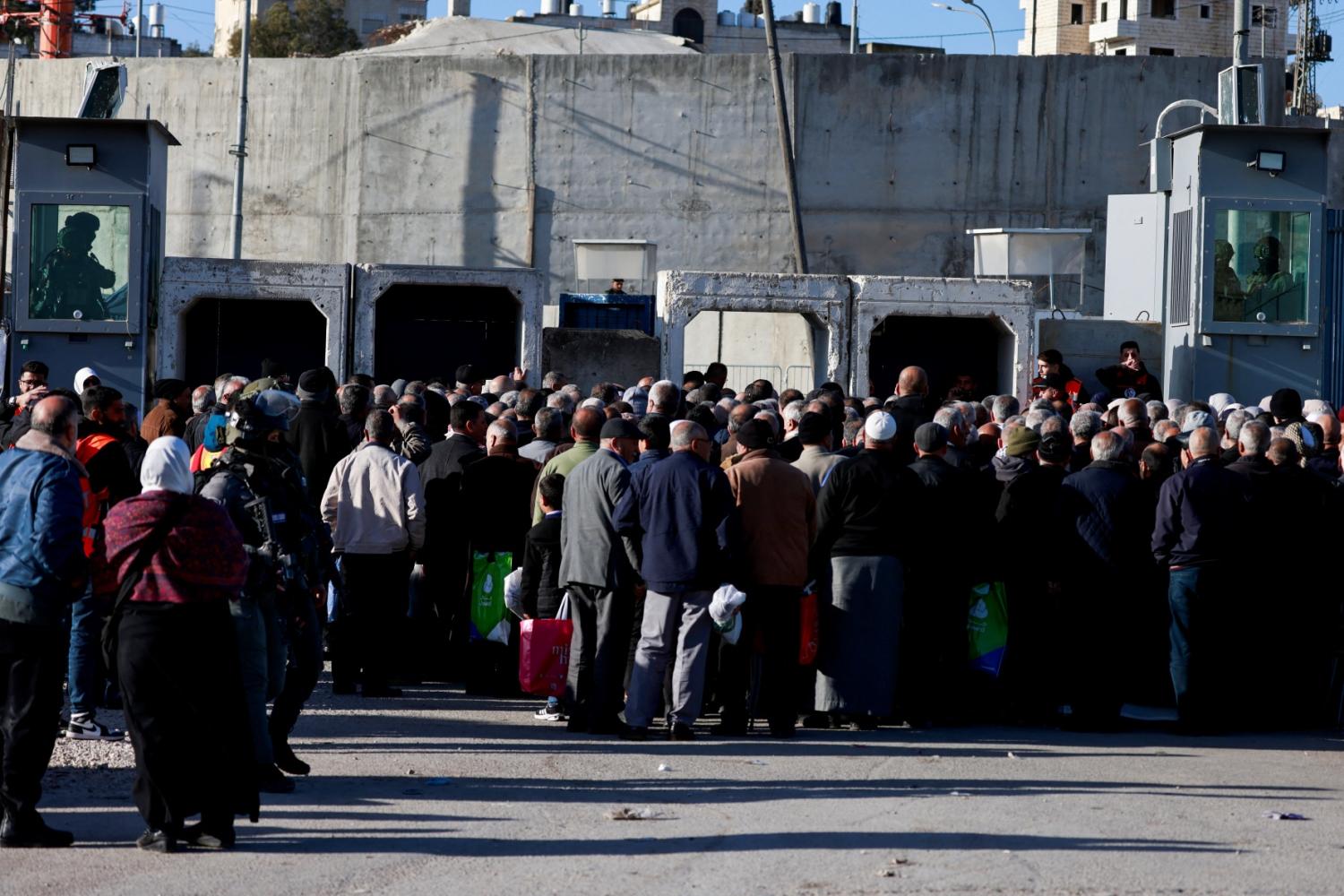
Israeli soldiers keep watch as Palestinian Muslims gather at the Qalandia checkpoint in the occupied West Bank city of Ramallah on February 20, 2026, to enter Jerusalem on their way to Al-Aqsa Mosque for the first Friday noon prayers of the Islamic holy month of Ramadan. (Jaafar Ashtiyeh/AFP via Getty Images)
Further, Palestinian banks are severely hampered by restrictions imposed by the Government of Israel. On the one hand, signed agreements require the Palestinian economy to operate in shekels, the Israeli currency. Yet, on the other hand, the Israeli government also refuses to accept the free flow of physical shekels back from Palestinian banks to Israel so that bank balances can be credited. This is not just a liquidity trap, given its long-standing nature over not just years but decades. In practice, it amounts to Israel’s paper currency being a forced Israeli export on Palestinian banks—an effective multi-billion-dollar loan from Palestinian banks to the Government of Israel.3
Perhaps most critically, the Israeli government has used its control over the PA’s tax revenues to push it into a fiscal crisis. Under a long-standing agreement, Israel collects taxes on goods that Palestinians in the West Bank and Gaza Strip import through Israeli ports and territory, and Israel is obligated to transfer the revenue to the PA. Although Israel has long withheld certain revenues from the PA, since late 2023, the Israeli government, under Finance Minister Smotrich’s direction, has been withholding a large proportion—hundreds of millions of dollars—of monthly tax revenue from the PA, leaving it unable to fully pay its civil servants’ salaries or fund public services. Cumulatively, the Palestinian Authority says that Israel has prevented billions of dollars from reaching it. To emphasize this point, the PA’s prime minister told Brookings last October that public servants were owed more than a year of back pay.
The need to rebuild the Palestinian Authority’s legitimacy
The two-state solution’s fading as a political possibility leaves the PA, established in the 1990s as part of the Oslo process, grappling with a nearly impossible contradiction at its core. It aims to lead the movement for Palestinian national liberation while also policing its own people in the small pockets of the West Bank where it governs, in partnership with and largely on behalf of Israel. These deeply conflicting mandates—seeking liberation from Israel while coordinating security with it—were enshrined in the 1990s’ Oslo Accords, with the hope that the PA would demonstrate the viability of an independent State of Palestine.
However, that vision is now severely diminished, even as security coordination remains. Consequently, many critics now see the PA as little more than a subcontractor for the Israeli occupation of the West Bank. This perception, compounded by the absence of Palestinian national legislative and presidential elections for two decades, the economic hardships faced by the population, and widespread allegations of corruption, has steadily eroded the PA’s legitimacy among Palestinians.4 It is further compounded by the significant number of Israeli settlers in the West Bank since the Oslo Accord were signed: 110,000 in 1993 to over half a million today.
In tandem with its domestic weakness, the PA faces increased demands for reform not only from its own population but from key international players. In response to such calls, the PA reached an agreement with the European Union to enact several categories of reforms in the summer of 2024 and in 2025, including in public financial management, revenue mobilization, the civil service, governance and rule of law, private sector development, the energy sector, administrative modernization, and educational curriculum. The PA is even reforming social protections, which include ending its program of providing payments to the families of prisoners held by Israel and instead placing these families in the same needs-based system as the broader Palestinian population served by the PA. These reforms are ongoing, as is the assessment of their implementation.
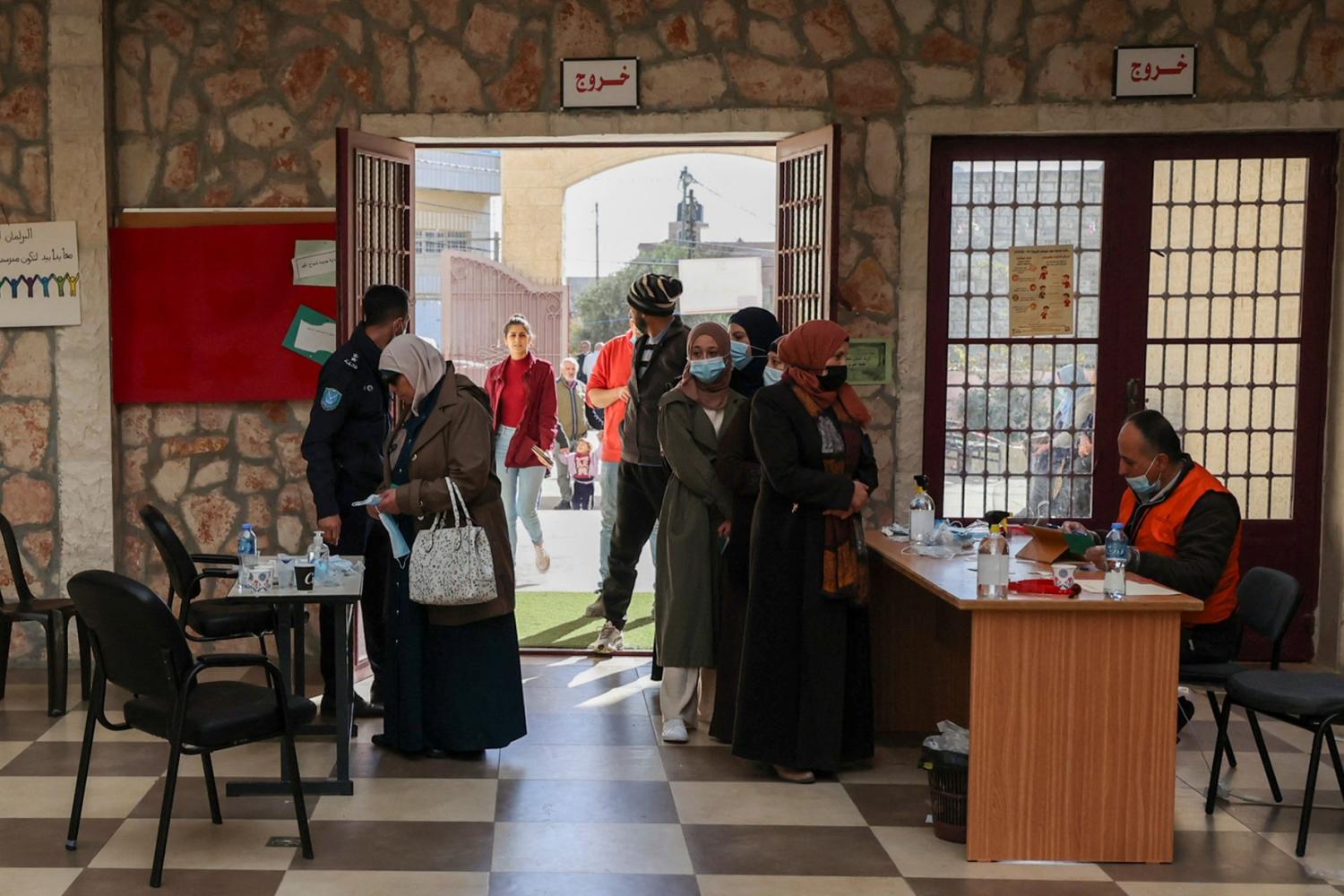
Palestinians are pictured at a polling station during municipal elections in the village of Baitain, east of the occupied West Bank city of Ramallah, on December 11, 2021. (Abbas Momani/AFP via Getty Images)
Of all the steps needed moving forward, holding Palestinian national elections would go a very long way toward restoring the PA’s legitimacy. Despite having a perfectly capable elections authority, which continues to oversee local elections, the PA has not held national elections—either legislative or presidential—for two decades. PA President Mahmoud Abbas sought to hold elections in 2021. The effort was largely thwarted by Israeli obstruction—particularly Israel’s refusal to commit to allowing Palestinians living in East Jerusalem a special voting arrangement, despite precedents both sides had accepted in prior national elections. Then, as the date approached, the Palestinian leadership’s own nervousness about the elections’ outcome also lessened its enthusiasm. Moreover, international actors—including the United States—did not forcefully press Israel for a concession on Palestinian voting in Jerusalem, acceptance of which would have pressed the PA to enable the elections to move forward.
The upcoming West Bank municipal elections, scheduled for April 2026, may serve as a key demonstration of the Palestinian electoral authority’s capacity. However, it will also be a key test of whether candidates and parties are willing to sign a pledge required for registration under the new election law signed by Abbas. This pledge commits candidates to the Palestine Liberation Organization’s political program: accepting Israel’s right to exist, striving to establish a Palestinian state alongside Israel on the pre-June 1967 armistice lines, and rejecting violence in favor of nonviolent means as the primary path to national liberation. Consequently, any party, campaign, or candidate that opposes this agenda, such as Hamas, would be barred from running.
If this framework is applied to future national elections, it would mean that only those committed to a Palestinian state along the 1967 lines and to nonviolence could participate. While Israel does not require candidates running in its parliamentary elections to accept the two-state framework (if it did, none of the current Israeli government and much of the opposition would qualify), Israeli basic law includes ideological disqualifiers for parties or candidates that advocate for negating Israel as a Jewish and democratic state, promote “incitement to racism,” or support “armed struggle by a hostile state or terrorist organization.” In this context, the new vetting requirements for Palestinian candidates should further reduce fears that a future Palestinian government would be committed to violence.
Although one could argue that preventing candidates from running on certain platforms is undemocratic, similar restrictions exist in countries like Germany and Spain. The absence of national elections deprives citizens of a crucial mechanism for holding their government accountable, fostering reform, and building legitimacy. Given the requirement for a commitment to nonviolence and a two-state solution, setting a date for and ultimately holding Palestinian national legislative and presidential elections would strengthen accountability and legitimacy.
US policy
Launched in the 1990s, Israeli-Palestinian negotiations aimed to move from existential questions to narrower arguments over where to partition the land along the rough divisions left in the wake of the 1967 war. The conflict is increasingly moving in a more existential direction, as evidenced by the horrors of the last two-plus years in Gaza. The erosion of the peace process and the PA, combined with rising settler violence, widening Israeli land grabs, and a deeply entrenched two-tiered legal system in the West Bank, underscores that this deterioration is not limited to Gaza.
Traditional U.S. policy is not built to meet the immediate or long-term crises underway. No matter the goal of U.S. policy in recent decades—whether resolving, narrowing, or containing this conflict, or simply freezing it so that policymakers’ attention can go elsewhere and perhaps return at a more opportune moment—it has not succeeded. This has been despite Washington’s enormous investments of attention, foreign assistance to Israel and the Palestinian people, and effort. This failure calls for a return to first principles.
What is needed?
The United States should adopt a policy approach based on the principle of equality. This principle should guide both the response to the immediate crisis and the long-term questions of how to create political structures that allow for equal freedoms, rights, and prosperity for Israelis and Palestinians. The two peoples involved should choose the political structure through which such a principle would manifest, whether two states, one democracy, or any of the many configurations in between.
It is time for the United States and the broader international community to put much more muscle behind the insistence on equality for Israelis and Palestinians.
Ultimately, U.S. policy should support both a negotiated outcome based on equal rights and practical steps in the immediate term that equally enable “life, liberty, and the pursuit of happiness.” Half a century of the United States and the international community asking nicely to resolve the conflict in Israel-Palestine has failed—and it is clear that Americans, including growing numbers of Democrats and Republicans, understand this. It is time for the United States and the broader international community to put much more muscle behind the insistence on equality for Israelis and Palestinians. This leverage comes in several forms: voting at the United Nations, initiating or joining actions in other international institutions, using the new U.S. presence in Israel-Palestine, and conditioning U.S. arms sales and foreign assistance.5 These levers should be used—now and in the years ahead—to halt the current crisis in the West Bank, reverse the broader deterioration underway, and place the pursuit of equality in Israel-Palestine at the core of U.S. diplomacy in this conflict.
Several specific goals follow clearly from such a framework. The United States should press Israel, including by reinstating financial and travel sanctions against violent extremists, to end the current campaign of violence and land seizure in the West Bank. But stopping this campaign is not enough. The United States—both the U.S. Congress through legislation and the Executive Branch through insistence—should push Israel to end the two-tiered legal system favoring Israelis in the West Bank and to examine and address discrimination inside Israel against the Palestinian citizens of Israel. Further, U.S. policy should pursue the dramatic expansion of Palestinian freedom of movement through the rapid removal of Israeli checkpoints in the West Bank and the restoration of systems that allow Palestinians much more agency to travel freely without Israeli interference.
Specific steps are needed to resolve the PA’s financial and economic crises. Washington should work with Israel, the Palestinian Authority, and the World Bank and International Monetary Fund to replace the outdated early-1990s protocol with a new system allowing the PA to directly collect import revenues, without Israeli intermediation. Further, the United States should push Israel to end restrictions on accepting its own hard currency from Palestinian banks, thereby enabling Palestinian banks to properly function and further advance investment capital into the Palestinian economy.
The PA, for its part, can and should take measures to advance its people’s well-being and freedom. These include: holding planned local elections in the months ahead; committing to and delivering on national elections; advancing reforms; deepening its engagement with regional states, particularly Saudi Arabia; presenting practical proposals to the United States for improved security and governance; and preparing a strategy for engaging Israel after elections.
Elections are an essential tool for restoring a legitimate Palestinian government in the eyes of Palestinians. American policy should insist that the PA, Israel, and the international community commit to the PA’s holding of national presidential and legislative elections. These would include candidates and parties committed, at a minimum, to the renunciation of violence, in line with existing international agreements. Elections can be held in the West Bank and East Jerusalem, as long as Israel does not block them. Elections would ideally also be held in Gaza, the governance of which must be inextricably linked to the PA in a manner determined by Palestinians. Pressure may be needed to get Israel to stop obstructing efforts by the PA and key regional governments to build such links.
Further, the United States should clearly affirm Palestinians’ equal right to self-determination by recognizing a Palestinian state that would live alongside its neighbors, Egypt, Israel, and Jordan, as a full and equal nation with United Nations membership.
Other steps should be taken to increase American capacity for diplomacy. U.S.-Palestinian engagement should be strengthened to enable collective problem-solving. Further, the United States should explore whether the mandate of the U.S.-led Civil-Military Coordination Center, recently created to coordinate governance and security in Gaza, could be expanded to include a role in the West Bank. The Trump administration has stated that this body—which marks the first sustained international role in on-the-ground Palestinian governance and security in the modern era—would be “calling the shots.” And, finally, Washington should accelerate ongoing Palestinian Authority reforms by joining forces with the European Union and other efforts.
In both actions and words, U.S. policy must make clear that it will only accept alternatives to a two-state solution that provide Israelis and Palestinians with the same rights and the same freedoms. Until that outcome is achieved, Washington must demand tangible, substantial, and rapid movement in that direction. It is long past time for the United States to align its deep involvement in Israel-Palestine with its founding principle that all people are created equal.
The Brookings Institution is committed to quality, independence, and impact.
We are supported by a diverse array of funders. In line with our values and policies, each Brookings publication represents the sole views of its author(s).