
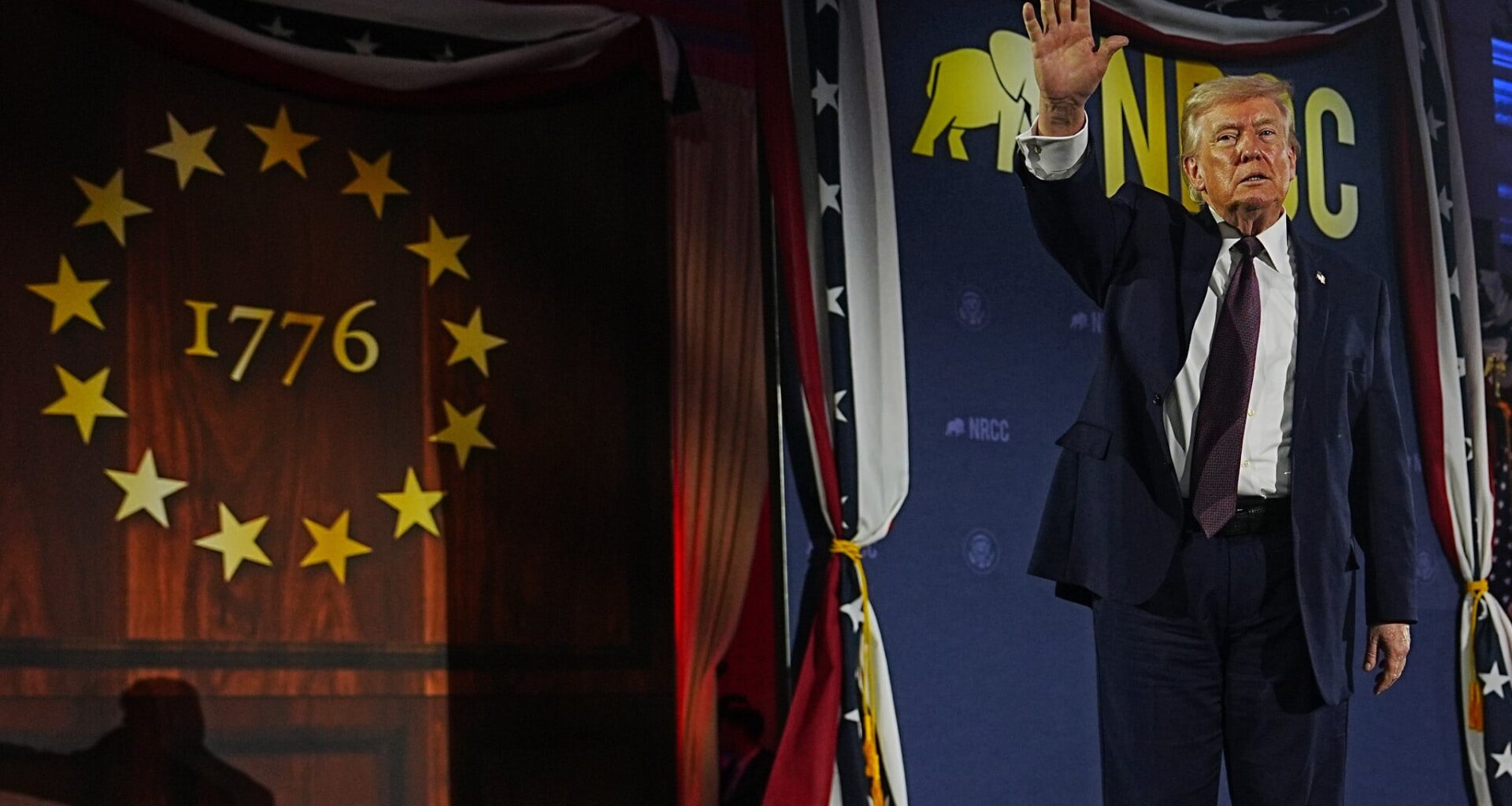
US President Donald Trump defended the Iran war at a Republican fundraising event on Wednesday, as the war’s economic fallout has mounted and lawmakers in his own party expressed notes of dissent.
Trump said the US “is winning so big” in the war in Iran, but it is keeping gas prices high, travelers are facing unprecedented airport security wait times and Americans remain concerned about steep costs of living.
Trump addressed the National Republican Congressional Committee’s annual fundraising dinner at Washington’s Union Station roughly seven months before the November 3 midterm elections in the US, in which the incumbent president’s party historically has lost seats in Congress.
The gathering also came as polling shows most Americans believe the US military action against Iran, undertaken in conjunction with Israel, has gone too far, and voters are more and more worried about Trump’s failure to address affordability issues.
US Sen. Lisa Murkowski, a moderate Republican from Alaska, said her constituents are asking about the path forward in Iran and whether Trump will deploy troops there.
Get The Times of Israel’s Daily Edition
by email and never miss our top stories
By signing up, you agree to the terms
“There’s a lot that people want to know, so whether it’s how it’s being communicated in the media, or how it’s being communicated here in the Congress, I think it’s lacking right now,” Murkowski said.
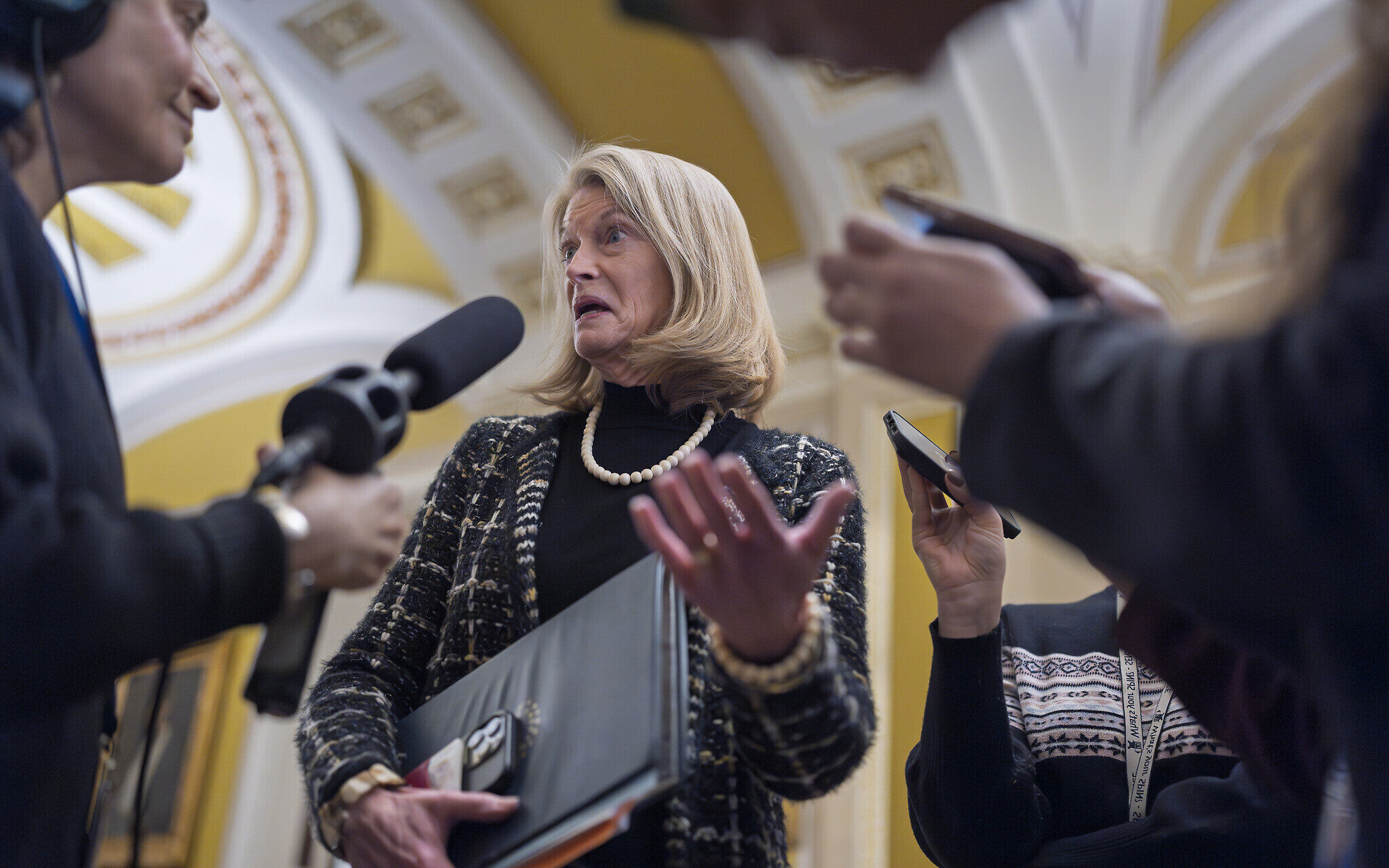
Sen. Lisa Murkowski of Alaska, speaks with reporters outside the Senate chamber at the US Capitol in Washington, January 22, 2025. (AP Photo/J. Scott Applewhite)
Trump has insisted that the current economic jolt will be temporary, and that he can bring the conflict to a close quickly — all of which defy the more complicated and nuanced political and economic realities.
Gas prices were $3.12 a gallon in the US when Democratic president Joe Biden left office and were just under $3 before the US-Israeli strikes began. Today’s average is $3.98, according to motorist group AAA.
Trump has suggested the war is worth some short-term political jitters.
“I can’t say that ‘Gee, I don’t want to have any impact on oil prices for three or four weeks, or two months, and we’re going to let Iran have a nuclear weapon,’” he said.
During his speech on Wednesday night, he acknowledged the impact on the US economy but said he felt the attack was necessary. “We had to cut out the cancer,” he said. “The cancer was Iran with a nuclear weapon, and we’ve cut it out.”
In the meantime, about 59 percent of Americans say the US military strikes in Iran have been excessive, while 45% are “extremely” or “very” concerned about being able to afford gas in the next few months, according to a poll released Wednesday by The Associated Press-NORC Center for Public Affairs Research.
Trump blamed Americans’ sour opinion of the war on media coverage that doesn’t echo his claim that Iran has been militarily destroyed. Iran has maintained its ability to strike targets in the region and effectively shut down the Strait of Hormuz, snarling the global oil trade. Meanwhile, some of Trump’s own war objectives remain undefined or unfulfilled.
“You know, if you listen to the news, you think we’re losing a war in Iran where we’re decimating the other side,” Trump said.
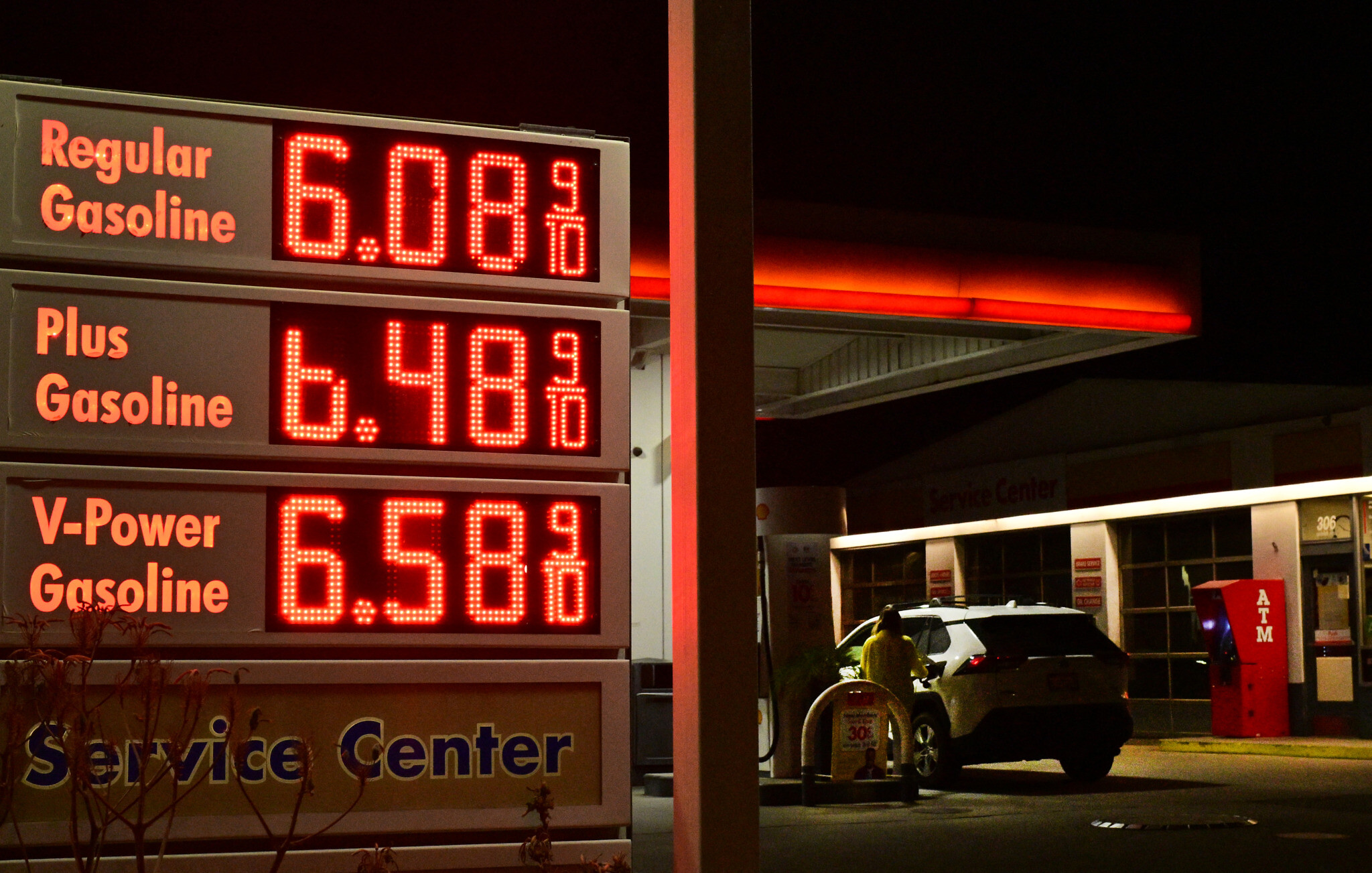
Rising gas prices are displayed at a gas station in Monterey Park, California on March 22, 2026. (Frederic J. BROWN / AFP)
Prior to the event, Republican US lawmakers said Pentagon officials failed to give a congressional panel sufficient information regarding a potential US ground operation against Iran during a classified briefing.
“We want to know more about what’s going on, what the options are, and why they’re being considered, and we’re just not getting enough answers on those questions,” House Armed Services Committee chair Rep. Mike Rogers told reporters after the hearing.
Rogers said troop movements in the Middle East should be “thoughtful and deliberate,” indicating that what he heard from Pentagon officials didn’t reflect that.
“That’s what I conveyed to them at the end of this hearing, is this has consequences if you don’t remedy it,” he added.
Given Rogers’ hawkish reputation, his criticism indicated that Trump could lose support from key members of his party if he proceeds with a ground operation against Iran.
The hearing came as the Pentagon prepares to deploy thousands of troops from the US Army’s 82nd Airborne Division to the Middle East.
Asked about Rodgers’ concerns, Senate Armed Services Committee chair Roger Wicker told reporters, “Let me put it this way: I can see why he might have said that.”
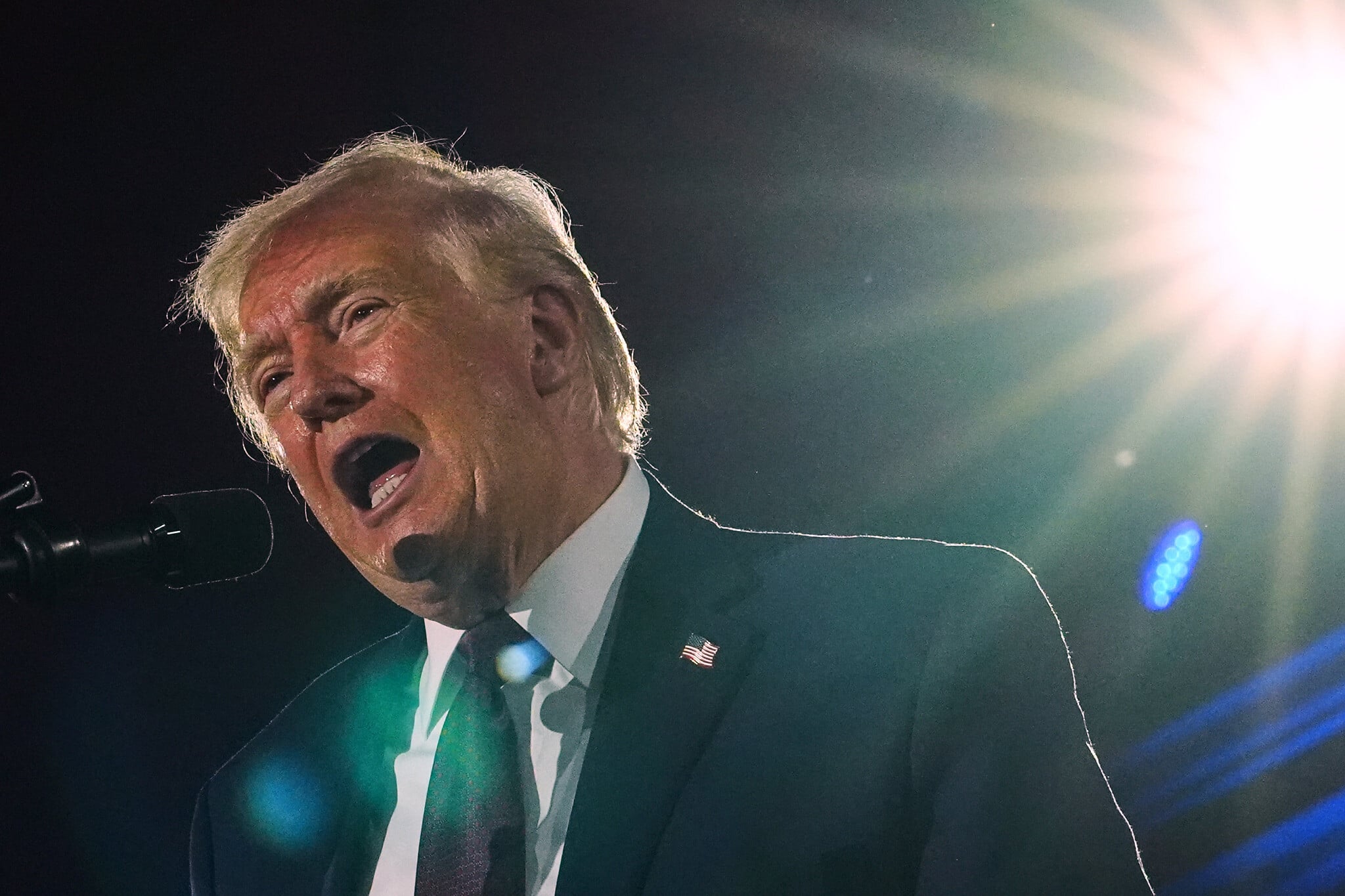
President Donald Trump speaks at the National Republican Congressional Committee’s annual fundraising dinner, March 25, 2026, at Union Station in Washington, DC. (AP/Julia Demaree Nikhinson)
Also upset by the hearing was fellow Republican Nancy Mace, who has been more critical of the war from the get-go.
“Just walked out of a House Armed Services briefing on Iran. Let me repeat: I will not support troops on the ground in Iran, even more so after this briefing,” Mace wrote on X.
“The justifications presented to the American public for the war in Iran were not the same military objectives we were briefed on today in the House Armed Services Committee. This gap is deeply troubling. The longer this war continues, the faster it will lose the support of Congress and the American people,” she added in a separate post.
At Wednesday’s event, US Rep. Nick LaLota, Republican of New York, said voters in his Long Island-based district are concerned about affordability and safety. But he also said the war in Iran means “the president is right to think about America’s long-term security.”
On whether Iran policy will be an anchor for Republicans, LaLota encouraged taking a wait-and-see approach leading up to November, and said any fallout could depend on whether the US has stopped Iran’s nuclear ambitions and reopened the Strait of Hormuz.
“I think this could be a thing that bolsters conservatives’ approach to national security,” he said.
Richard Hudson, chair of the National Republican Congressional Committee, similarly said it was too early to jump to political conclusions.
“If we’re still at this stage in the war in the fall, then I’ll talk to you about that,” Hudson said. “But the president says it’s going to be short, so I believe him. I think he did the right thing by doing what he did.”
You appreciate our wartime journalism

You clearly find our careful reporting of the Iran war valuable, at a time when facts are often distorted and news coverage often lacks context.
Your support is essential to continue our work. We want to continue delivering the professional journalism you value, even as the demands on our newsroom have grown dramatically during this ongoing conflict.
So today, please consider joining our reader support group, The Times of Israel Community. For as little as $6 a month you’ll become our partners while enjoying The Times of Israel AD-FREE, as well as accessing exclusive content available only to Times of Israel Community members.
Thank you,
David Horovitz, Founding Editor of The Times of Israel