
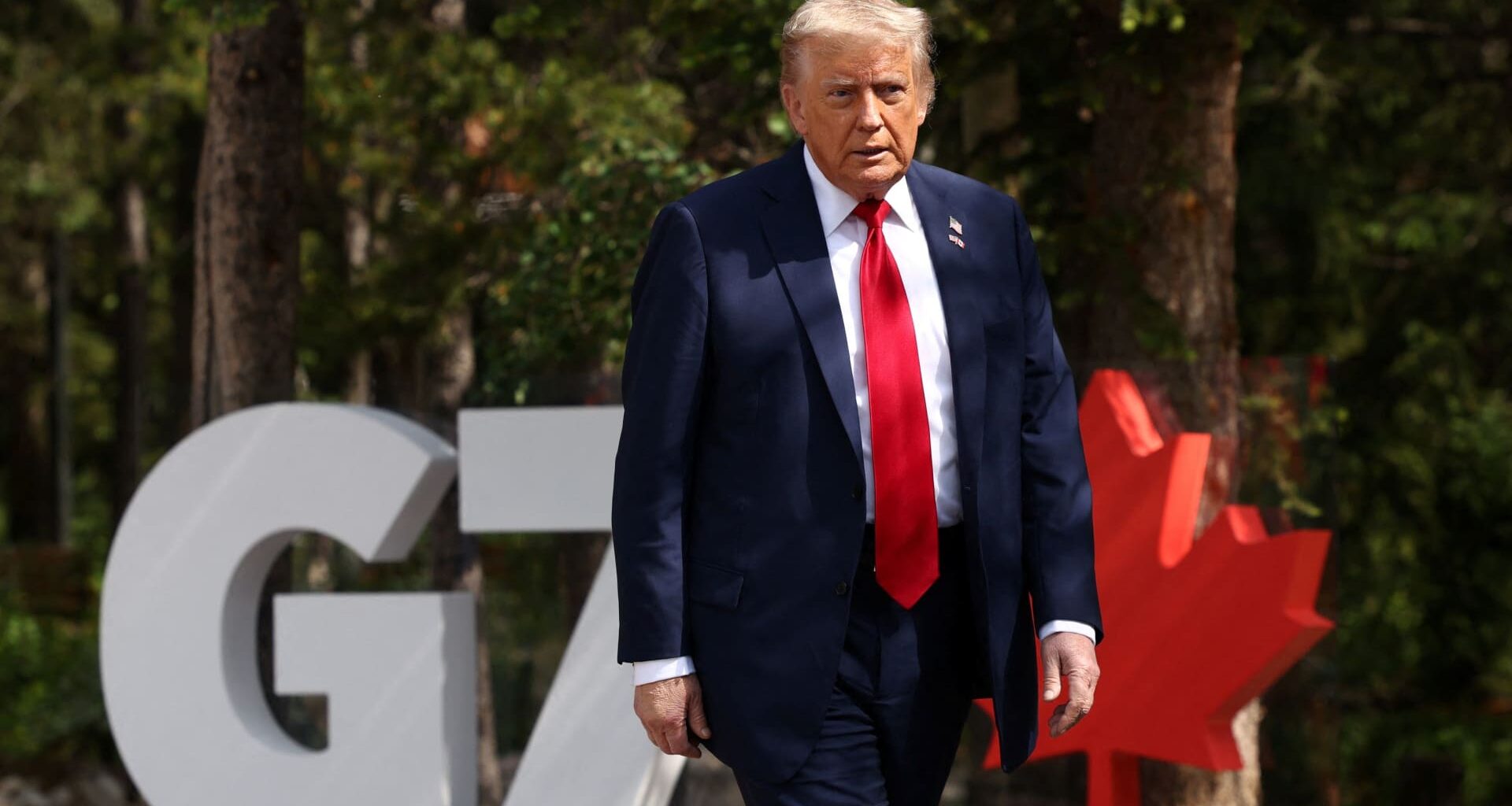
U.S. President Donald Trump arrives at the G7 summit in Kananaskis, Alberta, Canada, June 16, 2025.
Kevin Lamarque | Reuters
The U.S. and Israeli war on Iran is having a catastrophic impact on the global economy, European members of the G7 have warned ahead of a key summit on Thursday.
Foreign ministers from the group of leading industrialized nations — whose core members are the U.S., U.K., Canada, France, Germany, Italy and Japan — are set to meet in France for a two-day summit, with the wars in Iran and Ukraine top of the agenda.
European leaders and ministers issued warnings about the impact of the war on the eve of the gathering, at which they’re expected to encourage the U.S. to pursue an off-ramp with Iran.
It comes amid an apparent impasse over a possible ceasefire, as well as potential escalation with the threat of ground troops.
“To make it crystal clear, this war is a catastrophe for the world’s economies,” Boris Pistorius, Germany’s defense minister warned early Thursday.
“European partners and Germany highlighted from the beginning that we have not been consulted before. Nobody asked us before. It’s not our war,” he told reporters during a visit to Australia.
International energy prices have rocketed since the conflict was initiated by the U.S. and Israel in late February, with energy infrastructure in Iran and neighboring Gulf states destroyed or damaged as a result of U.S.-Israeli airstrikes and Iran’s retaliatory attacks.
Tehran’s almost total closure of the Strait of Hormuz, a vital maritime passage through which a fifth of global oil and gas supplies normally flow, has severely restricted global energy supplies, with the EU’s leader warning that the situation was “critical.”
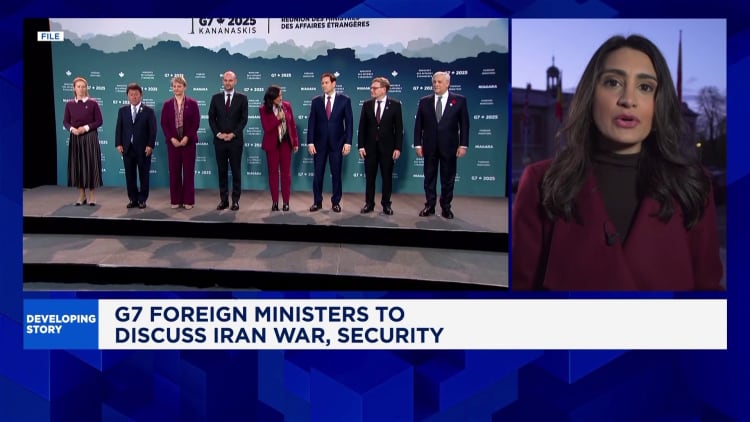
French Finance Minister Roland Lescure said Wednesday the world is now facing a conflict “that has changed in nature, and therefore the economic consequences have also changed.”
“Today, 30 to 40% of the refining capacity in the Gulf is damaged or destroyed. I spoke with the Qatari Minister of Energy [Saad Sherida Al Kaabi, who said] 17% of gas production capacity is destroyed following attacks on these facilities, which will take years — we’re talking about three years — to restore.”
Even so-called ‘Trump whisperer,‘ Italian Prime Minister Giorgia Meloni, on Wednesday described the crisis in the Middle East as one which “involves everyone and that, if it were to continue over time, could clearly cause economic and social consequences that would end up affecting more nations, the most vulnerable nations, starting with the African continent.”
Washington looking for an off-ramp?
The latest G7 meeting — which will include representatives from the EU, as well as guest delegations from Saudi Arabia, Brazil, India, South Korea and Ukraine — comes as Washington appears to be looking for an off-ramp to the war.
President Donald Trump and the White House insisted this week that the U.S. is holding talks with top — but unnamed — Iranian officials and said it had proposed a peace plan to Tehran via intermediaries.
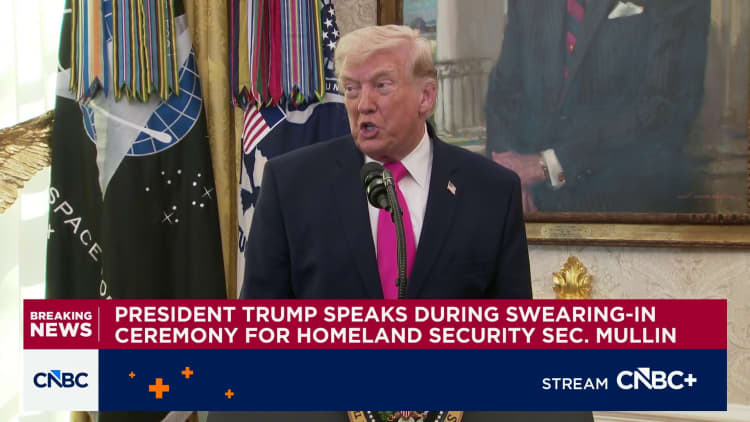
Iranian Foreign Minister Abbas Araghchi reportedly told state media on Wednesday that officials were reviewing the American proposal to end the war, but said Tehran had no intention of having talks with the U.S.
Araghchi added that an exchange of messages between the two countries through mediators “does not mean negotiations with the U.S.,” Reuters reported.
Iran state media then reported Wednesday that the Islamic Republic would reject a U.S. ceasefire offer, instead countering with its five-point list that would give Tehran control over the Strait of Hormuz.
Further blurring the picture over potential peace talks, the U.S. is sending thousands more soldiers to the region who could be rapidly deployed for possible additional military action. This includes seizing the Kharg Island oil port or reopening the strait, if negotiations falter.
Iran’s parliament speaker, Mohammad Bagher Ghalibaf, commented on X Wednesday that intelligence suggested “Iran’s enemies” were planning to occupy “one of the Iranian islands” with support from an unnamed country in the region.
Largely shut out of peace efforts, G7 members appear to have very little sway over Washington’s position and intentions when it comes to Iran, particularly after Trump lambasted allies for refusing to assist the U.S. in its military operations.
“I think NATO is making a very foolish mistake. And I’ve long said that, you know, I wonder whether or not NATO would ever be there for us. So this is a this was a great test, because we don’t need them, but they should have been there,” Trump told reporters in the Oval Office last week.
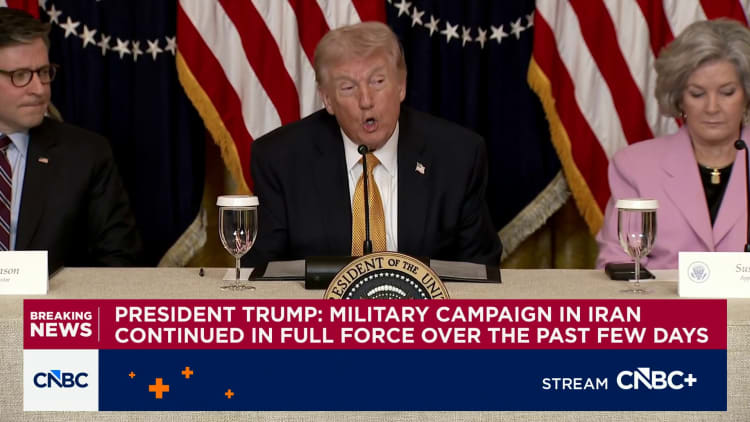
NATO Secretary-General Mark Rutte reportedly ruffled some feathers in Europe when he praised Trump in an interview with CBS last weekend and appeared to suggest the U.S. ‘ European NATO allies would “come together” to “answer the president’s call, to make sure that we secure the free sailing through the Strait of Hormuz.”
European leaders have signaled an unwillingness to get involved in what they see as a war of choice, rather than necessity. The European Union’s foreign policy chief Kaja Kallas summed up that sentiment when she remarked last week that, “this is not Europe’s war. We didn’t start the war. We were not consulted.”