
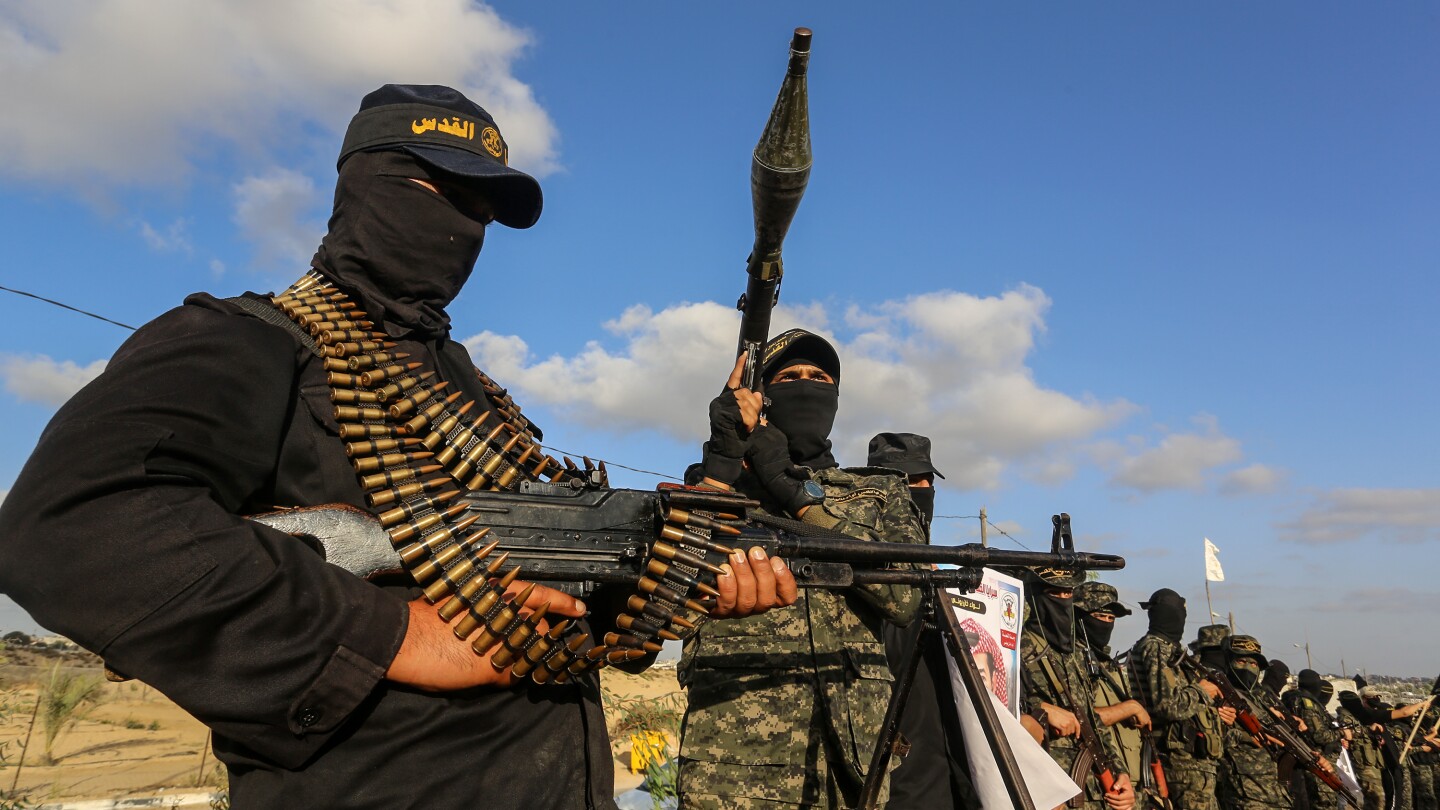
Since 1979, Iran has sought to export its Islamic Revolution across the Muslim world, drive the United States out of the Middle East, and ultimately destroy Israel. To achieve these goals, Tehran built the “Axis of Resistance,” a proxy network to wage war against the Jewish state and the West while sparing the regime the cost of direct confrontation. For decades, that strategy appeared effective. But after Hamas’s October 7, 2023, massacre in southern Israel, Jerusalem began degrading much of that axis. Now Iran faces unprecedented pressure.
While the Hezbollah, Hamas, and Houthi proxy threats often draw attention, Palestinian Islamic Jihad has largely slipped from view, even though its ideology, commitment to armed struggle, and expanding infrastructure in the West Bank make it a dangerous instrument in the war of attrition against Israel.
In exile, Palestinian Islamic Jihad received training from the Islamic Revolutionary Guard Corps and Hezbollah.
Founded in 1981, Palestinian Islamic Jihad was shaped by Ayatollah Ruhollah Khomeini’s revolutionary ideology. Israel’s 1988 decision to expel the group’s leadership from Gaza to Lebanon backfired. In exile, Palestinian Islamic Jihad received training from the Islamic Revolutionary Guard Corps and Hezbollah, turning ideological affinity into a patronage relationship built on funding, arms, and strategic alignment. Palestinian Islamic Jihad also became first Palestinian group to adopt suicide terrorism—a tactic taken from Hezbollah—beginning with the Egged bus attack in 1989 and mastering it during the Second Intifada (2000–2005), before shifting more toward rockets. Though Palestinian Islamic Jihad is Sunni and Iran’s regime is Shi’i, the group subordinates that divide to a shared jihad against Israel, which it presents as the key to restoring Muslim unity.
Palestinian Islamic Jihad assumed the role of Iran’s Palestinian shock troops, ready to strike Israel whenever Tehran wanted to escalate the conflict. Today, that commitment is more a strategic trap. Although Palestinian Islamic Jihad’s military wing, the Al-Quds Brigades, eulogized Iranian Supreme Leader Ali Khamenei as a central figure in a broader civilizational struggle against the “Zionist-American project,” it did not enter the war to full capacity. Palestinian Islamic Jihad says Iran has the “right to respond” to “the criminals [Donald] Trump and [Benjamin] Netanyahu” and reaffirms its commitment to “armed struggle” alongside the “resistance” movements across the region. Yet, like Hamas, it stops short of announcing specific retaliation—though Palestinian Islamic Jihad’s Lebanese branch allegedly fired rockets at Israel before Hezbollah entered the war, apparently to help Hezbollah maintain initial deniability.
There are several reasons for Palestinian Islamic Jihad restraint. First is disruption of communication with Islamic Revolutionary Guard Corps officials overseeing the Palestinian file. Second, Israel eliminated several Palestinian Islamic Jihad commanders, weakening the group’s ability to coordinate and respond, including Ali Raziana, commander of the northern Gaza brigade of the Al-Quds Brigades, and Adham al-Othman, Palestinian Islamic Jihad’s commander in Lebanon. Still, Palestinian Islamic Jihad continues to replace fallen leaders.
The clearest constraint, however, is Palestinian Islamic Jihad’s weakened state after more than two years of war with Israel. It took part in the October 7, 2023, slaughter and claimed to hold more than thirty hostages. Israel has since sharply degraded the group’s capabilities and terrorist infrastructure, eliminating many senior leaders and reducing its ranks from an estimated 12,000 fighters to around 5,000. As a result, Palestinian Islamic Jihad is less likely to open a major new front than to intensify attritional violence from the West Bank, where it remains embedded, while also mounting occasional attacks from Lebanon—potentially including a return to suicide terrorism. Here, a failed August 18, 2024, bombing in Tel Aviv, provides a warning. Hamas and Palestinian Islamic Jihad both claimed responsibility. The groups’ Turkey-based headquarters ran the operation.
The Islamic Revolutionary Guard Corps built Palestinian Islamic Jihad solely for “armed struggle.”
Another reason for Palestinian Islamic Jihad restraint is that it likely finds the current pause useful while it seeks to regroup, recruit, and rearm. Unlike Hamas, which has political ambitions and pretensions of governance, the Islamic Revolutionary Guard Corps built Palestinian Islamic Jihad solely for “armed struggle.” That difference long has caused friction between the two. Palestinian Islamic Jihad often has viewed Hamas’s indirect dealings with Israel as betrayal of “resistance.”
At the same time, Palestinian Islamic Jihad may be disillusioned with Iran itself. Palestinian Islamic Jihad leaders long have praised Iran in near-reverential terms—former Secretary-General Ramadan Shallah called the movement “another fruit of Ayatollah Khomeini’s fruitful tree”—and President Ebrahim Raisi openly celebrated Palestinian Islamic Jihad’s role on October 7, 2023. Yet, since then, disappointment with Iran has grown as Islamic Jihad members feel that Tehran praised the operation but then abandoned Gaza during Israel’s military campaign.
The relationship, however, was not always seamless. When Palestinian Islamic Jihad refused both to endorse the Iranian-backed Houthis and to denounce the Saudi-led intervention, Tehran cut funding in 2015, forcing Palestinian Islamic Jihad to scramble for alternative patronage through contacts in Algeria, Turkey, Saudi Arabia, and Egypt. Support resumed in 2016, and especially after Ziyad al-Nakhalah took over the group’s leadership in 2018, Palestinian Islamic Jihad returned to closer alignment with Tehran.
Palestinian Islamic Jihad must now calibrate its rhetoric. It congratulated Mojtaba Khamenei on his succession as supreme leader, but it fears too close an embrace will alienate Arab states whom Iran now attacks and where Palestinian Islamic Jihad leadership seeks refuge, especially after regime change in Syria lost it an important safe-haven. But unlike Hamas, which recently urged Iran not to target neighboring states, Palestinian Islamic Jihad has remained silent.
Palestinian Islamic Jihad remains active in the West Bank, especially around Jenin and Tulkarm. It will likely try to strike its new balance by focusing on its operations there, providing a service to the Islamic Republic with efforts to destabilize the West Bank. Here, it has an advantage: It can turn destruction into propaganda. In its worldview, loss is not failure but proof of steadfastness; dead fighters become martyrs, and devastation becomes sacrifice.