
Good Thursday morning!
In today’s edition of Your Daily Phil, we examine a recent outburst yesterday by the mayor of the beleaguered northern Israeli city of Kiryat Shmona during a meeting with government officials and what it means for the country’s North, and report on the release of the Jewish Climate Trust’s inaugural Jewish Guide to Climate Philanthropy. We feature an opinion piece by Jeff Green about applying insights from a 20-year career in the automotive industry to his more recent role in synagogue leadership, and one by Jay Greenlinger highlighting the need for more professional infrastructure and development opportunities geared toward early childhood educators. Also in this issue: Tanya Kak, Avishag Shaar-Yashuv and Mikhail “Misha” Libkin.
What We’re Watching
Iran has fired more than half a dozen missile barrages at Israel since 6:30 a.m. Israel time, the largest number of salvos launched in a five-hour period since the first days of the war.
The House Committee on Education and Workforce is holding a hearing on foreign influence at American universities.
What You Should Know
A QUICK WORD FROM EJP’S JUDAH ARI GROSS
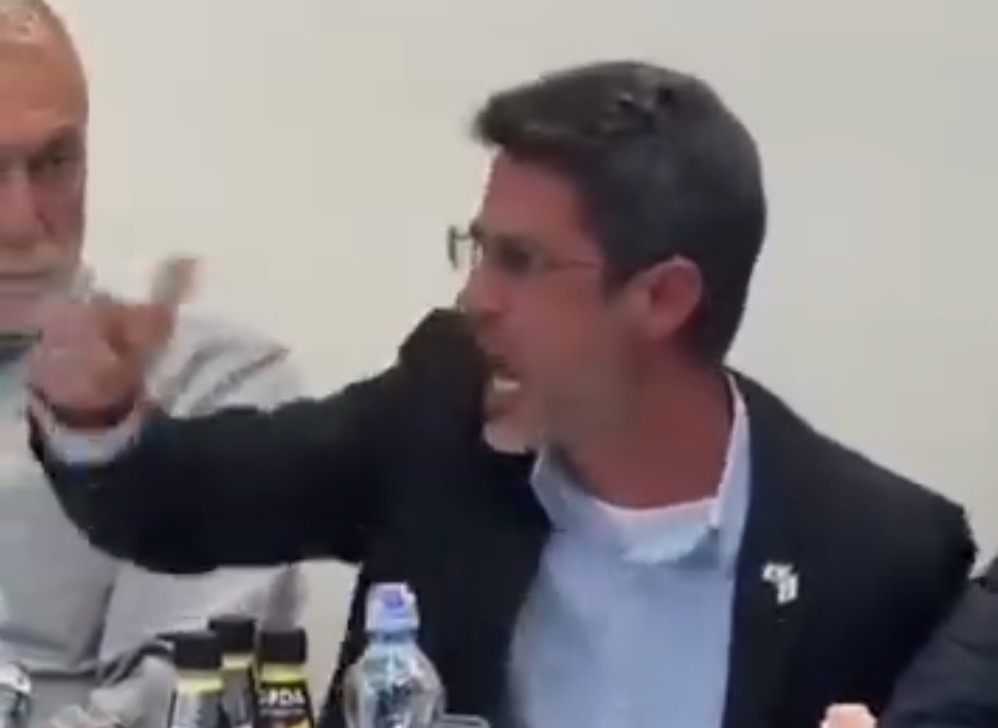
Lashing out at the heads of Israeli ministries during a meeting with them yesterday in the western Galilee, Avichai Stern, the mayor of the war-battered northern city of Kiryat Shmona, lambasted the government for failing to protect the residents of his city, which is again being targeted relentlessly by Hezbollah. He accused the ministries of providing insufficient, slow and often elusive assistance for his community, which was struggling even before it entered the Lebanese terror group’s crosshairs in the wake of the Oct. 7 terror attacks.
Kiryat Shmona and the surrounding area were evacuated soon after the Hezbollah attacks began in late 2023 and have not come close to recovering two-plus years later, with the majority of the city’s residents refusing to return after a ceasefire went into effect in November 2024. Those who did return to the North have spent more time in bomb shelters than anyone else in the country over the past month. Unlike Tel Aviv and other areas of central Israel, which are being targeted by long-range ballistic missiles from Iran hundreds of miles away — giving residents several minutes to enter bomb shelters — Kiryat Shmona is being attacked by Hezbollah from just a few kilometers away, meaning residents are forced to spend nearly all of their time in bomb shelters. (That is assuming, of course, that they have access to bomb shelters, which many do not.)
Pounding on the table, Stern highlighted the grave shortage of bomb shelters in the city — a situation that the Israeli government has been aware of for decades — saying that the city, which before the war had a population of roughly 22,000 — has 4,700 housing units that don’t have bomb shelters that are up to code or have bomb shelters at all. “You haven’t provided them with fortifications until now, so at least provide them protection now. If you can’t, get them out of harm’s way! You don’t send a soldier to battle without a ceramic vest, right? Why are you putting civilians on the frontline without protection?” he said.
Getting increasingly agitated, Stern noted that this is a personal issue for him as well. “I have a 2 ½-year-old daughter and a 5-year-old daughter, whom I have to take to activities in a bomb shelter, and I am praying every time I make that trip [that there isn’t an attack],” he said. “Do any of you know what it’s like getting missiles with zero seconds of warning — with kids at home, with people with disabilities, with elderly people?”
Stern’s tirade exemplified the frustration and disappointment of many residents of northern Israel, who yet again find themselves under attack without the governmental attention and support that they need. Unnamed government officials responded to Stern’s accusations, claiming that he, not the ministries, was the cause of the delays in funding for Kiryat Shmona, adding an ad hominem allegation that Stern was trying to get the government to pay for the repair of his father’s synagogue — a claim Stern has rejected as a “distortion” of his efforts to secure funding for several synagogues in the city that don’t have bomb shelters.
Philanthropy professionals who focus on northern Israel and work closely with the local governments told eJewishPhilanthropy that the situation in Israel’s North is indeed dire, that residents are facing constant deadly attacks without the life-saving protections that they need and that the government has not made the North’s recovery a top priority.
Michal Cohen, the CEO of the Rashi Foundation, which runs a number of programs in northern Israel, denounced the government for both its “abandonment” of northern Israel, particularly as it relates to bomb shelters and fortifications, and for the unnamed officials’ aggressive response to Stern’s remarks. “During a war, who are you attacking?” Cohen fumed, adding: “We don’t have enough enemies from outside?”
While the American-Israeli war against Iran has drawn the lion’s share of media coverage over the past month, the conflict with Hezbollah and the ramifications for already-struggling northern Israel are even more significant and potentially devastating. While Tel Aviv is also under bombardment, few believe that the future of the city or of central Israel are at risk. Not so with Kiryat Shmona. “I went to sleep last night worried about Kiryat Shmona and I woke up this morning worrying about Kiryat Shmona — that has been a motif since the war started,” Sarah Mali, director general of Jewish Federations of Canada-UIA Canada, told eJP this morning. “There is a genuine question about the longevity of Kiryat Shmona as a decent stable city in the North and even more serious questions about its ability to thrive.”