
Over the past year, a pattern has emerged across markets, policy decisions and price behavior pointing to the early stages of de facto dollarization.
In April 2025, when a “five-dollar pizza” shop opened in Tehran’s affluent Niavaran neighborhood, many dismissed the fixed dollar price as a marketing gimmick. At the time, one pizza cost roughly 5 million rials, with inflation reportedly above 40%.
Less than a year later, on the eve of the current war, the same pizza was priced at 8.6 million rials, while officials acknowledged inflation exceeding 70%. What initially appeared symbolic began to look practical.
The shift was not confined to niche businesses and high-end stores. Informal dollar transactions, once largely limited to luxury goods or services aimed at foreign customers, steadily expanded.
In the months leading up to the 12-day war, despite the departure of many foreign nationals, dollar-pegged property sales and rentals increased noticeably. While upscale properties led the trend, mid-range apartments also entered the market with dollar-based pricing.
By the end of 2025, the US dollar had climbed to 1,430,000 rials, up from 800,000 in January of the same year. The volatility hit the automotive market hard. With car production concentrated among three major state-linked manufacturers and supply unable to meet demand, the price of second-hand cars in rial terms outpaced the increase in the dollar exchange rate.
Media headlines read, “The dollar is in the driver’s seat,” and traders increasingly priced vehicles in dollars. In December, automobile market expert Abdollah Babaei warned that if current trends continued, car transactions would effectively become dollarized.
 Stealth austerity: Tehran seeks fuel price hike without a reckoning
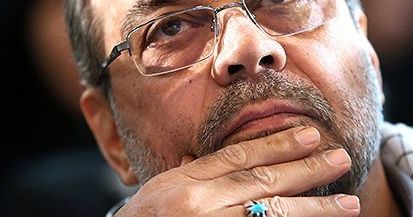
Economists began warning of a structural shift. Former Tehran Stock Exchange chief Hossein Abdeh Tabrizi cautioned that Iran “will enter the stage of dollarization” if 60% inflation and government overspending continued.
he statement went viral, and many echoed the growing concern that “Iran’s economy is on a dangerous path,” with the rial losing its function both as a store of value and as a unit of account.
Government policy after the 12-day war reinforced these anxieties.
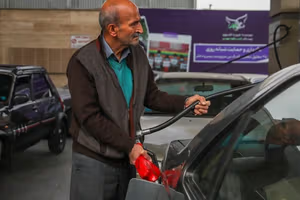
The administration’s 2026–2027 budget introduced three pivotal shifts. First, gasoline subsidies moved from a liter-based rationing system to cash transfers. Second, an inflation coefficient was added to the pricing formula of Iran’s key commodity anchor. Third, the preferential exchange rate was abruptly removed in December, converting the government’s largest dollar commitment into rial-based direct subsidies.
Perhaps most striking was the historic decline in oil revenue’s share of the budget—from about 32% in 2025–2026 to just 5% in 2026–2027, the lowest level since the 1960s.
To compensate, taxes were increased by more than 60%. Across these measures, the common denominator was clear: the state systematically reduced its foreign-currency and commodity obligations, converting them into rial-based commitments. The administration that campaigned on taming inflation now appeared increasingly reliant on inflationary financing to navigate wartime pressures.
 Capital flees Tehran stocks as geopolitical tensions deepen
In February, before the outbreak of the second war, average inflation for basic necessities reached triple digits, estimated between 105% and 115%. Reacting to these concerns, the administration pushed to remove four zeros from the rial, presenting it as a technical reform to simplify calculations.
In reality, redenomination in a high-inflation environment is an expensive cosmetic surgery on a patient on his deathbed—an adjustment that quickly loses meaning as prices continue to rise.
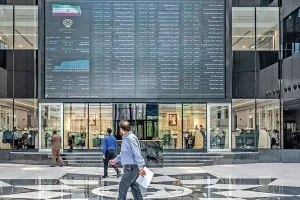
During the second war, market closures, the suspension of price discovery in the exchange market, and reduced demand slowed money circulation and provided short-term inflationary relief. At the same time, large banks halted operations, increasing demand for physical cash.
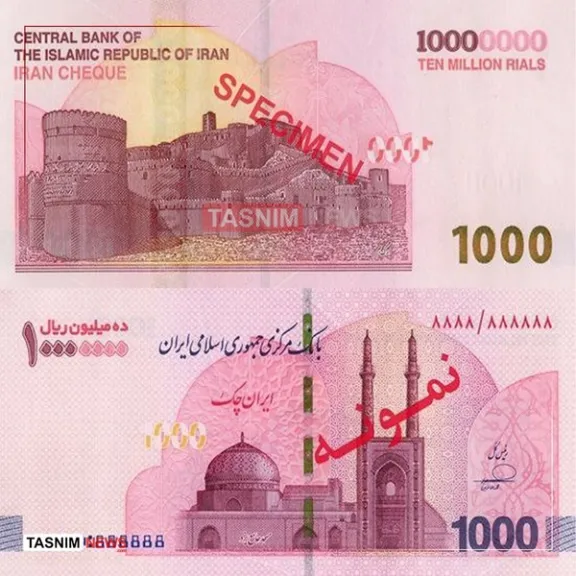
The Central Bank responded by issuing a 10-million-rial banknote—raising the highest denomination one hundredfold from 100,000 rials—a step it had resisted for years.
But such pauses rarely eliminate underlying pressures. When markets fully reopen and normal trading resumes, deferred demand for foreign currency is likely to return. A similar pattern followed the 12 day war, when pent-up demand translated into a rapid adjustment in prices once restrictions eased.
Even under conservative assumptions, inflation could move decisively into triple-digit territory if monetary expansion continues. At that point, the shift toward dollar pricing would no longer be limited to select sectors. It would spread more systematically across contracts, wages and savings behavior.
Dollarization rarely begins with legislation; it begins with economic self-preservation. It starts with a pizza menu, moves to apartment contracts and car listings, and eventually reshapes fiscal expectations.
If post-war reopening triggers another inflationary wave, the timeline may not be measured in years but in quarters. Under such conditions, the transition toward de facto dollarization would become increasingly difficult to reverse.