
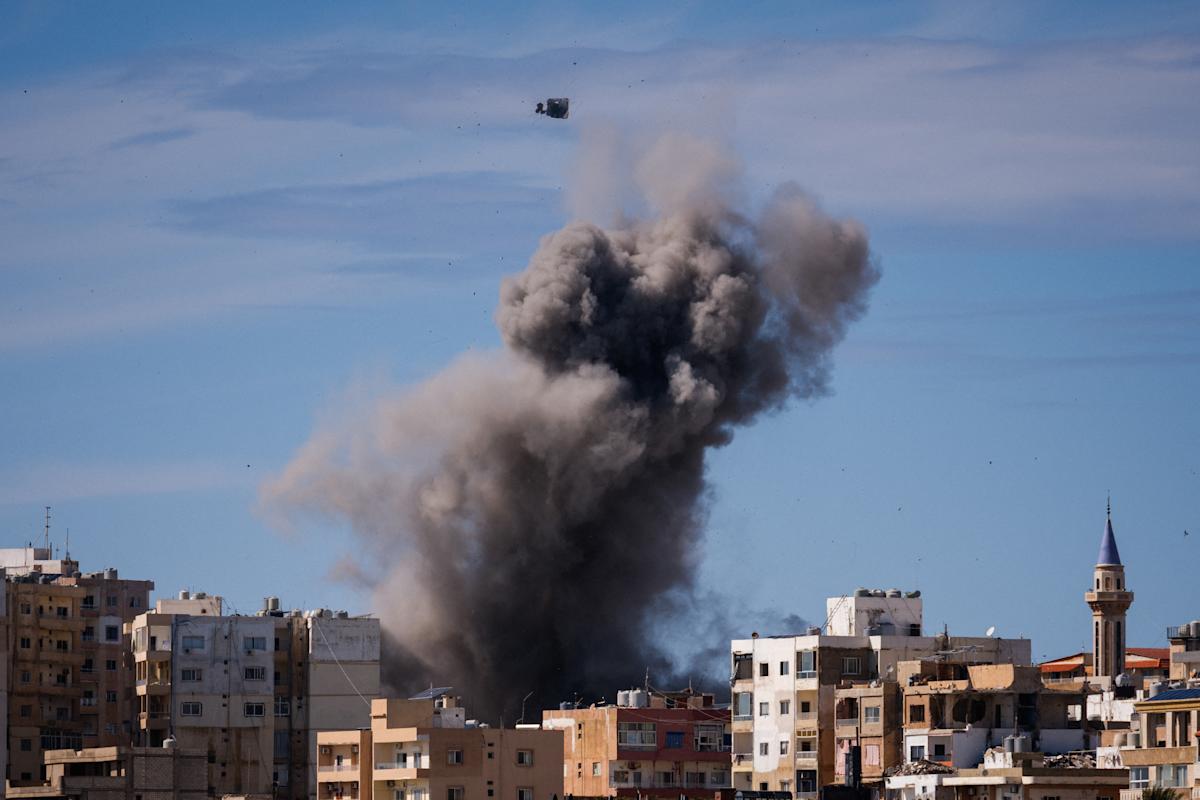
As the Iran war enters its fourth week, the Strait of Hormuz remains effectively closed, choking off roughly 15 million to 16 million barrels of oil per day from the market, and attacks on key energy infrastructure have disrupted refineries throughout the Gulf.
Oil analysts say the conflict is unlike any other in history.
The war in Iran is “incomparable” with any past oil shock, both in its scale and wide-ranging impact on the energy market, BP (BP) chief economist Gareth Ramsay said in comments at an industry event on Tuesday.
“I don’t think you really compare this with any disruption in the past,” Ramsay said at CERAWeek by S&P Global, a major energy conference.
The disruption of the Strait of Hormuz, he said, is “every analyst’s study piece, or worst nightmare that we thought could never happen.”
Read more: What an extended war with Iran could mean for gas prices
Since the war began, futures on international oil benchmark Brent crude (BZ=F) have gained roughly 40%, while those on US benchmark West Texas Intermediate (WTI) crude (CL=F) have picked up more than 30% to trade near record highs.
Read more: How oil price shocks ripple through your wallet, from gas to groceries
The conflict — and the subsequent disruption of the oil market — has drawn some comparisons to the 1973 oil embargo crisis. Following the Yom Kippur War, the Arab OPEC states cut off sales to the US and other Western economies, sending crude prices skyrocketing within months. The shock drove a spike in inflation, deepened an already weakening growth backdrop, and contributed to steep losses in the equity market as policymakers tightened monetary policy in an attempt to contain price pressures.
Over the long run, the embargo reshaped the global oil market, accelerating the shift in pricing power toward producer nations and pushing governments to build strategic petroleum reserves and design coordinated emergency response mechanisms.
Read more: What’s the Strategic Petroleum Reserve, and can it help lower gas prices?
Today’s disruption is the largest on record for the oil market and will likely have long-lasting consequences for the energy sector and surrounding geopolitics, Jim Burkhard, S&P Global’s head of crude oil market research, told Yahoo Finance.
“You go back to the ’73 oil embargo, the repercussions lasted for years, decades,” Burkhard said. “This story is just beginning to unfold.”
The conflict in Iran, which has increasingly engulfed the surrounding region, is already reshaping the structure of the physical oil market, analysts told Yahoo Finance. Markets are now grappling with a scenario long discussed in theory but rarely thought of as a legitimate possibility — the effective shutdown of the world’s most critical energy chokepoint.
 The Liberia-flagged tanker Shenlong Suezmax, carrying crude oil from Saudi Arabia, cleared the Strait of Hormuz and is seen at the Mumbai Port in Mumbai, India, on March 12. (AP Photo/Rafiq Maqbool) · ASSOCIATED PRESS
“Clearly, countries are going to want to diversify,” Ramsay said. “We are going to see, I think, interesting things” as governments attempt to grapple with preventing another crisis like the war in Iran from impacting their nations so heavily.
Even if flows begin to recover in the coming weeks, analysts told Yahoo Finance the episode is likely to leave a lasting risk premium embedded in oil prices, forcing governments and companies to rethink supply chains, inventory buffers, and exposure to geopolitical shocks for years to come.
Goldman Sachs is now predicting that Brent and WTI will average $85 and $79 per barrel, respectively, in 2026, against previous estimates of $77 and $67, respectively. In 2027, the bank expects Brent and WTI to average $80 and $75, respectively. The new price target “takes into account a longer disruption, strategic inventory rebuilding from 2026Q4, and the response of policy, demand, and supply,” the bank’s analysts wrote in a recent client note.
The war is also likely to curtail global growth through the ripple effect of rising energy prices, BP’s Ramsay said. A 10% rise in oil prices might reduce global economic growth by 0.1% to 0.2%, while a 30% to 40% rise in prices, like the market is now staring down now, could cut a full 1% of global growth, which would represent a “significant global slowdown,” Ramsay said at CERAWeek.
The keys, analysts told Yahoo Finance, are how long the conflict continues and how long the strait remains closed. Government measures such as SPR releases or sanctions waivers are “not going to make up 14 million barrels a day,” Burkhard said.
For every day the war goes on, prices get steeper, shuttered wells become more challenging to turn back on, and damage continues to infrastructure where repairs could take years. In a televised interview on Tuesday, Iranian parliamentary speaker Mohammad Baqer Qalibaf said the Strait of Hormuz “cannot be the same as before and return to its previous conditions.”
“There’s the scale, and then there’s the duration,” Ramsay said. “There’s been no disruption of this scale.”
Jake Conley is a breaking news reporter covering US equities for Yahoo Finance. Follow him on X at @byjakeconley or email him at jake.conley@yahooinc.com.
Click here for in-depth analysis of the latest stock market news and events moving stock prices
Read the latest financial and business news from Yahoo Finance