
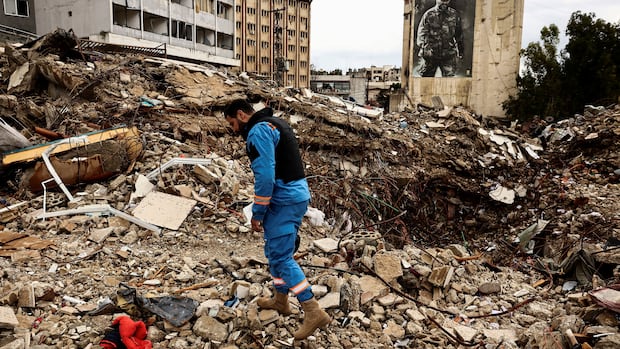
U.S. President Donald Trump warned Iran on Thursday to “get serious” about a deal to end nearly four weeks of fighting, after its foreign minister said Tehran was reviewing the U.S. proposal but that there were no talks on winding down the war.
Trump’s comments came as the economic and humanitarian toll of the conflict mounted, with fuel shortages spreading worldwide, sending companies and countries scrambling to contain the fallout.
On Thursday, Iran launched multiple waves of missiles at Israel, triggering air raid sirens in Tel Aviv and other areas and injuring at least five people.
In Iran, strikes hit a residential zone in the southern city of Bandar Abbas and a village on the outskirts of the southern city of Shiraz, where two teenage brothers were killed, Iran’s Tasnim news agency said. A university building in Isfahan was reported to have been hit.
WATCH | Former diplomat on the latest developments: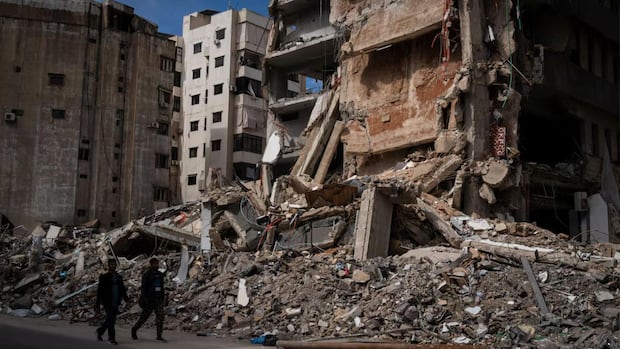
Iran rejects ceasefire proposal as more U.S. troops head to region | Hanomansing Tonight
Iran dismissed a U.S. plan to pause the war in the Middle East and continued to launch more attacks on Israel and Gulf countries. Former U.S. ambassador Gina Abercrombie-Winstanley does not believe there are meaningful negotiations happening yet between the U.S. and Iran.
Israeli officials said Israel had killed the naval commander of Iran’s Revolutionary Guards. Israeli Defence Minister Israel Katz said that Commodore Alireza Tangsiri was responsible for bombing operations that have blocked ships from crossing the Strait of Hormuz.
Israel’s military also said it has killed the Iranian navy intelligence chief, characterizing Behnam Rezaei as a “central knowledge authority in maritime intelligence.”
The military, separately, said a service member was killed in clashes with Hezbollah fighters in southern Lebanon.
Exchanges of missiles and drones across the Gulf continued on Thursday.
In Abu Dhabi in the United Arab Emirates, two people were killed and three others injured by debris from an intercepted ballistic missile, the government said.
Is it a negotiation?
“Indirect talks” between the U.S. and Iran are taking place through messages relayed by Pakistan, with other states including Turkey and Egypt also supporting mediation efforts, Pakistan’s foreign minister said.
But Pakistan’s Foreign Ministry did not confirm whether direct talks would take place in Islamabad later this week. At a weekly news briefing, ministry spokesperson Tahir Andrabi said details on the timing, venue and itinerary would be shared in due course. Asked whether Iranian or U.S. delegations were expected to hold talks in Islamabad later this week, he said, “We will let you know when these developments take place.”
 Zahra, 6, displaced from Beirut’s southern suburb of Dahiyeh, sits inside a tent used as a shelter along the beachfront in Beirut, Lebanon, on Thursday. (Emilio Morenatti/The Associated Press)
He added that Pakistan’s diplomatic efforts are aimed at ending the conflict and emphasized that the initiative is not directed against any country.
Iranian Foreign Minister Abbas Araqchi has said the messaging described in media reports have not risen to the level of a negotiation.
“Messages being conveyed through our friendly countries and us responding by stating our positions or issuing the necessary warnings is not called negotiation or dialogue,” Araqchi said in comments broadcast late on Wednesday.
“At present, our policy is to continue resistance and defend the country, and we have no intention of negotiating.”
In a social media post on Truth Social, Trump said that Iran “better get serious soon, before it is too late, because once that happens, there is NO TURNING BACK, and it won’t be pretty.”
“They now have the chance, that is Iran, to permanently abandon their nuclear ambitions and to join a new path forward,” Trump said hours later at a cabinet meeting at the White House. “We’ll see if they want to do it. If they don’t, we’re their worst nightmare. In the meantime, we’ll just keep blowing them away.”
WATCH | Iranian resolve surprises some analysts, but not all: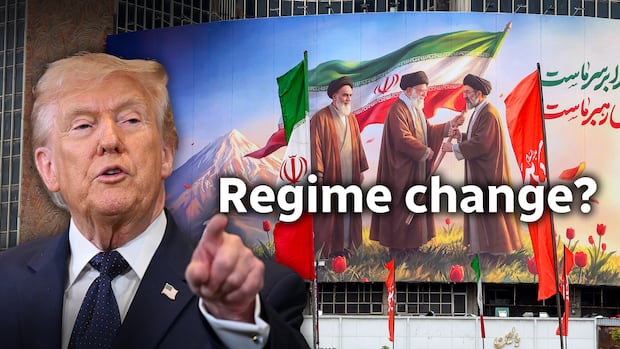
Why regime change in Iran was never in the cards | About That
Although the U.S. and Israel claim several wins in their war against Iran’s military, the messaging from the start of the war about achieving regime change has fizzled out. Andrew Chang explains how Iran’s deeply entrenched power structure and military strategy make its leadership so difficult to replace. Images provided by The Canadian Press, Adobe Stock, Reuters and Getty Images
CORRECTION (March 26, 2026): An earlier version of this upload included an incorrect title for Dana Stroul. It has been replaced.
Though Araqchi’s comments suggested some willingness by Tehran to negotiate an end to the war if Iranian demands were met, any such talks would likely prove very difficult given the maximalist positions laid out by both sides.
A 15-point U.S. proposal to end the conflict includes demands ranging from dismantling Iran’s nuclear program and curbing its missiles to effectively handing over control of the Strait of Hormuz, according to sources and reports in recent days. At the Washington cabinet meeting, U.S. Special Envoy Steve Witkoff confirmed that the U.S. had sent a “15-point action list” as a basis for negotiations to end the war.
But Iran has hardened its stance since the war began, demanding guarantees against future military action, compensation for losses, and formal control of the Strait of Hormuz, Iranian sources say. It also told intermediaries that Lebanon must be included in any ceasefire deal, regional sources said.
The waterway, which is effectively closed, is a conduit for one-fifth of the world’s oil and liquefied natural gas. Businesses from airlines to supermarkets and used-car dealers are grappling with challenges including rising costs, weakening demand and disrupted supply chains.
Iran has been blocking ships from the strait that it perceives as linked to the U.S. and Israeli war effort, while letting through a trickle of others.
Jasem Mohamed al-Budaiwi, secretary-general of the Gulf Co-operation Council, a bloc of six Gulf Arab nations, said Thursday Iran was charging for safe passage.
France’s armed forces chief held a video conference call with 35 countries over ways to re-open the Strait of Hormuz, France’s Defence Ministry said on Thursday. The ministry did not disclose which countries in particular had joined the call.
Trump has not identified who the U.S. is negotiating with. Iran’s Supreme Commander Ayatollah Ali Khamenei was killed on the first day of the conflict by an Israeli strike and was replaced by his son Mojtaba, who has been wounded in strikes and not been seen in any photograph or video clip since his appointment. Several other high-ranking Iranian officials have also been killed.
LISTEN | Why reopening the strait is so hard:
Front Burner24:40Can the U.S. re-open the Strait of Hormuz alone?