
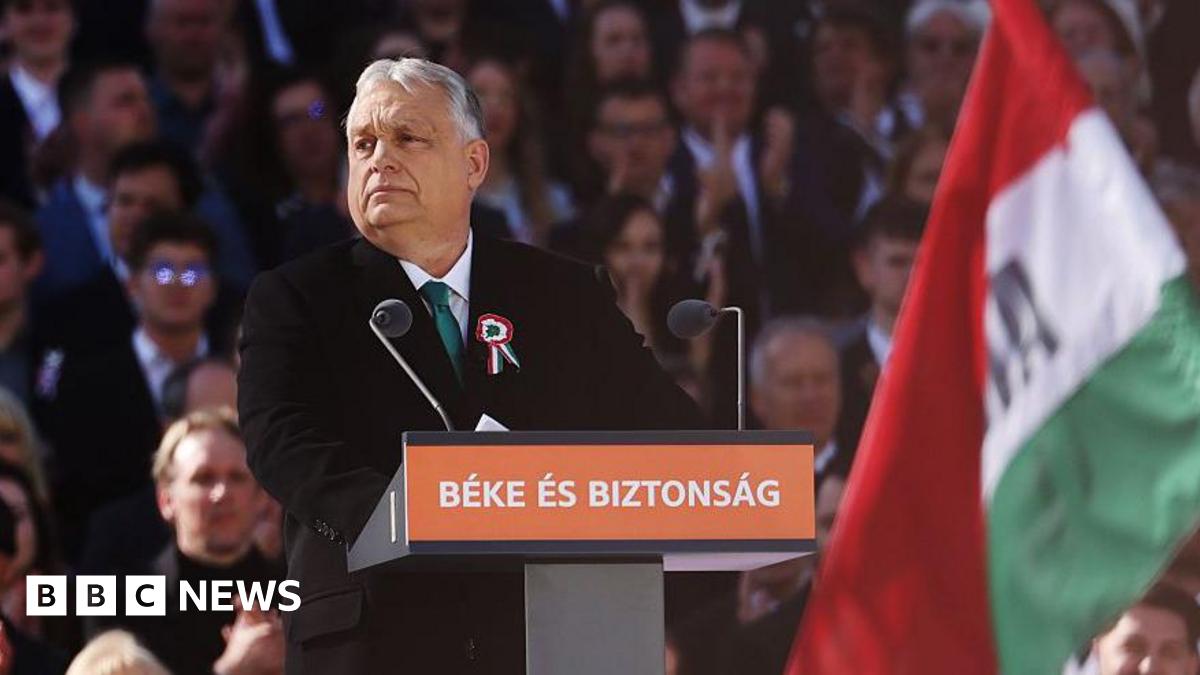
The film has been released with little more than two weeks to go before Hungarians go to the polls, and the campaign has been shrouded by almost daily claims alleging domestic and foreign plots to undermine a fair vote.
Fidesz officials, including the prime minister, allege interference by the EU and Ukraine to prevent a fifth consecutive Orban victory.
Independent media, and the opposition Tisza party, allege Russian involvement in support of Orban, who is seen as Vladimir Putin’s closest partner in the European Union.
Recently the Washington Post reported an alleged proposal by the SVR Russian Foreign Intelligence Service to stage a mock assassination attempt against Orban.
The paper also produced evidence that the Hungarian Foreign Minister, Peter Szijjarto, had been giving his Russian counterpart Sergey Lavrov a running commentary on proceedings behind closed doors at European Council summits.
Poland’s prime minister, Donald Tusk, then revealed that Lithuania had years before asked for a Hungarian delegation to be excluded from a Nato meeting because of fears of information being leaked to Russia.
Szijjarto initially condemned the Russia allegations as fake news, but then argued it was “perfectly natural” to consult with allies.
“I consult with the Turks, the Serbs, and the Russian foreign minister. If necessary, I consult with the Chinese, the Africans, and the south-east Asians in order to establish co-operation that serves Hungary’s interests as much as possible,” he said.
“We will not abandon the national interest, even if there is very crude foreign intelligence interference in the Hungarian elections with the participation of Brussels.”
Rival polls suggest a big difference in voting intentions ahead of the election.
On Wednesday, the Median agency reported a 58% to 35% lead for Tisza, while the government-funded Nézöpont put Fidesz ahead by 46% to 40%.