
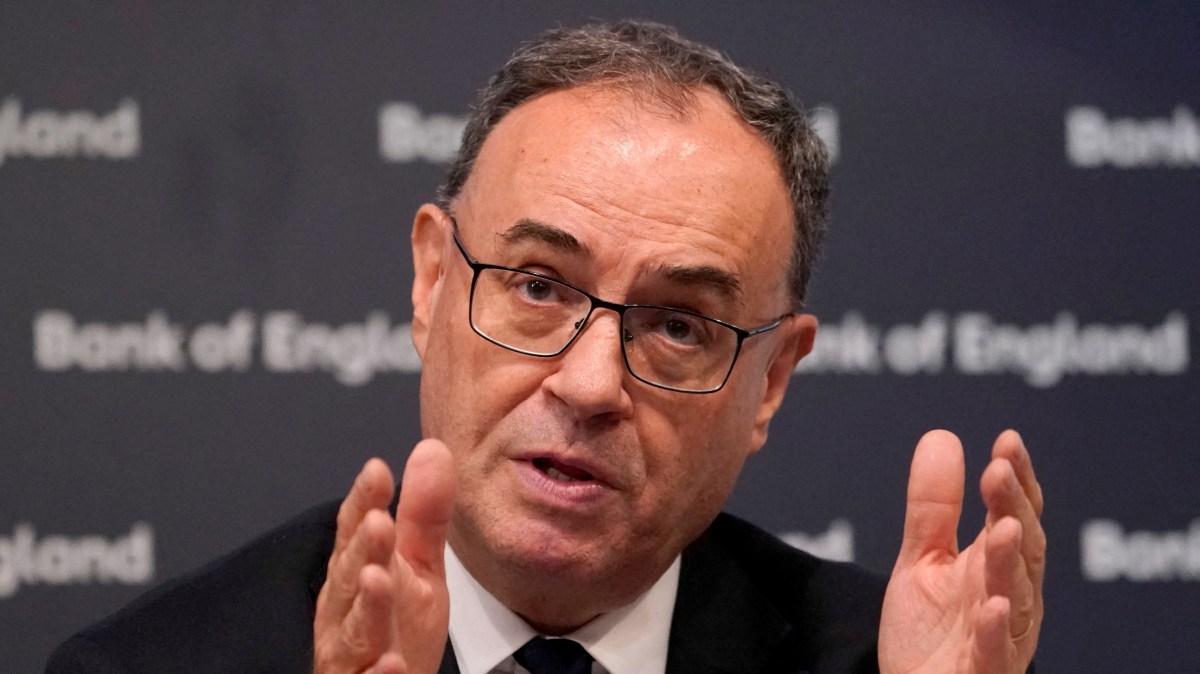
The Bank of England has cut interest rates to their lowest level in more than two years after the first-ever two-round vote among its officials.
The Bank of England’s monetary policy committee (MPC), the nine-member group that sets the base rate of interest in the UK every six weeks, voted 5-4 in favour of lowering borrowing costs by 0.25 percentage points to 4 per cent.
The reduction from 4.25 per cent takes the rate to its lowest level since February 2023. It is the fifth quarter-point reduction in a year.
The decision, announced at noon, required two ballots after the first vote was indecisive — four MPC members backed a quarter-point cut, four favoured a hold, and one called for a larger half-point cut. In the second vote, five MPC members voted for a quarter-point reduction.
It is the first time there has been two ballots since the MPC’s inaugural vote in 1998 after the Bank of England was made independent of the government by the chancellor at the time, Gordon Brown.
• Follow our live business updates here
The central bank said that Rachel Reeves’s March spring statement, alongside the £25 billion rise in employers’ national insurance contributions (NICs), would tightly constrain the economy “over the next year”. The Bank added that inflation would be fuelled by the NICs raid and the 6.7 per cent rise in the minimum wage via an acceleration in food prices.
Andrew Bailey, the governor of the Bank of England, characterised the rate cut as a “finely balanced decision”, adding that future rate cuts “will need to be made gradually and carefully”.
The Bank forecasts that inflation will rise to 4 per cent in September from its current rate of 3.6 per cent as it warned of a stronger risk of repeated price increases in the coming years.
The Bank said the near-term rise in inflation will be mainly driven by higher food and energy prices and rising household utility bills. The Bank is required to keep inflation at 2 per cent, a target it has not achieved since last summer.
September’s inflation rate is used to determine benefit settlements and changes in the pensioner triple lock.
The warning from the Bank will rekindle fears of a repeat of the inflation crisis of 2022 and 2023, when the cost of living reached its highest level in four decades — 11.1 per cent — almost entirely fuelled by a sharp rise in basic essentials.
The economy will expand by 1.25 per cent this year, a slight upgrade from the Bank’s previous forecast in May. GDP will then increase by 1.25 per cent next year and 1.5 per cent in 2027, the Bank said.
Unemployment is set to peak at 4.9 per cent, up from the current 4.7 per cent which is already a four-year high.
Officials at the Bank also warned of a 0.2 per cent hit to the economy over the next three years due to President Trump’s tariffs, despite Sir Keir Starmer reaching a trade agreement with the US in May.
A return of the intense financial market volatility seen in the wake of Trump’s “Liberation Day” reciprocal tariffs could wipe a further 0.2 per cent off UK GDP, the Bank said. However, there may be downward pressure put on inflation from countries rerouting goods originally bound for the US to the UK.
MPC members who voted for a quarter-point reduction, which included the governor, thought there had been enough progress on inflation in recent months and that a cut was required to counteract higher unemployment, increased staff layoffs and sluggish consumer spending.
Alan Taylor, the external MPC member who initially backed a larger rate cut before changing his vote in the second ballot, thought there was an “increased” recession risk that warranted a quicker loosening of monetary policy.
The four members of the MPC who wanted to leave rates unchanged at 4.25 per cent, including Huw Pill, the Bank’s chief economist, were concerned that companies and workers were engaged in a cycle of high wage demands and price increases. This group wanted to see more data proving that inflation is on a downward path before backing further cuts.
The Bank said that “monetary policy is not on a preset path”.
Rachel Reeves, the chancellor, said: “This fifth interest rate cut since the election is welcome news, helping bring down the cost of mortgages and loans for families and businesses.
“The stability we have brought to the public finances through our Plan for Change has helped make this possible and helped us become the fastest growing economy in the G7 in the first quarter of this year. We’re locking in this growth in the long run by investing over £113 billion in infrastructure, securing three major trade deals and embracing the technologies of the future — to drive up wages and improve living standards across the UK.”