
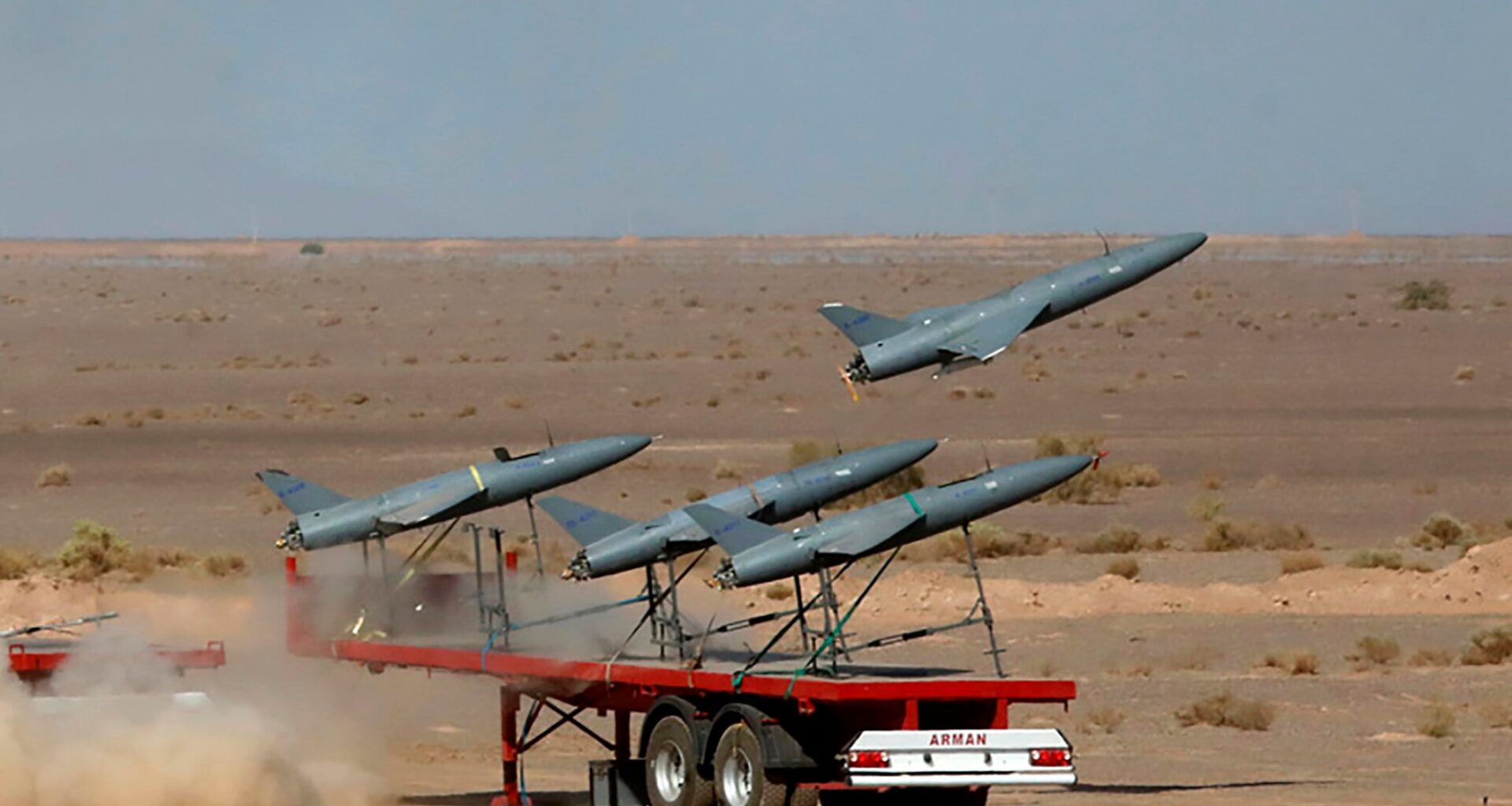
While much of the attention during the ongoing war with Iran has focused on ballistic missiles and their destructive potential, Tehran’s drones pose a different — and in some ways more complex — challenge.
Since the war began on February 28, Iran has launched some 550 drones at Israel, according to the Institute of National Security Studies (INSS), alongside hundreds of ballistic missiles. In the broader regional war, thousands more have been fired at Gulf states and US assets.
At the same time, Israel has continued to contend with daily unmanned aerial vehicle incursions from Hezbollah on the northern front, adding a constant, closer-range threat.
While slower-moving and usually less destructive than rockets or missiles, drones can pose a challenge due to the difficulty detecting and tracking them, and the need to deploy various assets to intercept the weapons they carry, which travel differently from unguided projectiles that follow a predictable parabolic arc.
“Drone warfare now complicates all aspects of operations,” Dara Massicot, a senior fellow in the Russia and Eurasia Program at the Carnegie Endowment for International Peace, told The Times of Israel, “from allocating air force assets to shoot them down, to force protection considerations, and how to protect critical infrastructure.”
Get The Times of Israel’s Daily Edition
by email and never miss our top stories
By signing up, you agree to the terms
Because they take hours to reach Israel, Iranian drones rarely pose a major threat here, though they have been a constant menace to the Gulf, which has had to deal with over 3,500 drone attacks since the war began, according to the INSS.
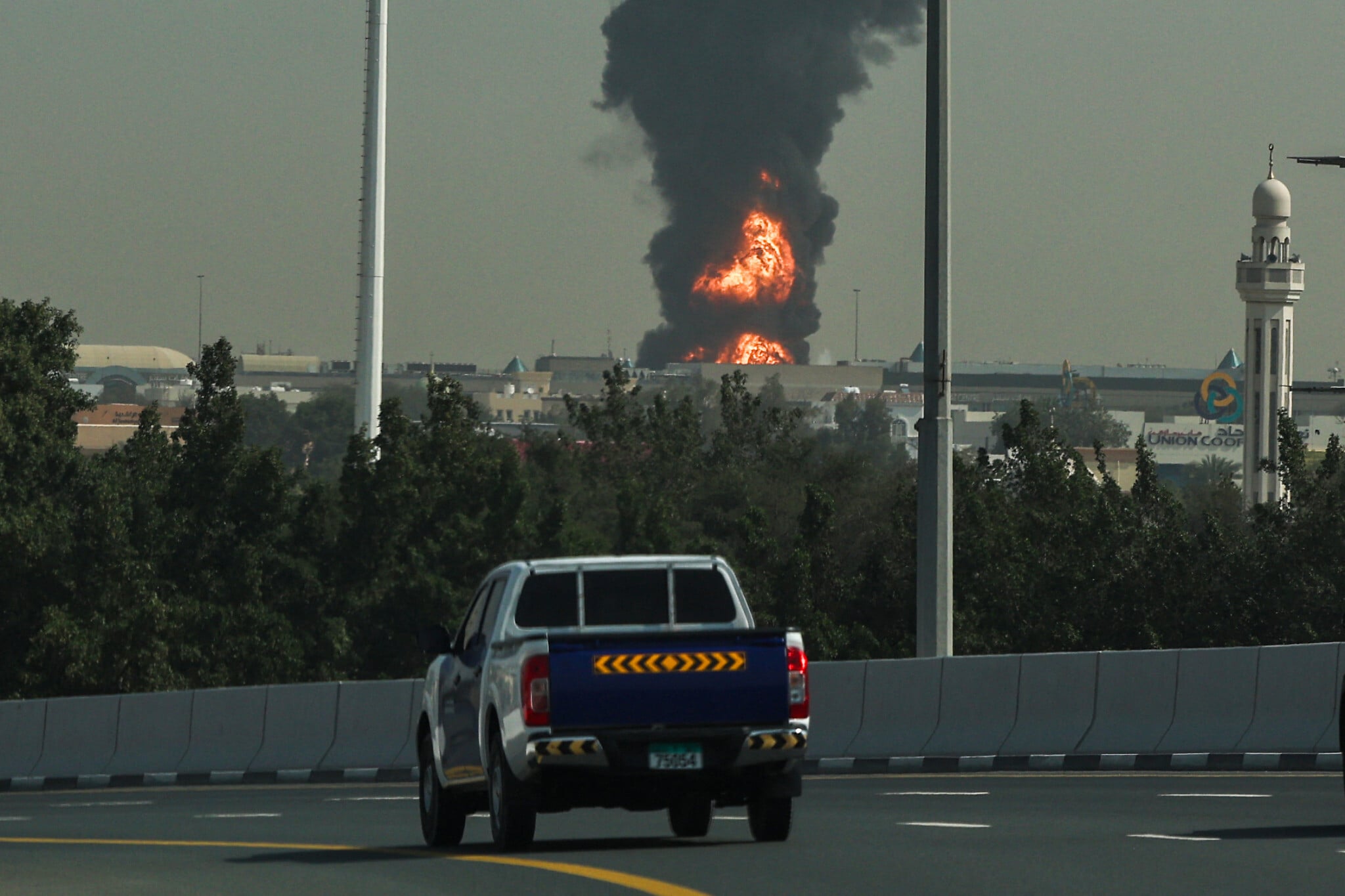
A smoke plume rises from a fire sparked by an Iranian drone attack at Dubai International Airport in Dubai on March 16, 2026. (AFP)
In contrast, Hezbollah’s drones, coming from neighboring Lebanon, traditionally posed a greater danger due to the limited time for detection and interception. As of last week, the terror group had fired over 100 drones at Israel since entering the war earlier this month, according to the IDF.
Military officials say the Israel Defense Forces have seen increased success in intercepting Hezbollah’s drones during the current war, although the combined pressure of attacks on multiple fronts has imposed a constant strain that keeps air defenses engaged around the clock.
With these weapons marking warfare’s bleeding edge, an arms race is taking place between drone technology and innovations meant to combat them, from active air defenses to hacking into the machines and taking them over.
According to Dominika Kunertova, a research fellow at the Harvard Kennedy School’s Belfer Center for Science and International Affairs, recent years of drone warfare have been marked by “fast-paced developments” — most notably, a shift from drones serving as platforms for launching munitions to becoming the munitions themselves with the rise of one-way attack, or suicide, drones.
Unlike traditional drones, which return after completing a mission, these systems are designed to crash into their targets and are rigged with explosives that detonate on impact, functioning as both the delivery system and the weapon itself.
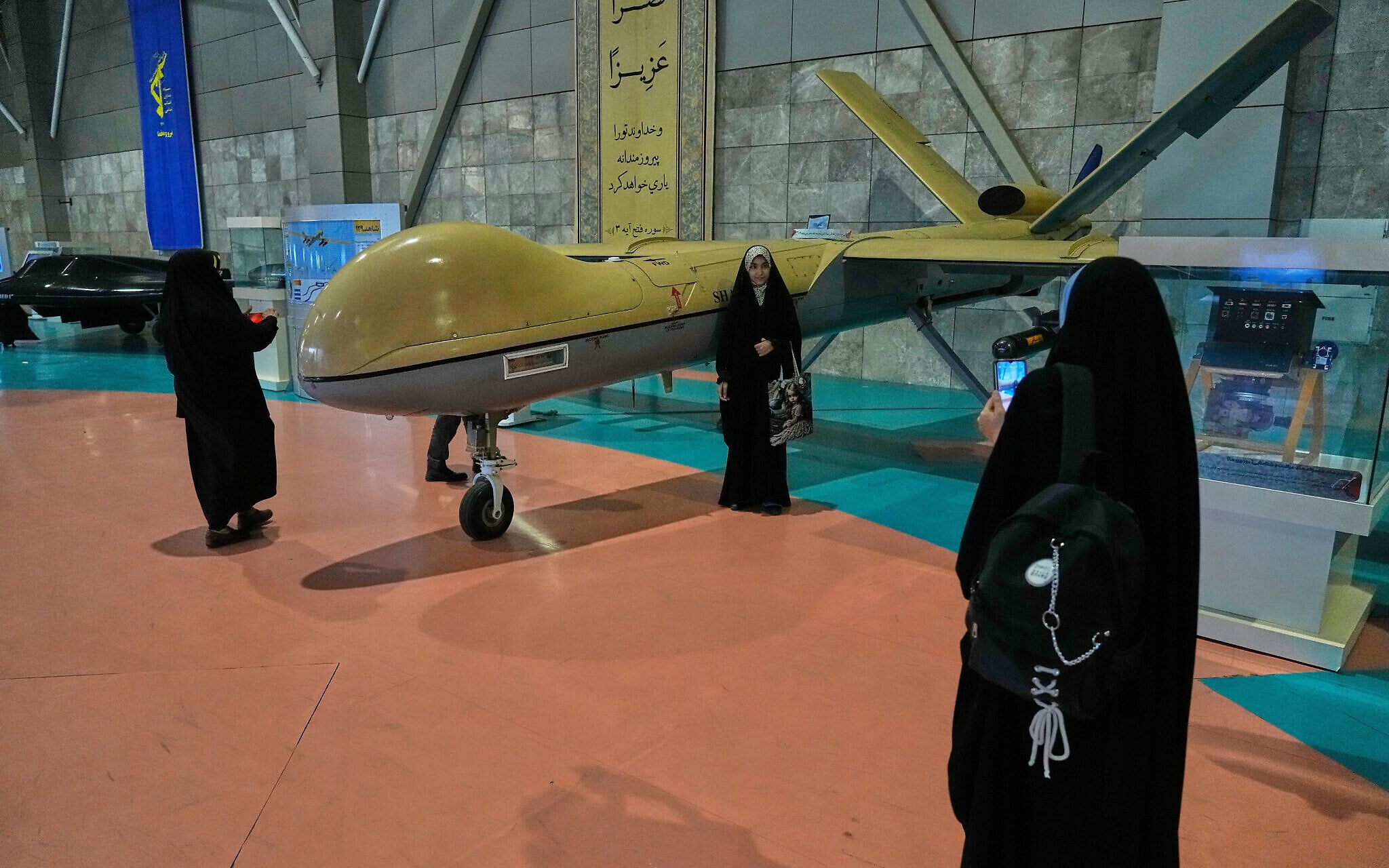
People take pictures with a Shahed-129 Iranian domestically built drone as they visit the National Aerospace Park of Iran’s Revolutionary Guard, just outside Tehran, Iran, November 13, 2025. (AP/Vahid Salemi)
Much like it does in its response to traditional munitions like rockets and missiles, Israel relies on a multilayered defense system to counter drones — one built on the understanding that no single tool can address the threat alone.
At the core are its national air defense systems.
The Iron Dome, largely designed to intercept short-range rockets, is also intended to handle drones. Above it sits David’s Sling, which is designed to intercept more difficult aerial threats, including rockets, missiles, cruise missiles, aircraft and UAVs.
More recently, Israel has introduced the Iron Beam, a high-powered laser system designed to shoot down drones and other aerial threats at a far lower cost per interception. While the Defense Ministry said the system became operational in late 2025, military officials said it has not yet been declared operational within the IDF.
Israel does not rely only on ground-based batteries. The IDF at times also uses fighter jets and attack helicopters to chase down and intercept UAVs.
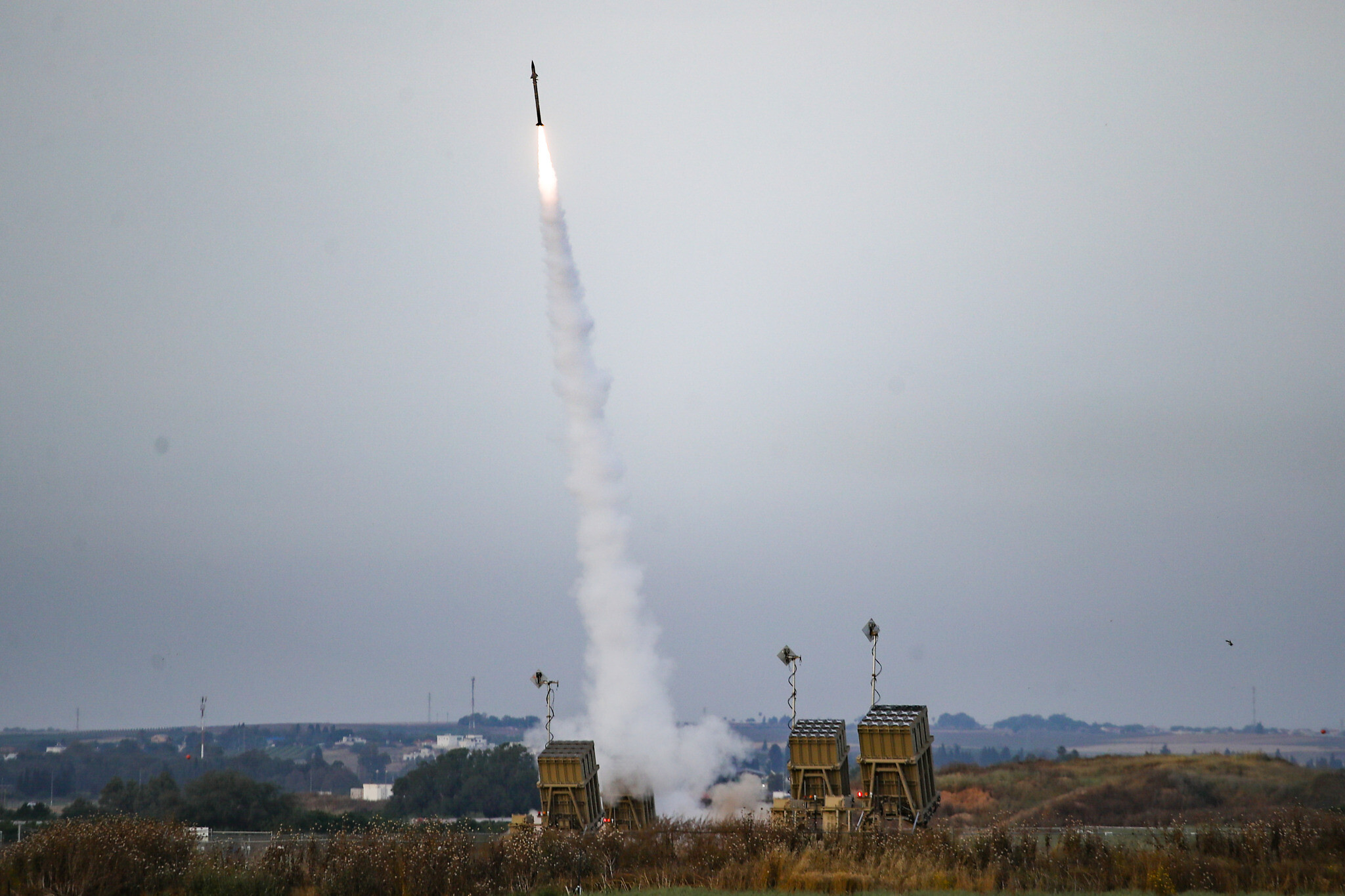
The Iron Dome anti-missile system fires to intercept a rocket fired from the Gaza Strip, near Sderot, May 10, 2023. (Flash90)
Below that national layer are more localized systems meant to protect bases and infrastructure.
Rafael’s Drone Dome, Elbit’s ReDrone, and Israel Aerospace Industries’ Drone Guard use a combination of sensors to detect incoming drones and stop them either through “soft-kill” methods, such as GPS jamming or taking control of the drone to redirect it mid-flight, or through “hard-kill” methods, such as launching interceptor missiles.
Lessons from Ukraine’s drone battlefield
The need for a multilayered detection and defense system to counter drone threats has been underscored by the ongoing Russia-Ukraine war.
In that conflict, Russia has extensively used UAVs, many of which use an Iranian design, in repeated barrages against Ukrainian cities and energy infrastructure, often combining them with missiles to stretch air defenses and maximize impact.
“The Ukrainians learned that multiple layers of interception capabilities are needed,” Massicot noted as one of the takeaways from the European conflict.
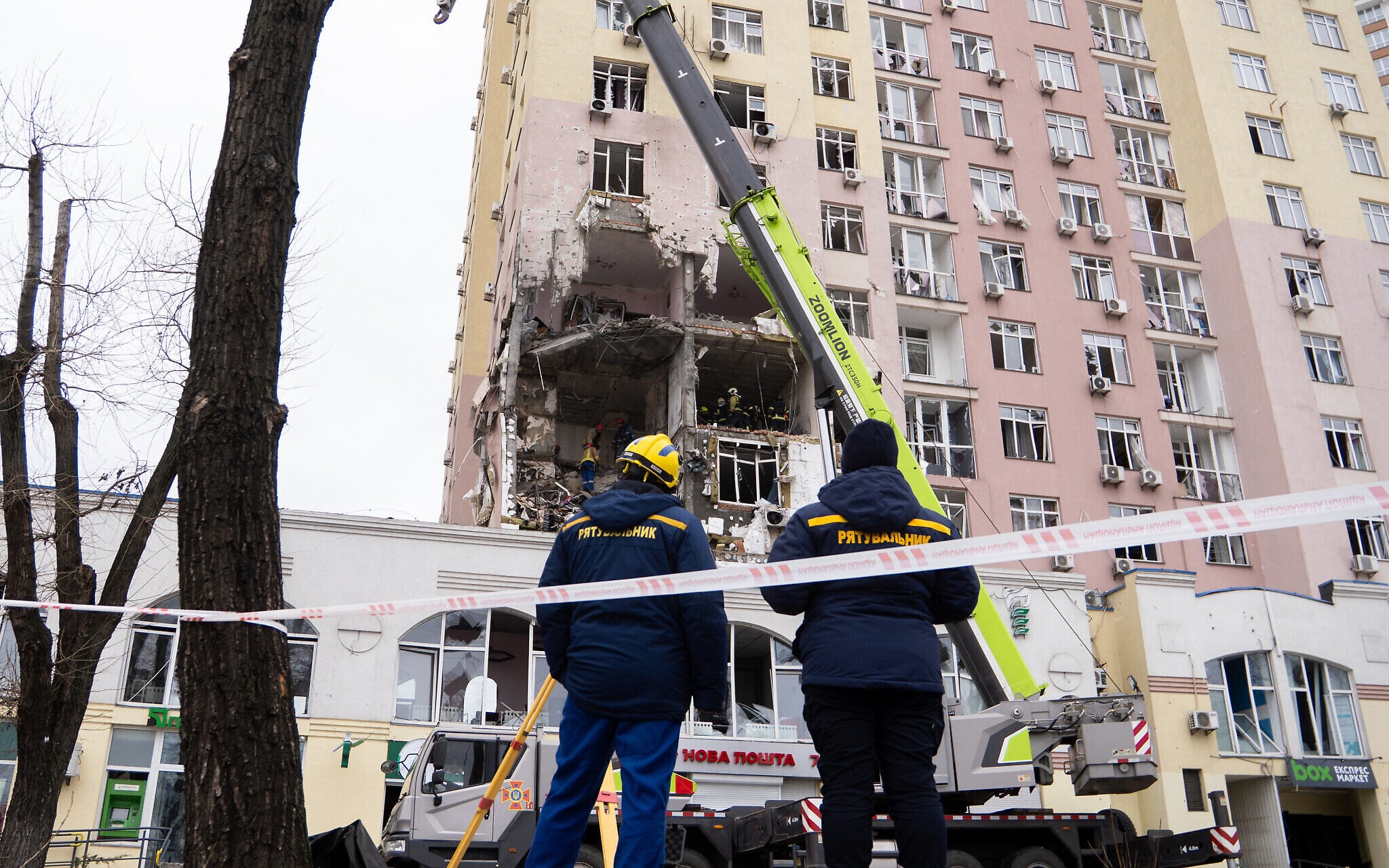
Ukrainian rescuers stand in front of a damaged residential building following a Russian drone and missile attack in Kyiv, December 27, 2025. (Serhii Okunev / AFP)
“To counter drones successfully, a layered system of detection is needed — to detect and potentially jam the drones off their course,” Massicot said, adding, “Ukraine has developed a system that has all these features.”
Kunertova noted that detecting drones is often one of the most difficult parts of that system, as small UAVs can be hard to distinguish on traditional radar, where they are often mistaken for birds.
Israel is no stranger to this challenge. Its aerial defense array uses a wide range of sensors to identify what it calls “suspicious aerial targets” approaching Israeli airspace, but with radars set to high sensitivity, many such detections have later been determined to be false — often birds.
“In this sense, early [detection] is the key to success, because it creates enough of a time window to react,” she said.
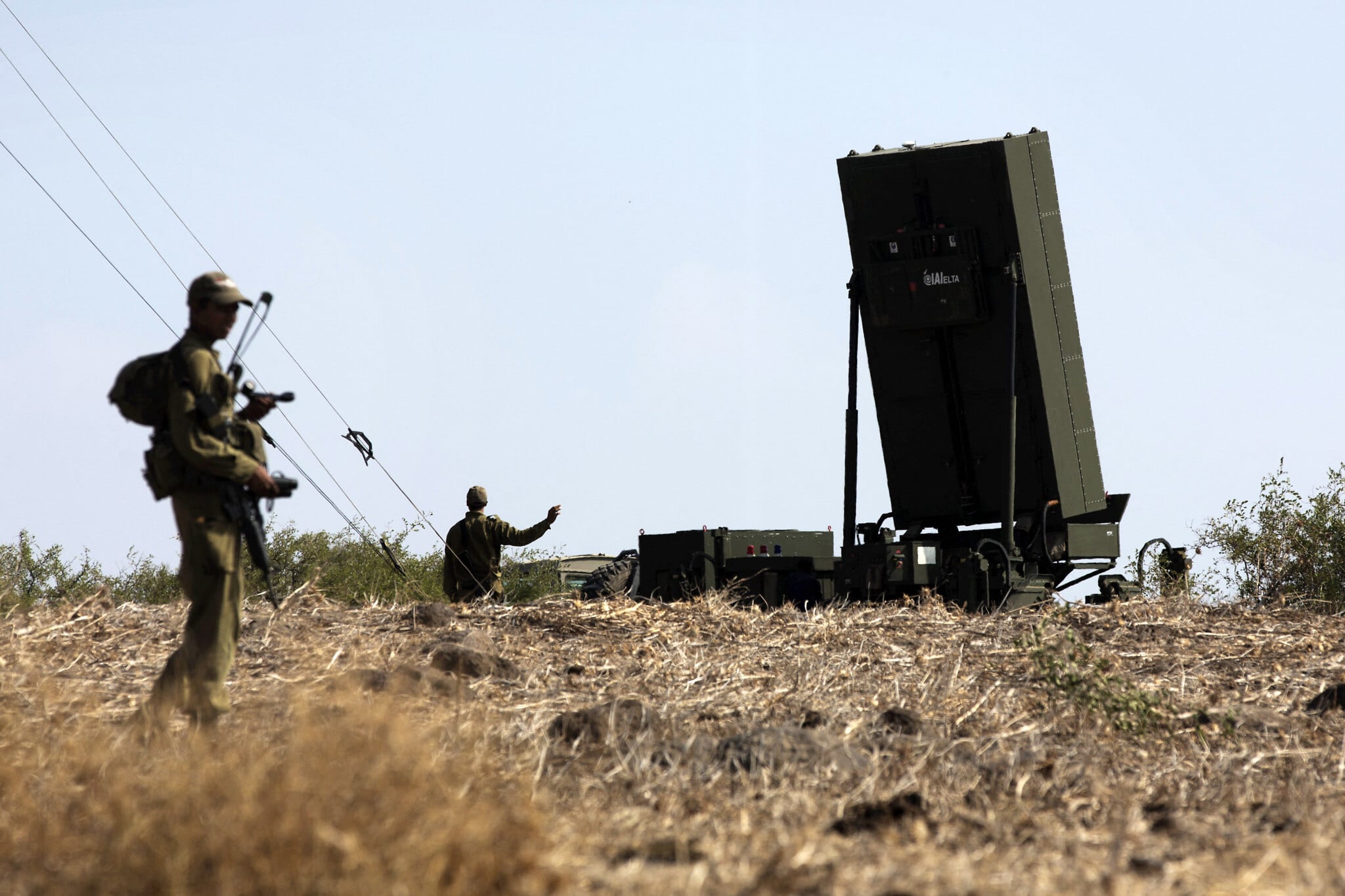
Israeli soldiers gather next to anti-missile radars positioned in the north of Israel, August 29, 2013. (MENAHEM KAHANA / AFP)
To address this challenge, Ukraine has developed an acoustic detection system that identifies UAVs by sound — a technology that could eventually be incorporated into other nations’ defense systems.
It is Kyiv’s four years of experience confronting Russian UAVs that have made the country an increasingly sought-after source of expertise.
Last week, Ukraine’s security council secretary Rustem Umerov said Kyiv had deployed military units to protect critical and civilian infrastructure against drones in five Middle Eastern countries — the United Arab Emirates, Saudi Arabia, Qatar, Kuwait and Jordan.
The announcement followed earlier remarks by Ukrainian President Volodymyr Zelensky, who said that 11 countries had sought Kyiv’s assistance in countering Iranian drones.
Additionally, he said that 201 Ukrainian anti-drone experts were operating in the Middle East, with another 34 “ready to deploy.”
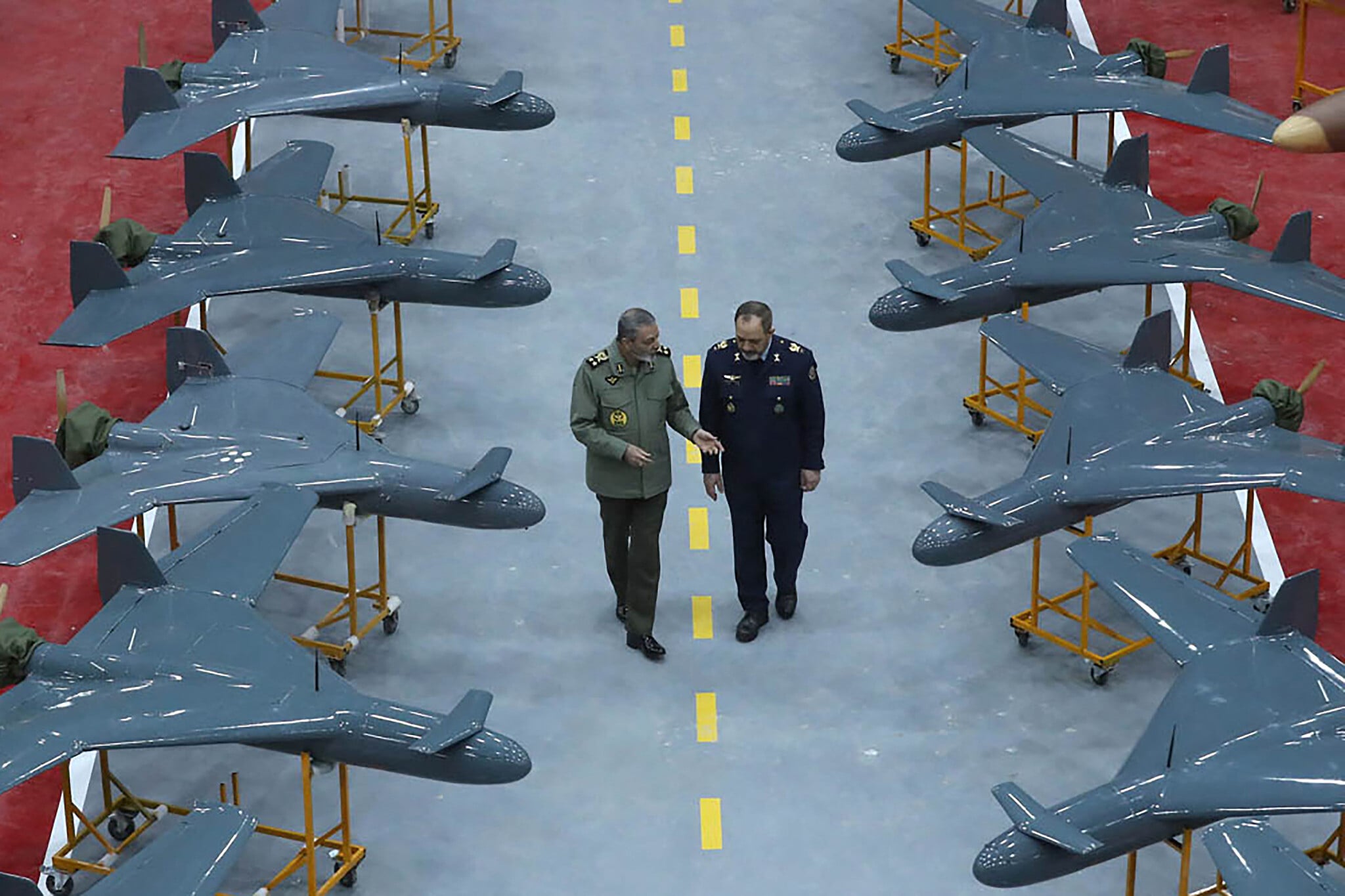
This handout picture released by the Iranian Army Office on January 13, 2025, shows Iran’s Defence Minister Brigadier General Aziz Nasirzadeh (right) speaking with Iran’s army commander-in-chief General Abdolrahim Mousavi during a delivery ceremony of unmanned aircraft systems (UAS), commonly known as drones, to Iran’s army by the country’s Ministry of Defense, in Tehran. (Iranian Army Office / AFP)
Israel also appeared to seek assistance from Ukraine, with Prime Minister Benjamin Netanyahu’s office recently reaching out to Zelensky to request a phone call.
Though the topic of conversation was not officially stated, Ynet news reported that Netanyahu wanted to discuss cooperating on countering Iranian drones.
The rise of the Shahed drone
The experience Ukraine is now sharing was forged under constant waves of Iranian-designed Shahed drones launched by Russia.
Simple, cheap and built to be used in large numbers, the Shahed-136 — Iran’s most well-known UAV, which has been used extensively in its recent attacks against regional powers — has been adapted by Russia into the Geran drone, with improvements, including anti-jamming antennas, that have made it more difficult to counter. The system is estimated to cost between $20,000 and $50,000 per unit, according to the Center for Strategic and International Studies.
According to Massicot, just as Israel and Gulf states have turned to Ukraine for guidance, Iran is likely learning from Russia’s experience in drone warfare.
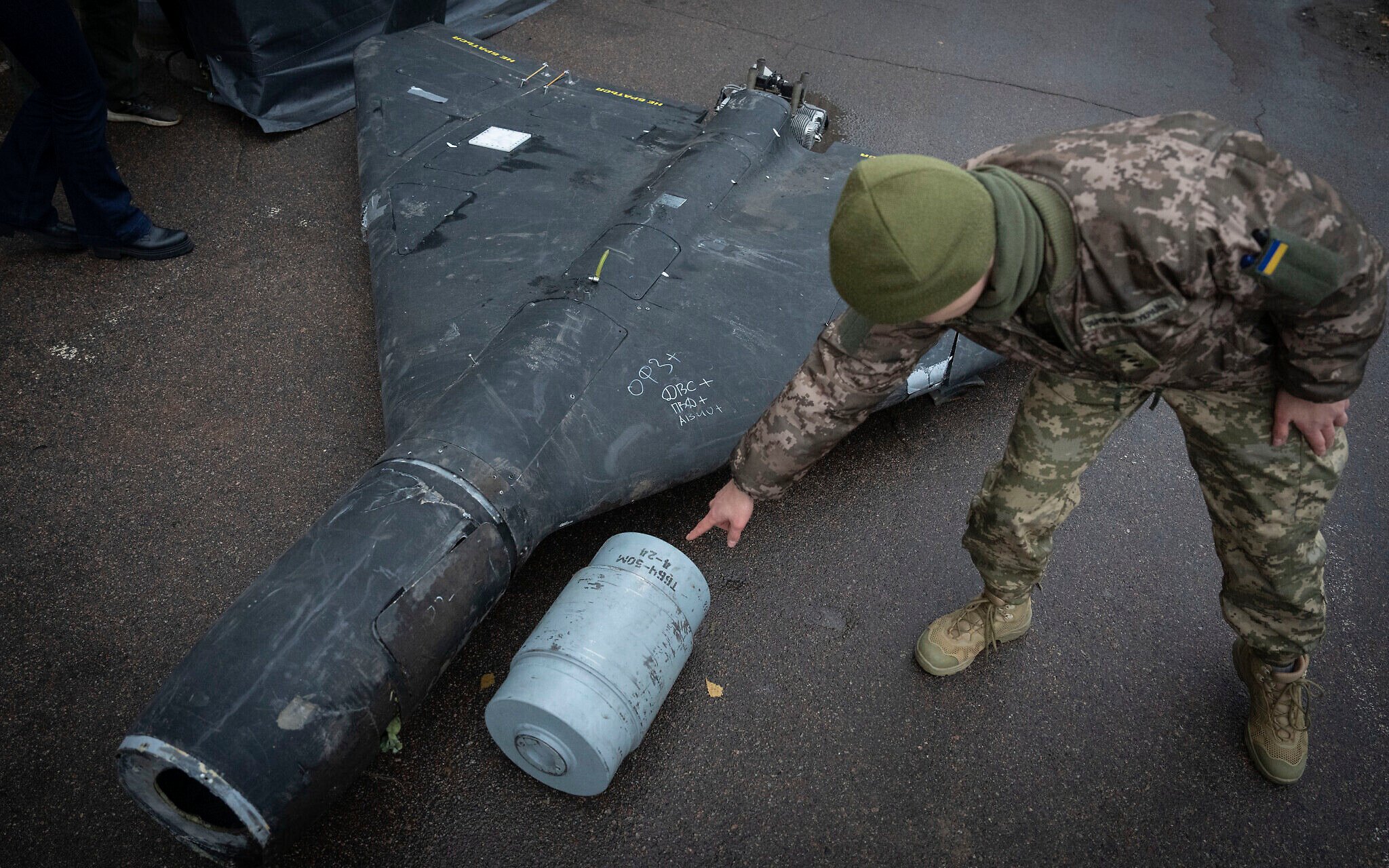
A Ukrainian officer shows a thermobaric charge of a downed Shahed drone launched by Russia in a research laboratory in an undisclosed location in Ukraine, Nov. 14, 2024. (AP Photo/Efrem Lukatsky)
She explained that “either by observing Russian attacks, or Russia providing direct advice to Iran,” Tehran is implementing Moscow’s tactics by launching waves of drones and missiles to try to saturate air defenses, as well as aiming to fly drones at lower altitudes — making them harder to detect and intercept.
“Iran has four years of information now on how to cause the most damage to energy infrastructure and civilian buildings, or radars on bases, which they are now doing,” Massicot said.
The race for affordable air defense
According to Kunertova, the relatively limited damage that drones can cause makes it difficult to justify the use of costly interceptors. But the weapons are still significant enough to demand a response.
“Modern armies have never faced this kind of threat before, in terms of these low-flying drones,” she said.
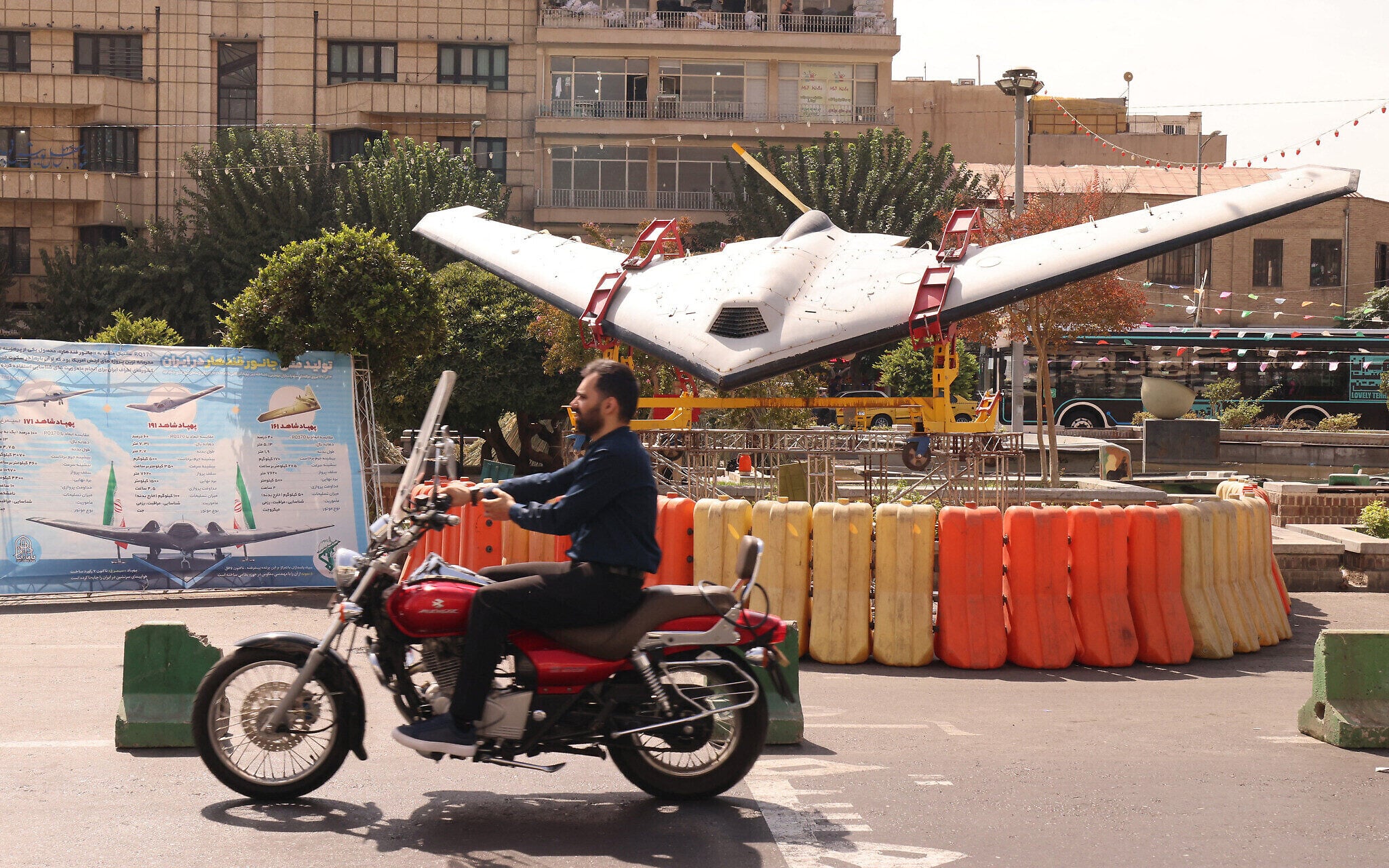
An Iranian man rides his motorcycle past a Shahed drone in Tehran’s Bahrestan Square on September 27, 2025, as part of an exhibit to commemorate the 1980-88 Iran-Iraq war. (Atta Kenare/AFP)
Kyiv has led the push for cheaper defenses against the low-cost threat, developing and deploying interceptor drones that don’t break the bank.
As opposed to interceptor missiles, which can cost millions of dollars per unit, these drones typically cost between $1,000 and $4,000.
In February, Ukraine’s military chief Oleksandr Syrskyi credited drones with intercepting 70 percent of Shaheds over Ukrainian territory.
Massicot believes that Ukraine could potentially become a major supplier of counter-drone capabilities to Israel and other allies.
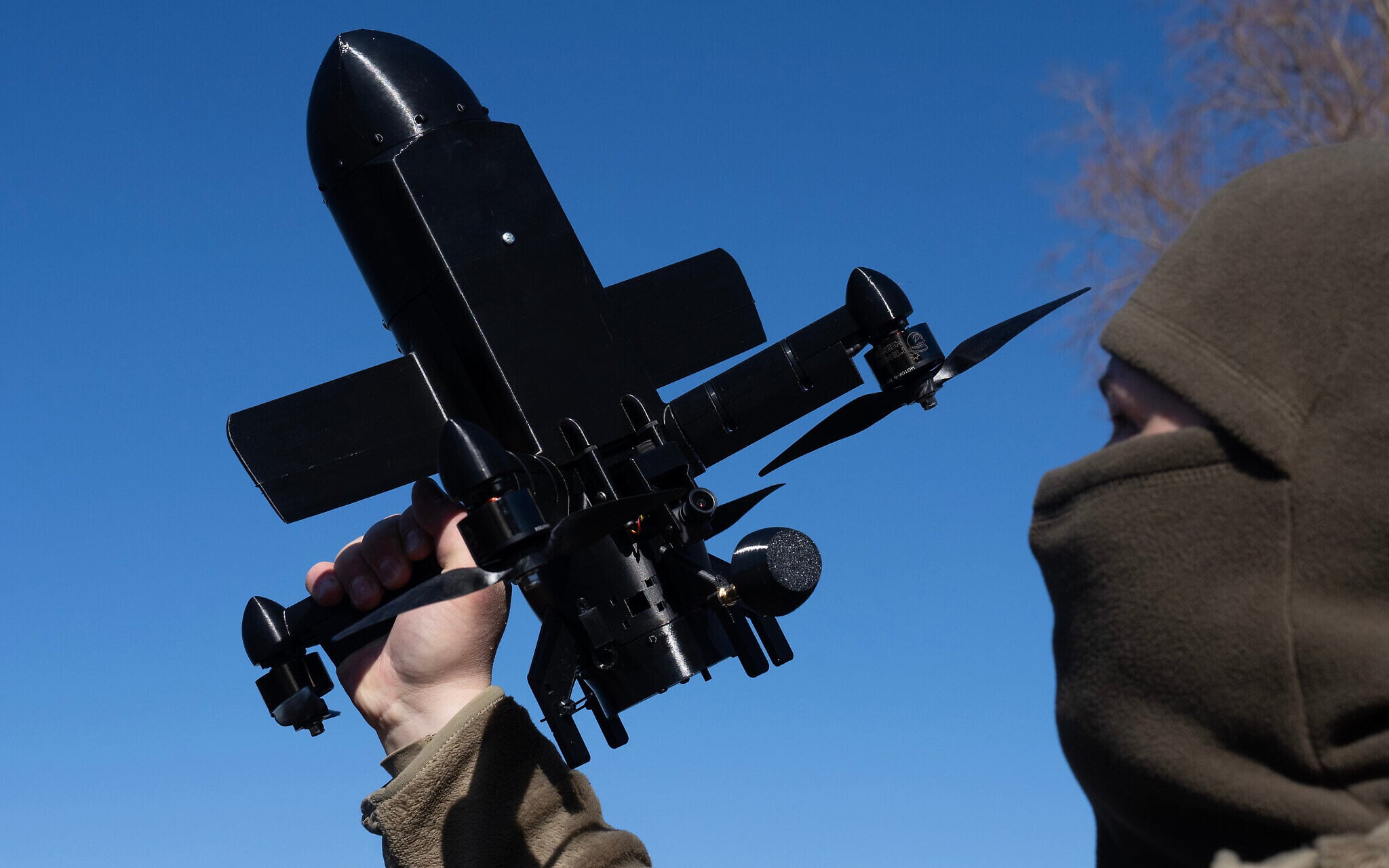
A Ukrainian military instructor demonstrates the operation of an interceptor drone designed to destroy Russian attack drones in the Kyiv region of Ukraine, March 11, 2026. (AP/Efrem Lukatsky)
“Some Ukrainian firms can scale up production of proven capabilities, but are looking for capital investment,” she noted.
High-powered lasers like Israel’s Iron Beam could provide a far cheaper alternative, with each interception costing just a few dollars. But despite being declared operational, the system has yet to be tested in combat.
During the conflict with Hezbollah in 2024, the IDF’s newly revived 946th Air Defense Battalion, which operates anti-drone systems, used a lower-powered and shorter-range version of the system to shoot down some 35 drones launched at northern Israel from Lebanon. The battalion remains deployed on the Lebanon border, as part of the 91st “Galilee” Regional Division.
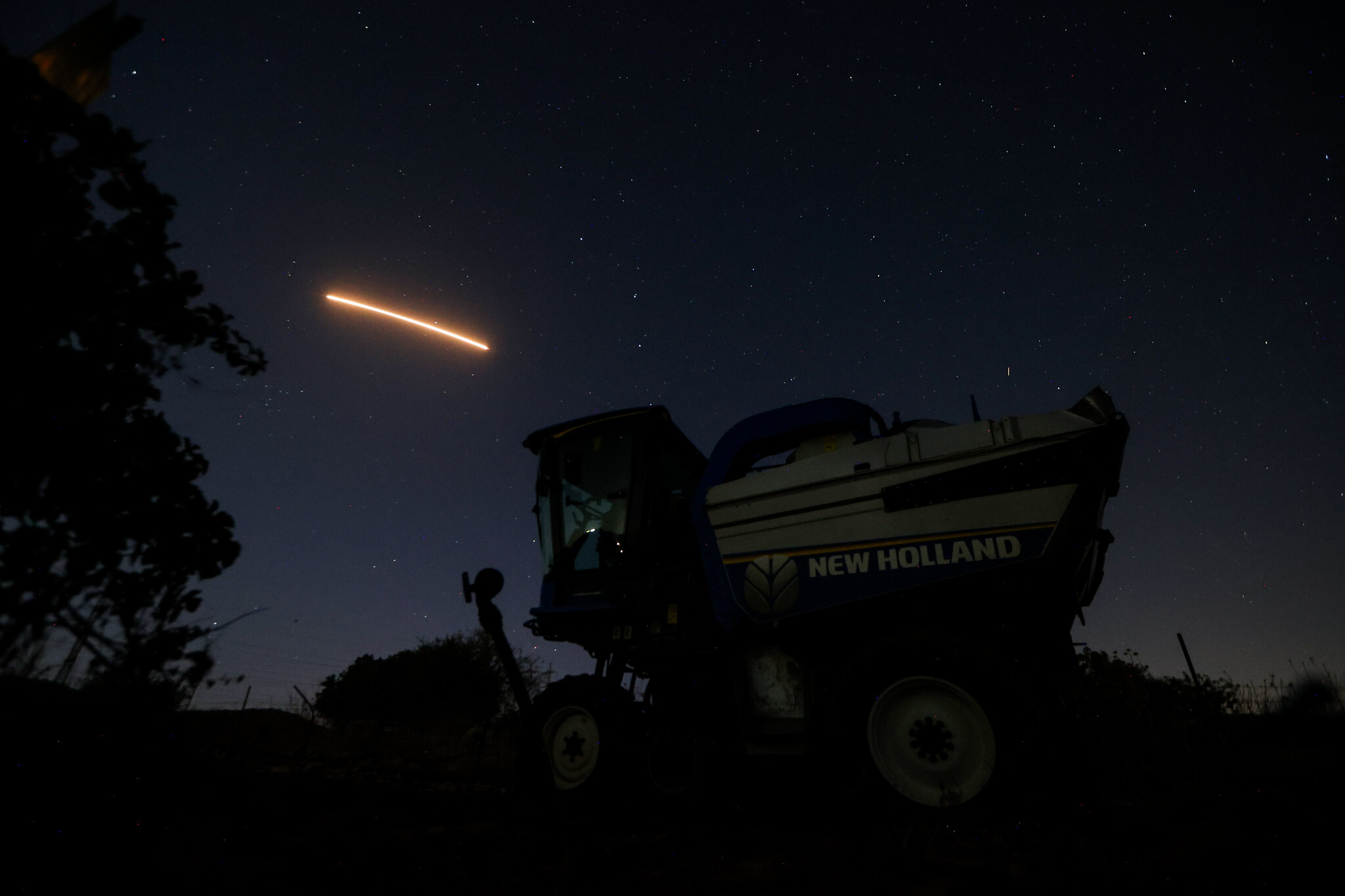
A long exposure picture shows the Iron Dome system firing an interceptor at a drone fired from Lebanon in the Golan Heights, August 5, 2024. (Maor Kinsbursky/Flash90)
Even as drone technologies evolve, analysts caution against overstating their impact, with Kunertova asserting that UAVs will never be considered “campaign-winning” on their own.
“They’re going to always be used in combination with more powerful offensive weapons,” such as ballistic missiles, she said.