
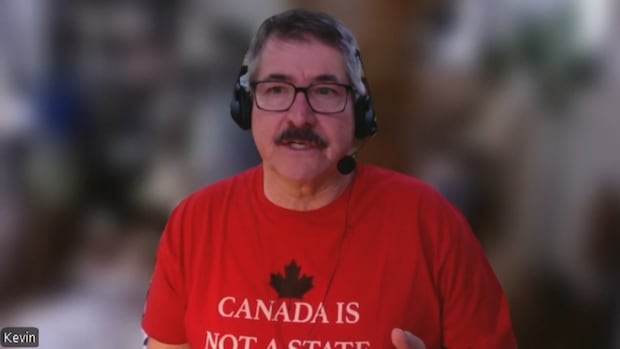
American lawmakers are demanding answers from the Trump administration after a Canadian man says U.S. customs officers held him for three hours at the border and forced him to provide a DNA sample before sending him home.
U.S. Rep. Debbie Dingell, a Democrat who represents an area of Michigan just outside Detroit, says she’s “outraged” by the man’s experience.
Earlier this week, she penned a letter alongside Maryland Rep. Jamie Raskin — the top Democrat on the House judiciary committee — to the Homeland Security, State, and Justice departments seeking information about the “extraordinary incident.”
“This kind of hostile and arbitrary treatment at the border could further damage one of our most important bilateral relationships already battered by President Trump’s vilification of the Canadian people and threats to annex their country,” the letter read.
The push for answers comes as some Canadians limit or completely avoid travel to the U.S., with many citing fears about how border authorities might treat them.
Dingell says she became aware of the story last weekend from a Substack journalist who connected her with the Canadian man, a 68-year-old retired nuclear power plant employee who lives just north of Kincardine, Ont.
Retiree wanted to attend ‘No Kings’ rally
Kevin Larson says he’s crossed the border many times over the years without issue, often to visit family, or sometimes for training as part of his work as a health physicist.
On the morning of Oct. 18, 2025, he tried to enter the U.S. at the Blue Water Bridge near Sarnia, Ont. He says he wanted to join Americans at the “No Kings” rally across the river in Port Huron, Mich., for “reasons of interest to Canada, but also to let them know that we care about them.”
“I have been very concerned with the Trump administration calling us the 51st state,” Larson said Wednesday. “We have been allies for generations and friends, and he’s just throwing it out the window. ”
Larson said he felt there was a good chance he’d be turned away at the border, “but I didn’t expect the treatment that I got,” he said.
He says he doesn’t have a criminal record, and brought a Canadian flag for the event, printed copies of directions to the rally, and a change of clothes on the off chance he “had a flat tire and had to stay overnight.”
‘If you don’t give us a DNA sample, we can charge you’
Larson says once he told U.S. Customs and Border Protection why he wanted to enter the country, he was sent for a secondary inspection. In the office, he had to sign a form stating that he wouldn’t provide “material support or resources” to foreign terrorist organizations — particularly, drug cartels — per a copy he provided to CBC Windsor.
“I signed that. No big deal. I’m not a criminal,” he said with a laugh.
He says border officers questioned him, searched his phone and car, took his fingerprints and photo, and eventually denied him entry.
But Larson says the customs officers then told him he had to provide a DNA sample via cheek swab before he could head home.
“I said, ‘No, I consider that a privacy thing. I’m not going to do it,” he said. “Then they explained, ‘Sir, if you don’t give us a DNA sample, we can charge you, and it would be an offence if you’re found guilty,’ something like that. And I said, ‘No, I’m not going to give you the DNA sample.”
Larson says a supervisor then took him to a private room. “He actually read the regulation that he was citing to ask me for DNA. ‘It’s a charge if you’re found guilty, sir. It is a maximum jail sentence of one year,” he said.
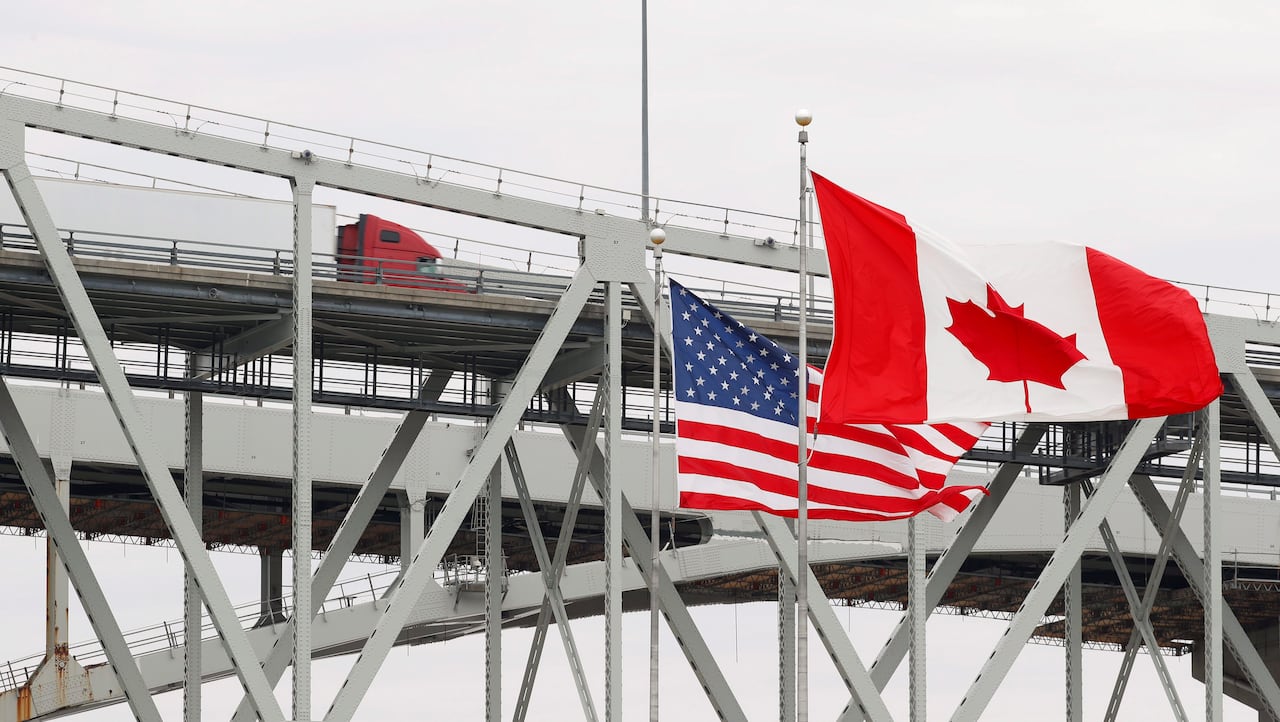 A truck crosses the Blue Water Bridge into Port Huron, Mich., from Sarnia, Ont., on Mar. 18, 2020. (Paul Sancya/Associated Press)
Larson says he was “rattled” and ultimately complied, in part to avoid a longer-term ban that would prevent him from visiting a cousin in Georgia in the future. He was then allowed to drive back across the bridge to Canada.
CBP did not respond to an interview request, but a 2025 directive says the border agency “collects DNA samples and accompanying biographical data for submission to [the DOJ/FBI Combined DNA Index System] from all persons arrested on federal criminal charges and from aliens in CBP custody who are subject to fingerprinting.” It also says CBP “may refer persons who fail to cooperate in the collection of a DNA sample for prosecution.”
However, the guidance says DNA collection does not apply to “[a]liens lawfully in or being processed for lawful admission into the United States” or those held at a point of entry “during consideration of admissibility, and not subject to further detention or proceedings.”
In records Larson shared, customs officials wrote he provided “[i]nsufficient evidence” for his “intended purpose of entry to the U.S.” as the reason they denied his admission.
Larson disputes that reasoning. “At no time did they question the intent of my visit,” he said. “They never challenged that whatsoever.”
An FBI form he provided lists two purported infractions in a “charge/citation” section: “Immigrant w/out Docs” and “Alien inadmissibility under Section 212 (a),” which appears to apply to those who have previously had an “unlawful presence” in the U.S.
Larson says he had his Canadian passport, so he doesn’t understand the first infraction.
“I consider both those statements to be false,” he said. “I’m upset with the language in these documents because they do not reflect the reality and the understanding we all had of what was going on there.”
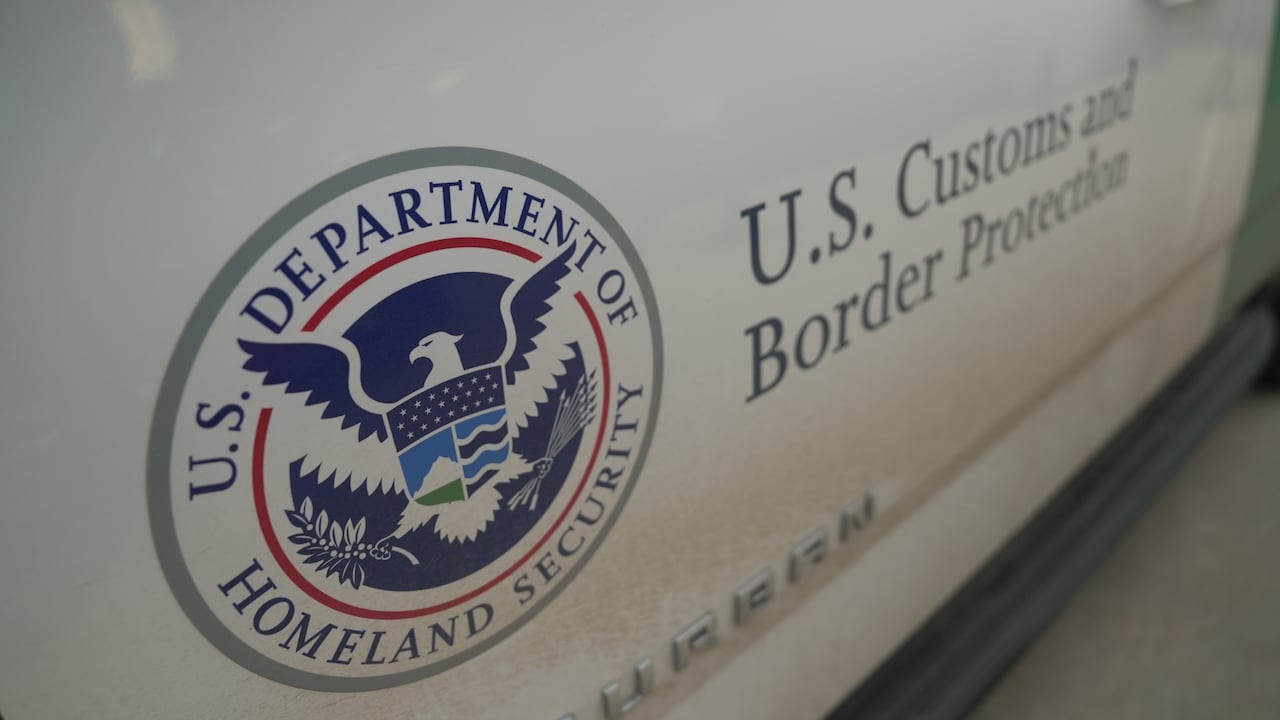 A U.S. Customs and Border Protection vehicle is shown near Warroad, Minn., on Nov. 4, 2025. (Tyson Koschik/CBC)
Larson says the border officers he dealt with were professional, but he believes they made a mistake in taking his DNA and wants it removed from the FBI database.
“I’m not even looking for an apology,” he said. “I think the border folks were just doing their job, and I hope we can get past it.”
In response to questions about the removal process, FBI said its “Lab Division has processes and standard operating procedures in place that correspond to Federal Laws,” and declined to comment further.
U.S. lawmaker pledges to ‘get answers’
Dingell, who grew up near Port Huron along the St. Clair River, says that as she learned more about Larson’s experience, “it made absolute no sense” to her.
In her letter with Raskin — a constitutional lawyer — the pair ask for the administration’s legal justification for taking Larson’s DNA, if this has happened to others, as well as how the DNA is being stored and the process for removing it, among other things.
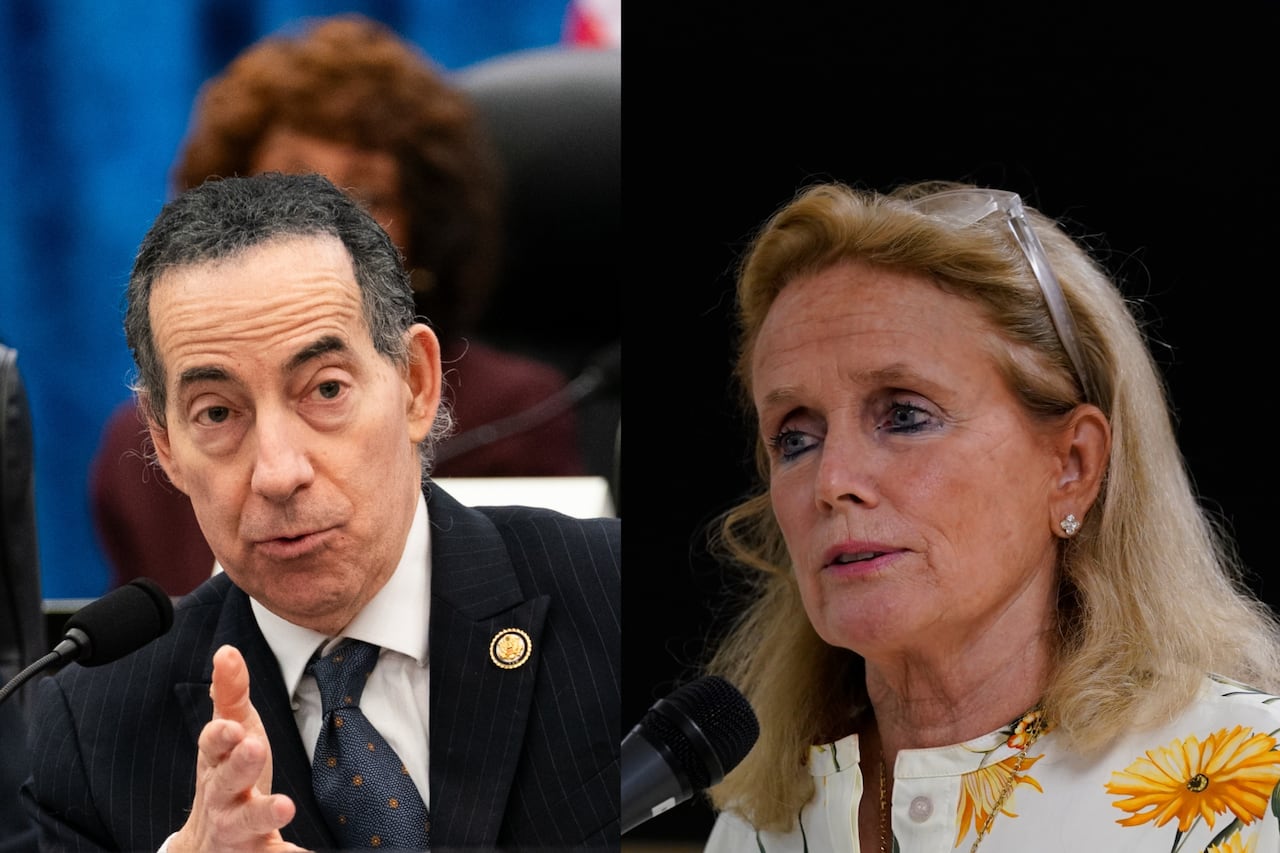 U.S. Democratic Reps. Jamie Raskin, left, and Debbie Dingell, right. (Allison Robbert/Carlos Osorio/The Associated Press)
“[Raskin] could not imagine what happened or why that was allowed, which is why he joined me in sending the letter,” she said. “There was no evidence of any pending warrants, of any criminal history. There was nothing.”
Dingell says they haven’t received answers yet, but they will keep pushing until they do. “We’re both known for being tenacious, and we’re going to get answers,” she said. “If we have to introduce legislation, have hearings, we’ll do exactly that.”
Dingell said she wants Canadians to know that people in Michigan understand the “precious relationship” between the two countries and want to maintain it.
“We love you,” she said. “How can you live so close and not be family, friends, and community?”
Larson, for his part, is helping to organize a “No Tyrants” rally in Owen Sound this Saturday. He also won’t be making any more trips to the U.S. for the time being, he says. He’s gone once since last October — entering at a Windsor-Detroit crossing — and says CBP held him for an hour before letting him into the country.
“My wife and I had numerous chats, and we’ve decided we’re not going to the States until the administration changes or something changes,” he said. “It’s just getting too scary. We’ve told our cousin she has to come see us.”
Larson remains optimistic about the future of the Canada-U.S. relationship. “We are so close to our friends in the States,” he said. “So many of us hope we can get back to that and get through this difficult time right now. A lot of people say it’s permanent harm that’s been done, but I’m hopeful we can see past it.”