
Filter by article type:
In-brief analysis
In-depth analysis
In-brief analysis
Aug 7, 2025
Data source: U.S. Energy Information Administration analysis based on Global Trade Tracker, Argus, and Vortexa
Note: Data for 2025 are preliminary. 1H25=first half of 2025. figure data
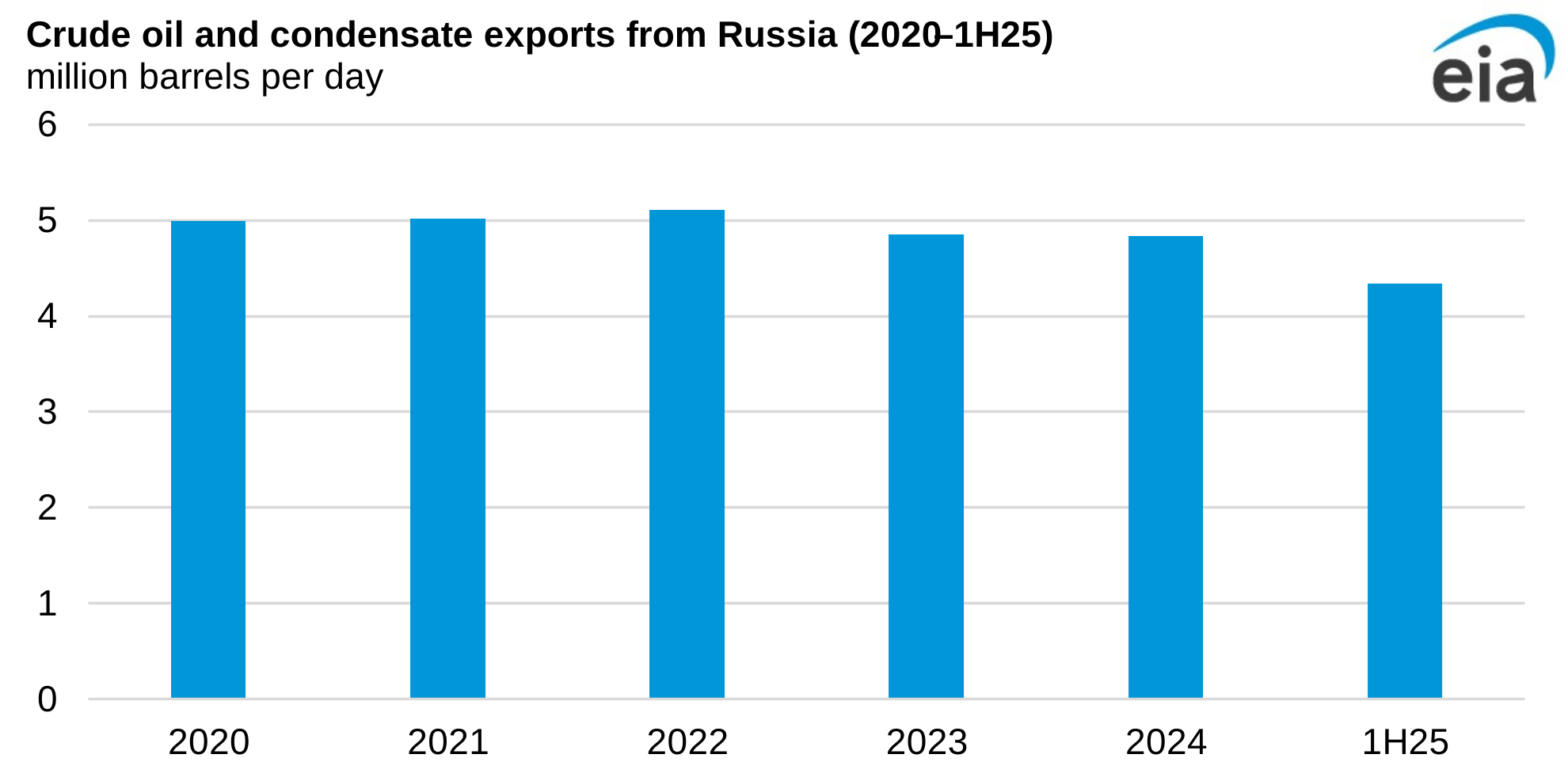
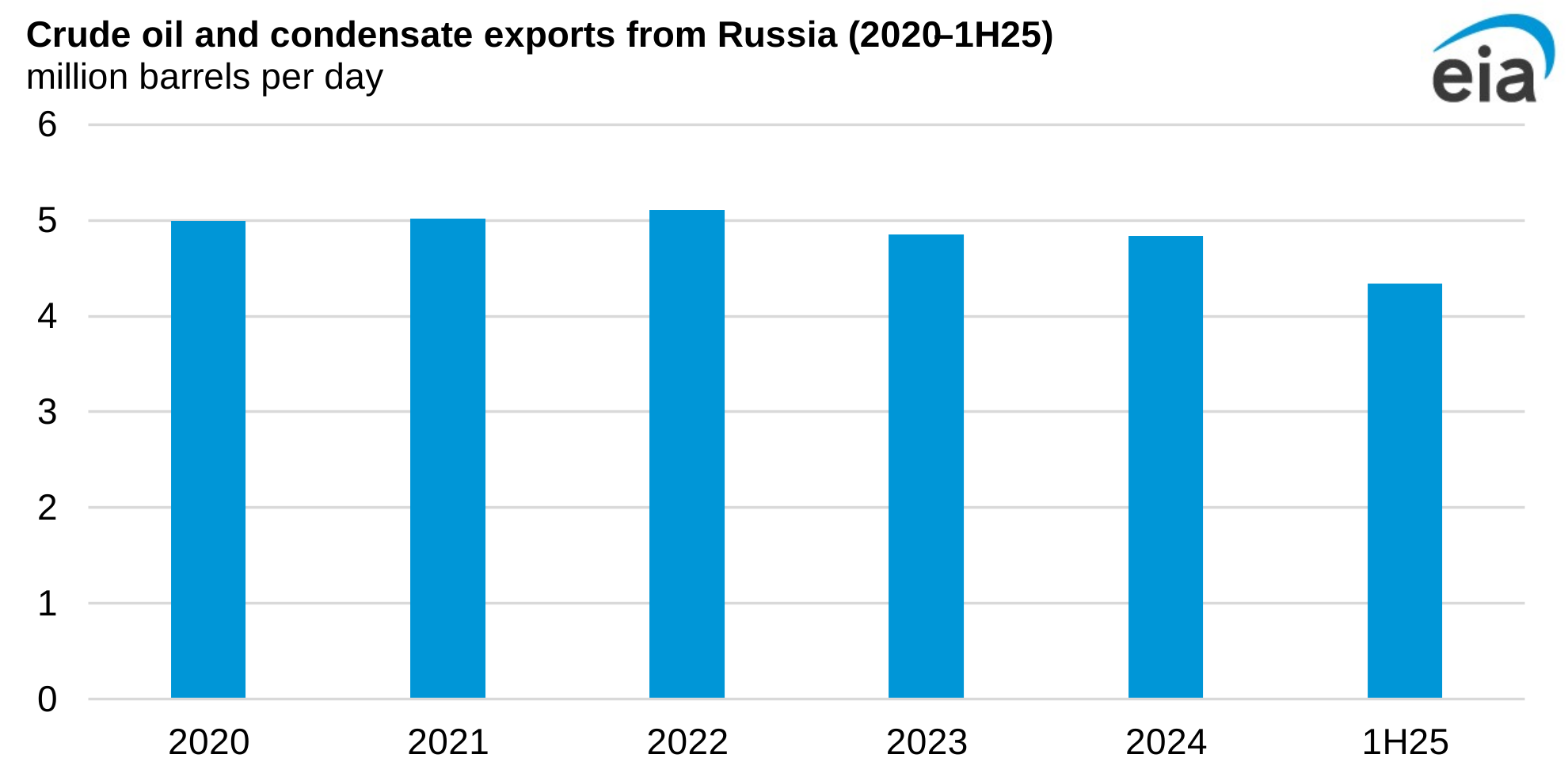
From 2020 to 2024, crude oil and condensate exports from Russia averaged 5.0 million barrels per day (b/d). Exports from Russia in the first half of 2025 (1H25) were 4.3 million b/d (compared with 4.8 million b/d in 2024). Even as crude oil export volumes from Russia have remained relatively high, the destination of these exports has shifted, mainly due to sanctions related to Russia’s full-scale invasion of Ukraine in February 2022.
In-brief analysis
Aug 6, 2025
Data source: CME Group, Bloomberg L.P.
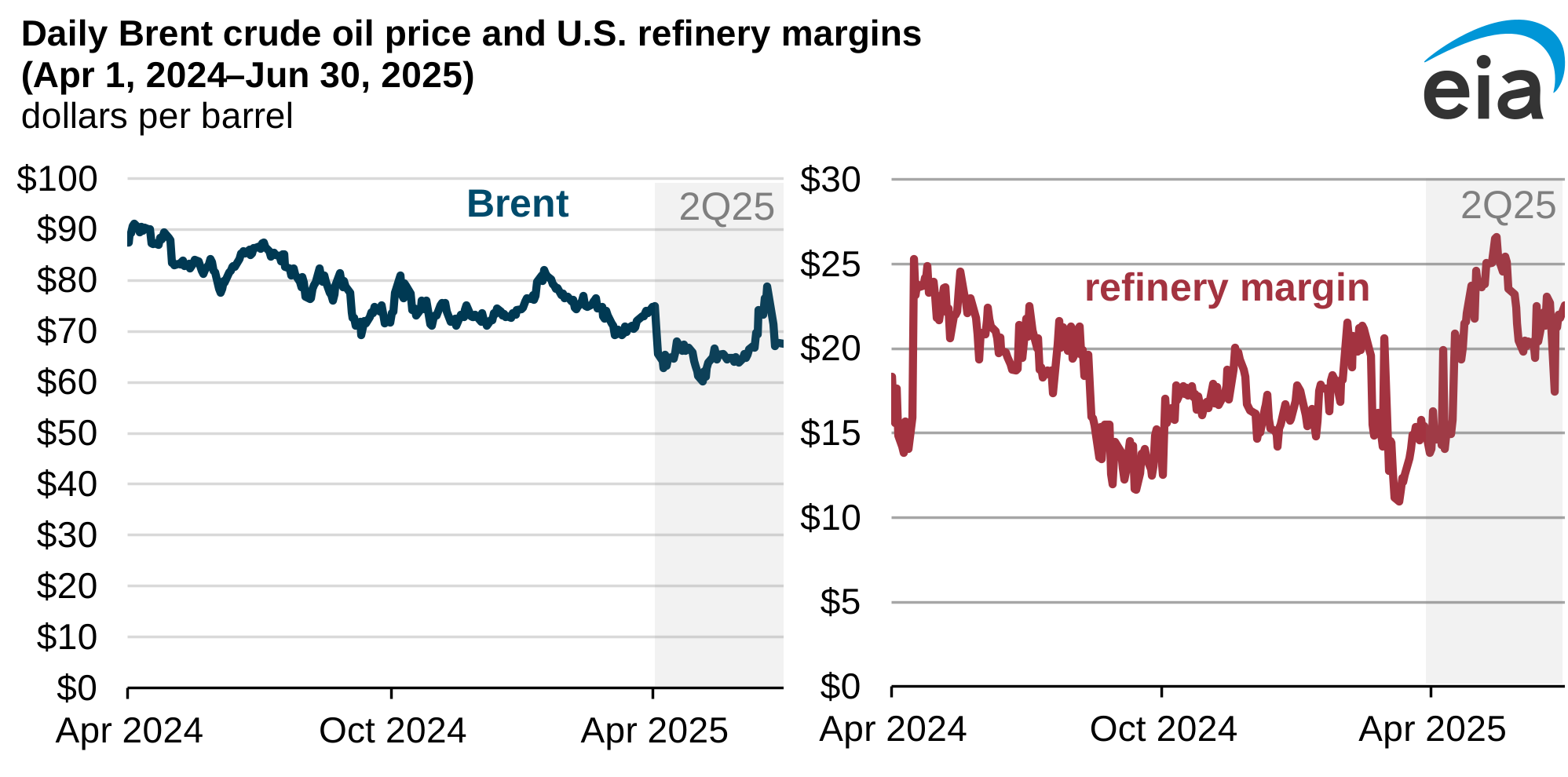
Note: Refinery margin is calculated as the 3-2-1 crack spread on the U.S. Atlantic Coast, which represents the price of two barrels of gasoline and one barrel of distillate fuel oil minus three barrels of Brent crude oil. 2Q25=second quarter of 2025
Energy prices—along with other globally traded commodities, equities, and currencies—were more volatile in the second quarter of 2025 (2Q25) amid significant uncertainty from concerns over economic growth as well as geopolitical tensions in the Middle East. The geopolitical uncertainty has affected crude oil prices and refinery margins, and shifting government policies have affected biofuel compliance credit prices.
In-brief analysis
Aug 5, 2025
Data source: U.S. Energy Information Administration, Form EIA-930, Hourly and Daily Balancing Authority Operations Report
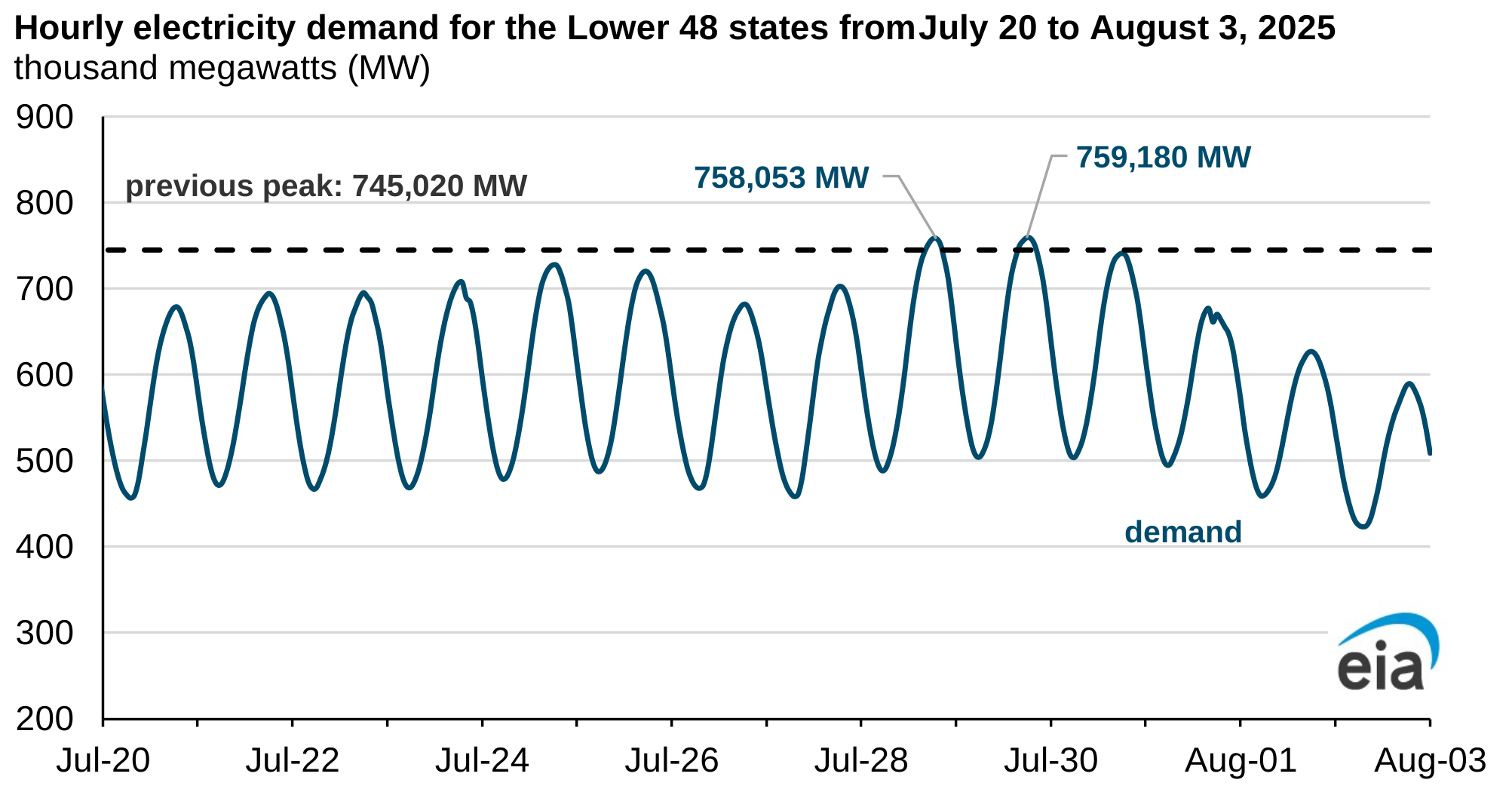
Electricity demand in the Lower 48 states exceeded previous peaks on two days in the last week of July.
In-brief analysis
Aug 4, 2025
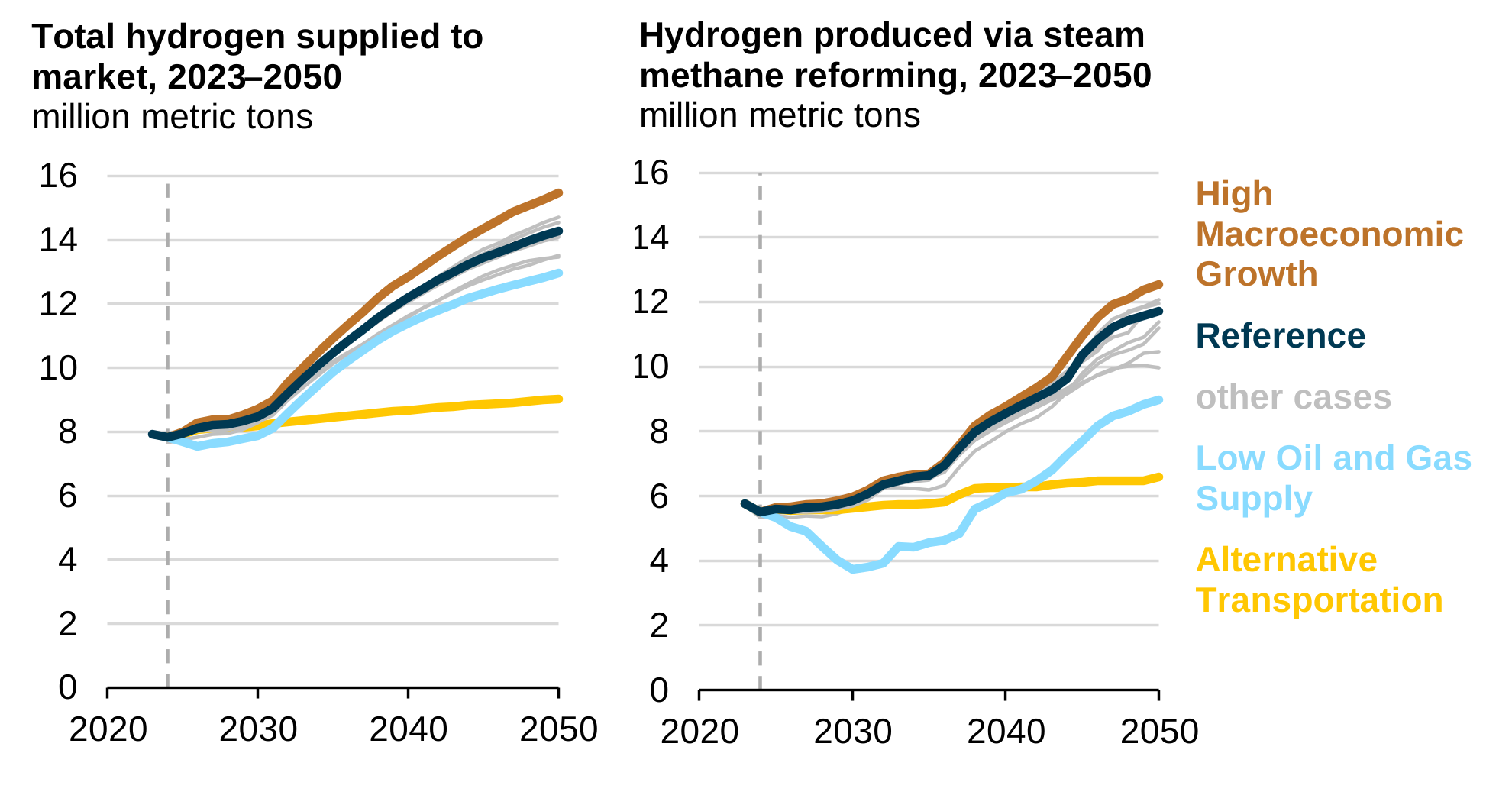
In our recently published Annual Energy Outlook 2025 (AEO2025), we introduced our new Hydrogen Market Module (HMM), which allows us to model the market for hydrogen in the coming decades.
In-brief analysis
Jul 31, 2025
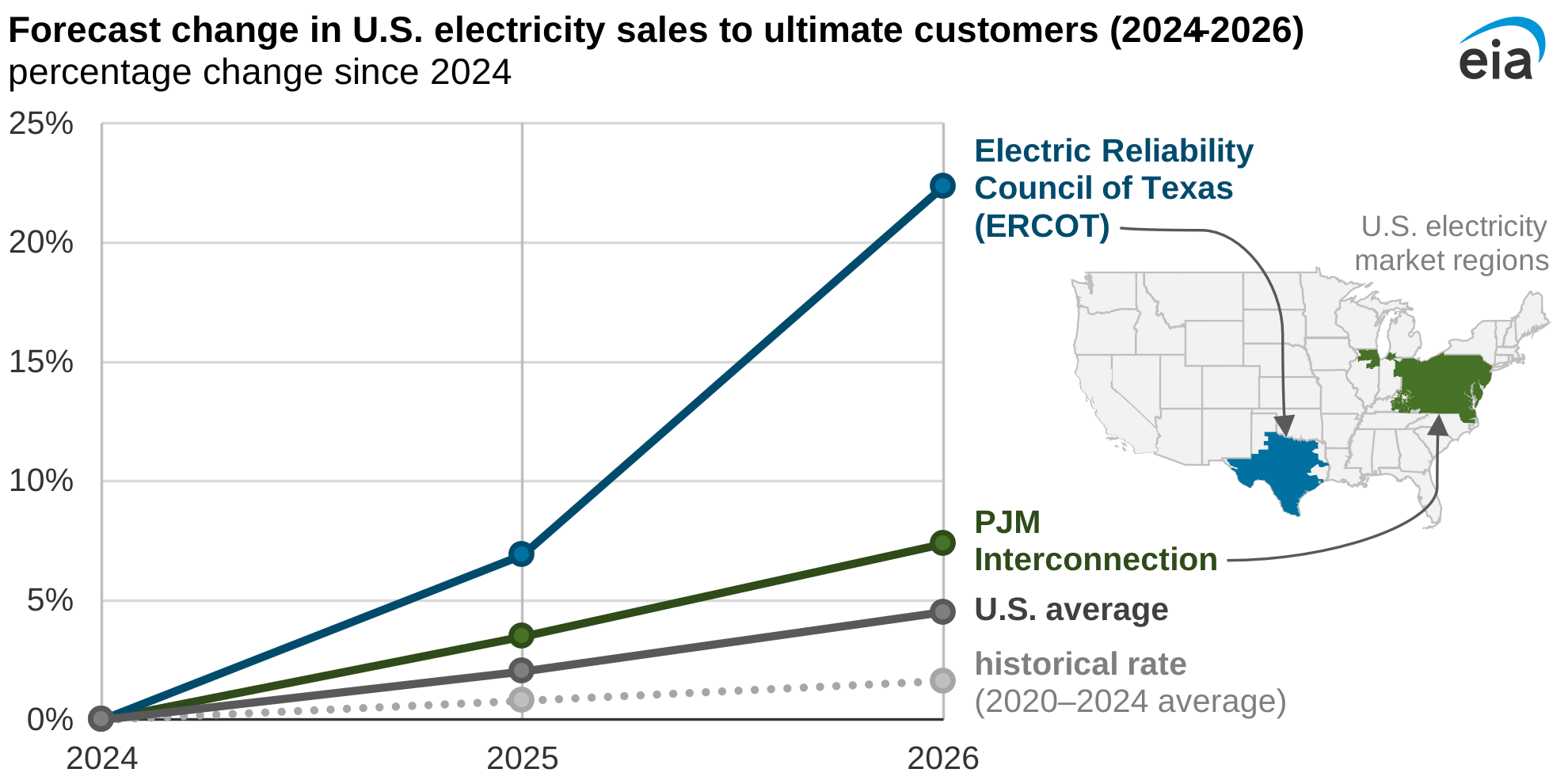
In our most recent Short-Term Energy Outlook (STEO), we forecast nationwide U.S. retail electricity sales to ultimate customers will grow at an annual rate of 2.2% in both 2025 and 2026, compared with average growth of 0.8% between 2020 and 2024. The forecast reflects rapid electricity demand growth in Texas and several mid-Atlantic states, where the grid is managed by the Electric Reliability Council of Texas (ERCOT) and the PJM Interconnection, respectively. We expect electricity demand in ERCOT to grow at an average rate of 11% in 2025 and 2026 while the PJM region grows by 4%.
In-brief analysis
Jul 30, 2025
This TIE was updated on August 4 to clarify language.
Data source: Standard International Trade Classification data published by the U.S. Census Bureau
Note: Prices are adjusted for inflation.
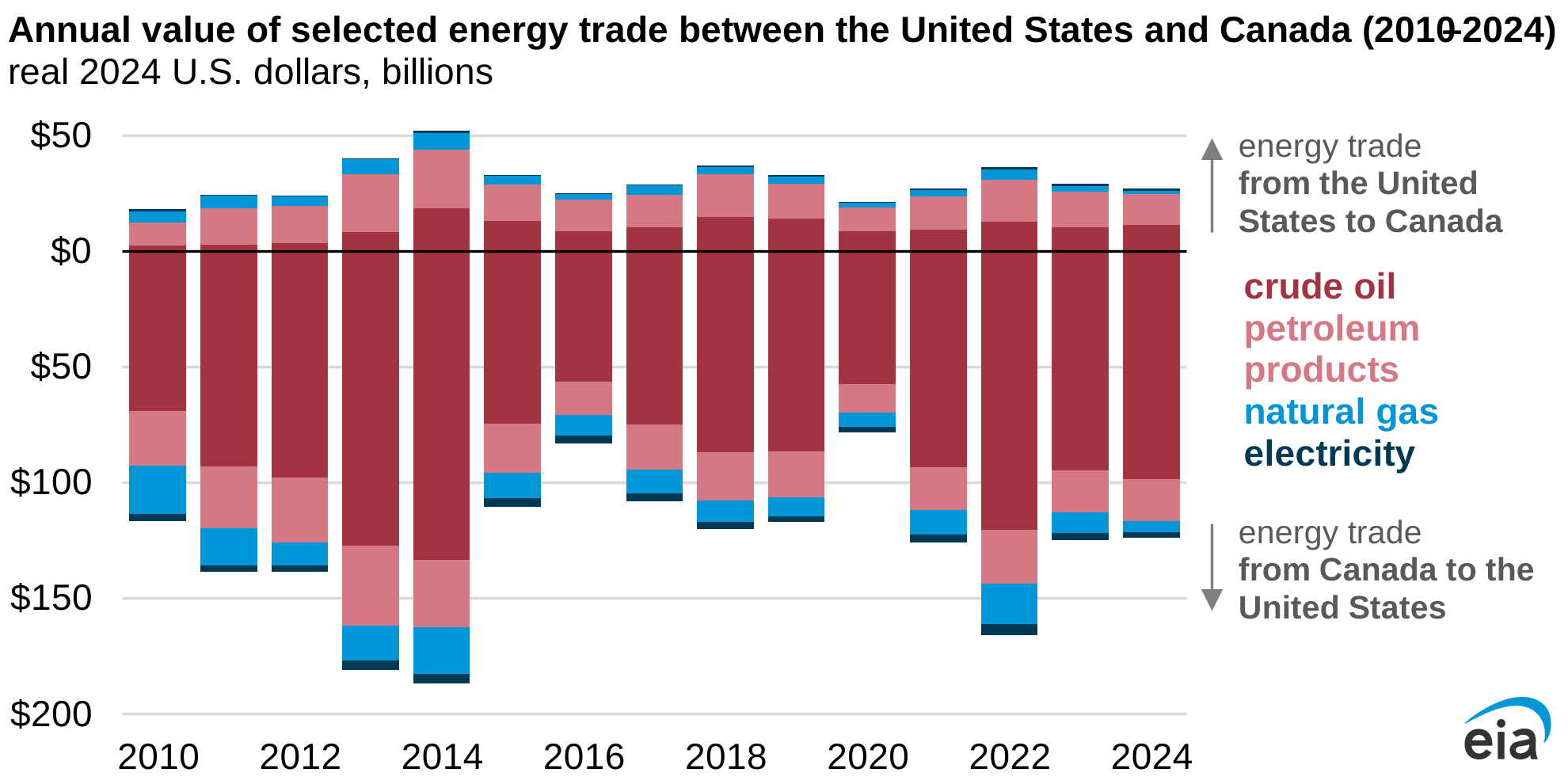
The value of energy trade between the United States and Canada remained steady in 2024 at an estimated $151 billion compared with $154 billion in 2023, according to data from the U.S. Census Bureau. Energy trade value is the total value of energy imports and exports between two countries and is driven by commodity volumes and prices. Most of the U.S.-Canada trade value is U.S. energy imports from Canada—$124 billion in 2024—rather than from U.S. energy exports to Canada, which totaled $27 billion last year.
Tags:
prices, international, electricity, natural gas, exports/imports, United States, liquid fuels, Canada, crude oil, oil/petroleum, petroleum products
In-depth analysis
Jul 29, 2025
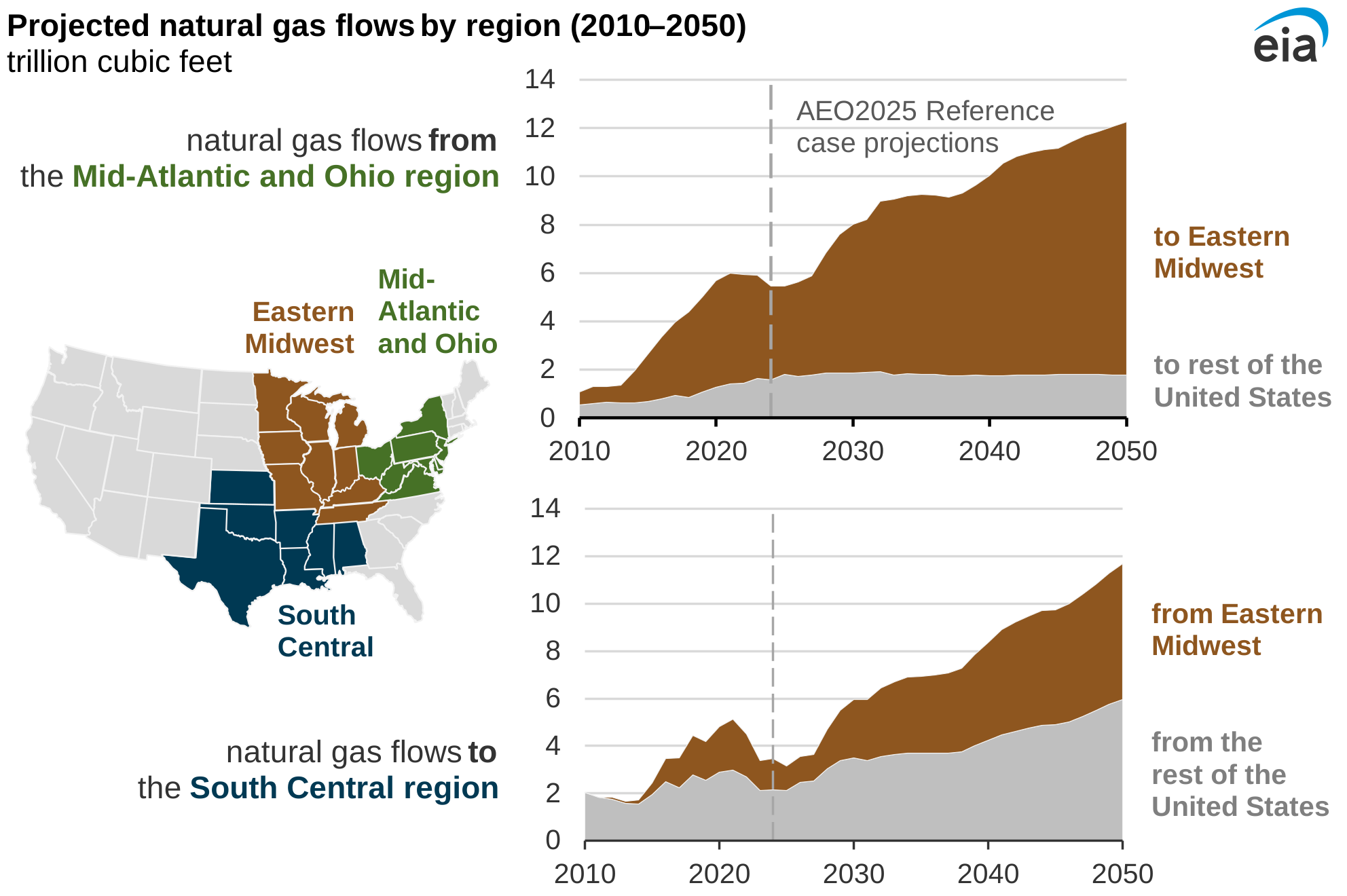
In our Annual Energy Outlook 2025 (AEO2025), we project regional differences in natural gas markets will encourage increased natural gas flows from the mid-Atlantic to the southern Gulf Coast in the coming decades. Across the cases we explored, we project production from the Appalachian Basin in the mid-Atlantic and Ohio region will increasingly meet growing demand on the Gulf Coast in the South Central region, driven largely by increasing liquefied natural gas (LNG) exports. The economics of increased production in the Appalachian Basin are more favorable by 2030, and our model shows natural gas transiting through the Eastern Midwest region on the way to the Gulf Coast.
Tags:
natural gas, AEO (Annual Energy Outlook), forecasts/projections, production/supply, consumption/demand, exports/imports, LNG (liquefied natural gas), Henry Hub, prices, Marcellus, Permian, Haynesville, Gulf Coast, map
In-brief analysis
Jul 28, 2025
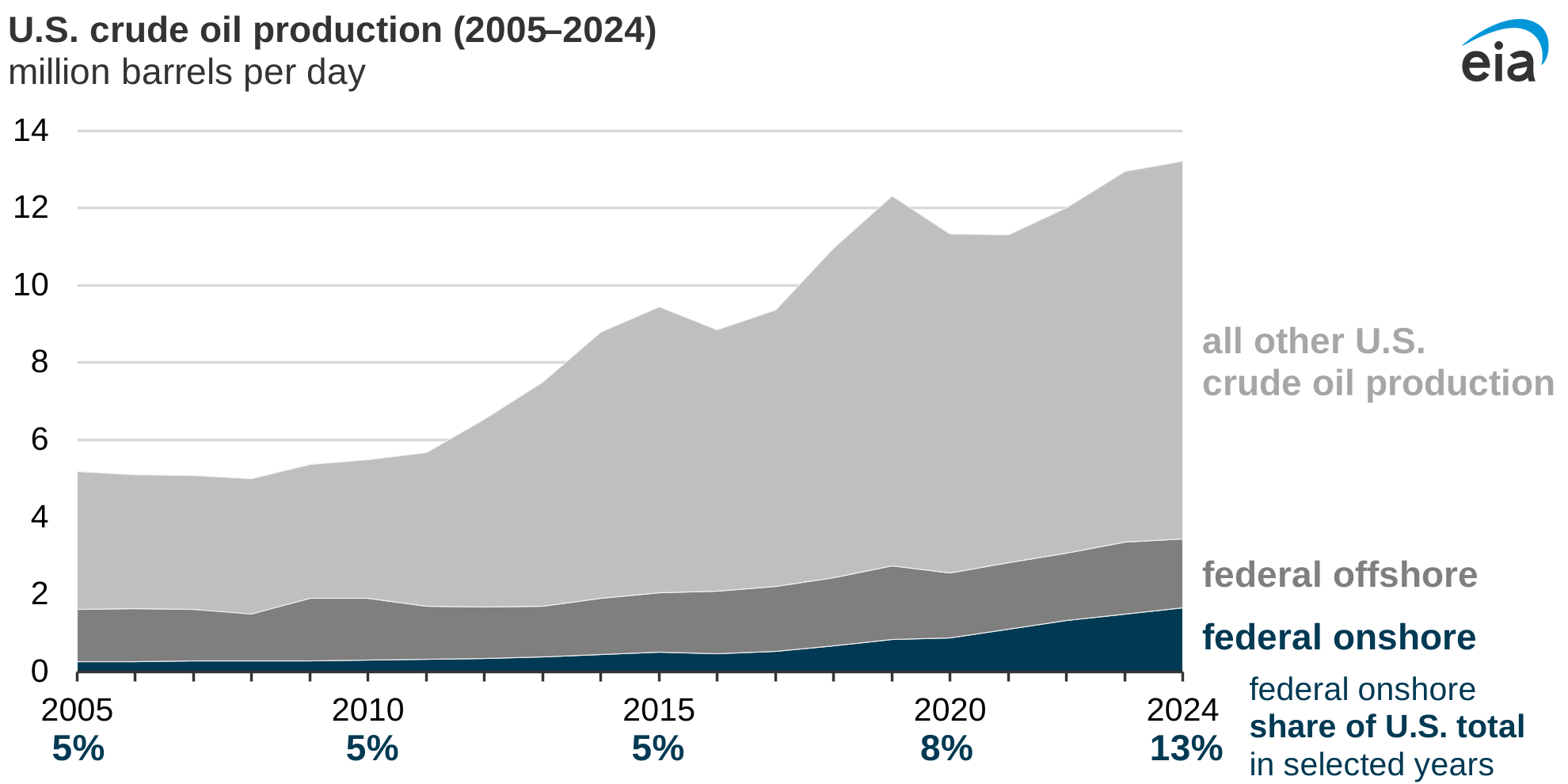
Crude oil production from onshore federal lands has increased in recent years as a result of significant growth in drilling activity and operations. According to data collected by the U.S. Department of the Interior’s Office of Natural Resources Revenue, onshore crude oil production from federal lands reached 1.7 million barrels per day (b/d) in 2024, a record high. Most of this growth was in New Mexico from crude oil produced from federal lands in the Permian Basin.
In-brief analysis
Jul 24, 2025
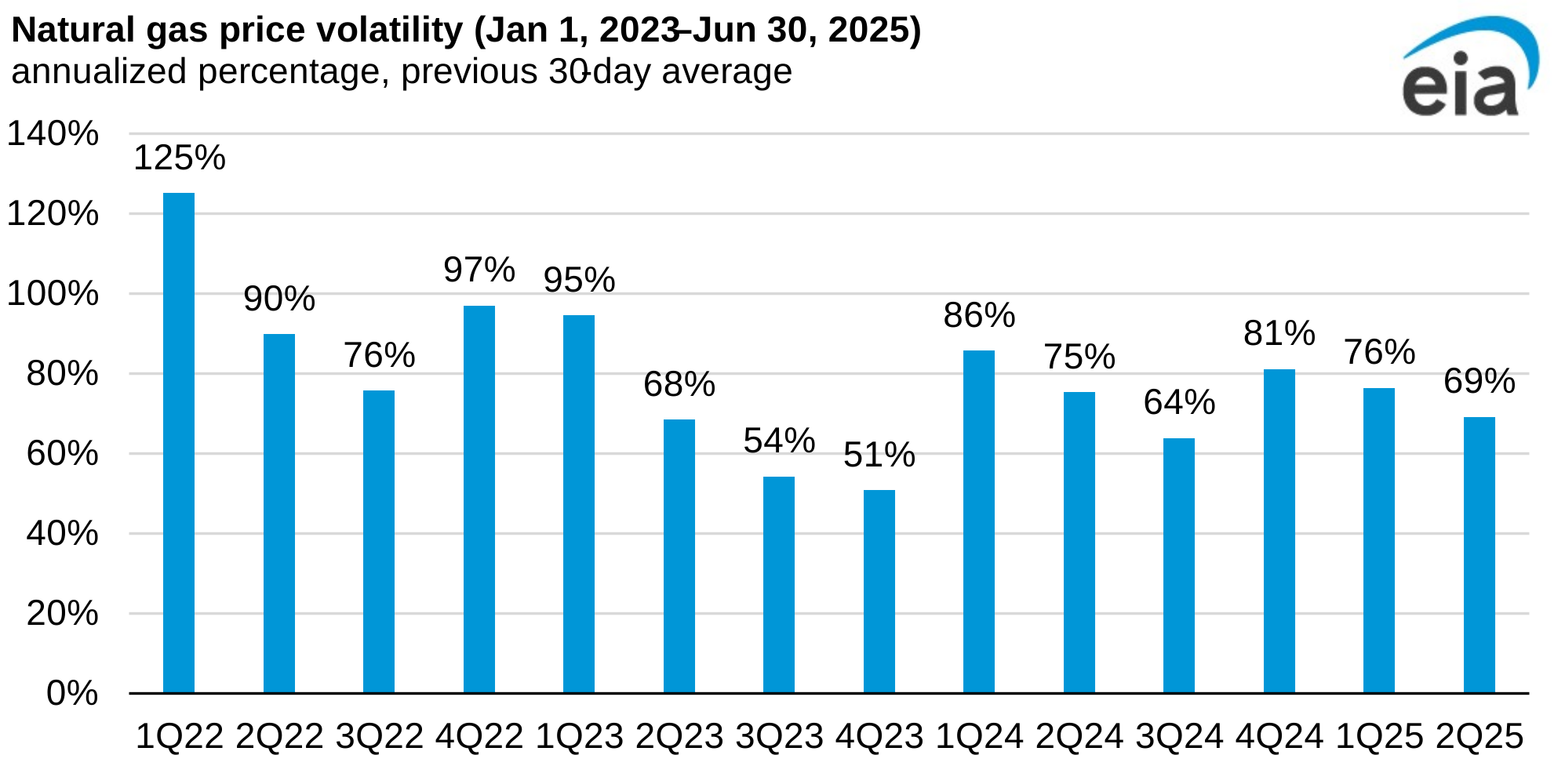
Data source: Bloomberg L.P.
Note: Annualized percentage, a widely used trading measure of price volatility, is the standard deviation for the previous quarter of daily changes in the Henry Hub front-month futures price multiplied by the square root of 252 (number of trading days in a year) multiplied by 100. Percentages are averages for that period. 1Q25=first quarter of 2025
The average historical volatility of the daily Henry Hub front-month futures price, a key benchmark for U.S. natural gas, trended downward through the first half of the year, with quarterly volatility falling from a recent high of 81% in the fourth quarter of 2024 to 69% by mid-2025. This decline marks a return to more typical seasonal patterns and reflects greater market stability as storage inventories return to levels close to the prior five-year average. Since 2022, natural gas markets have experienced a series of extremes, including both unusually high and low inventory levels, which contributed to elevated price volatility. Recent quarters, by contrast, have seen more seasonally consistent price movements, suggesting that natural gas market dynamics have steadied amid record storage injections and more balanced inventories.
In-brief analysis
Jul 23, 2025
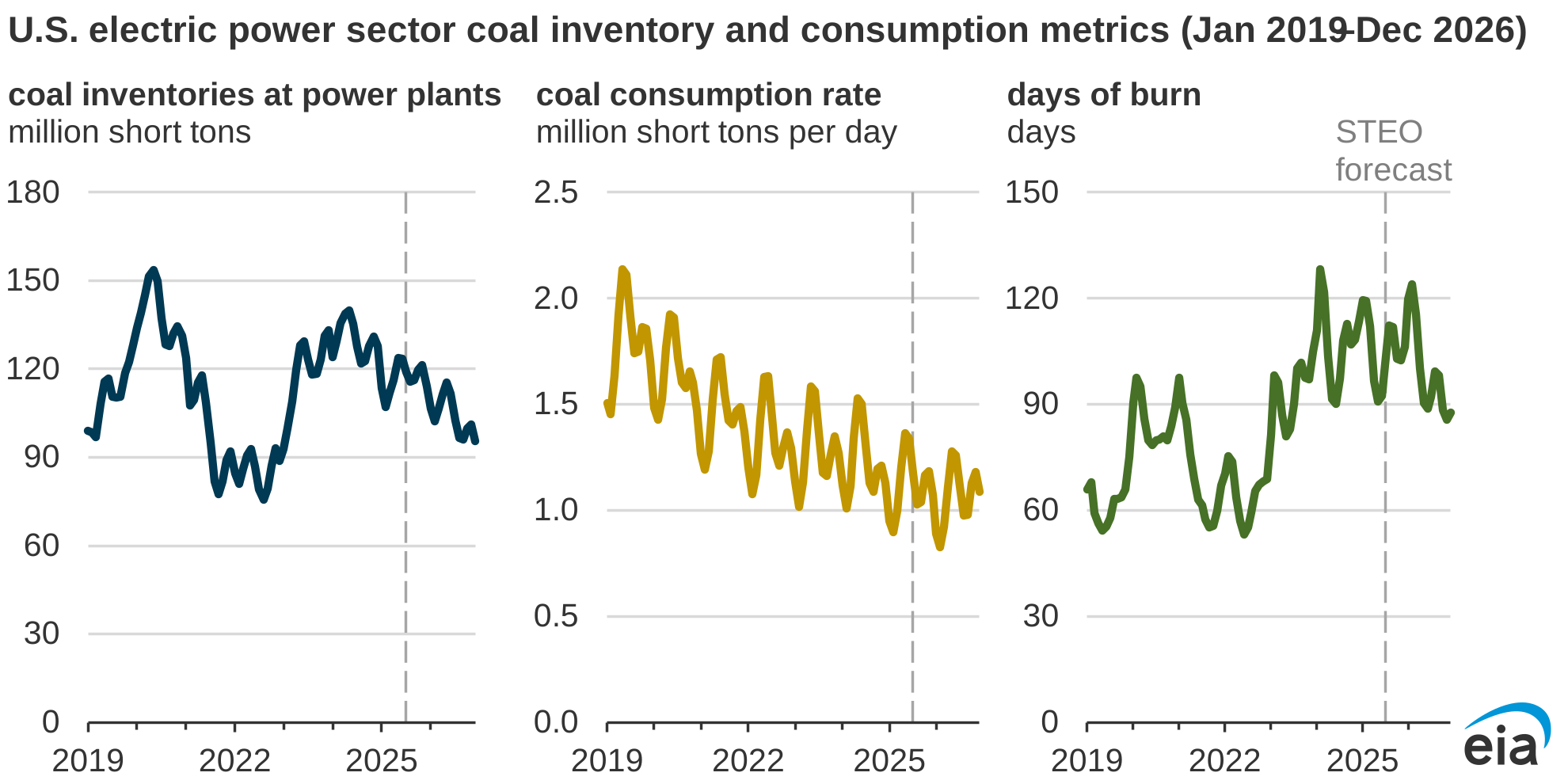
We expect U.S. coal-fired power plants will remain relatively well-stocked through the end of next year in our latest Short-Term Energy Outlook. We estimate power plants in the United States had 124 million short tons of coal on-site at the end of June for them to consume that coal at a rate of about 1.3 million short tons per day, meaning they had about 93 days’ worth of fuel on-site. This metric, also called days of burn, is calculated by dividing coal inventories held at power plants by a seasonal consumption rate. We forecast days of burn will range between about 90 and 120 days between now through the end of 2026, or about a month’s worth of coal more than power plants had on-site between 2019 and 2022.
In-brief analysis
Jul 22, 2025

The United States exported more crude oil to Nigeria than it received from Nigeria for the first time in February and March 2025. During this period, refinery maintenance on the U.S. East Coast drove down U.S. demand for crude oil imports, including imports from Nigeria, and the relatively new Dangote refinery in Nigeria drove up Nigeria’s demand for inputs, including crude oil it imported from the United States. This marks the first time that the United States was a net crude oil exporter to Nigeria, and structural changes to crude oil trade between the countries suggest this dynamic could occur more frequently.
In-brief analysis
Jul 21, 2025
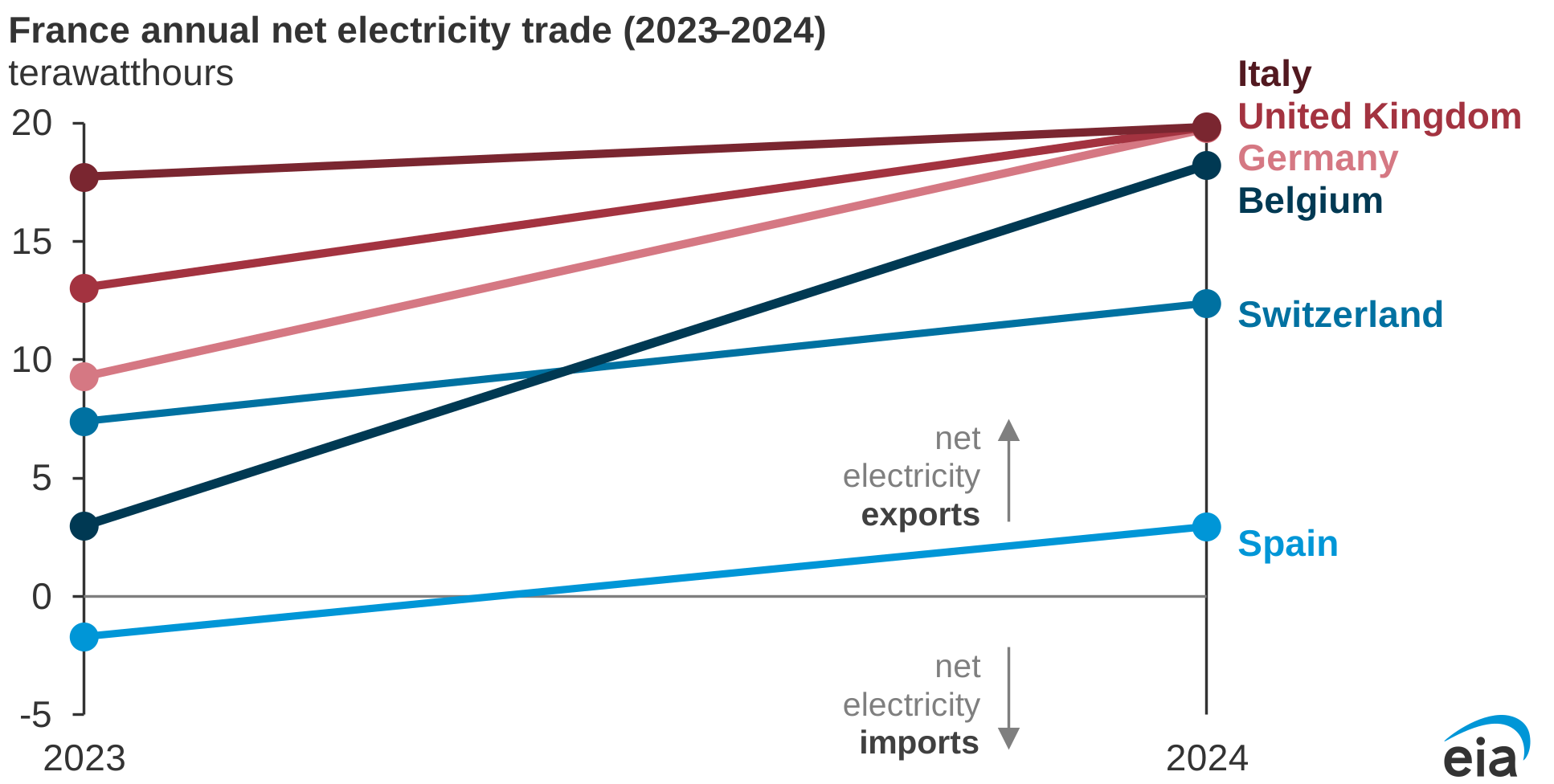
In 2024, France increased its cross-border electricity deliveries by 48%, from 70 terawatthours (TWh) in 2023 to 103 TWh in 2024. France’s electricity exports to Belgium and Germany increased the most, but France also exported more electricity to Spain, Switzerland, the United Kingdom, and Italy, according to data from the European Network of Transmission System Operators for Electricity. Within France’s electricity generation mix, nuclear energy increased the most, followed by hydropower.
In-brief analysis
Jul 18, 2025
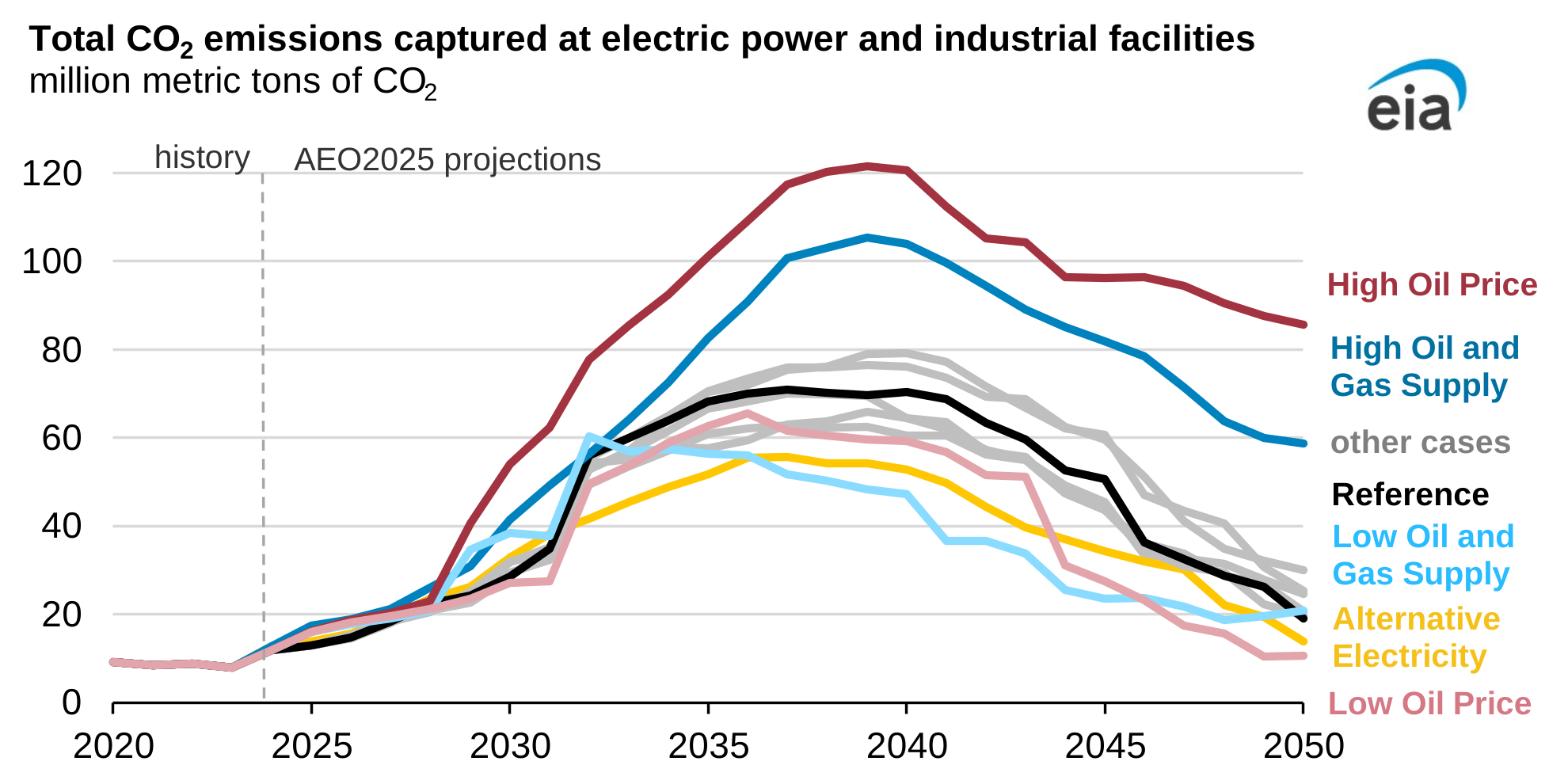
Data source: U.S. Energy Information Administration, Annual Energy Outlook 2025 (AEO2025)
In our recently published Annual Energy Outlook 2025 (AEO2025), we introduce our new Carbon Capture, Allocation, Transportation, and Sequestration module (CCATS), which allows us to model carbon capture in the coming decades.
In-brief analysis
Jul 16, 2025
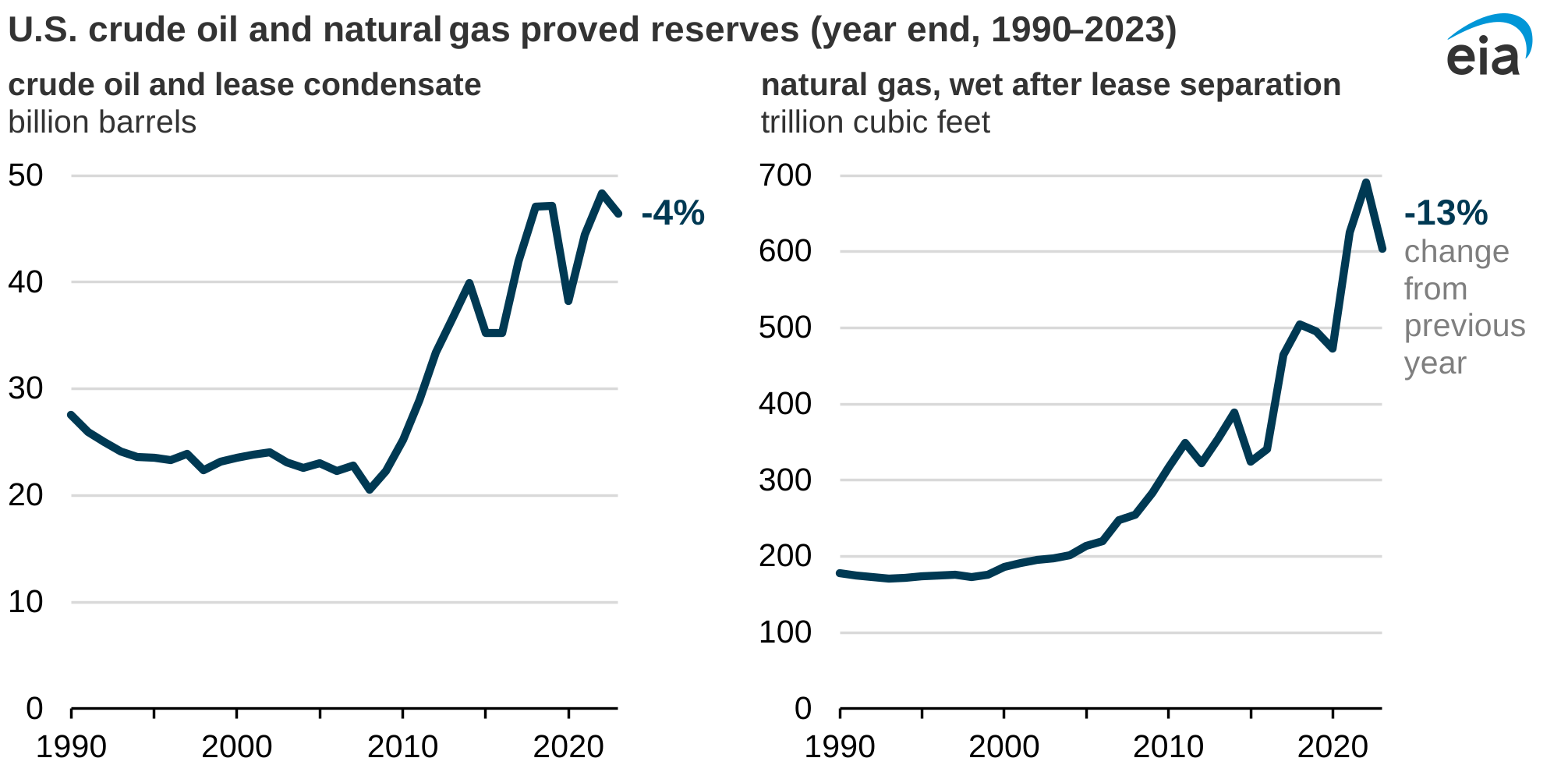
U.S. proved reserves of crude oil and lease condensate totaled 46 billion barrels at year-end 2023, a 4% decline from the previous year’s record, according to our U.S. Crude Oil and Natural Gas Proved Reserves, Year-End 2023 report. U.S. proved reserves of natural gas fell to 604 trillion cubic feet, a 13% decline from their 2022 record. Both declines marked the first annual decrease in U.S. proved reserves for those fuels since 2020.
In-brief analysis
Jul 14, 2025
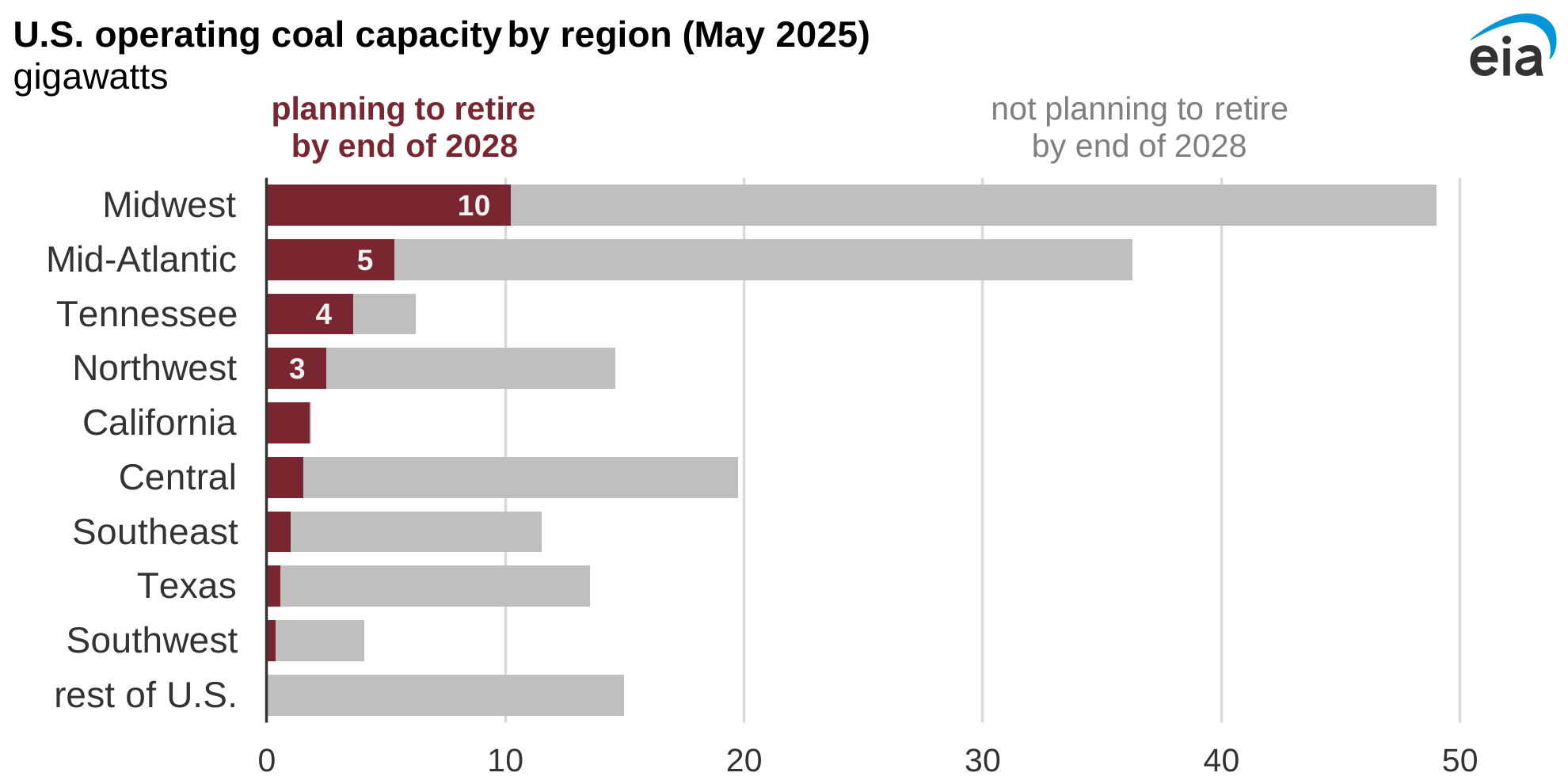
Based on what power plant owners and operators have reported to EIA, the total operating capacity of U.S. coal-fired power plants is scheduled to fall from 172 gigawatts (GW) in May 2025 to 145 GW by the end of 2028, according to our Preliminary Monthly Electric Generator Inventory. On a regional basis, 58% of the planned coal capacity retirements are in the Midwest and Mid-Atlantic regions.