
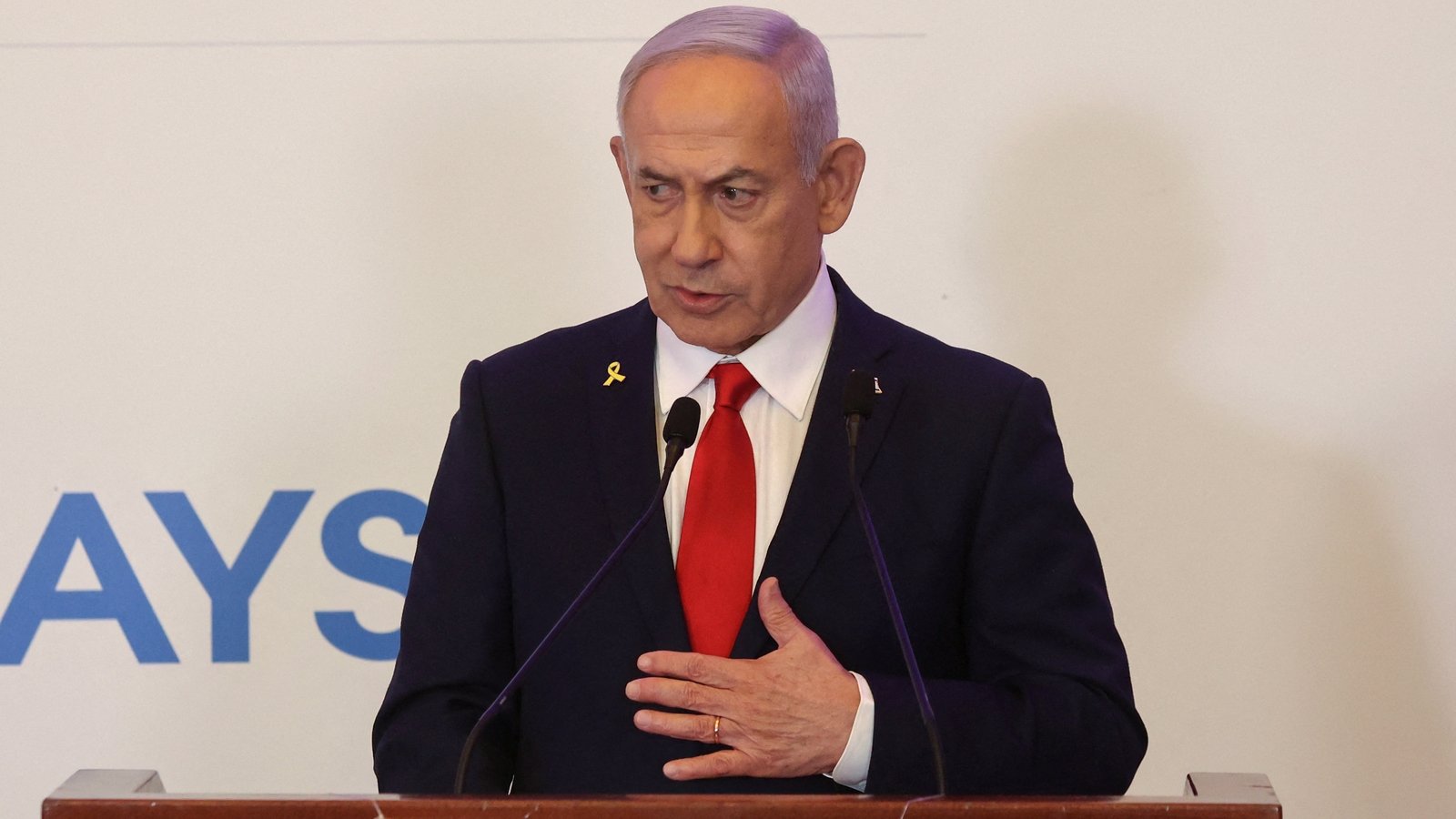
Israel’s Prime Minister Benjamin Netanyahu is expected to convene a meeting of his security cabinet later today, amid reports he is preparing to order a full military occupation of Gaza.
The proposals have been sharply criticised by the United Nations and aid groups.
They are also facing opposition from within Israel, with reports that some military leaders are against any such escalation, while families of Israeli hostages fear it will put the lives of their loved ones at risk.
It comes as an EU assessment found significant obstructive factors are undermining humanitarian operations in Gaza.
We need your consent to load this rte-player contentWe use rte-player to manage extra content that can set cookies on your device and collect data about your activity. Please review their details and accept them to load the content.Manage Preferences
The EU’s foreign policy and humanitarian arms updated member countries late last night on the status of an agreement reached with Israel last month on boosting humanitarian access to Gaza.
An EU official said late last night that there were some positive developments regarding fuel delivery, the reopening of some routes, and an upward trend in the number of daily trucks entering the enclave and the repair of some vital infrastructure.
However, the official added that “significant obstructive factors continue to undermine humanitarian operations and aid delivery to Gaza, notably the lack of a safe operating environment to allow the distribution of aid at scale.”
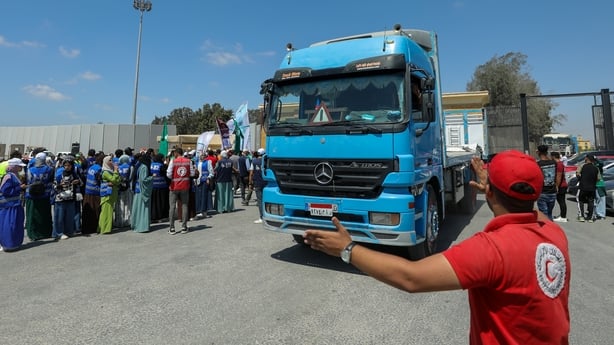
Aid trucks remain stranded at the Rafah Border Crossing
‘Military pressure kills hostages’
Gil Dickmann’s cousin, Carmel Gat, survived 11 months in Hamas captivity, but was killed in Gaza just before Israeli forces arrived last August.
He said any decision by the security cabinet to occupy Gaza or expand military operations could mean the killing of more hostages.
Speaking on RTÉ’s Morning Ireland, he said it was his family’s “worst nightmare” when they found out Carmel had died.
“Military pressure kills the hostages,” he said, adding that families of hostages will protest the cabinet’s meeting.
Mr Dickmann said the lives of many hostages could still be saved if Israel ends the war instead of occupying Gaza.
“That would be a victory for Israel and that would also mean victory for the people of Gaza, who would see the end of the war and the end of Hamas,” he said.
The Middle East Director of the International Communities Organisation, Gershon Baskin, said any escalation of the war in Gaza endangers the lives of hostages and would destroy what little is left in Gaza.
He said whatever decision is made at today’s security cabinet meeting is “crucial”.
We need your consent to load this rte-player contentWe use rte-player to manage extra content that can set cookies on your device and collect data about your activity. Please review their details and accept them to load the content.Manage Preferences
Speaking on the same programme, he said there is “nothing logical” about what Israel is planning to do.
“This war is over. Israel has achieved its strategic goal. Hamas is disseminated and admits it will not continue to govern Gaza,” he said.
The Israeli government is under growing pressure to bring the war in Gaza to an end, with concern mounting after the United Nations warned that famine was unfolding in the territory of more than two million Palestinians.
The October 2023 attack by Hamas that sparked the war resulted in the deaths of 1,219 people, the majority of them civilians, according to an AFP tally based on official figures.
Of the 251 hostages seized during Hamas’s 2023 attack, 49 are still held in Gaza, including 27 the Israeli military claims are dead.
Israel’s war has killed at least 61,158 people in Gaza, mostly civilians, according to figures from the Gaza health ministry, which are considered reliable by the United Nations.