
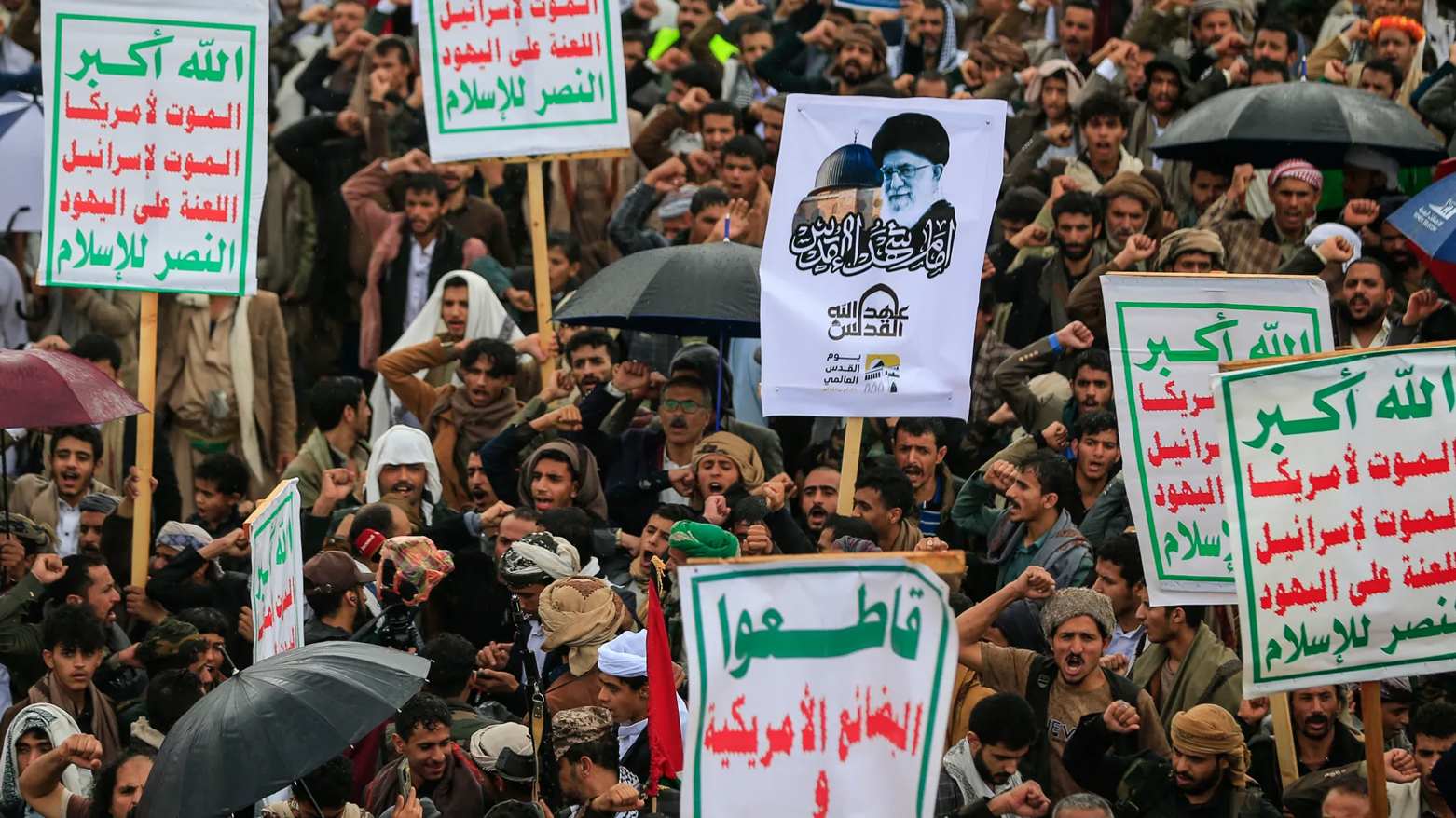
Yahya Saree, military spokesperson for Ansar Allah, stated in a message released on Saturday, that the missile strikes targeted “sensitive military objectives of the Israeli enemy in southern occupied Palestine” and coincided with simultaneous operations by Iranian forces and Hezbollah in Lebanon.
ERBIL (Kurdistan24) – Yemen’s Houthis said on Saturday that it had launched a batch of ballistic missiles targeting military sites in southern occupied Palestine, marking its first direct operation against Israeli territory since the outbreak of the ongoing regional conflict.
Yahya Saree, military spokesperson for Ansar Allah, stated in a message released on Saturday, that the missile strikes targeted “sensitive military objectives of the Israeli enemy in southern occupied Palestine” and coincided with simultaneous operations by Iranian forces and Hezbollah in Lebanon.
“Our operations will continue until the objectives are achieved and the aggression stops on all resistance fronts,” Saree added.
Israel’s military confirmed the launch, describing it as the first missile fired from Yemen in the current war, which began on February 28, according to Agence France-Presse (AFP). A statement cited by AFP said the military had “identified the launch of a missile from Yemen toward Israeli territory” and that air defense systems were operating to intercept the threat.
Israeli authorities reported that air raid sirens were activated in areas including Beer Sheba and near the country’s primary nuclear research center. The military’s statement noted that it was monitoring the situation amid continued exchanges of fire with Iran and allied groups across multiple fronts.
The Houthi announcement linked the operation to prior communications from the Yemeni Armed Forces concerning military intervention in support of Iran and other regional resistance fronts. The statement cited ongoing escalation, targeting of infrastructure, and “crimes and massacres” against populations in Lebanon, Iran, Iraq, and Palestine as justification for the action.
Separately, Israel and Iranian forces continued to exchange missile strikes. Iranian and Hezbollah missile attacks overnight on March 28 triggered multiple rounds of air raid sirens across central and southern Israel.
Israel reported that a missile strike by Iranian forces late Friday killed a 52-year-old man in Tel Aviv, with emergency responders attending multiple impact sites across the metropolitan area, according to the Associated Press (AP).
Earlier, Israel conducted strikes on Iranian nuclear-related facilities, including the Shahid Khondab Heavy Water Complex in Arak and the Ardakan yellowcake production plant in Yazd province. Iranian authorities reported no casualties and no contamination risk, confirming that the targeted facilities were inactive or secured, AP said. Iran’s Foreign Minister Abbas Araghchi warned on social media that Tehran would impose a “HEAVY price for Israeli crimes,” according to AP.
Military activity extended beyond Israel and Iran. Iranian attacks on Prince Sultan Air Base in Saudi Arabia wounded at least 10 U.S. service members, with two in serious condition, according to two anonymous U.S. officials cited by AP. Saudi Arabia intercepted additional missiles and drones aimed at Riyadh, while Kuwait reported damage to port infrastructure.
The conflict has caused extensive civilian and infrastructural disruptions. AP reported over 1,900 deaths in Iran and more than 1,100 in Lebanon since the start of the war, with 19 civilian fatalities in Israel and additional military casualties in Lebanon. Humanitarian concerns have prompted limited Iranian facilitation of aid through the Strait of Hormuz, according to the UN and Iranian officials.
The reported missile launch from Yemen represents a new dimension of the conflict, expanding the geographic scope of hostilities. Israeli forces continued to monitor the situation closely, with air defense systems active in response to the incoming threat, AFP noted.