
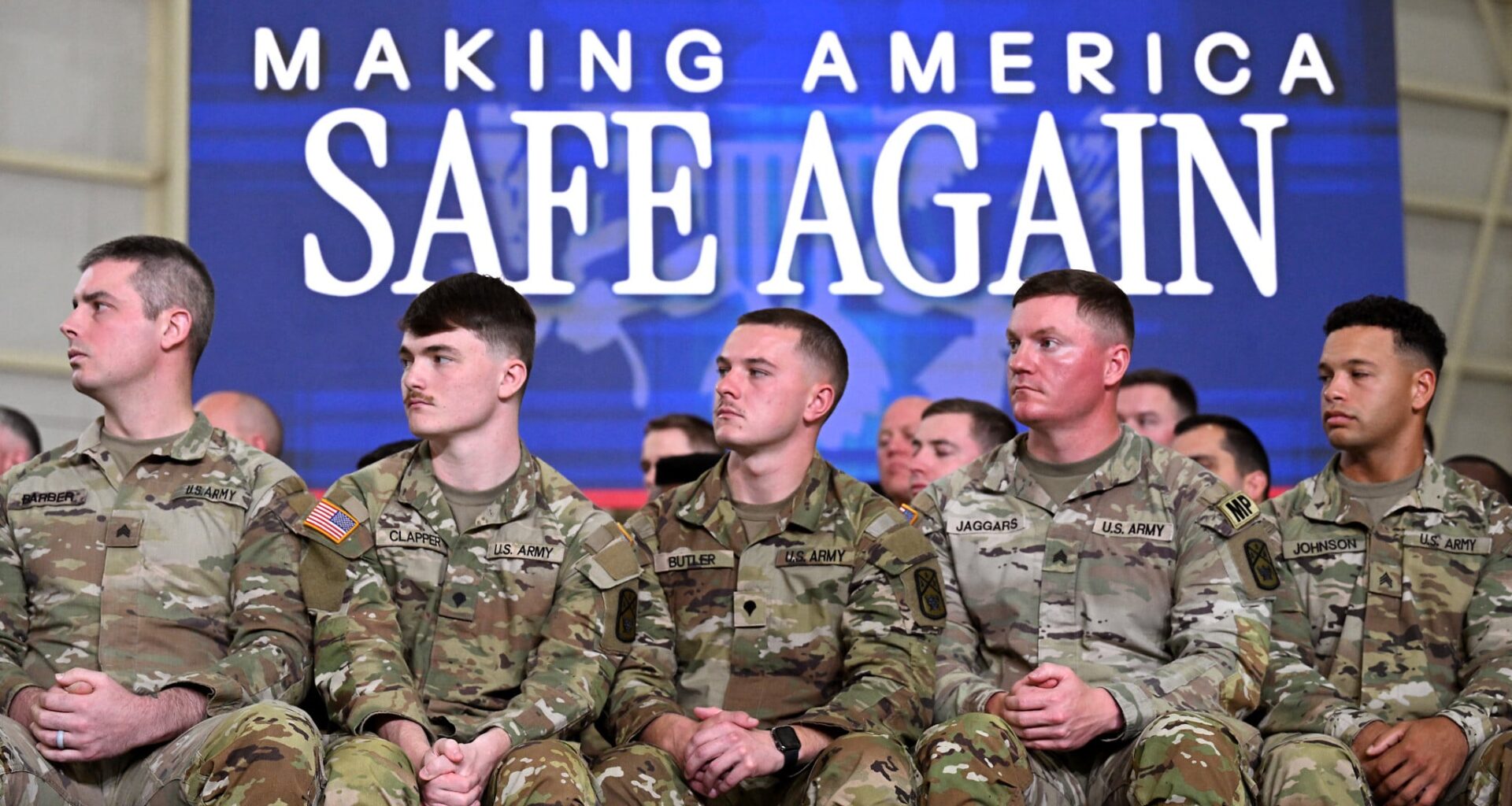
The US Department of Defense is preparing options for ground operations in Iran, which would fall short of a full-scale invasion but could involve thousands of troops and take weeks or months, The Washington Post reported late Saturday.
According to the report, which cited unnamed American officials, US President Donald Trump has not greenlit any of the plans yet.
The White House, asked for comment for the report, said the Pentagon works to give the president “maximum optionality,” but that this “does not mean the President has made a decision.”
According to the Post, the potential operations could see a mixture of special forces and conventional infantry sent to conduct extended raids into coastal areas near the Strait of Hormuz, including seizing islands controlled by the Islamic Republic and holding them for an extended period of time.
Experts have warned that holding territory would put American soldiers in significantly more danger than they’ve faced so far in the war, which has already seen 13 US servicemembers killed in action, and more than 300 wounded.
Get The Times of Israel’s Daily Edition
by email and never miss our top stories
By signing up, you agree to the terms
The timeline of the potential operations was not entirely clear, with one source telling the Post that the objectives under consideration would take “weeks, not months” to achieve, while another estimated the operations could last “a couple of months.”
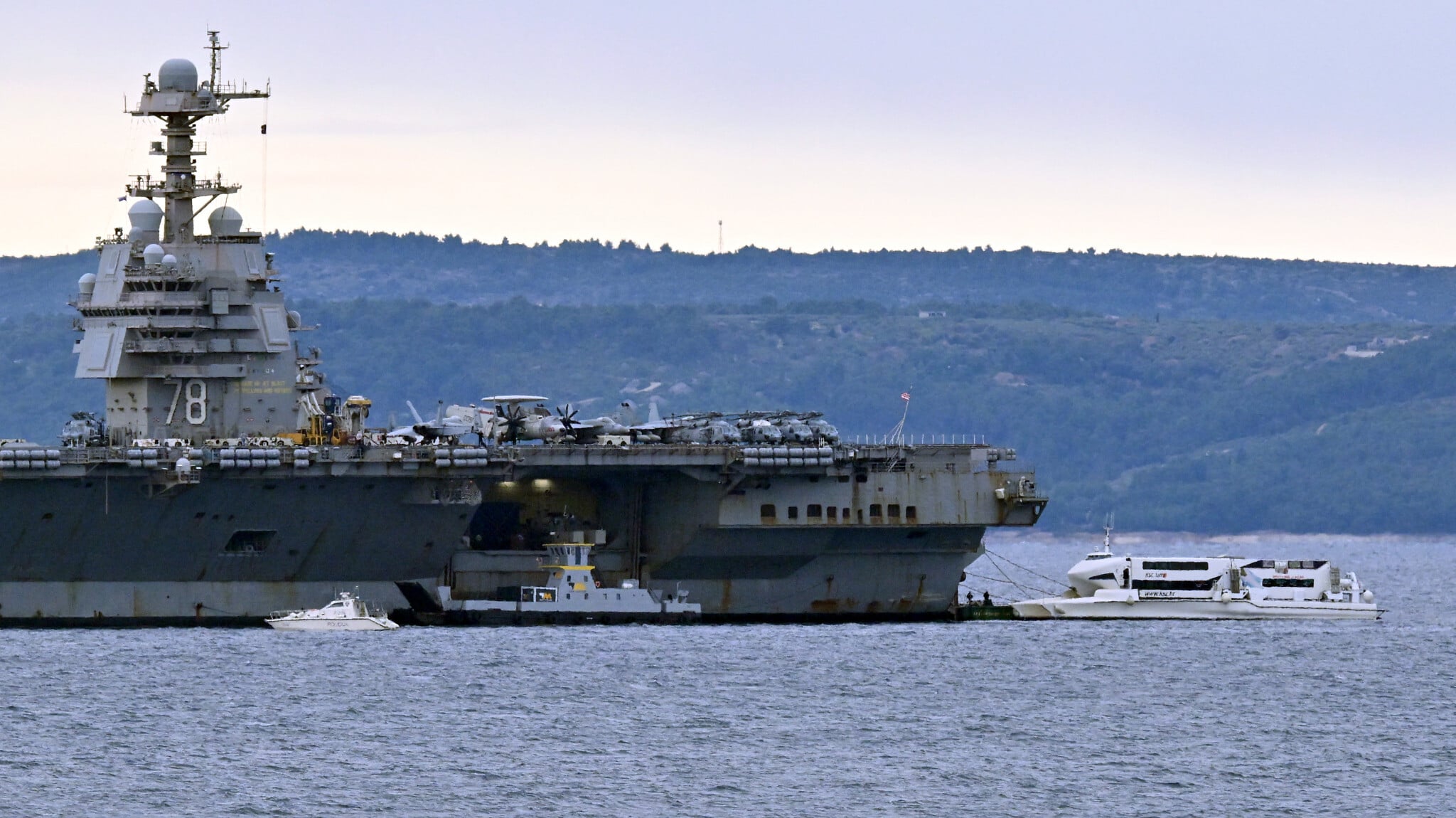
Harbor tugboats and other civilian vessels approach the US Navy aircraft carrier USS Gerald R. Ford at an anchor point off the Croatian coastal city of Split on March 28, 2026, for a scheduled port visit and maintenance stop following involvement in Middle East war operations. (ELVIS BARUKCIC / AFP)
The Iranian regime’s Islamic Revolutionary Guards Corps on Sunday threatened to target US universities in the Middle East, after claiming US-Israeli strikes had destroyed two Iranian universities.
“If the US government wants its universities in the region to be free from retaliation… it must condemn the bombing of the universities in an official statement by 12 noon on Monday, March 30, Tehran time,” said the statement published by Iranian media.
The statement added: “We advise all employees, professors, and students of American universities in the region and residents of their surrounding areas” stay a kilometer (0.6 miles) away from campuses.
Several US universities have campuses scattered throughout the Gulf region, such as Texas A&M University in Qatar and New York University in the United Arab Emirates.
Strikes overnight Friday and into Saturday hit Tehran, including the university of science and technology in the northeast of the capital, damaging buildings but not causing any casualties, according to media reports.
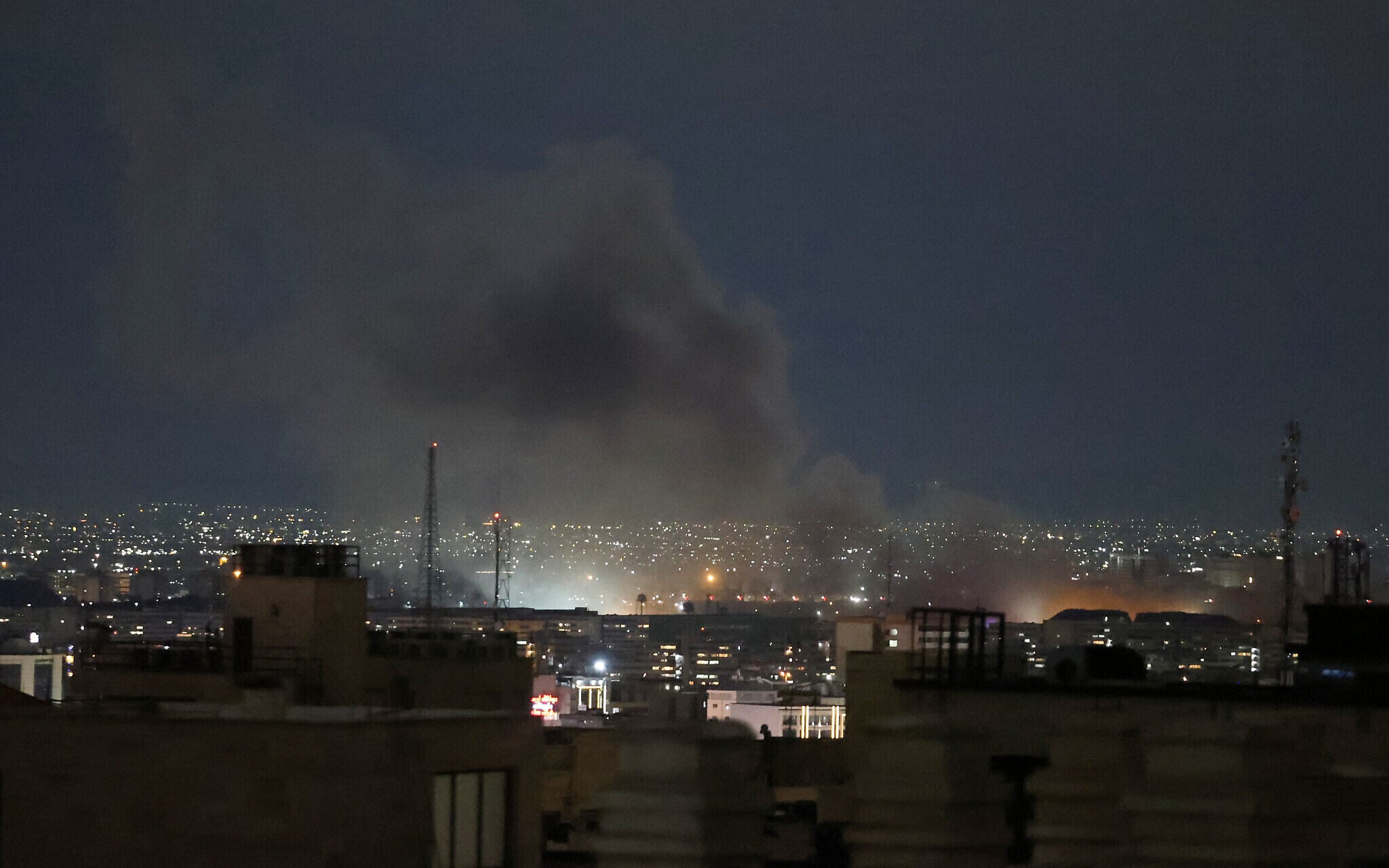
A plume of smoke rises from the site of a strike in Tehran early on March 28, 2026, amid the US-Israeli war with Iran. (ATTA KENARE / AFP)
Meanwhile, the regime continued its attacks on neighboring Arab states and Israel.
Two ballistic missile attacks targeting southern Israel after midnight set off warning sirens in the country, but no direct injuries were reported as a result of them. They came after the pro-Iran Houthi group in Yemen on Saturday joined the war, firing missiles and a drone at Israel for the first time since October 2025.
The IRGC said Sunday it had launched missile and drone strikes on aluminum plants in Bahrain and the UAE over the weekend, targeting what it described as industries linked to the US military.
The Guards said the strikes were retaliation for a US-Israeli attack on Iranian industrial infrastructure launched from bases in Gulf states.
Aluminium Bahrain, one of the world’s largest aluminum producers, said two employees were wounded in an Iranian strike targeting its facility on Saturday. The company, also known as Alba, said the workers suffered minor injuries.
Alba added that it was assessing the impact on operations and would provide updates when available. It gave no details on damage to the site.
Emirates Global Aluminium said Saturday that an Iranian attack inflicted significant damage on one of its sites in Abu Dhabi and wounded six employees, but that none of the injuries were life-threatening.
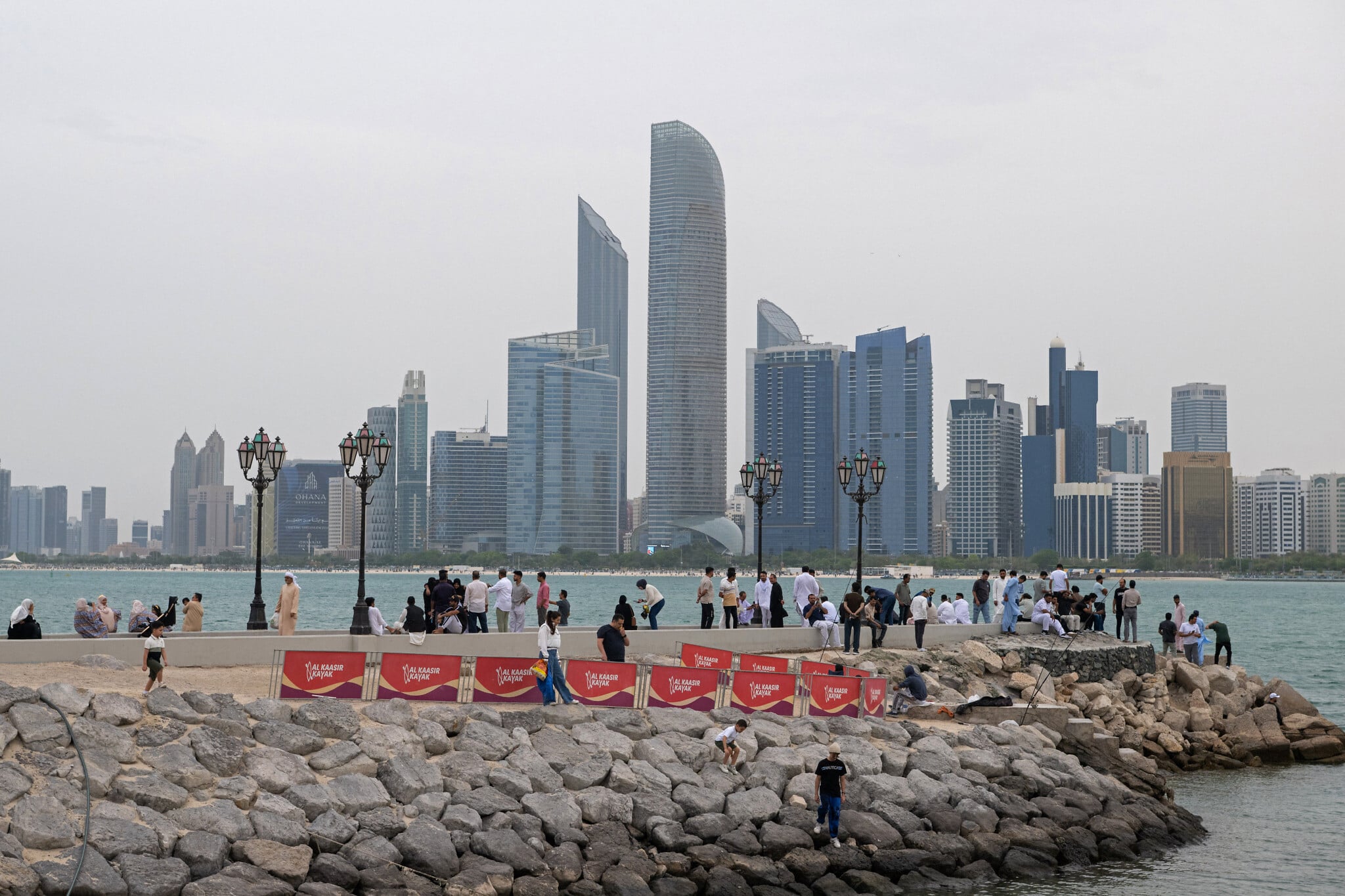
People sit along the corniche area on the occasion of Eid al-Fitr, marking the end of the holy month of Ramadan, in Abu Dhabi on March 20, 2026. (Ryan Lim / AFP)
Earlier in the day, the Emirati defense ministry said it had intercepted a drone-and-missile attack and that falling debris had sparked two fires in the Khalifa industrial zone on the emirate’s coast.
Five Indian nationals were injured, with “moderate to minor wounds,” authorities said, later reporting a third fire in which a Pakistani man was also injured. All three fires were brought under control, the ministry added.
Attacks by pro-Iran groups in Iraq and Syria were also reported.
Interceptions and drone activity were heard for hours over the weekend across Erbil, the capital of the semi-autonomous Kurdish region in northern Iraq, including drones shot down while attempting to target the US consulate and nearby bases.
On Saturday, the residence of Nechirvan Barzani, president of the semi-autonomous northern Kurdish region of Iraq, was targeted, causing damage but no casualties.
The US condemned what it termed “despicable terrorist attacks,” calling the attack on Barzani’s residence “a direct assault on Iraq’s sovereignty, stability and unity.”
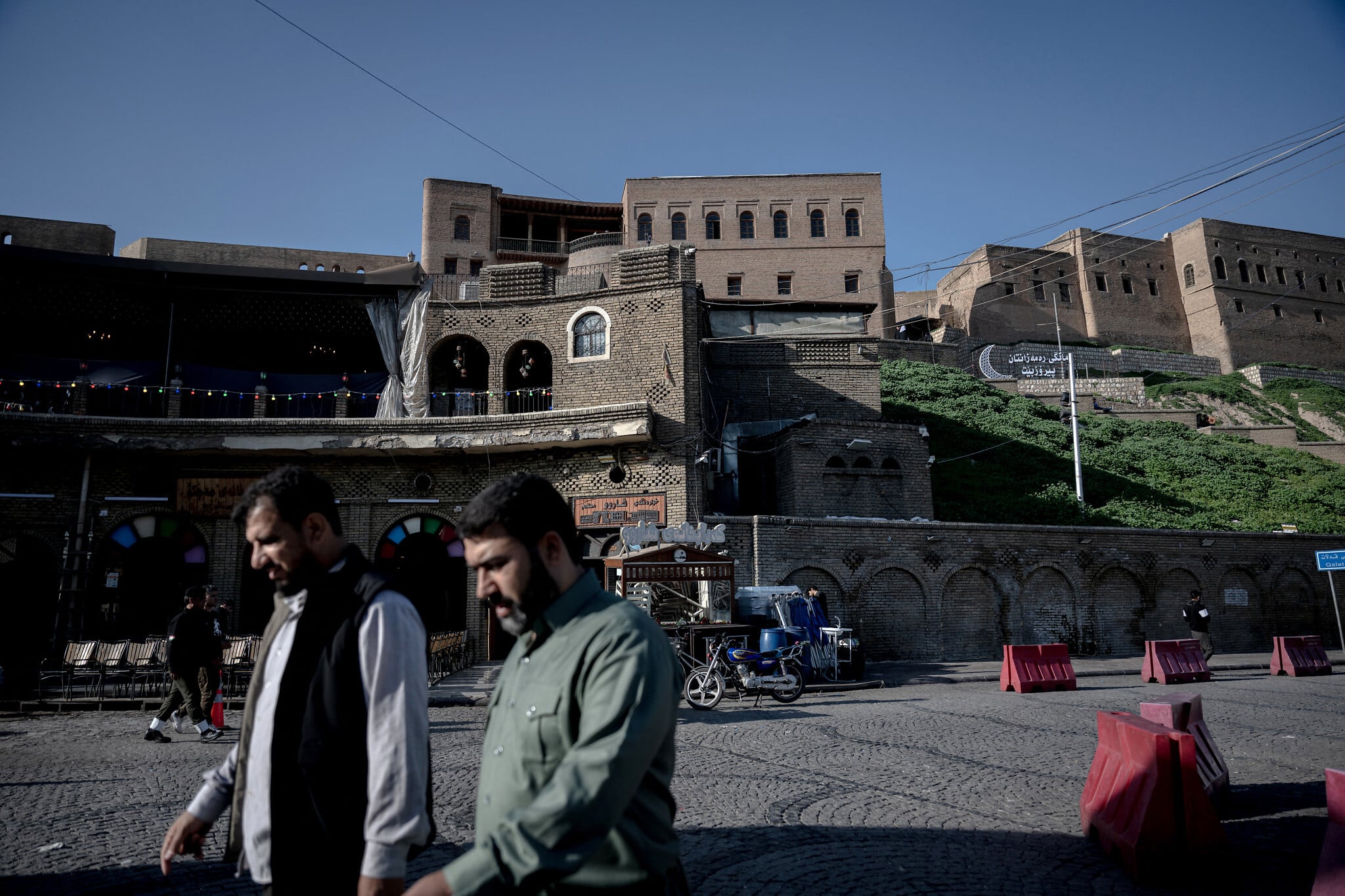
Iraqi Kurds walk near Citadel in Erbil, the capital of Iraq’s autonomous Kurdish region on March 18, 2026, ahead of the Eid al-Fitr celebrations. (Ozan KOSE / AFP)
Additionally, Syria foiled drone attacks launched from Iraqi territory that targeted its strategic Al-Tanf military base, Syria’s state news agency reported on Saturday.
Israel launched its campaign against Iran, alongside the US, to degrade the Iranian regime’s military capabilities, distance threats posed by Iran — including its nuclear and ballistic missile programs — and “create the conditions” for the Iranian people to topple the regime, the military and other Israeli leaders have said.
Since the war began on February 28, 16 Israeli civilians and foreign nationals have been killed in Israel in Iranian ballistic missile attacks, along with four Palestinians in the West Bank.
You appreciate our wartime journalism

You clearly find our careful reporting of the Iran war valuable, at a time when facts are often distorted and news coverage often lacks context.
Your support is essential to continue our work. We want to continue delivering the professional journalism you value, even as the demands on our newsroom have grown dramatically during this ongoing conflict.
So today, please consider joining our reader support group, The Times of Israel Community. For as little as $6 a month you’ll become our partners while enjoying The Times of Israel AD-FREE, as well as accessing exclusive content available only to Times of Israel Community members.
Thank you,
David Horovitz, Founding Editor of The Times of Israel