
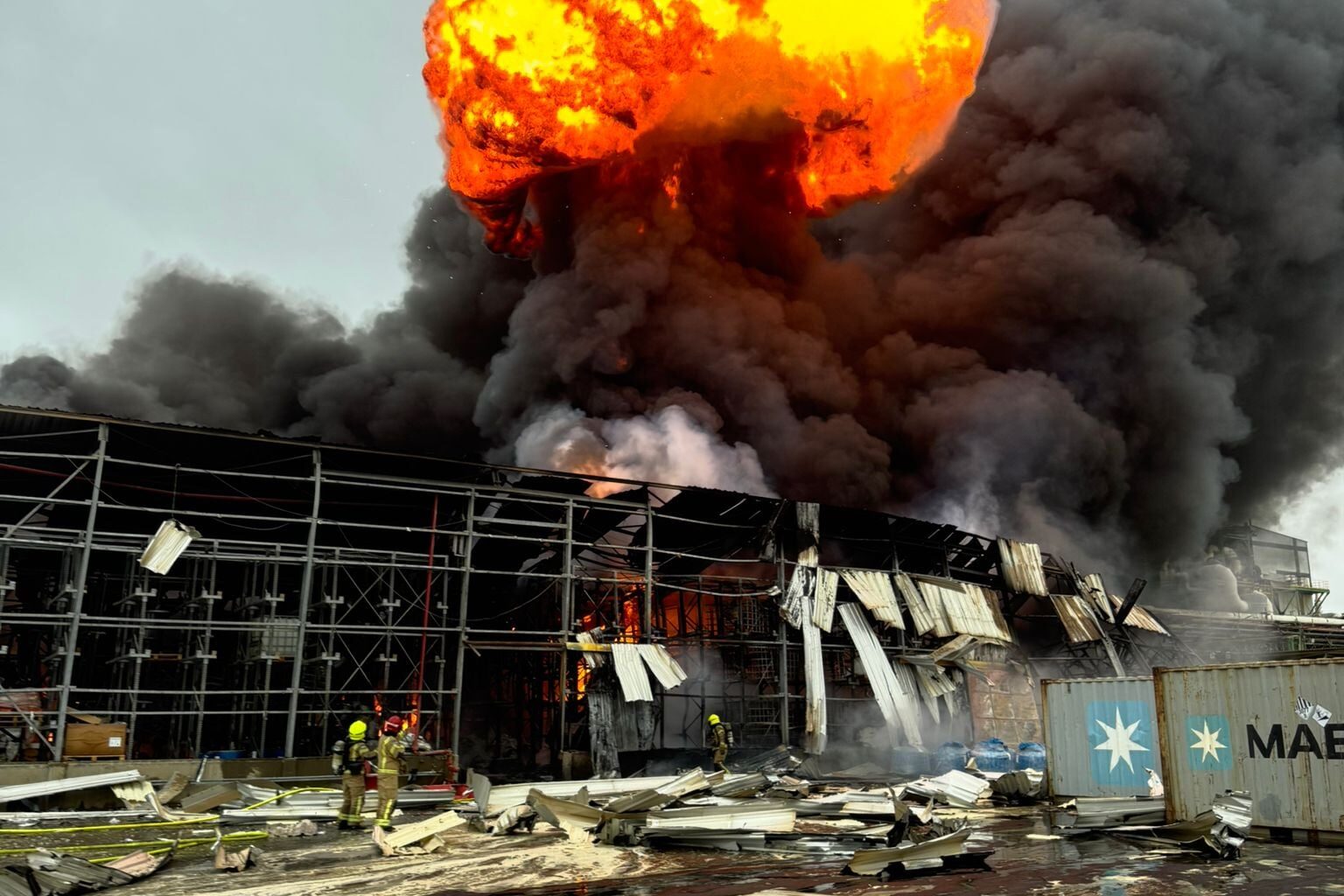
A “fragment” from a ballistic missile launched from Iran struck a chemical plant in Israel’s south on Sunday, the IDF said, causing no injuries but sparking a blaze and prompting concerns of a hazardous chemicals leak.
The impact and fire at an industrial zone came amid Iran’s sixth missile attack of the day. Further missile attacks followed, with one missile lightly injuring 11 people in the southern city of Beersheba.
The IDF Home Front Command issued a warning to civilians near the Neot Hovav industrial zone, south of Beersheba, to remain indoors due to concerns of a hazardous materials leak after the impact at a fertilizer factory and the major fire that followed.
After the fire was brought under control, the Environmental Protection Ministry said that there was no risk to the public.
Minister Idit Silman said that ministry professionals had carried out on-site measurements and monitoring, and that “in accordance with the findings of the updated tests, it was decided to open the roads and return activity to normal.”
Get The Times of Israel’s Daily Edition
by email and never miss our top stories
By signing up, you agree to the terms
Workers from the factory and adjacent plants who were hurried off to protected areas were allowed to leave those spaces.
According to the IDF, the missile did not directly hit the industrial zone, but a fragment struck the facility there, causing the large fire.
שברי יירוט נפלו במפעל באזור נאות חובב בשל ירי מאיראן.
שימוש לפי סעיף 27א’ לחוק זכויות יוצרים pic.twitter.com/NLyVWfvk7j
— הארץ חדשות (@haaretznewsvid) March 29, 2026
Home Front Command search-and-rescue forces were dispatched to the scene and operated alongside the fire service to extinguish the blaze, the army said. Fire and rescue teams said they worked to seal and contain damaged chemical storage units at the factory.
Deputy head of the fire service’s Southern District, Itzik Levy, said the containers held a pesticide.
ADAMA, a maker of active ingredients and crop protection materials, said its Makhteshim plant in southern Israel was the one that was hit. ADAMA, part of the Chinese-owned Syngenta Group, noted that the extent of the damage to the plant was not immediately clear.
Emergency services and police initially asked members of the public not to approach the area.
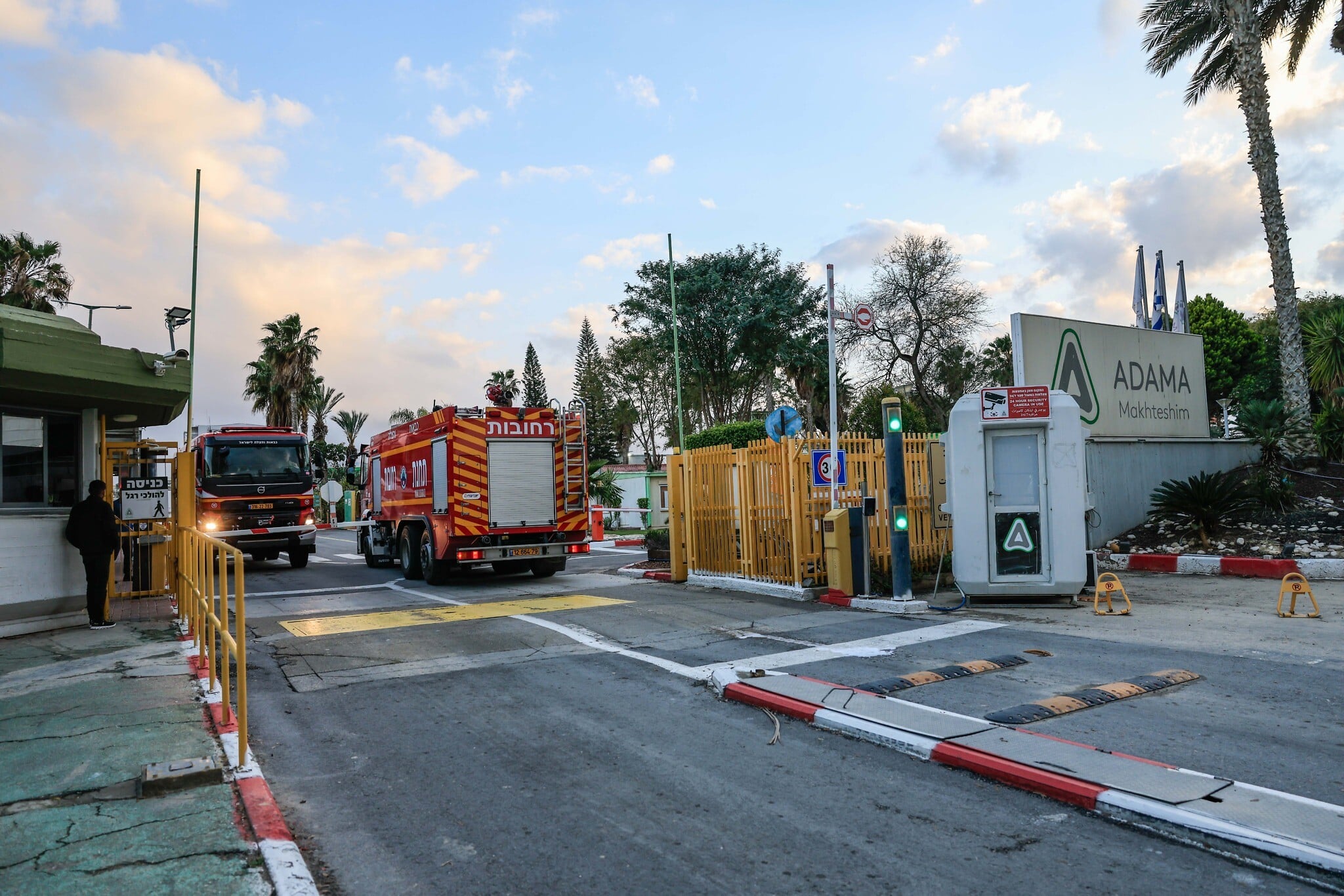
Fire trucks enter a factory in the Neot Hovav industrial zone in the Negev after an Iranian missile impacted and caused a blaze there, March 29, 2026. (Tsafrir Abayov/Flash90)
Not long after the factory was hit, another Iranian attack saw a missile hit an open area in the southern city of Beersheba. The blast shattered windows in nearby homes. Rescue services said some 100 homes suffered damage, some of them significant, leaving residents unable to stay in the buildings.
“There was a crazy explosion,” one local resident told The Times of Israel. “A few broken windows. But everything is ok.”
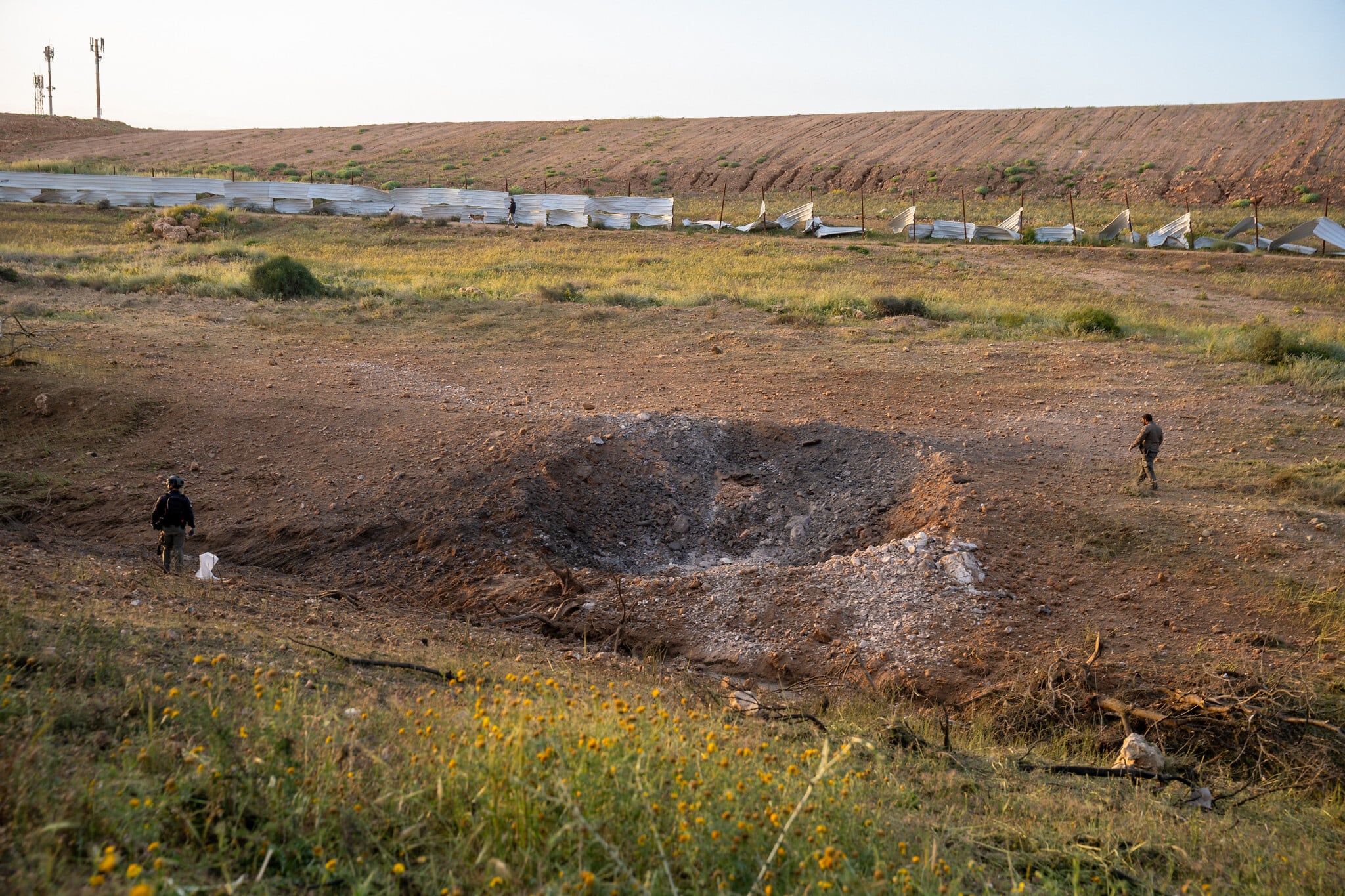
The site of an Iranian missile impact in an open area in Beersheba, March 29, 2026. (Emanuel Fabian/Times of Israel)
The Magen David Adom emergency service said 11 people were injured by “flying objects” caused by the missile’s shockwave.
MDA said it also treated 20 others suffering acute anxiety, and all 31 were taken to Soroka Medical Center.
An eighth missile attack from Iran, also aimed at the south, was intercepted.
Earlier in the day, a missile that triggered sirens in the Jerusalem area and central Israel was also intercepted, while another missile fired at the north was allowed to hit an open area, “according to protocol,” the military said.
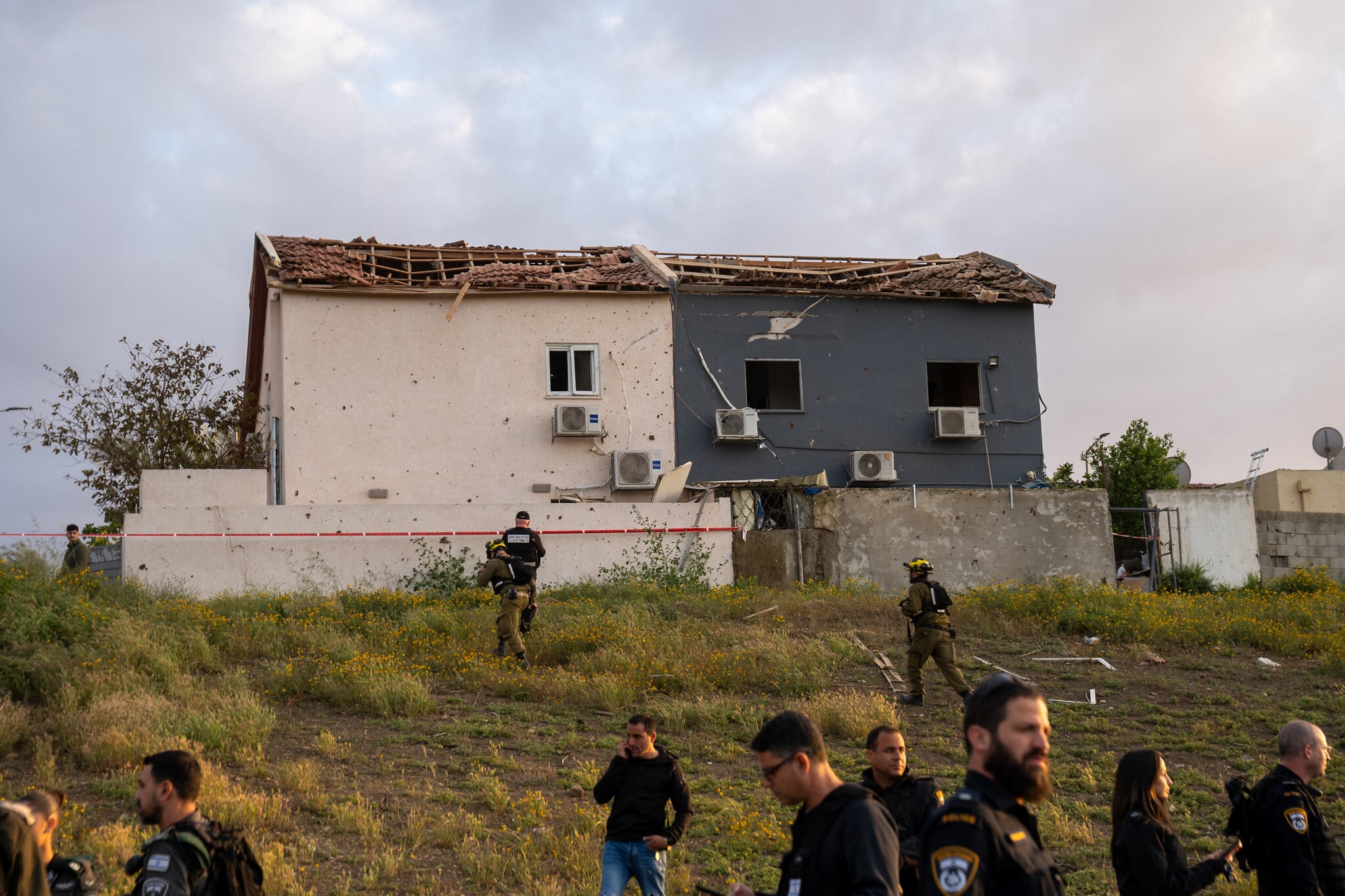
Damage to nearby buildings caused by an Iranian ballistic missile that hit an open area in the southern city of Beersheba, March 29, 2026. (Emanuel Fabian/Times of Israel)
IDF says it hit 140 Iranian missile targets
In an afternoon update, the military said the Israeli Air Force struck over 140 targets of Iran’s ballistic missile array in western and central Iran in the past day.
The IDF said the strikes hit sites where Iran stored and launched ballistic missiles, alongside air defense systems.
As Iran fired salvos of missiles at southern, central, and northern areas, its Lebanese ally terror group Hezbollah continued to harass the north with rockets and drones.
Several rockets were fired from Lebanon at the north concurrently with the Iranian attacks, with the IDF reporting that some were intercepted and others hit open areas. The incessant rocket fire from Lebanon, which has come at a higher rate than the Iranian attacks, kept sirens wailing repeatedly throughout the day. Those closest to the border have little more than 10 seconds’ warning before missiles hit.
The IDF continued carrying out strikes targeting Hezbollah in Lebanon.
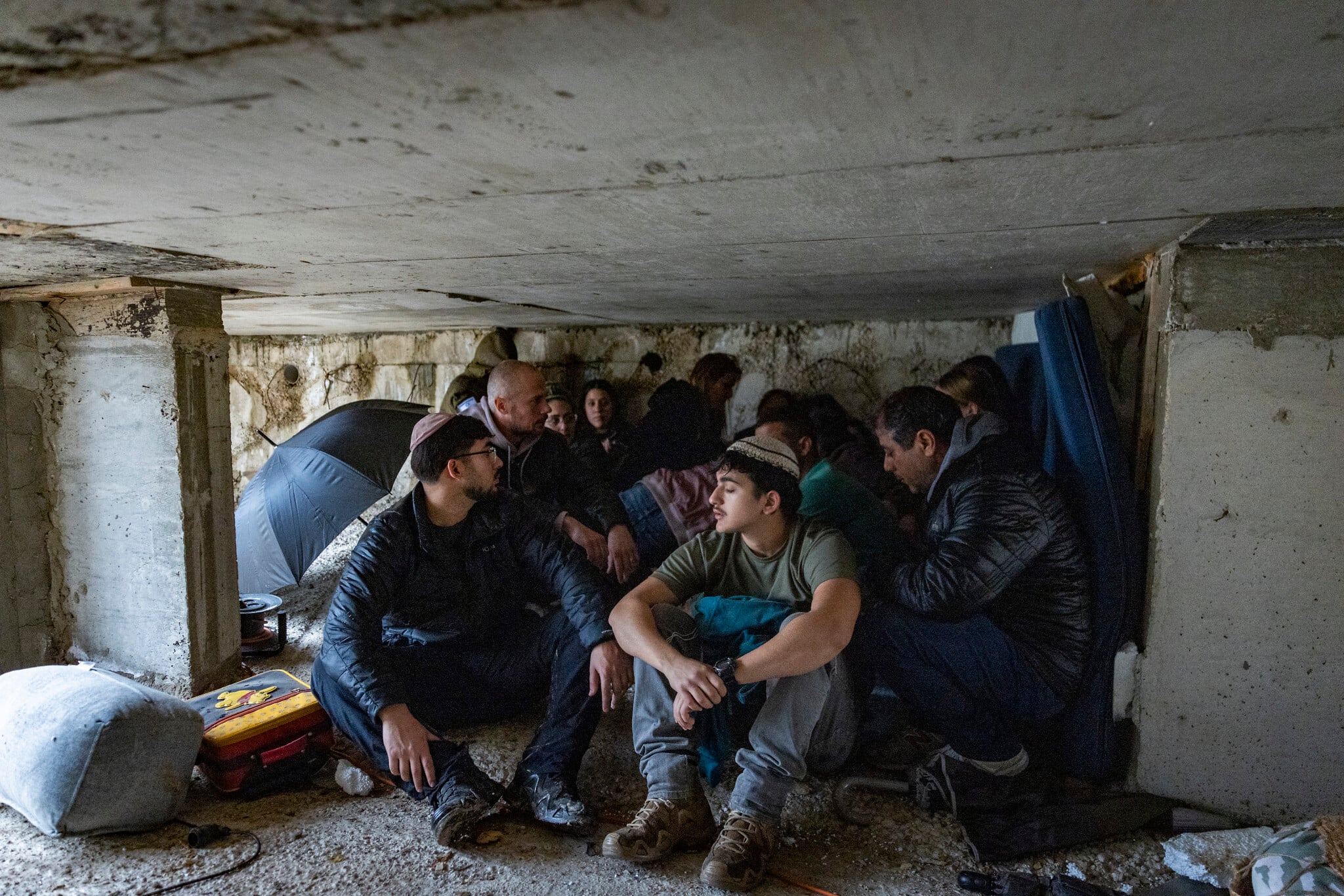
People take cover as a siren warns of incoming missiles near the city of Beit Shemesh, March 29, 2026. (Chaim Goldberg/Flash90)
Israel and the US launched their campaign against Iran on February 28 in a bid to destabilize the regime and destroy its nuclear and ballistic missile capacities. Iran has responded with missile and drone strikes across the region, and its proxies in Iraq and Lebanon have also carried out attacks, with Israel launching massive airstrikes in Lebanon in response to the Hezbollah terror group’s rocket barrages.
On Saturday, for the first time since the start of the war, the Houthi rebels in Yemen also fired a ballistic missile at Israel, as well as a drone.
France condemned the two attacks by Yemen’s Houthi rebels on Israel, accusing them on Sunday of escalating tension in the Middle East by entering the regional war.
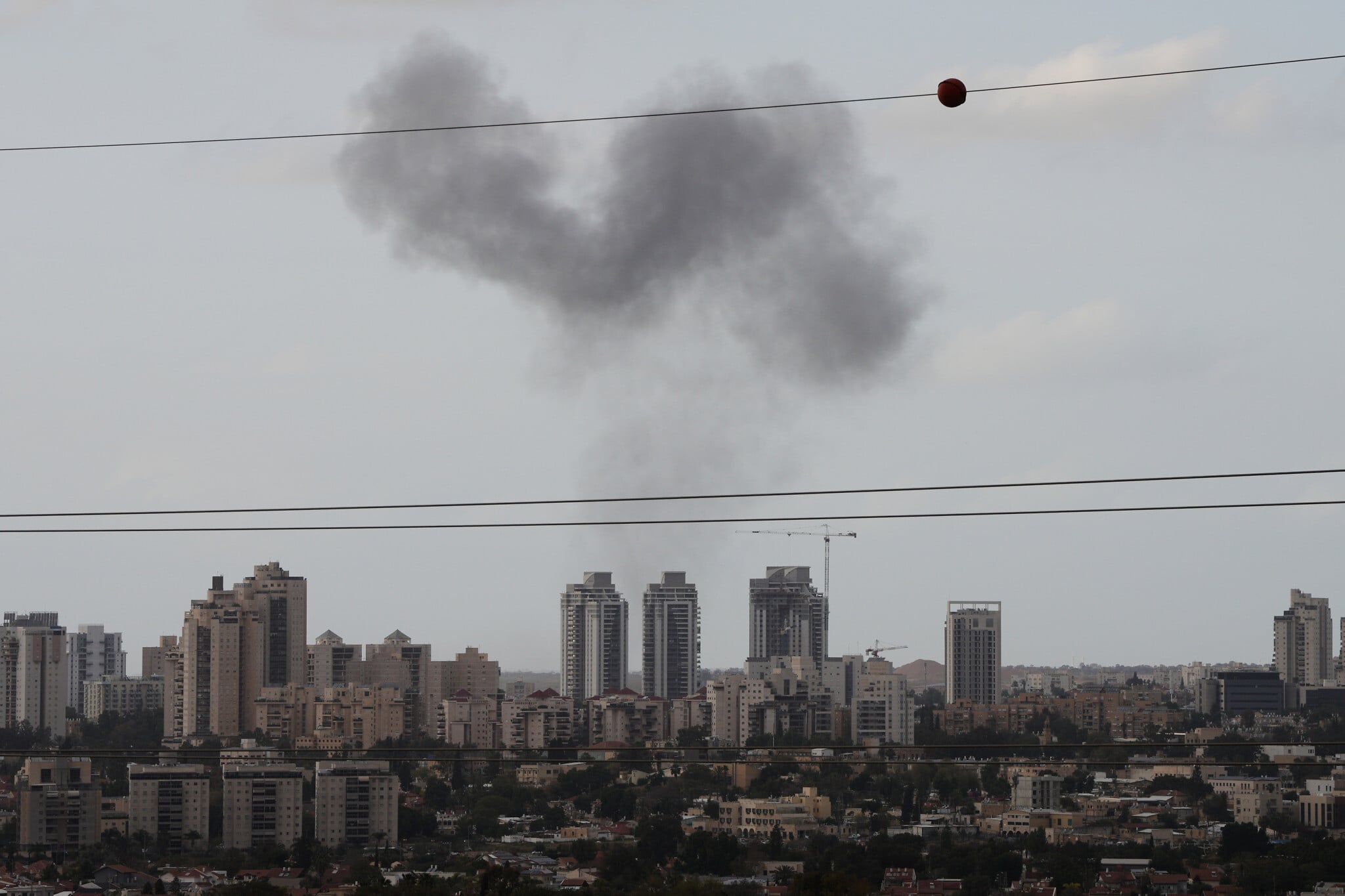
Smoke billows in Beersheba, southern Israel, after it was struck by an Iranian missile, March 29, 2026. (Maya Levin/AP)
A Houthi spokesman said the day before that the Iran-backed group had fired missiles and drones towards “several vital and military sites” in Israel.
“The Houthis should abstain from all attacks,” French foreign ministry spokesman Pascal Confavreux said. He accused them of being “irresponsible.”
He said everything should be done “to avoid an even greater escalation of the conflict,” which has killed thousands across the region and sent energy markets into a tailspin.
You appreciate our wartime journalism

You clearly find our careful reporting of the Iran war valuable, at a time when facts are often distorted and news coverage often lacks context.
Your support is essential to continue our work. We want to continue delivering the professional journalism you value, even as the demands on our newsroom have grown dramatically during this ongoing conflict.
So today, please consider joining our reader support group, The Times of Israel Community. For as little as $6 a month you’ll become our partners while enjoying The Times of Israel AD-FREE, as well as accessing exclusive content available only to Times of Israel Community members.
Thank you,
David Horovitz, Founding Editor of The Times of Israel