
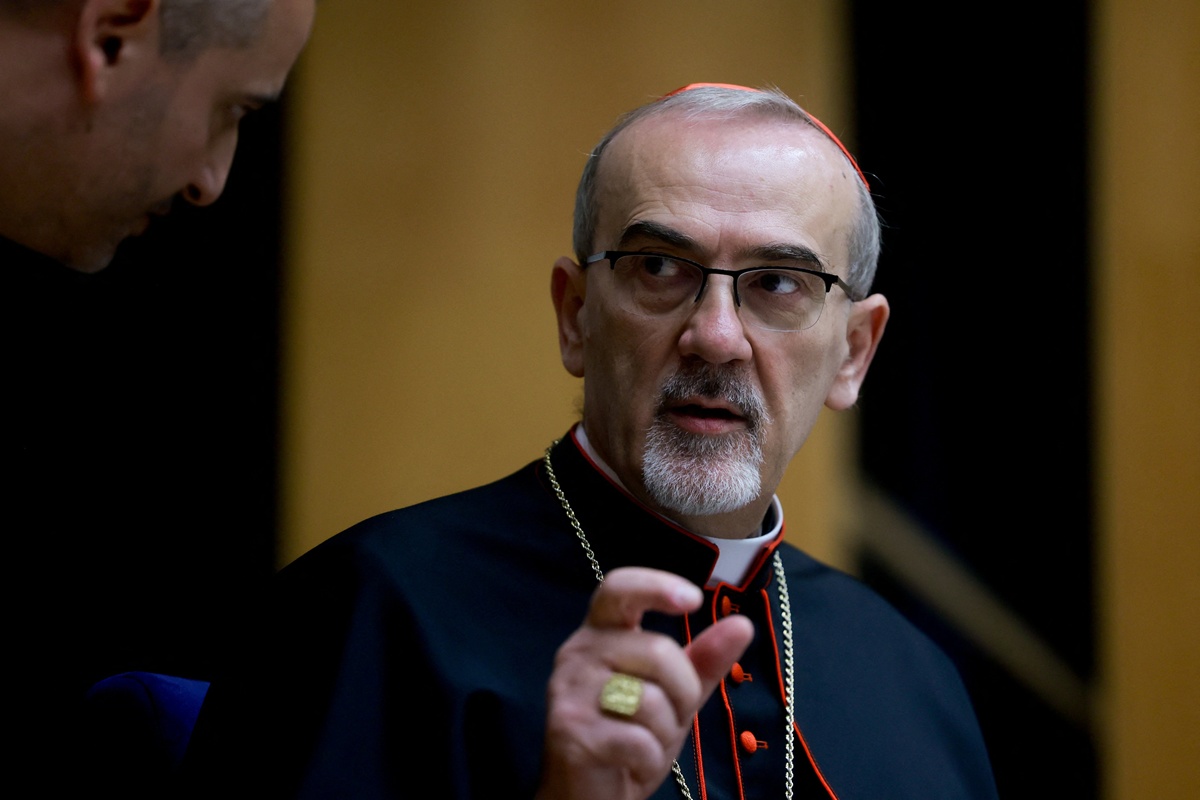
Pope Leo opened Holy Week in Rome on Palm Sunday, March 29, by making a passionate appeal for peace as the world is torn by war, especially in the Middle East and Ukraine, but also in Myanmar and the Democratic Republic of the Congo. He said: “Christ, King of Peace, cries out again from his cross: ‘God is love! Have mercy! Lay down your weapons! Remember that you are brothers and sisters!’”
At the end of the long celebration, Pope Leo prayed especially for the Christians in the Middle East, “who are suffering the consequences of a brutal conflict and, in many cases, are unable to observe fully the liturgies of these holy days.” His words took on added meaning because news had just arrived at the Vatican that, for the first time in centuries, the Christian leaders in Jerusalem, including Cardinal Pierbattista Pizzaballa, the Latin Patriarch, were prevented by Israeli police from entering the Church of the Holy Sepulcher in Jerusalem to celebrate the Palm Sunday Mass.
The news was communicated in a statement issued by the Latin Patriarch of Jerusalem and the Franciscan priest who is the official guardian of the church of the Holy Sepulcher, which covers the sites of the crucifixion, burial and resurrection of Jesus and is the most revered location in Christianity.
Pope Leo: ‘No one can use’ Jesus ‘to justify war’
Celebrating his first Holy Week as pope, Leo began the traditional liturgy that commemorates the final events of Jesus’ life on earth, starting with his entry to Jerusalem on Palm Sunday. He did so by blessing the palm branches at the obelisk in the center of St. Peter’s Square and then joining in the procession of cardinals, bishops, men and women religious and lay people, all carrying palm branches, to the altar on the steps in front of St. Peter’s Basilica. Tens of thousands of people were present and participated in the ceremony, while believers worldwide followed along on television or via livestream.
In his homily, the first Augustinian pope told them: “As Jesus walks the Way of the Cross, we place ourselves behind him, following in his footsteps. As we walk with him, we contemplate his passion for the sake of humanity, his broken heart, and his life as a gift of love.”
“As we set our gaze upon him who was crucified for us, we can see a crucified humanity,” he said. “In his wounds, we see the hurts of so many women and men today. In his last cry to the Father, we hear the weeping of those who are crushed, who have no hope, who are sick and who are alone. Above all, we hear the painful groans of all those who are oppressed by violence and are victims of war.”
He reminded Christians and people worldwide that “our God” is “Jesus, the King of Peace, who rejects war, whom no one can use to justify war.” He told them, Jesus “does not listen to the prayers of those who wage war, but rejects them, saying: ‘Even though you make many prayers, I will not listen: your hands are full of blood’” (Is 1:15).
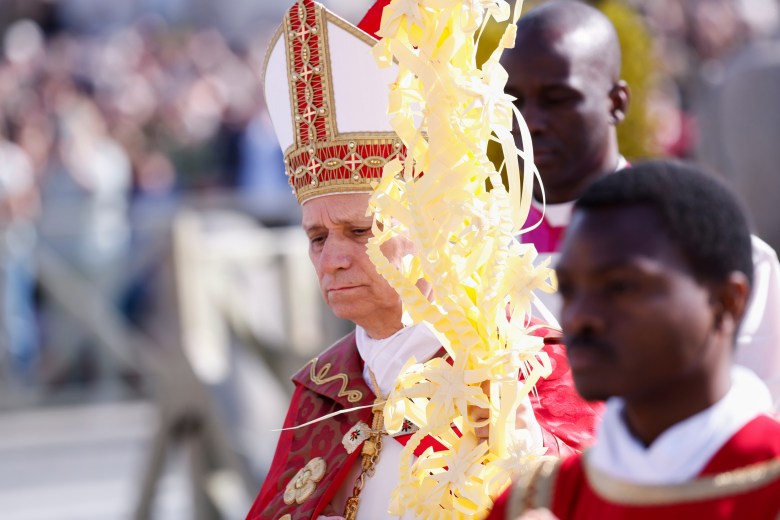 Pope Leo XIV presides over Palm Sunday Mass in St. Peter’s Square at the Vatican, Sunday, March 29, 2026. (Remo Casilli/Pool Photo via AP)
His words took on particular significance as some political and religious leaders, including U.S. Secretary of War Pete Hegseth and leaders in Israel, Iran and Russia, have invoked God’s name when speaking about wars. Last week, Mr. Hegseth led a Christian worship service at the Pentagon, where he prayed for “overwhelming violence of action against those who deserve no mercy.”
Again and again in his homily today, Pope Leo emphasized that Jesus is “King of Peace” and said Jesus’ desire “is to bring the world into the Father’s arms, tearing down every barrier that separates us from God and from our neighbor.” He recalled, “When one of his disciples drew his sword to defend him and struck the high priest’s servant, Jesus immediately stopped him, saying: ‘Put your sword back into its place, for all who take the sword will perish by the sword.’”
He concluded his homily by entrusting his appeal for peace “to Mary Most Holy, who stands beneath the cross of her Son and weeps also at the feet of those who are crucified today.”
At the end of the celebration, Pope Leo drew attention to the increasingly dramatic situation of Christians in the Middle East. The pope said:
Our prayers are more than ever with the Christians of the Middle East, who are suffering the consequences of a brutal conflict and, in many cases, are unable to observe fully the liturgies of these holy days. Just as the church contemplates the mystery of the Lord’s Passion, we cannot forget those who today are truly sharing in his suffering. Their ordeal challenges all our consciences. Let us raise our prayer to the Prince of Peace that he may sustain the peoples wounded by war and open concrete paths to reconciliation and peace.
Leaders’ statements on the Jerusalem incident
Describing the incident in which Cardinal Pizzaballa and the Custos of the Holy Land were denied access to the Church of the Holy Sepulchre as a “grave precedent,” the Latin Patriarchate of Jerusalem and the Custody of the Holy Land issued a joint statement, the full text of which is quoted here:
This morning, the Israeli Police prevented the Latin Patriarch of Jerusalem, His Beatitude Cardinal Pierbattista Pizzaballa, Head of the Catholic Church in the Holy Land, together with the Custos of the Holy Land, the Most Reverend Fr. Francesco Ielpo, OFM, the official Guardian of the Church of the Holy Sepulcher, from entering the Church of the Holy Sepulcher in Jerusalem, as they made their way to celebrate the Palm Sunday Mass.
The two were stopped en route, while proceeding privately and without any characteristics of a procession or ceremonial act, and were compelled to turn back. As a result, and for the first time in centuries, the Heads of the Church were prevented from celebrating the Palm Sunday Mass at the Church of the Holy Sepulcher.
This incident is a grave precedent, and disregards the sensibilities of billions of people around the world who, during this week, look to Jerusalem.
The Heads of the Churches have acted with full responsibility and, since the outset of the war, have complied with all imposed restrictions: public gatherings were cancelled, attendance was prohibited, and arrangements were made to broadcast the celebrations to hundreds of millions of faithful worldwide, who, during these days of Easter, turn their eyes to Jerusalem and to the Church of the Holy Sepulcher.
Preventing the entry of the Cardinal and the Custos, who bear the highest ecclesiastical responsibility for the Catholic Church and the Holy Places, constitutes a manifestly unreasonable and grossly disproportionate measure.
This hasty and fundamentally flawed decision, tainted by improper considerations, represents an extreme departure from basic principles of reasonableness, freedom of worship, and respect for the Status Quo.
The Latin Patriarchate of Jerusalem and the Custody of the Holy Land express their profound sorrow to the Christian faithful in the Holy Land and throughout the world that prayer on one of the most sacred days of the Christian calendar has thus been prevented.
The Italian foreign minister, Antonio Tajani, has made a formal protest on behalf of the Italian government to the Israeli authorities and has summoned the Israeli ambassador, demanding clarifications.
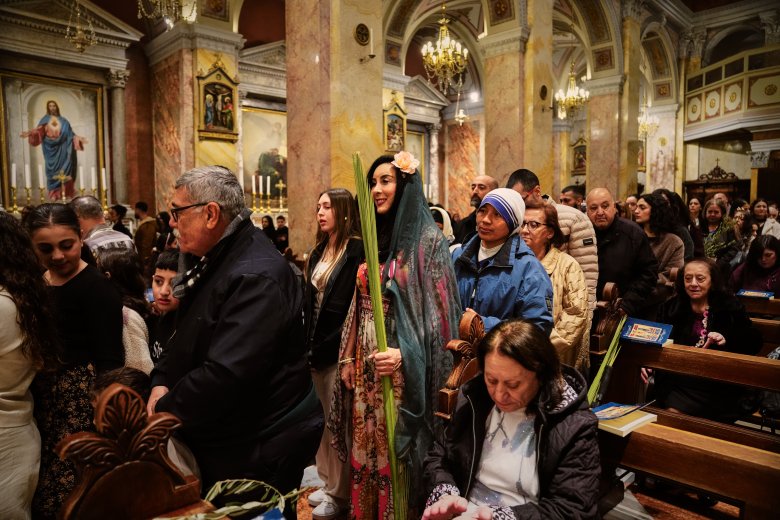 Catholic faithfuls attend a Palm Sunday mass at the Monastery of Saint Saviour in Jerusalem’s Old City Sunday, March 29, 2026. (AP Photo/Mahmoud Illean)
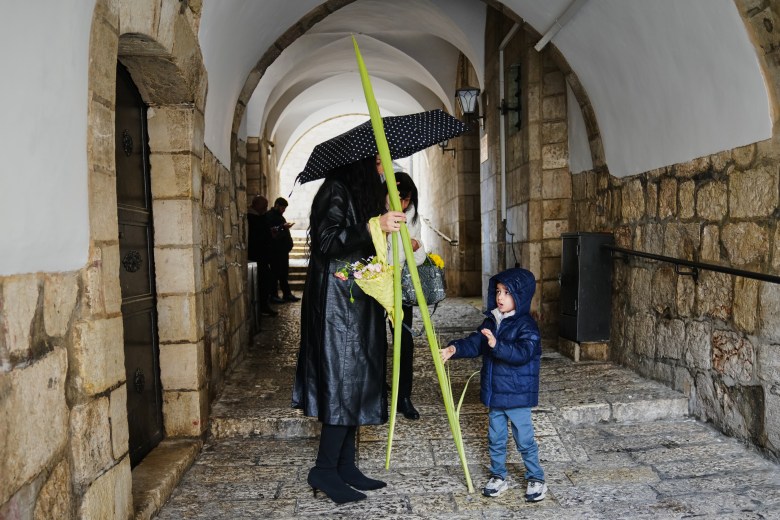 Christians walk with palm branches during Palm Sunday in Jerusalem’s Old City, Sunday, March 29, 2026. (AP Photo/Mahmoud Illean)
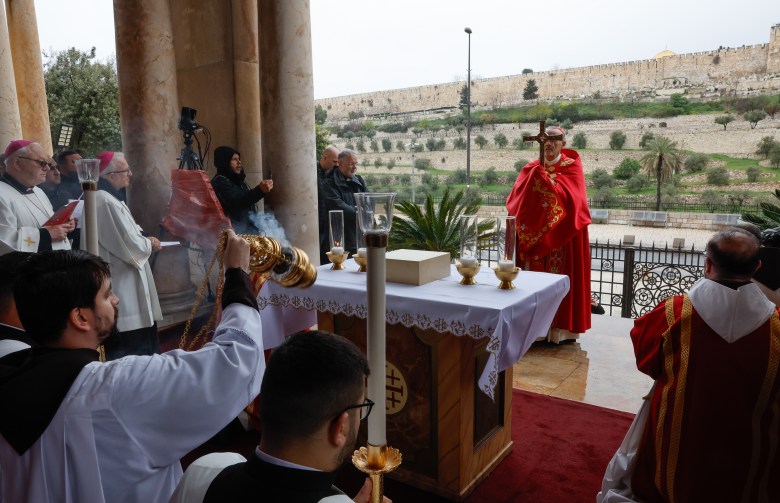 Cardinal Pierbattista Pizzaballa, the Latin Patriarch of Jerusalem, holds a prayer service to mark Palm Sunday in Jerusalem, Sunday, March 29, 2026. (Ammar Awad/Pool Photo via AP)
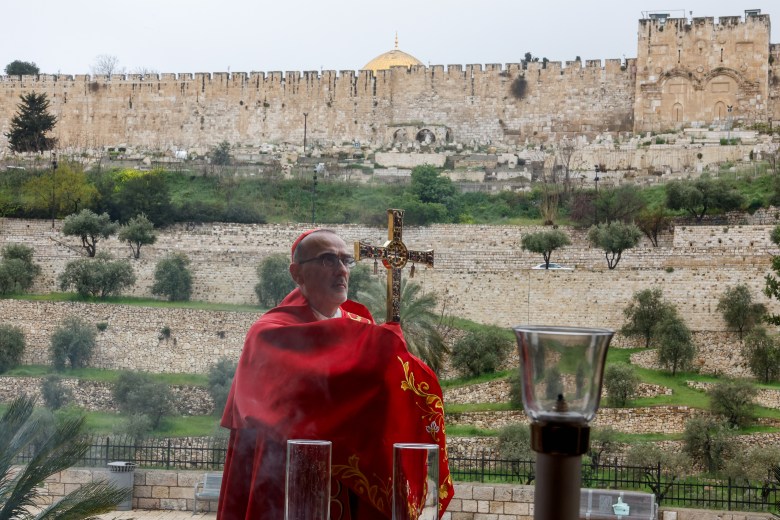 Cardinal Pierbattista Pizzaballa, the Latin Patriarch of Jerusalem, holds a prayer service to mark Palm Sunday in Jerusalem, Sunday, March 29, 2026. (Ammar Awad/Pool Photo via AP)
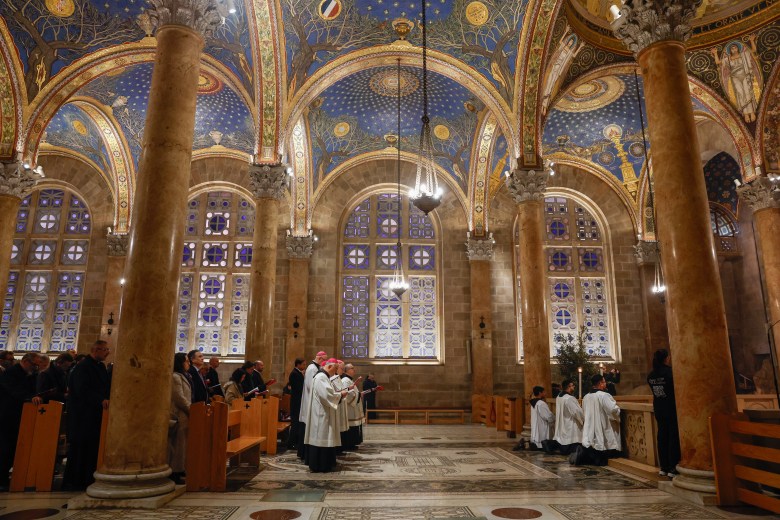 Faithful attend a prayer service in the Church of All Nations, held by Cardinal Pierbattista Pizzaballa, the Latin Patriarch of Jerusalem, to mark Palm Sunday in Jerusalem, Sunday, March 29, 2026. (Ammar Awad/Pool Photo via AP)
According to ANSA, the Italian news agency, the Israeli ambassador to Italy, Jonathan Peled, said Cardinal Pizzaballa was informed of the ban, since it is a conflict zone. Ambassador Peled said: “We understand that today is a significant day for Catholics and we had no intention of offending Christian believers around the world, but we must understand that we are under rocket attacks. The entire city of Jerusalem has been closed to Christians, Muslims, and even Jews for a month. The missiles have hit the entire city, even the Holy Sepulcher,” Peled continued. “Right as we speak, rockets and missiles are hitting Jerusalem, ten million Israelis are in shelters, and so we have to understand that this is a conflict zone.”
Israeli President Isaac Herzog stated this morning that he had spoken by phone with Cardinal Pizzaballa:
I just called the Latin Patriarch of Jerusalem, His Beatitude Cardinal Pierbattista Pizzaballa, to express my great sorrow over this morning’s unfortunate incident in the Old City of Jerusalem, in which Cardinal Pizzaballa and the Custos of the Holy Land, the Most Reverend Fr. Francesco Ielpo, were prevented from entering the Church of the Holy Sepulcher for prayers amid the ongoing security situation.
I clarified that the incident stemmed from security concerns due to the continuous threat of missile attacks from the Iranian terror regime against the civilian population in Israel, following previous incidents in which Iranian missiles fell in the area of the Old City of Jerusalem in recent days.
I reaffirmed the State of Israel’s unwavering commitment to freedom of religion for all faiths and to upholding the status quo at the holy sites of Jerusalem.
U.S. Ambassador to Israel Mike Huckabee also released a statement on X, saying, “Today’s action by Israeli police, aimed at preventing Latin Patriarch Pizzaballa and three other priests from entering the Church to impart a blessing on Palm Sunday, constitutes an unfortunate incident that is already having serious repercussions around the world. The fact that the Patriarch was denied access for a private ceremony is difficult to understand or justify.”
Related