
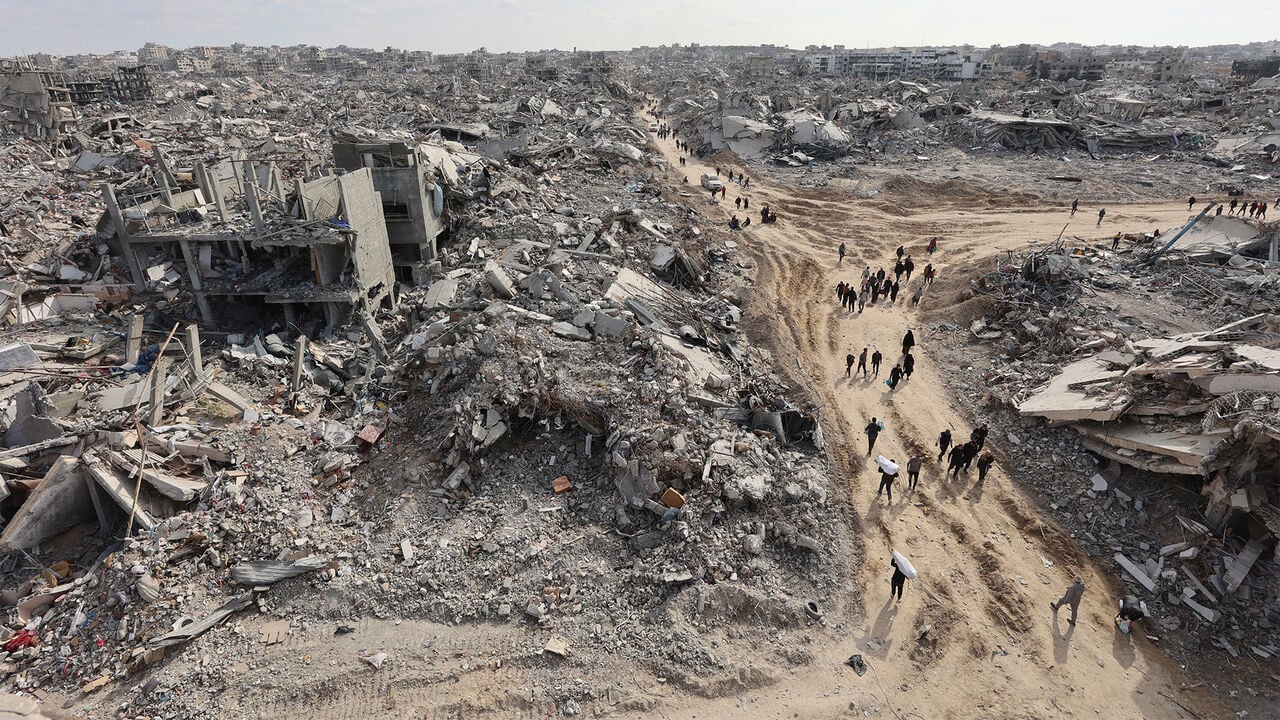
From above, much of Gaza appears flattened. But the full scale of the destruction and the number of people killed remain uncertain. Daily death tolls are issued by local authorities run by Hamas, the Islamist group that still controls parts of the strip, but many doubt their accuracy. Foreign journalists are barred unless embedded with Israeli forces. In the absence of access, independent researchers have turned to satellite images, surveys and public records to estimate what has been lost. Their findings suggest the toll may be even greater than suggested by official reports.
Satellite images of Rafah in July 2025 (top) and June 2023 (bottom)
Image: PlanetLab
The physical damage has been assessed both by what has been destroyed and by the rubble that remains. The first method tracks changes to building outlines in satellite images over time. Using this method, UNOSAT, a UN agency, identified damage to more than 190,000 buildings by early April—roughly 70% of Gaza’s pre-war structures. Of these, some 102,000 appear to have been completely destroyed. The World Bank reckons that translates to roughly 300,000 homes lost, including 77% of all apartment buildings.
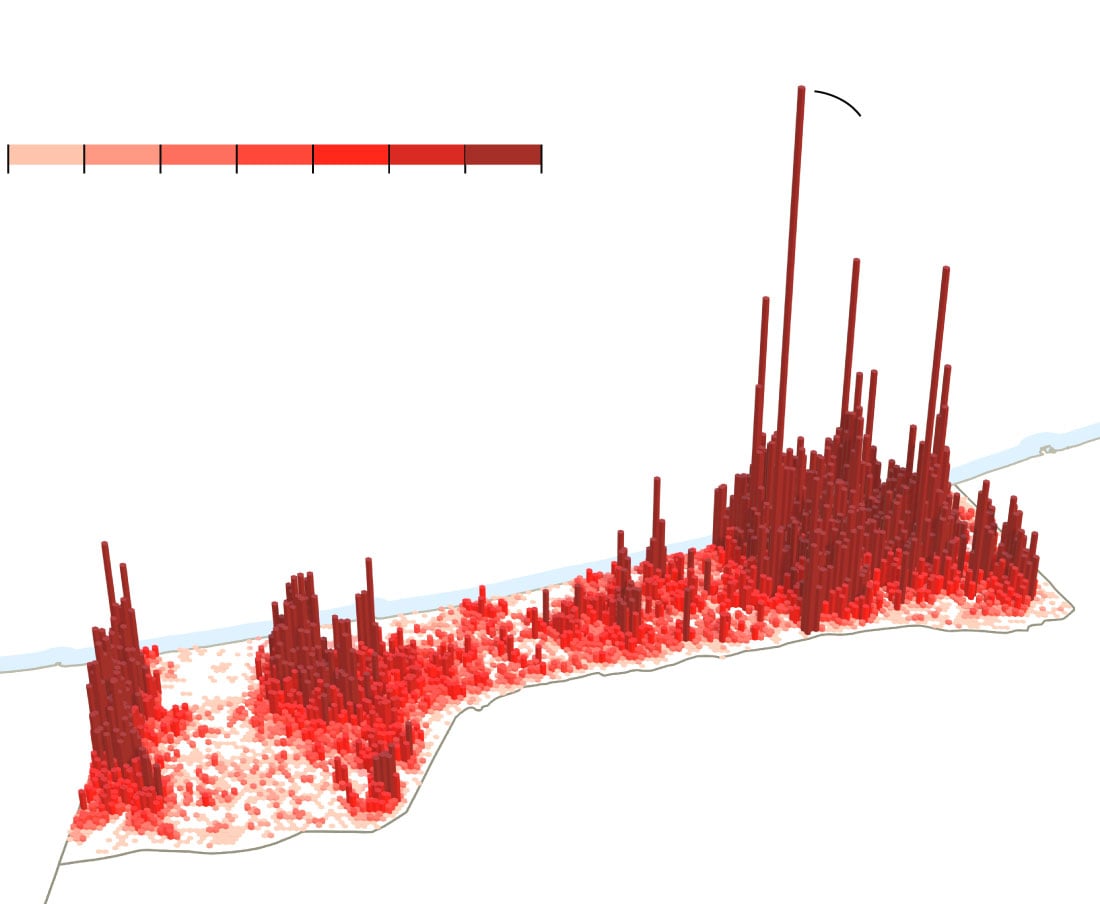
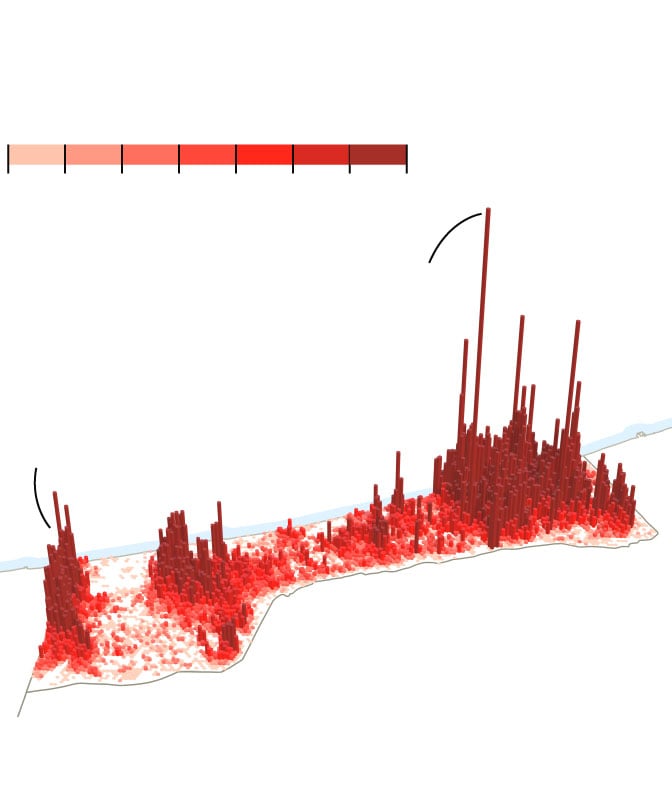
The second approach models how much debris a building of a given size would leave behind if destroyed. The most recent analysis by UN Habitat, another agency, estimated that 53.5m tonnes of rubble now lie across the strip, a 133% increase in 15 months.
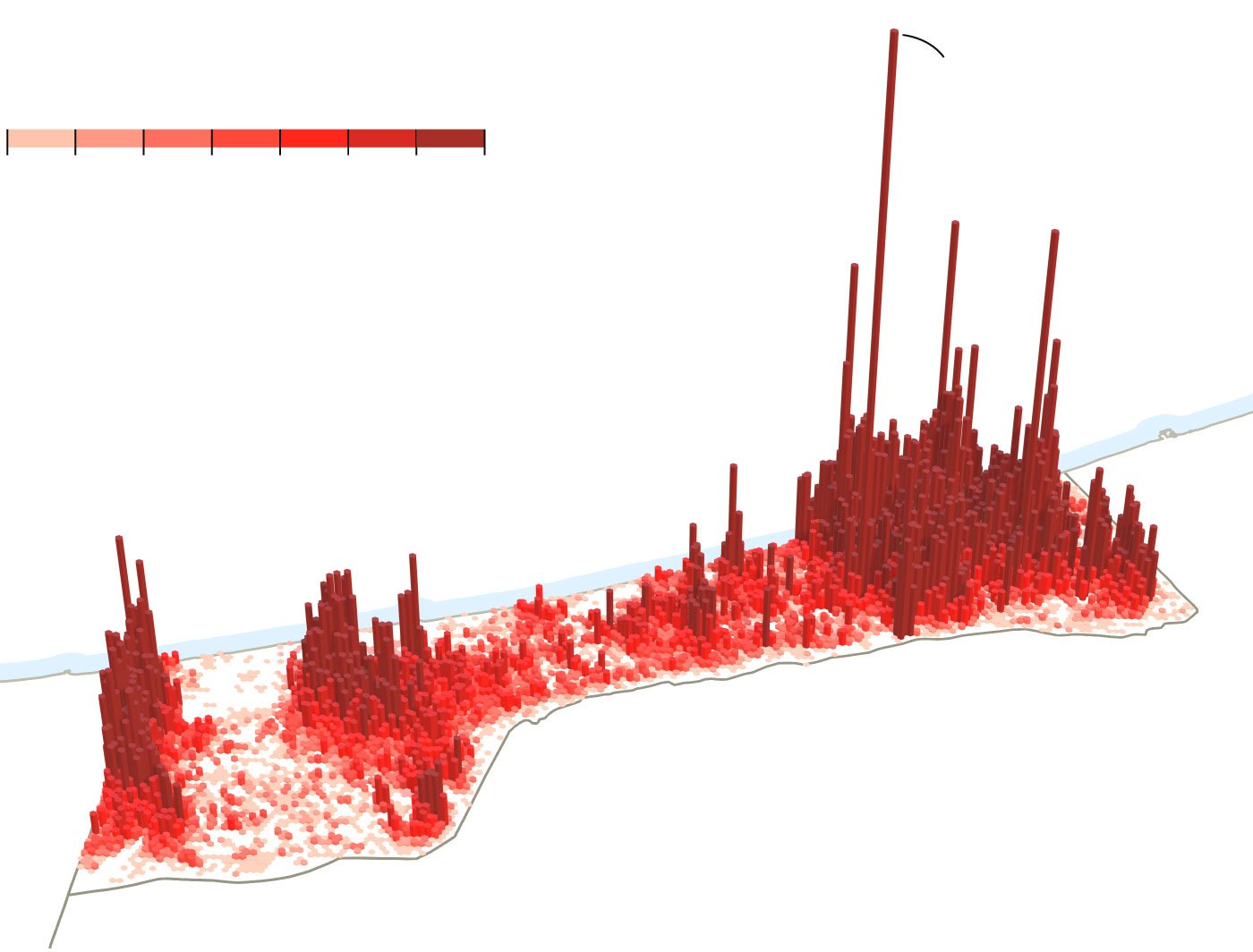
Gaza, estimated debris, ’000 tonnes
April 2025
Source: UN Environment Programme
Gaza, estimated debris, ’000 tonnes
April 2025
Source: UN Environment Programme
Gaza, estimated debris, ’000 tonnes
April 2025
Source: UN Environment Programme
That has left few havens. Before the war, Gaza’s 2m residents, half of them children, lived in 365 square kilometres—a population density similar to Madrid’s. But by July 30th, Israeli militarised zones and displacement had pushed the population into just 12.7% of the strip, where many now live in tents. That may be one of the most densely packed places on Earth.
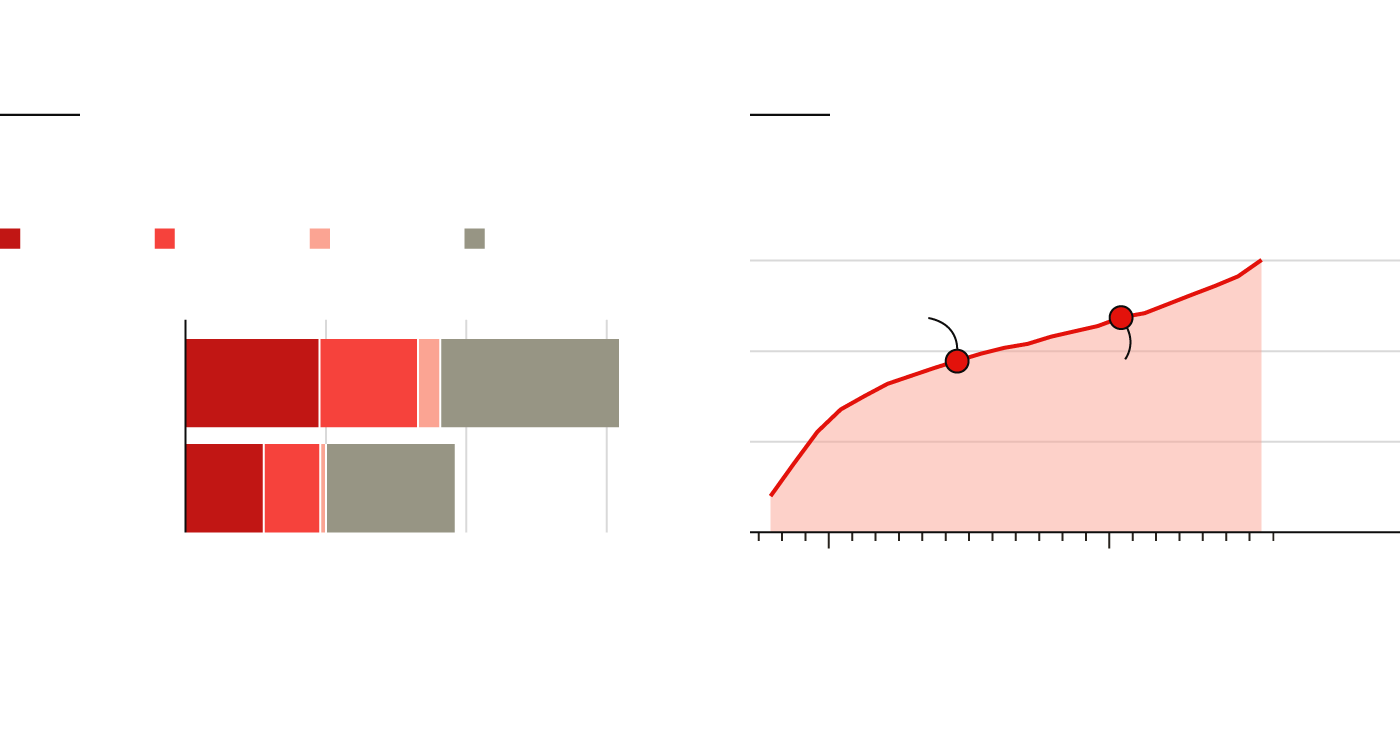
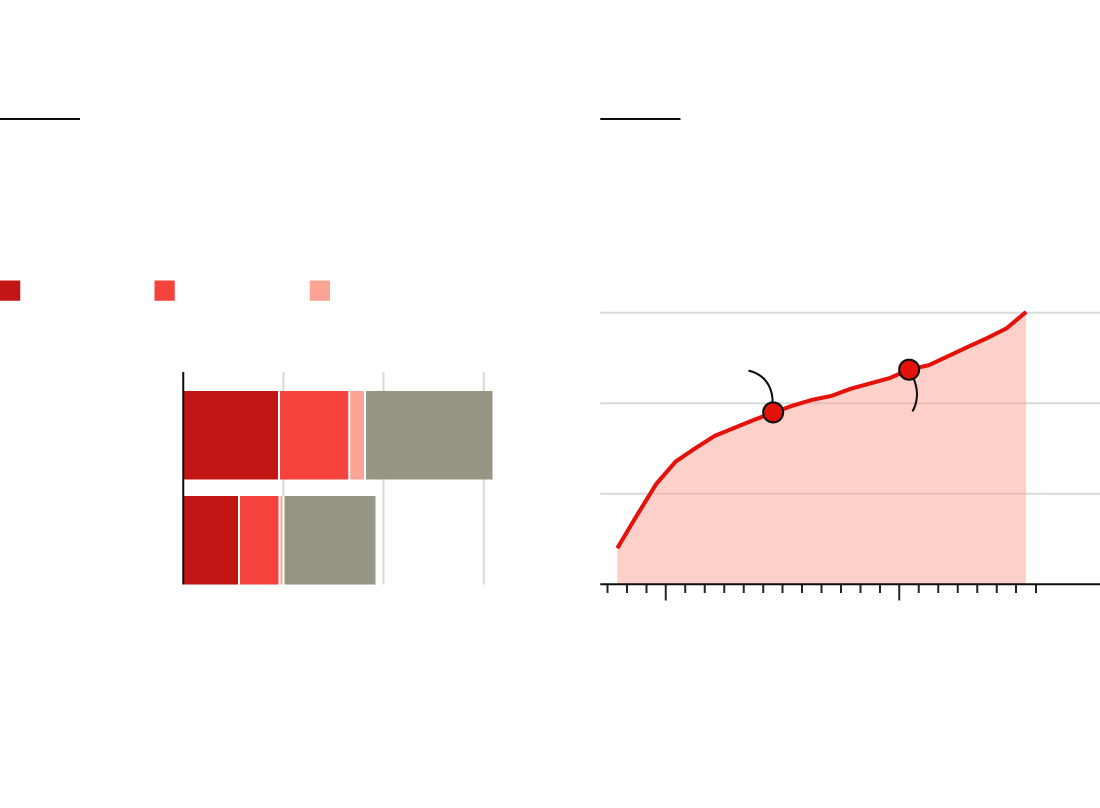
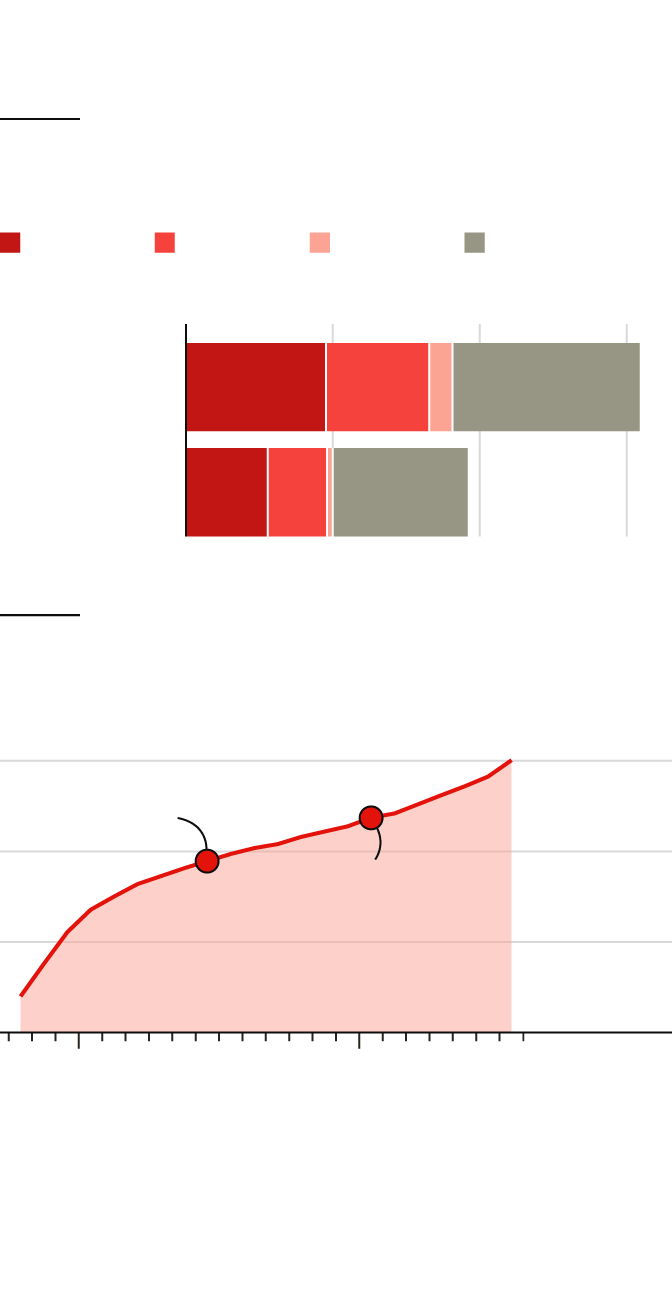
The collapse of medical care, sanitation and food supplies has caused thousands of deaths not directly tied to bombs or bullets. A study by Michael Spagat, of Royal Holloway University of London, and others estimated that by January 5th between 4,500 and 12,500 people had died from indirect causes. The same study put the number of violent deaths at roughly 60,000-90,000—more than half of them women, children, or men over the age of 65 (see chart).
*16- to 64-years-old
Sources: “Violent and non-violent death tolls for the Gaza war:
new primary evidence”,
M. Spagat et al., June 2025; Gaza Ministry of Health
*16- to 64-years-old
Sources: “Violent and non-violent death tolls for the Gaza war:
new primary evidence”,
M. Spagat et al., June 2025; Gaza Ministry of Health
*16- to 64-years-old
Sources: “Violent and non-violent death tolls for
the Gaza war: new primary evidence”,
M. Spagat et al., June 2025; Gaza Ministry of Health
Another study estimated that 55,000-79,000 Gazans had died from traumatic injuries by the end of June 2024. These independent estimates far exceed official counts, which reached 38,000 in June 2024 and 47,500 in January 2025. If you assume that the ratio between the official figures and the academic estimates have remained the same it would imply that 4-5% of the territory’s pre-war population has now been killed.
The broader demographic toll is hard to grasp. The studies imply that estimated life expectancy has fallen by more than 35 years, to roughly half the pre-war figure. In percentage terms this drop is bigger than the one recorded during China’s Great Leap Forward; in absolute terms it is similar to the one in the Rwanda genocide.
For the civilians who have survived, the outlook is bleak. Few basic services are running. By August 1st the UN found that 76% of schools had been directly hit by strikes. Around 95% of hospitals have been significantly damaged. The cost of rebuilding is still uncertain, but huge. In February the World Bank put it at roughly $53bn—more than twice the combined pre-war GDP of Gaza and the West Bank.
A full reckoning will be possible only once the fighting ends. But the patchy data available suggest that this is among the most destructive conflicts in recent history.■
Header: Getty Images