
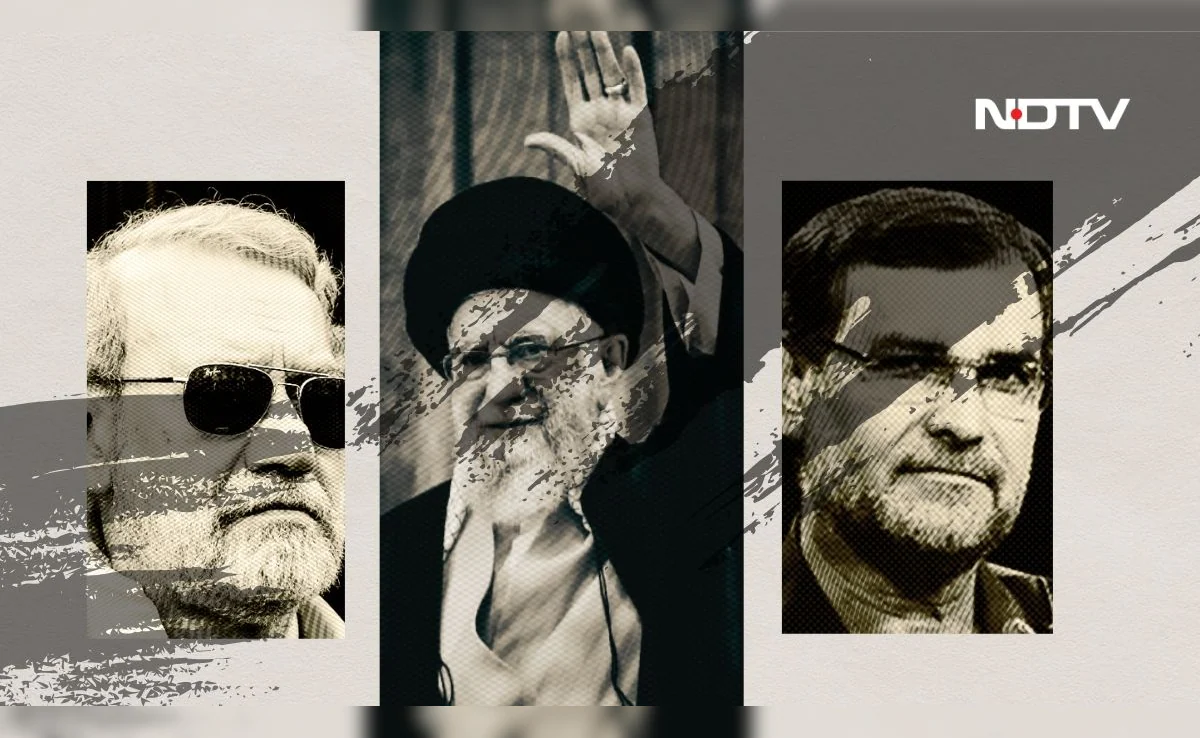
The assassination of the all-powerful Islamic Revolutionary Guard Corps’ (IRGC) Navy chief, Alireza Tangsiri, is the latest addition to Iran’s leadership falling prey to Israeli and American military campaigns. Tangsiri was reportedly killed in an Israeli airstrike on the port city of Bandar Abbas, on the coast of the contested Strait of Hormuz, and nearly 1,300 km from the besieged capital city of Tehran.
Targeting Tangsiri was to highlight that the centrality of the Hormuz Strait, now largely blocked and controlled by the IRGC, is core to the campaign’s aims, while the larger clarity of the intended strategic focus of the war remains murky. Meanwhile, President Donald Trump, who continues to shift goal posts on the end game for the military campaign and is now dabbling with the idea of an on-ground incursion targeting critical islands peppered across the Persian Gulf, is looking for a final gut punch against Tehran, which can be used to exit the war.
Advertisement – Scroll to continue
Over the past four weeks, with Tangsiri being the latest example, Israel has showcased that its war with Iran was being waged over the years in the shadows of espionage, intelligence, and covert operations. Conducting a precision strike in Bandar Abbas also highlights the spread of Israeli intelligence, a kind of reach that has been cultivated inside Iran and its institutions, both political and military.
For years, both Tehran and Tel Aviv have chased down each other’s personnel and interests. The 2010 assassination of Mahmoud al-Mabhou in Dubai, a co-founder of the military wing of Hamas, by Israel’s external spy agency, the Mossad, garnered global attention given the agent’s use of forged foreign passports predominantly from European countries. Attacks against Israeli diplomatic missions and officials blamed on Iran across global capitals, including New Delhi, have also been a regular fixture, albeit not as aggressively as the former’s operations in comparison. What we witness today with the war in the Middle East and the 12-day war that preceded it in 2025 is only the public disclosure of a conflict fought in the shadows for a prolonged period.
However, while the decapitation strikes have caused not just significant damage to the Iranian regime’s leadership structure, beginning with Ayatollah Ali Khamenei, whose killing in the largest failure in IRGC’s history, they may not be enough to dismantle the system and its entrenchment that runs the state. The IRGC is not the deep state, as many through this conflict have alluded to, a political concept that has its roots in the chinks of the Ottoman Empire, which ended over a century ago, but is liberally used today to elude towards unseen influences and powers that direct certain states and their trajectories.
For Iran, Israel’s reach within its borders, even during wartime, remains one of its biggest challenges. Since September 2025, Tehran has delivered execution orders against dozens of people accused of spying for Israel. The idea comes more from a sense of panic than betrayal, to instil fear amongst a very vulnerable population, both economically and politically, not heed advances by foreign agencies and work against the regime. Iran’s own networks of clandestine operations, dwarfed by both audacity and breadth of that of Israel, are expected to be operationalised further on the other side of this conflict, as a collapse of the regime remains unlikely. In the past week, two Israelis, including a teenager and a military reservist, were arrested on allegations of spying for the IRGC.
The IRGC, despite its current depleted condition, cannot be easily counted out. In a recent interview with a British newspaper, Sir Alex Younger, former chief of the United Kingdom’s external intelligence agency, the Secret Intelligence Service or MI6, said that Iran holds the upper hand in the conflict for the moment. Younger added that the strategy of “horizontal escalation”, meaning firing projectiles at all accessible targets irrespective of their prior relations or affiliations with the Iranian state, seems to have worked.
The Iranian regime surviving the ongoing air campaign is, in all probability, an accepted outcome. The US, all said and done, is edgy, and looking to make sure it is not pulled into a quagmire of its own making, like the wars in Iraq and Afghanistan, adding decades more to a conflict in the Middle East. But pressure now to ‘finish the job’ and not leave it half-done is intense, including from Gulf states, which do not wish to deal with an emboldened Iran under the flag of a victory. For Tehran, not losing the war is victory enough despite the losses.
Finally, one way or another, the war between Israel and Iran will continue after the US military campaign ends. It is unlikely that either Israel or the Gulf powers will be willing to give Iran space and accommodation to redraw the region’s security architecture or be a major stakeholder in it. However, without Iran being afforded such concessions, the region may remain on tenterhooks itself. This will expand an era of ‘shadow wars’ in the coming time, where clandestine operations will become the norm for years, if not decades, to come.
(Kabir Taneja is Executive Director of the Observer Research Foundation Middle East)
Disclaimer: These are the personal opinions of the author