
A major bill reforming immigration powers is now law in Canada, giving Ottawa powers to mass cancel groups of visas and setting time limits on asylum claims in the name of bringing immigration numbers under control.
But the legislation, passed Thursday, has also raised concerns from a coalition of civil society groups, including Amnesty International, immigration lawyers and public sector unions, that says it places too much authority in the government’s hands and is vowing to fight it.
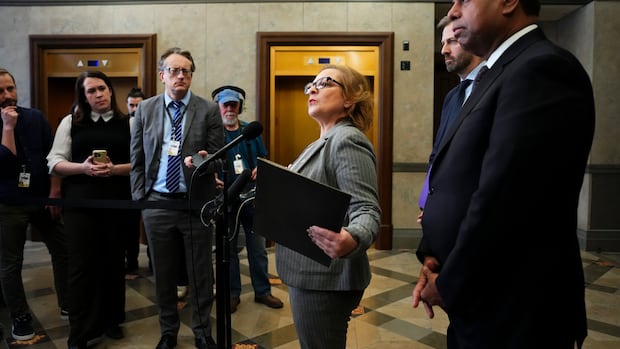
“Bill C-12 attacks the rights of refugees and migrants,” Julia Sande, a lawyer specializing in privacy and migrant rights at Amnesty International Canada, said in an interview with CBC News. “It makes it harder for people to have their claims for refugee protection fairly assessed, so it puts people at risk of being deported to face persecution and torture.”
She said the mass-cancellation powers, “without any sort of individualized assessment,” amount to shirking Canada’s international legal obligations.
 Amnesty International Canada lawyer Julia Sande says the federal government may be violating its international legal obligations with its new immigration legislation. (Aloysius Wong/CBC)
Adam Sadinsky, vice-president of the Canadian Association of Refugee Lawyers, called C-12 “the most significant rollback of refugee rights in more than a decade.”
He said he has no doubt the legislation “will ultimately end up before the courts to make a decision on its constitutionality,” and said he believes refugee and immigration lawyers across Canada are advising their clients and mulling whether they have cases that would form “the basis of a challenge.”
Sadinsky and Sande’s groups are part of the broader coalition, which includes the Canadian Council for Refugees, the Canadian Muslim Public Affairs Council and public sector unions like the Canadian Union of Public Employees.
‘A dangerous path’
In a statement, the coalition warned the bill sets “current and future governments on a dangerous path by limiting the ability to seek refugee protection in Canada, […] and facilitating the sharing of personal information within and outside the country.”
The law will cancel out thousands of refugee claims, as it also retroactively bars those who came to Canada more than a year prior from filing claims with the Immigration and Refugee Board.
Retroactive to June 24, 2020, and applying to claims made on or after June 3, 2025, the legislation would see some 19,000 applications dismissed, according to testimony by Immigration Minister Lena Diab to a Canadian Senate committee.
As for its necessity to acquire mass-cancellation powers, the government has cited hypothetical events out of its control such as wars or pandemics. It has also spoken about possible fraud in hypothetical scenarios.
However, based on internal IRCC documents, CBC News reported last fall that the department was concerned about “country-specific challenges” due to fraudulent visitor visa applications from India and Bangladesh.
Similar legislation elsewhere
During a debate in the House of Commons, Liberal MP Ruby Sahota, the secretary of state for combatting crime, said one-year limits on asylum claims exist elsewhere in the world including the European Union and the United States.
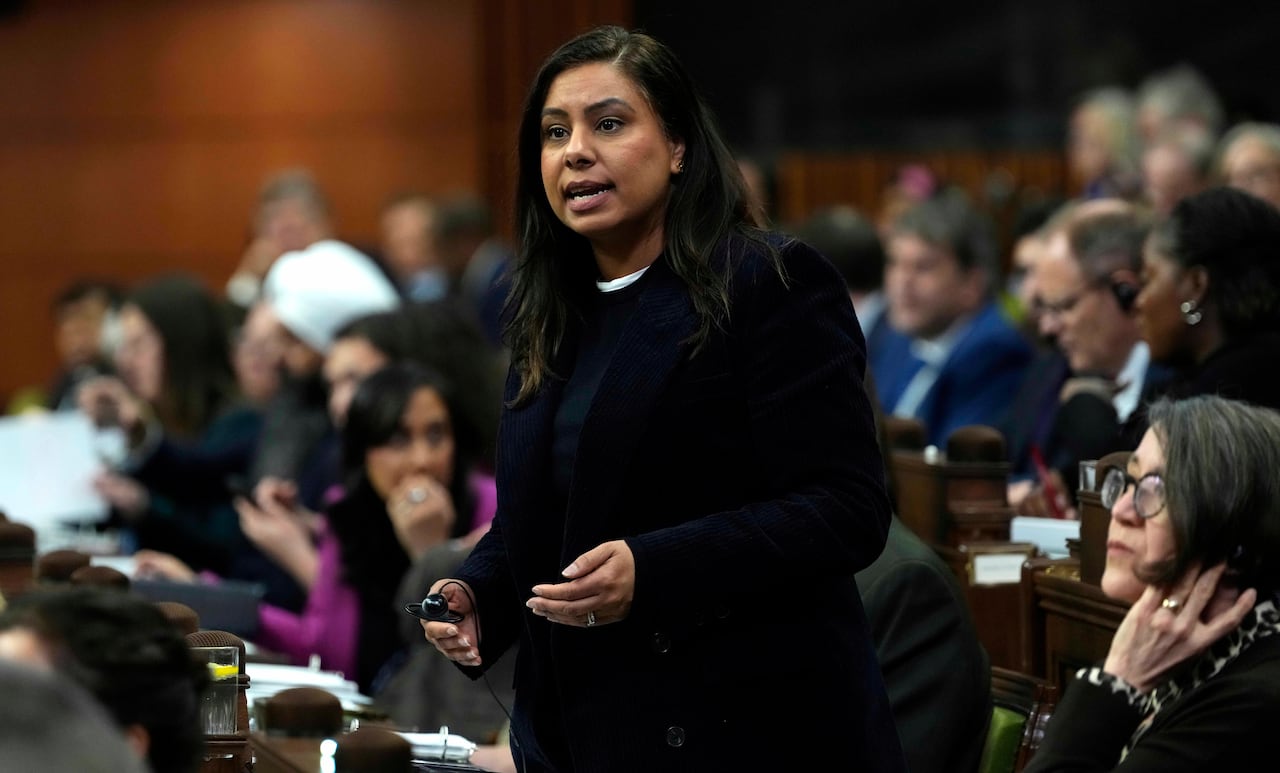 Secretary of State for Combatting Crime Ruby Sahota, pictured here in February, said legislation in other jurisdictions, such as the European Union and the U.S., limits asylum-seeking times. (Justin Tang/The Canadian Press)
“People who enter the country and wish to claim asylum would have an ample, one-year time period to put their claim in if their life is at risk,” she said.
“If a person has been living in Canada for a year, whether it is for study or a visit, is there a need to allow someone of that nature to be able to claim refugee status, which could bottleneck the system? I believe the short answer to that is no,” said Kevin Lamoureux, the parliamentary secretary to government House leader Steven MacKinnon.
The bill ultimately passed, with the support of both the opposition Conservatives and Bloc Québécois.
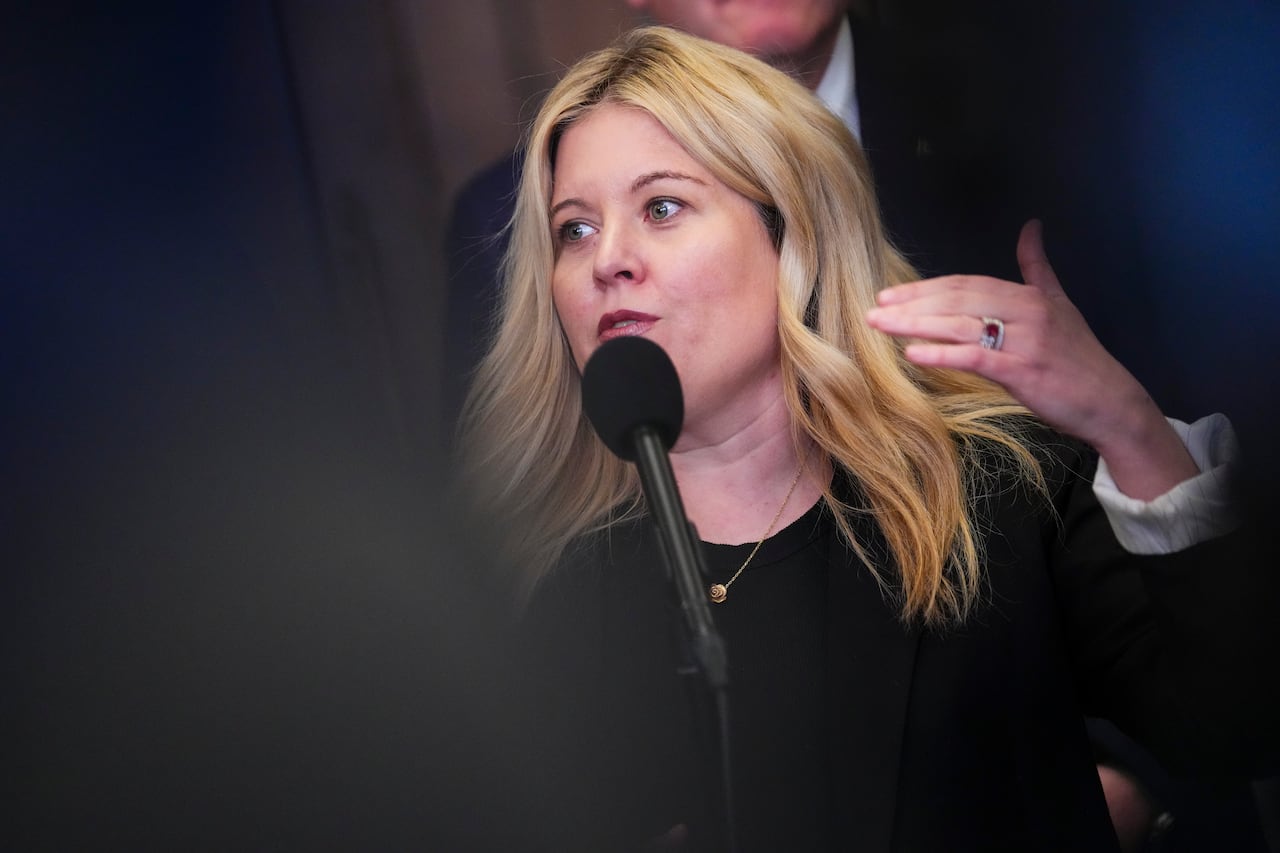 Conservative member of Parliament Michelle Rempel Garner responds to reporters questions in the foyer of the House of Commons on Parliament Hill in Ottawa on March 23. The CPC supported C-12 in the House of Commons. (Sean Kilpatrick/The Canadian Press)
“Canada’s asylum system should offer compassionate refuge to truly vulnerable persons in numbers that we can sustainably support, but Canadians believe that the asylum system should not be used as a back door by which migrants can quickly and easily end-run normal immigration processes,” said Conservative immigration critic Michelle Rempel-Garner.
Her NDP counterpart, Jenny Kwan, raised concerns similar to those from members of the coalition.
“There is no evidence that the legitimacy of a refugee claim is linked to how quickly someone files it. The introduction of a one-year bar is particularly troubling,” she said.
Legislation called Charter-compliant
In a statement, the Immigration Department told CBC News the new rules respect Canada’s obligations under the 1951 Refugee Convention and the Canadian Charter of Rights and Freedoms.
It cited an analysis by the Justice Department that highlighted how there are limits on the information-sharing powers granted by C-12, and noted mass cancellation decisions can only be made once cabinet has agreed they are in the public interest.
The IRCC also noted individuals whose refugee claims are disallowed still have a right to a pre-removal risk assessment.
C-12 also passed as Conservatives pushed for a parliamentary committee investigation into fraud in the international student program, saying the federal government needs to get to the bottom of recent findings by the auditor general on potentially thousands of fraudulent international student cases that have not been probed.
WATCH | Carney asked about the integrity of Canada’s immigration system: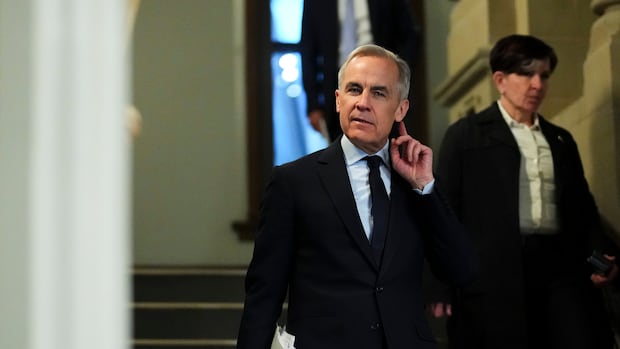
‘We’re taking back control’ on immigration: Carney asked about auditor general’s report
Prime Minister Mark Carney was asked about the integrity of the immigration system after Canada’s auditor general released a report Monday indicating the immigration department is not keeping up with its investigations of those suspected of having fraudulent or expired student visas.